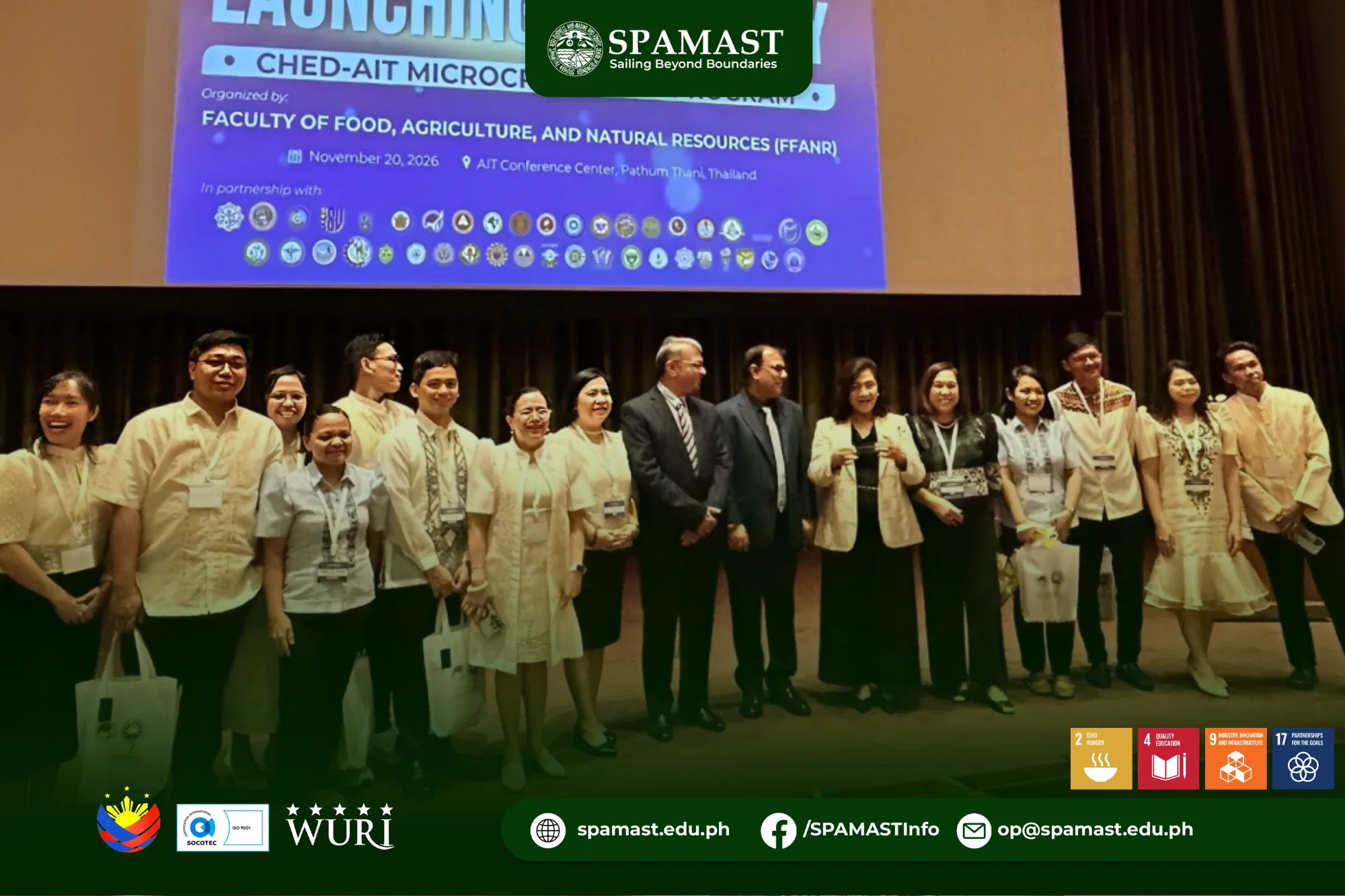
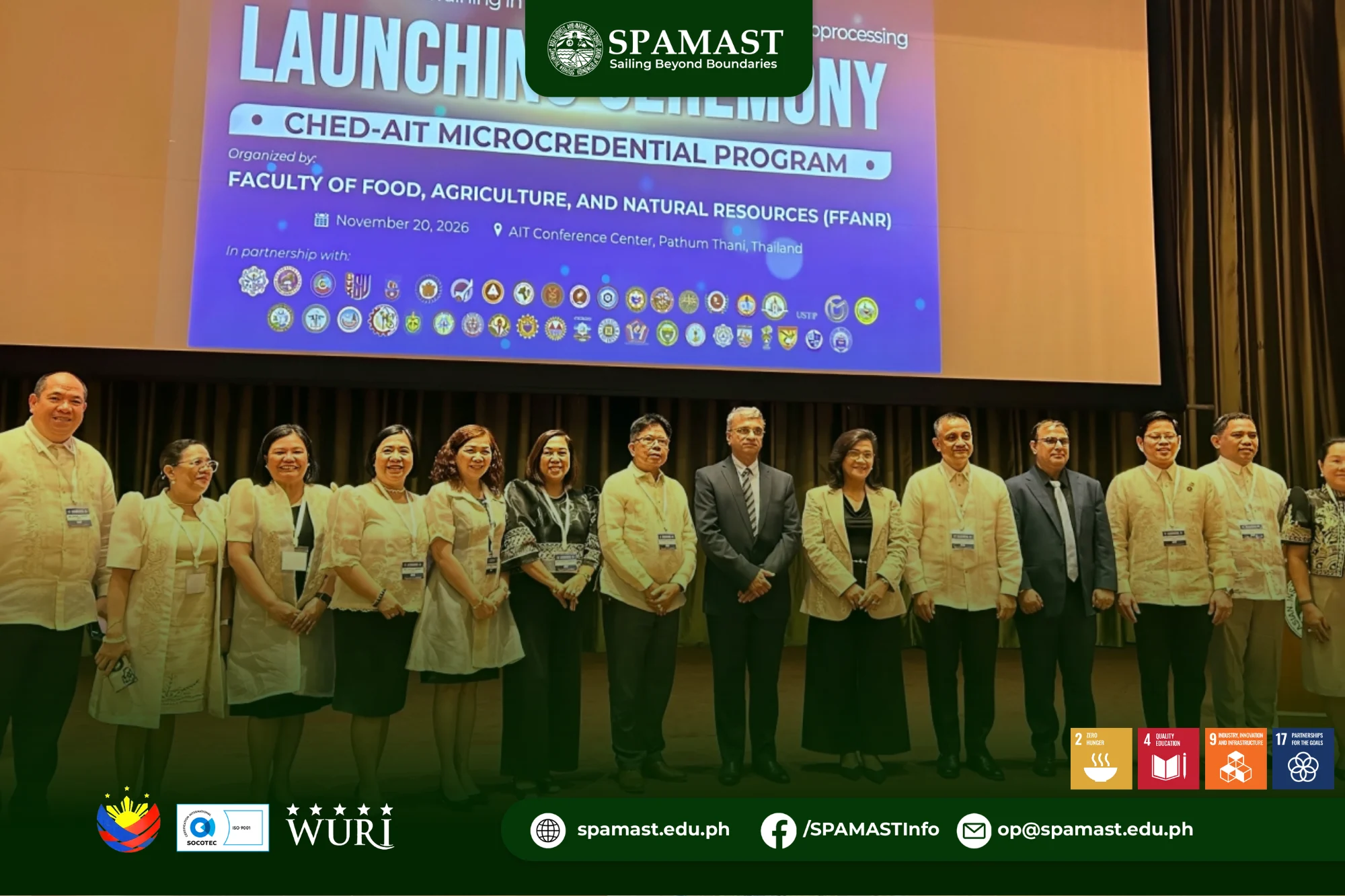
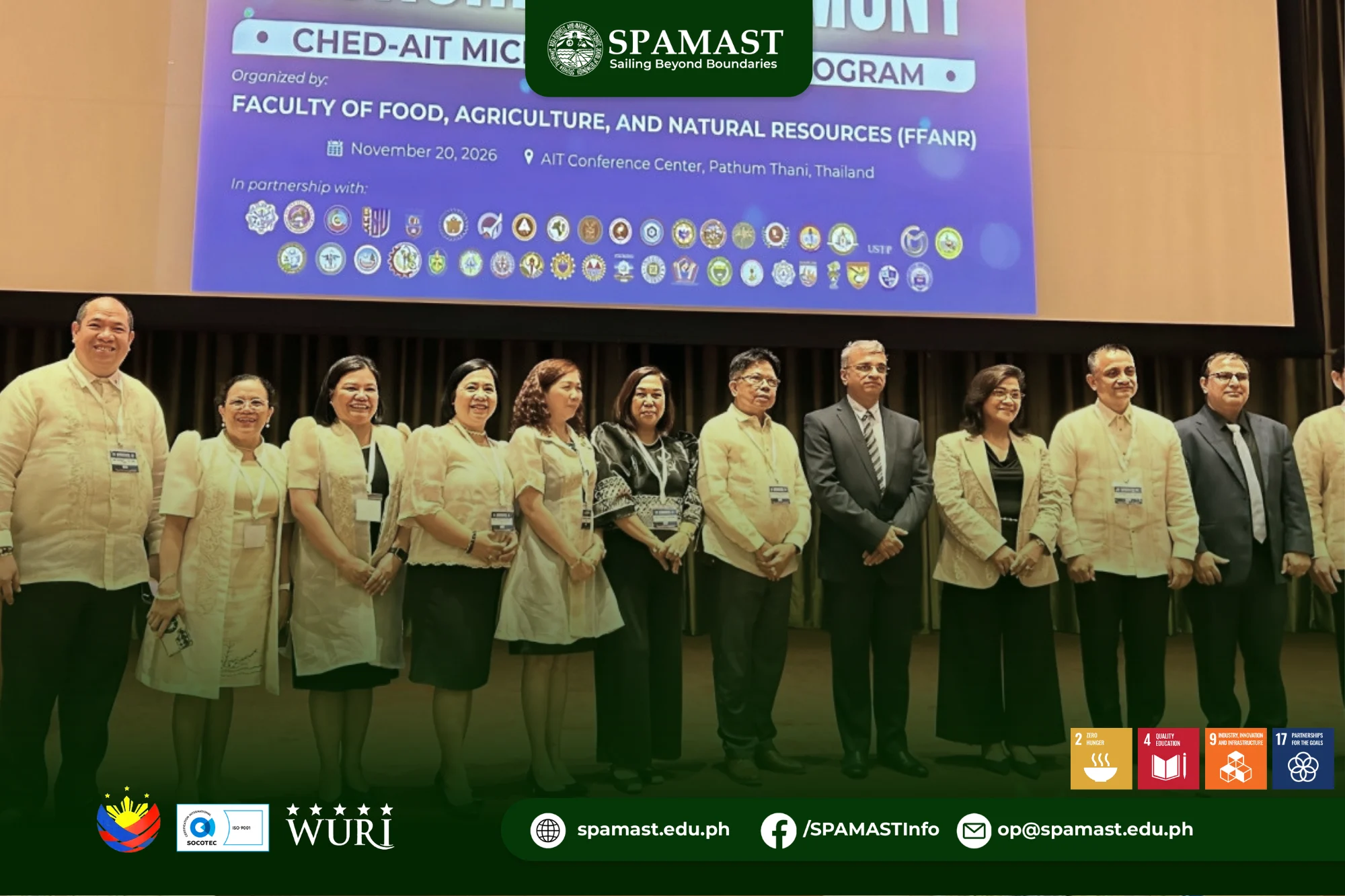
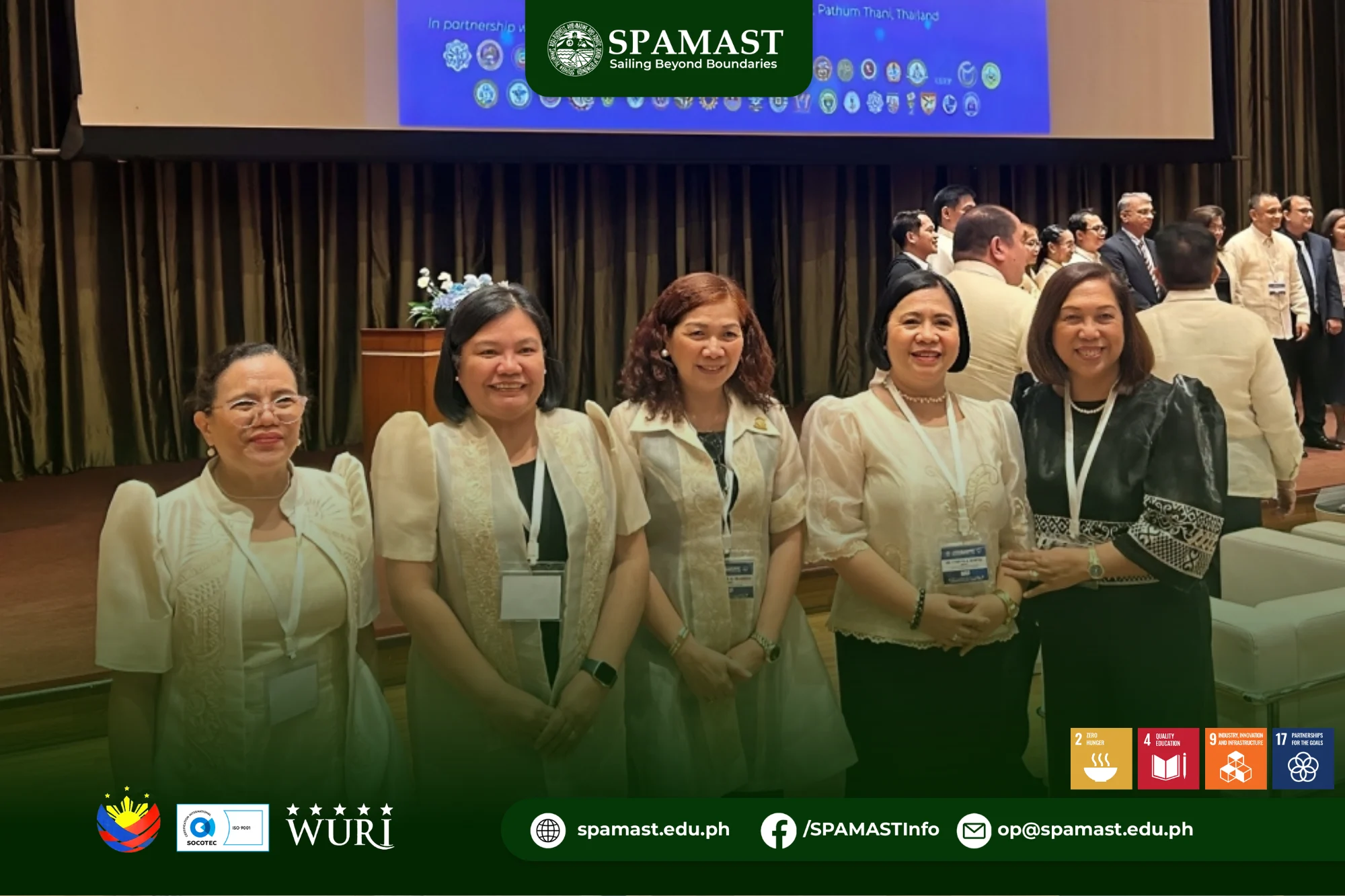
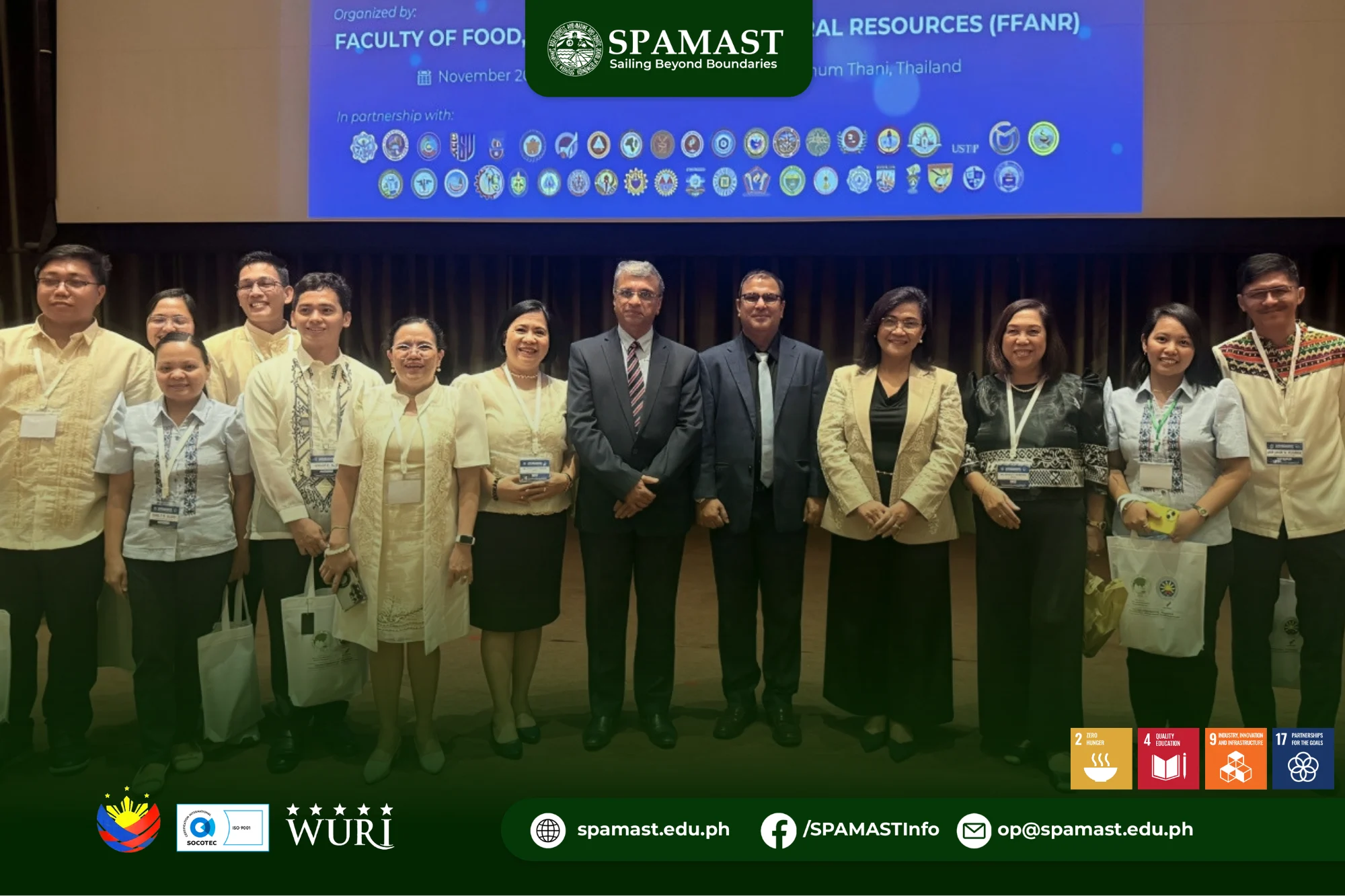
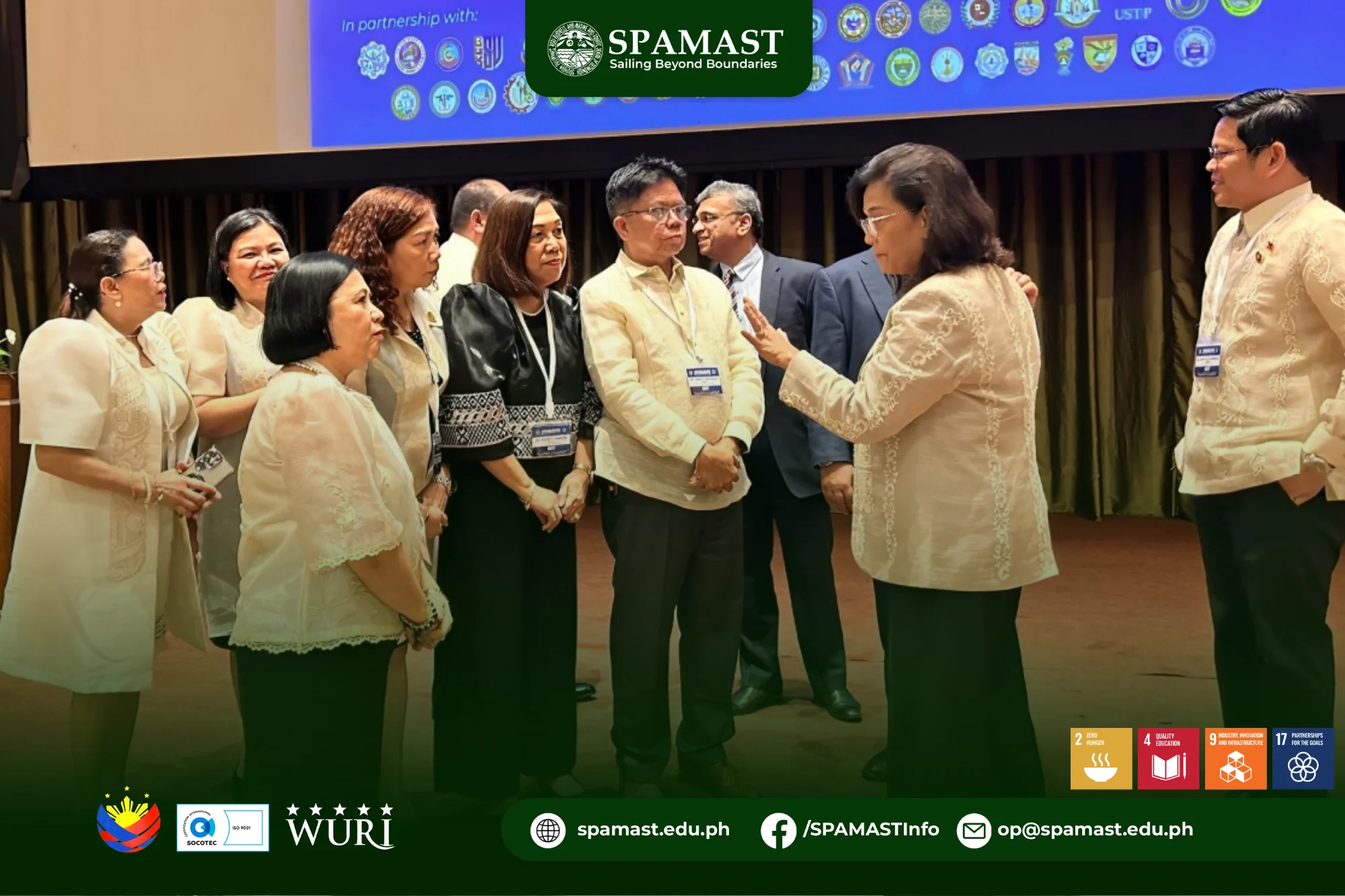
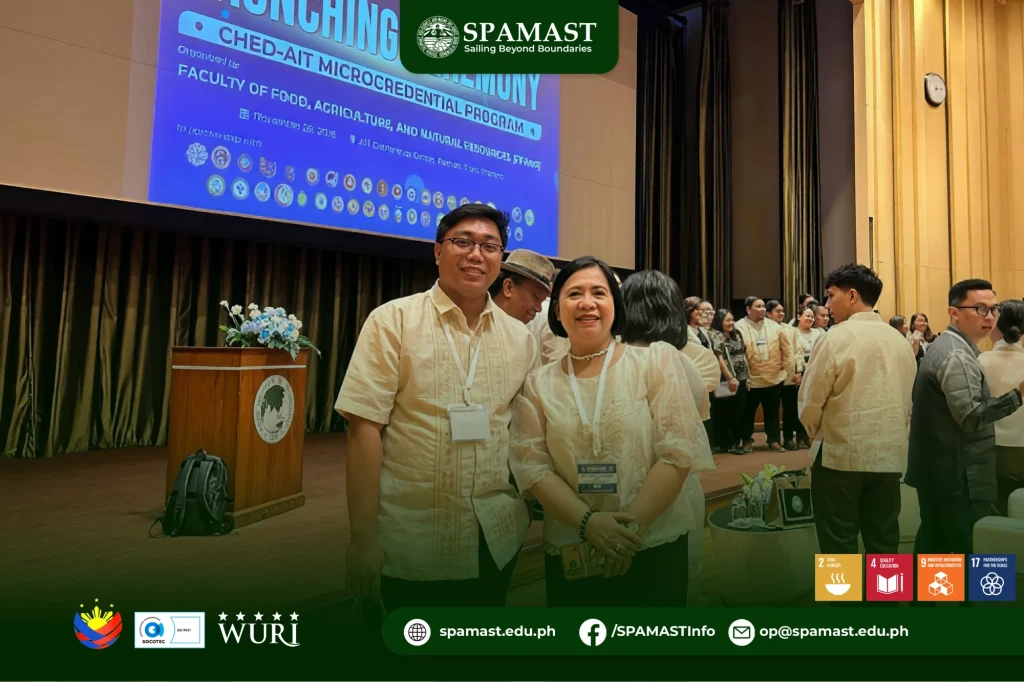
 PATHUM THANI, THAILAND – Reinforcing its commitment to internationalization, faculty development, and advancing food systems innovation, the Southern Philippines Agribusiness and Marine and Aquatic School of Technology (SPAMAST) participated in the official launching of the Asian Institute of Technology (AIT) Micro-Credential Program titled “Strengthening the Future of Food Systems: Specialized Graduate Training in Food Innovation, Nutrition, and Bioprocessing” on November 20, 2026, at the AIT Convention Center, Pathum Thani, Thailand.
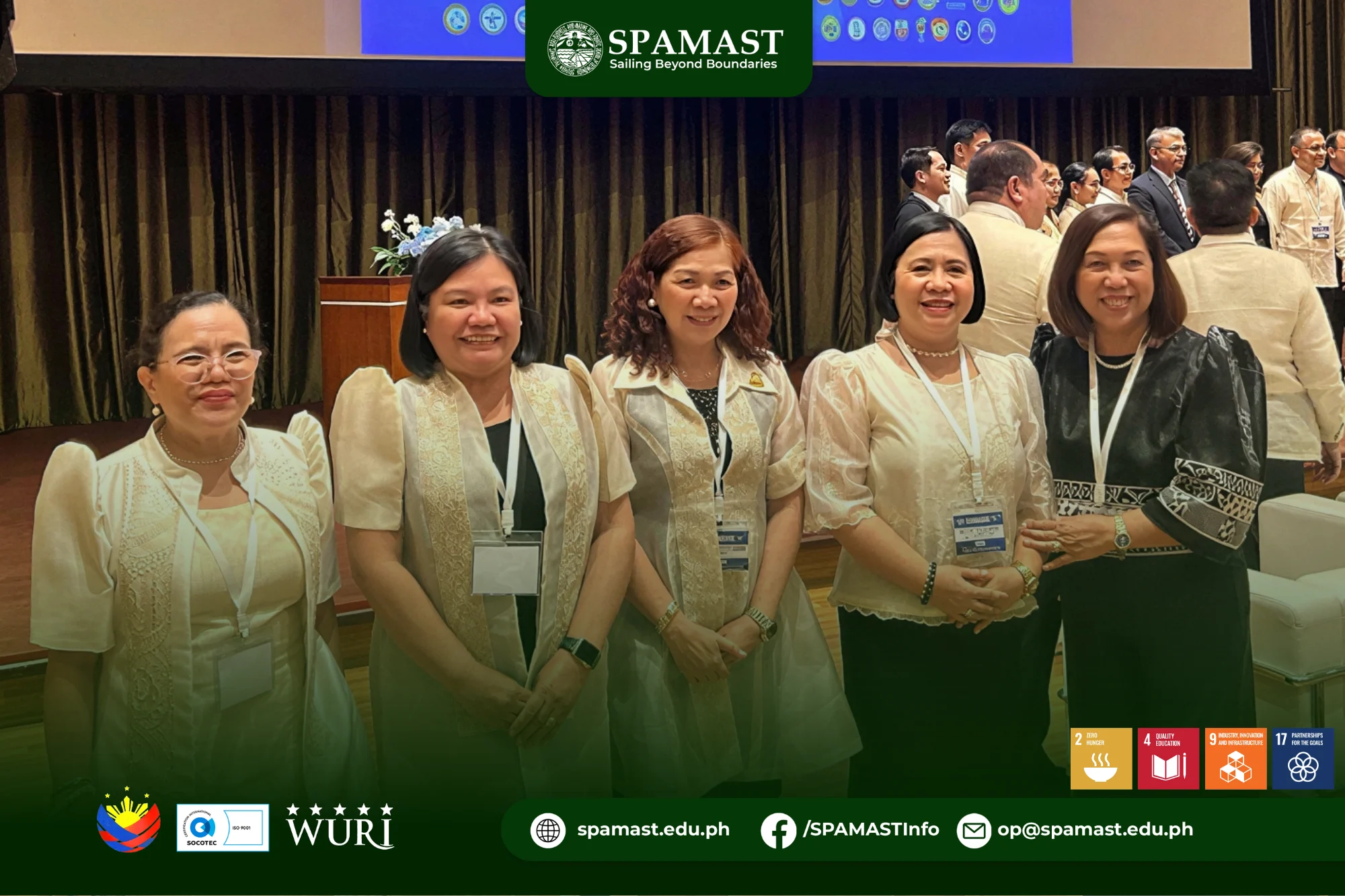
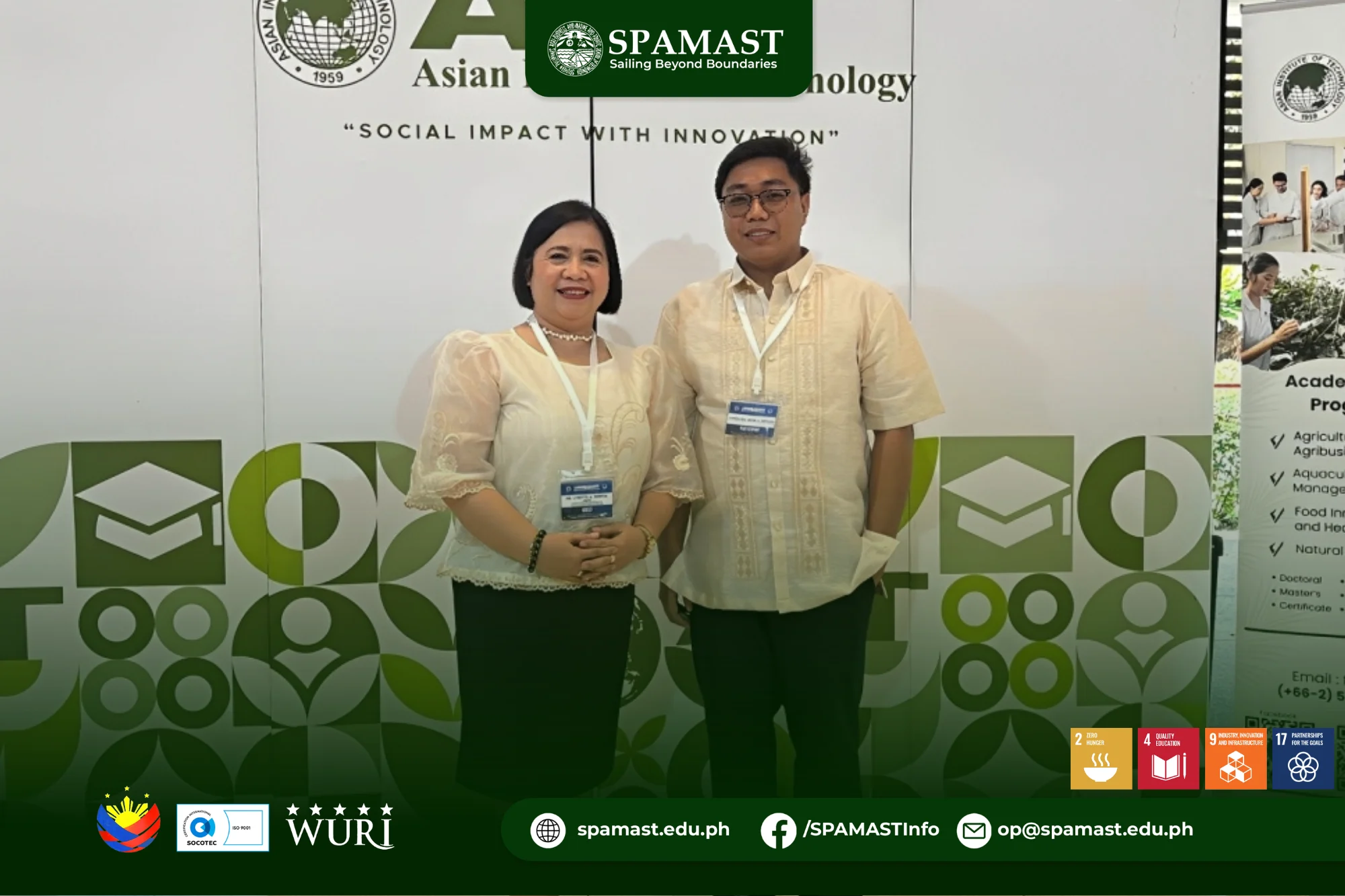
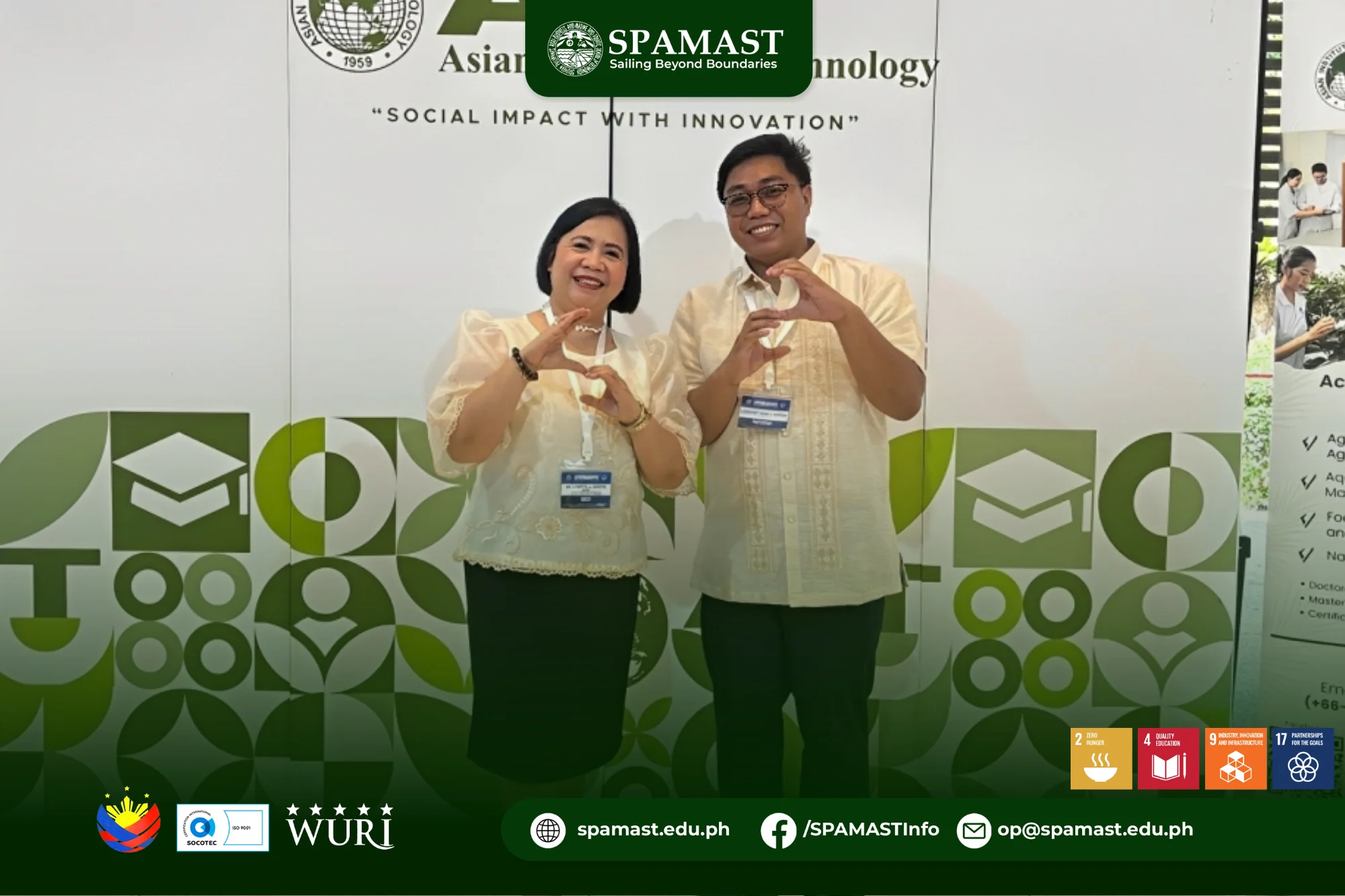
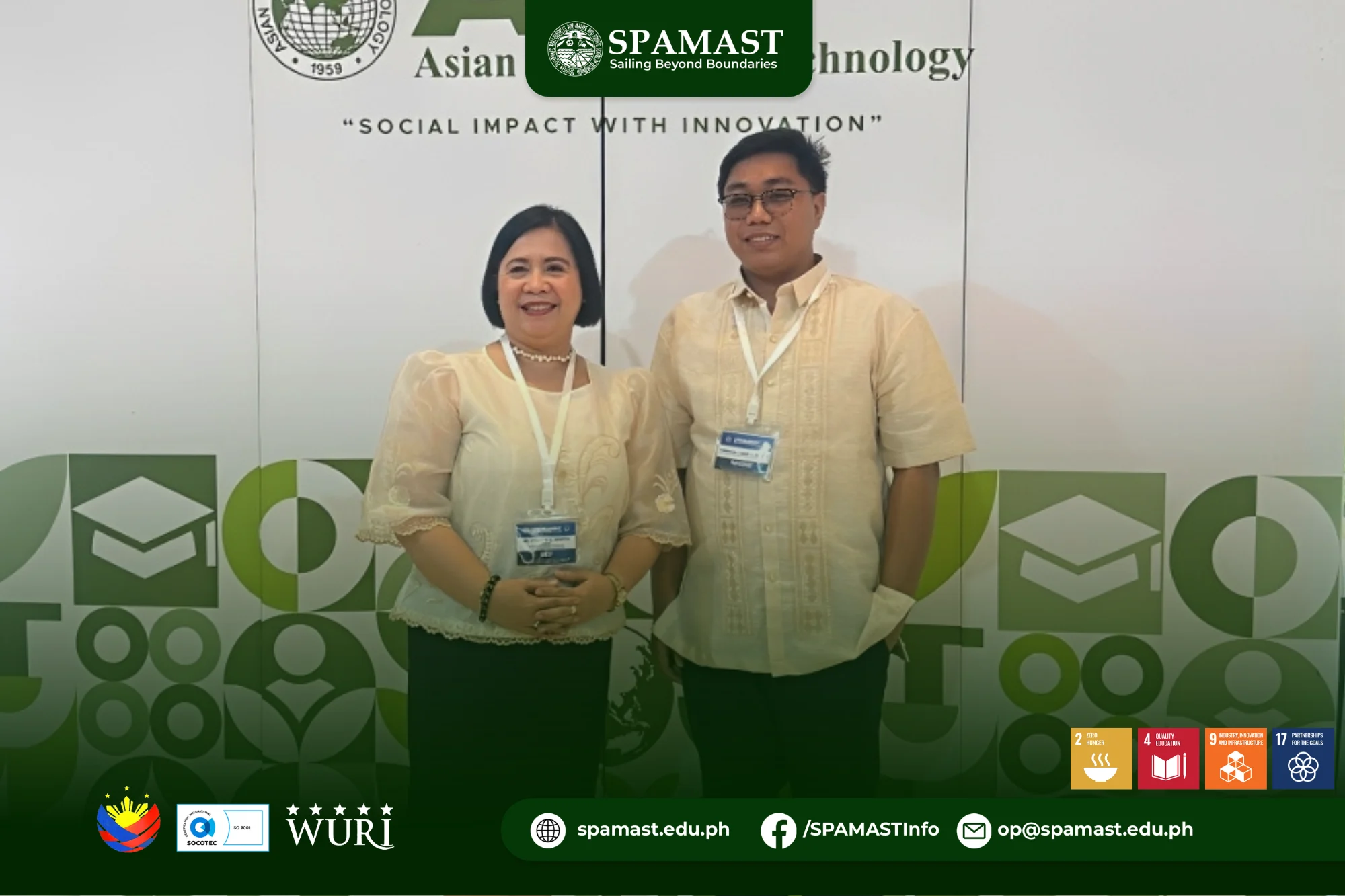
SPAMAST President Dr. Lynette A. Bontia and Mr. Chrishev Espesor, the institution’s designated representative to the program, attended the launching ceremony, marking another significant milestone in the College’s continuing efforts to expand international academic linkages and strengthen institutional capacity in agriculture, food innovation, and related fields.
The specialized graduate training program brings together faculty members from selected Philippine higher education institutions to develop advanced competencies in food science, food innovation, nutrition, and bioprocessing. Offered under the Commission on Higher Education (CHED) Higher Education Upskilling and Study for Advancement of Staff and Faculty (HUSAY) Program, the initiative provides stackable micro-credentials designed to strengthen the expertise of Filipino higher education faculty members.
The program comprises three certificates, totaling 27 academic credits, with nine credits allocated to each certificate. The completion of all three certificates earns participants an AIT diploma, with the credits also recognized toward a master’s or doctoral degree at the Institute. The first certificate, which includes face-to-face training from November 8 to December 4, 2026, is part of this comprehensive graduate-level learning opportunity.
Dr. Bontia’s participation in the launching underscores SPAMAST’s institutional commitment to providing its academic personnel with opportunities for international exposure, professional development, and access to globally recognized academic expertise. Meanwhile, Mr. Espesor’s participation represents the institution’s active engagement in specialized training that can contribute to strengthening its academic and research capabilities, particularly in areas relevant to agriculture and food systems.
Beyond individual professional development, the initiative opens opportunities for knowledge exchange, institutional networking, and potential academic and research collaborations between AIT and participating Philippine higher education institutions. It also reinforces the importance of equipping educators and researchers with innovative approaches and contemporary knowledge to respond to emerging challenges in food production, nutrition, sustainability, and agricultural development.
The initiative contributes to the achievement of several United Nations Sustainable Development Goals (SDGs), particularly SDG 2: Zero Hunger, through the advancement of sustainable food systems and food innovation; SDG 4: Quality Education, through specialized graduate-level training and lifelong learning opportunities; SDG 9: Industry, Innovation and Infrastructure, by promoting research, technological advancement, and innovation in food processing; and SDG 17: Partnerships for the Goals, through international academic cooperation and collaboration among higher education institutions.
As SPAMAST continues to pursue its strategic direction toward quality, internationalization, and research-driven development, its engagement in initiatives such as the AIT Micro-Credential Program reflects the institution’s determination to build a globally connected academic community capable of generating innovative and sustainable solutions for the agriculture and food sectors.
Through this international academic undertaking, SPAMAST further strengthens its role in developing competent professionals, advancing knowledge, and contributing to a more sustainable and resilient food system for the Philippines.