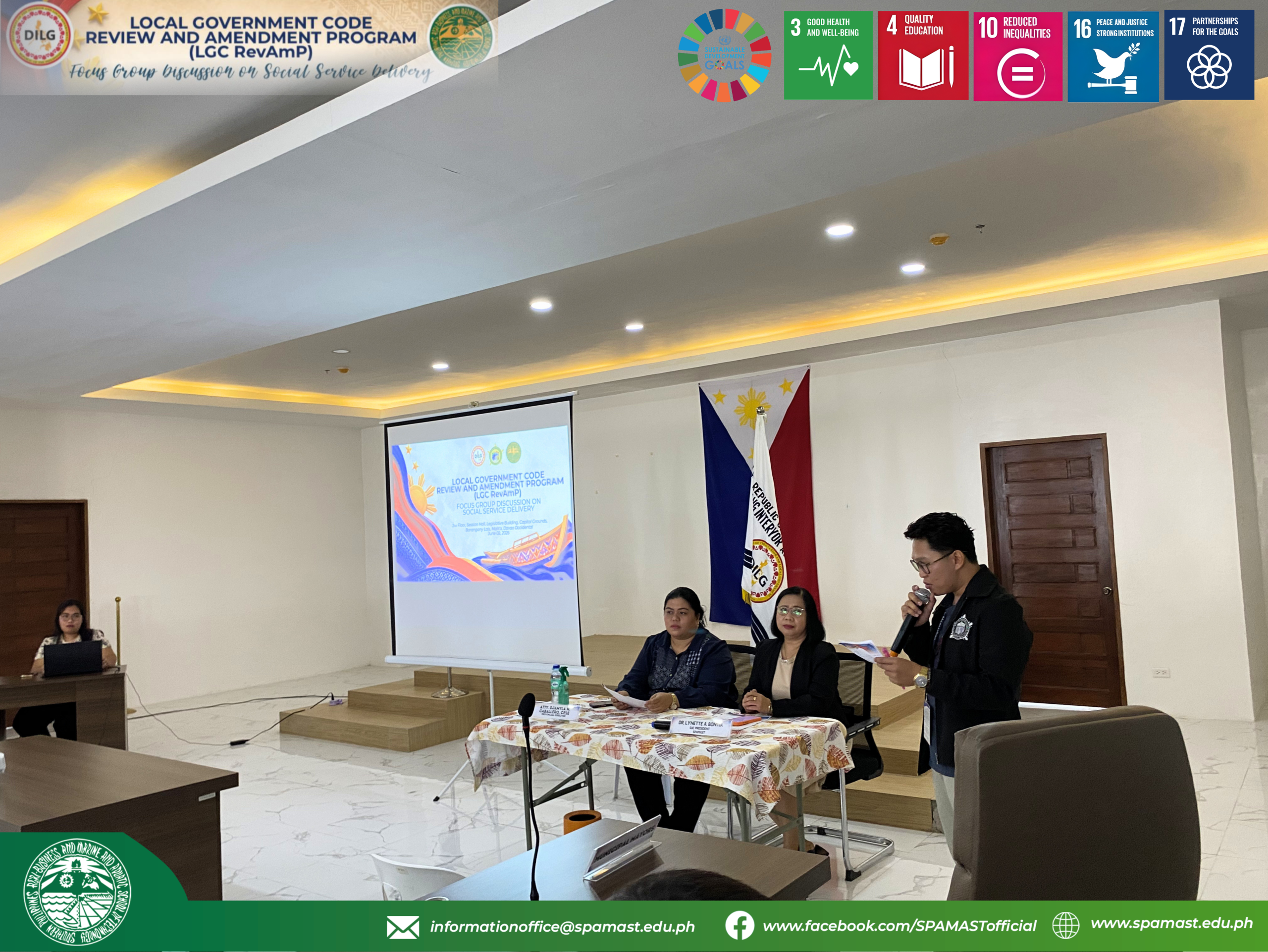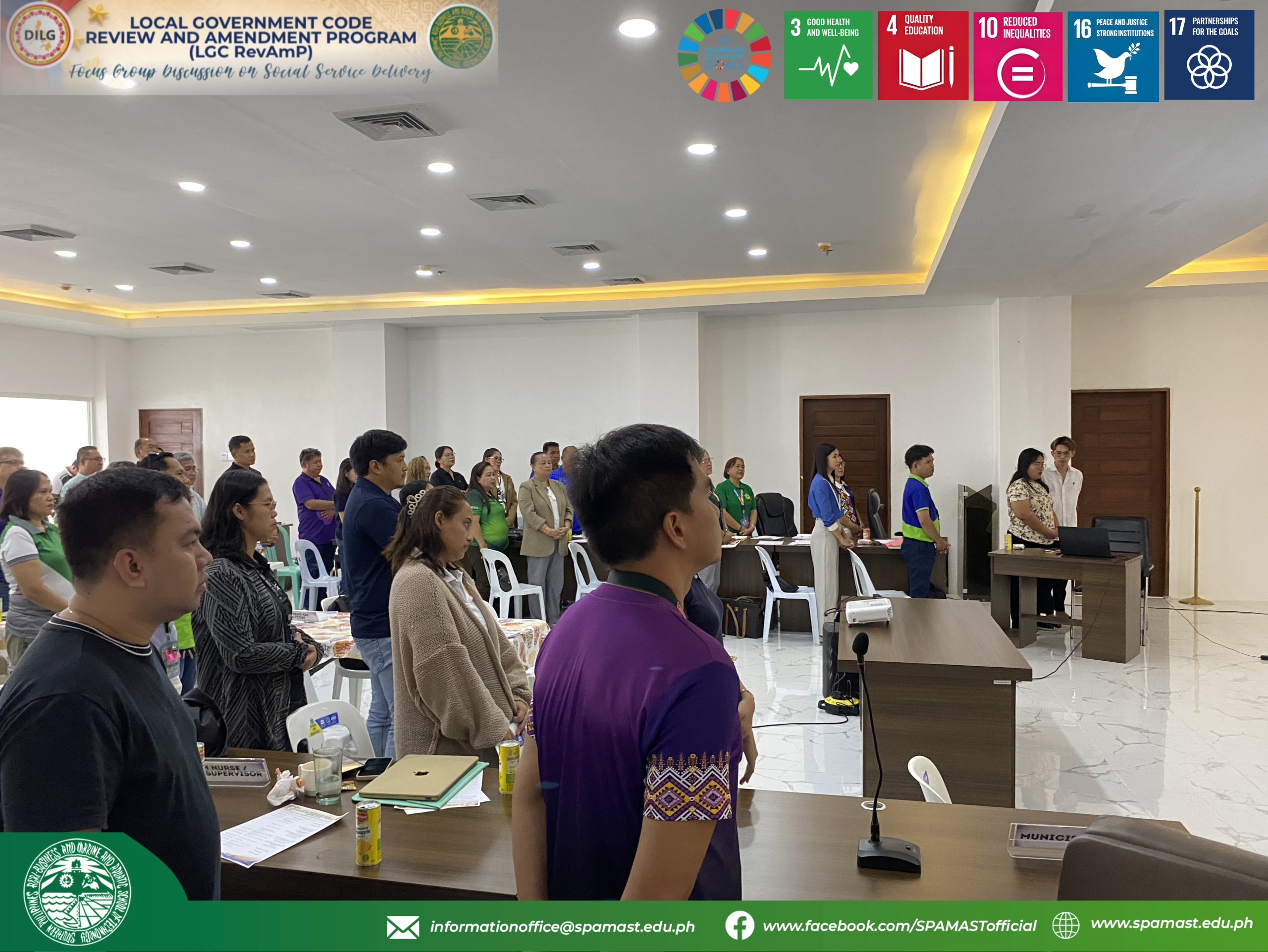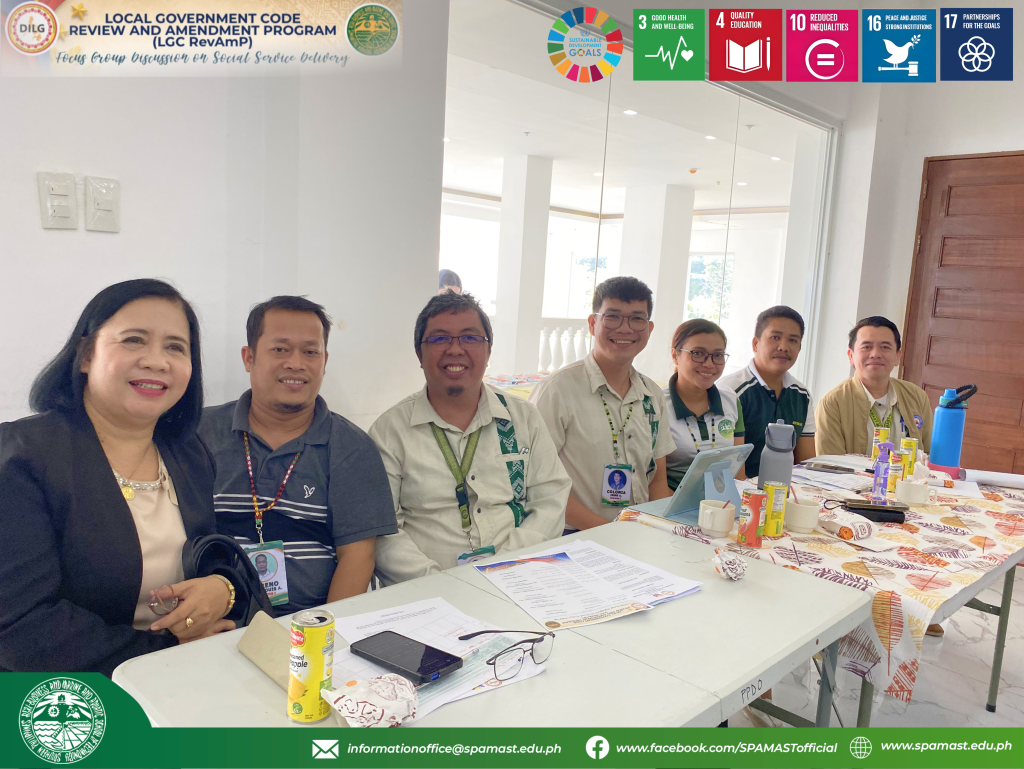
The Southern Philippines Agri-Business and Marine and Aquatic School of Technology (SPAMAST) reaffirmed its commitment to public service, policy development, and community engagement as it partnered with the Department of the Interior and Local Government (DILG) Davao Occidental in the conduct of the Local Government Code Review and Amendment Program (LGC RevAMP) Focus Group Discussion (FGD) on Social Service Delivery held at the Session Hall, Legislative Building, Provincial Capitol Grounds, Malita, Davao Occidental on June 2,2026.
As a recognized Learning Resource Institution (LRI) of the DILG Davao Occidental, SPAMAST played a vital role in facilitating the Focus Group Discussion, bringing its academic expertise and research capabilities to support evidence-based policy review and governance reforms. The activity gathered stakeholders from various sectors to assess the current state of social service delivery governance in Davao Occidental and generate recommendations for the enhancement of the Local Government Code.
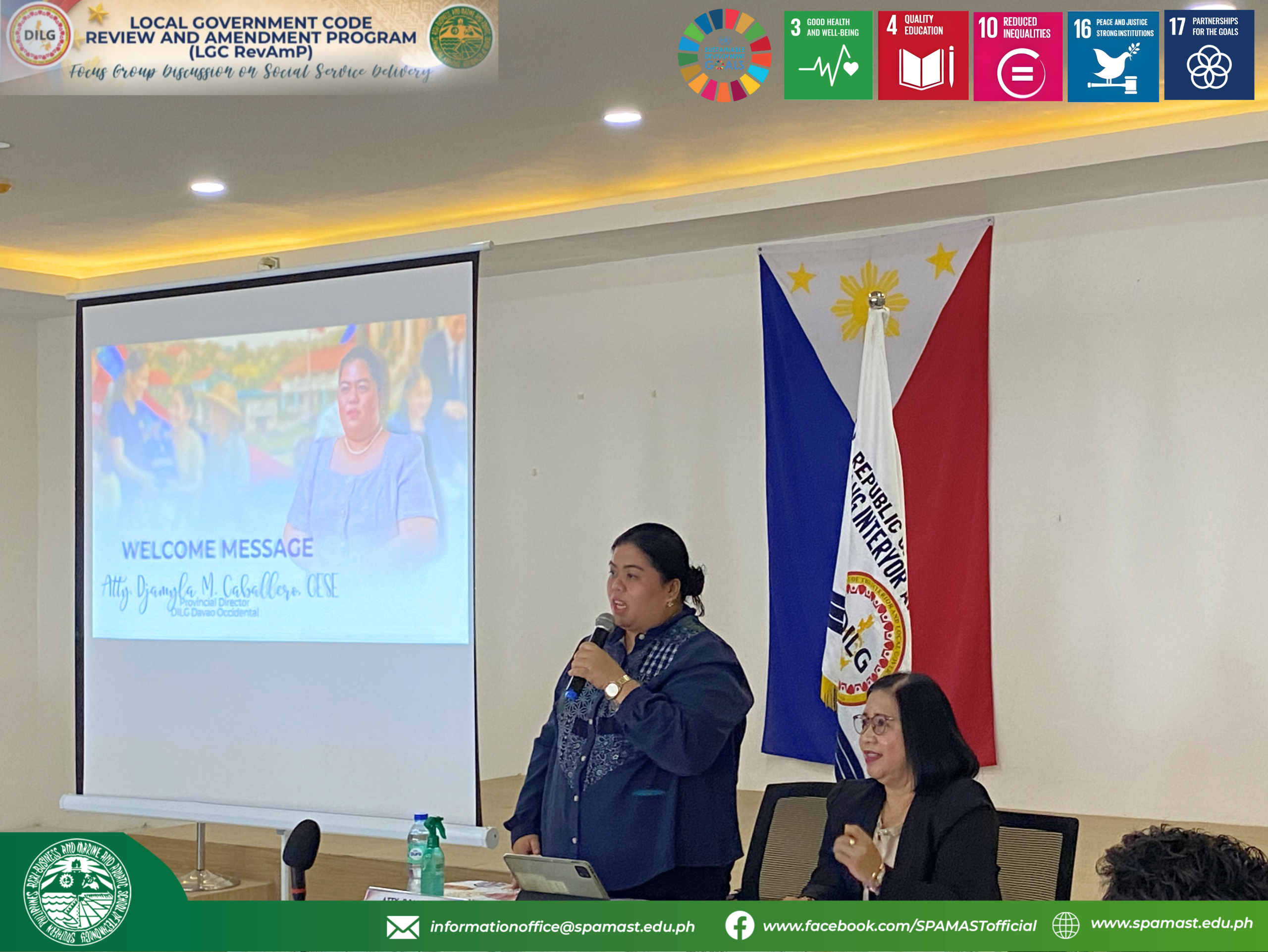
The program commenced with opening preliminaries, followed by a welcome message from Atty. Djamyla M. Caballero, CESE, Provincial Director of DILG Davao Occidental. In her address, she emphasized the importance of continuously reviewing and updating the Local Government Code to ensure that it remains responsive to the evolving needs and challenges faced by local communities. She highlighted the current realities in local governance and social service delivery, underscoring the necessity of policy reforms that will strengthen local government units’ capacity to provide efficient, inclusive, and people-centered services. Atty. Caballero further encouraged stakeholders to actively participate in the discussions, recognizing their valuable insights as essential inputs in crafting a more responsive and community-driven Local Government Code.
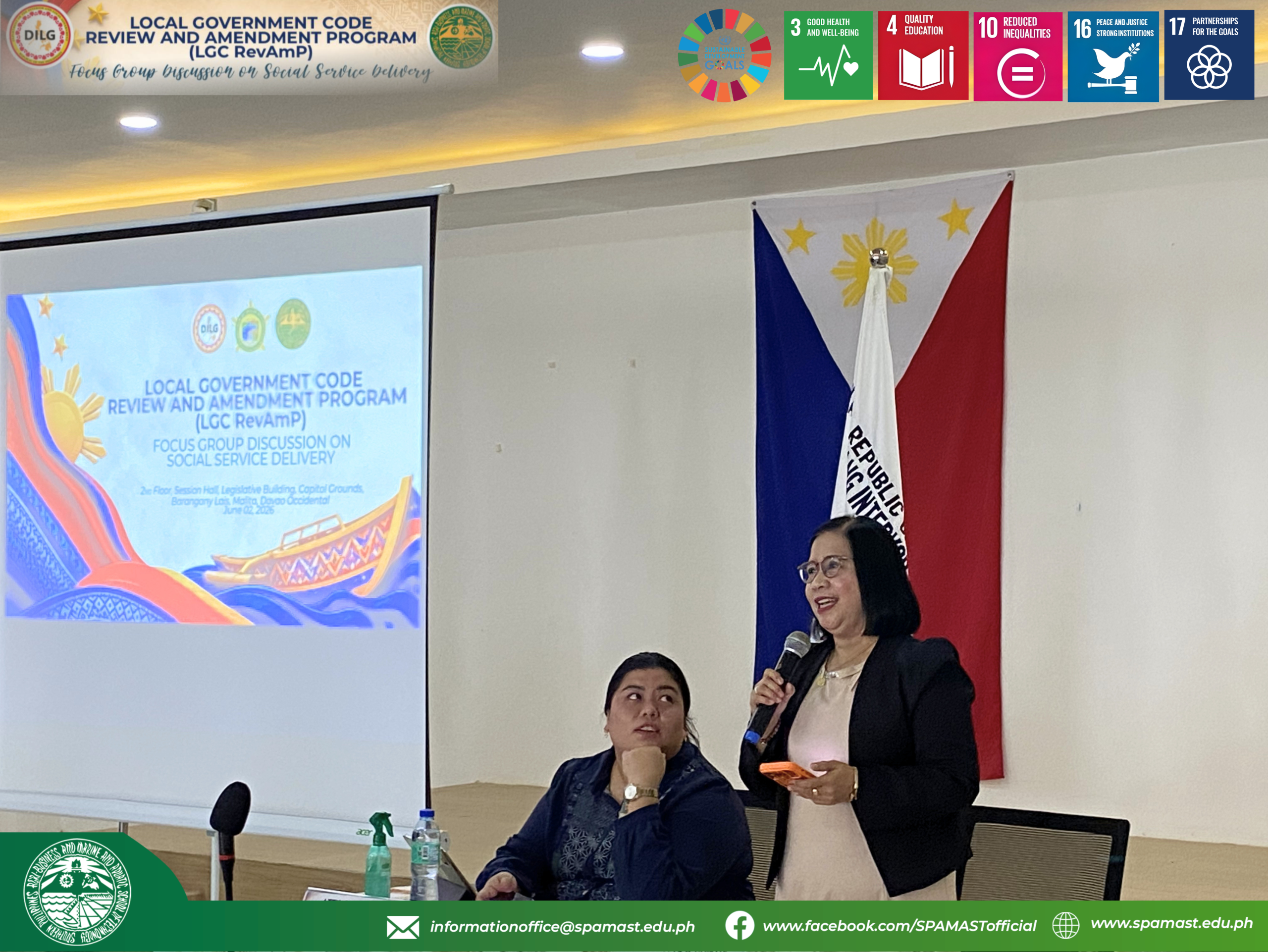
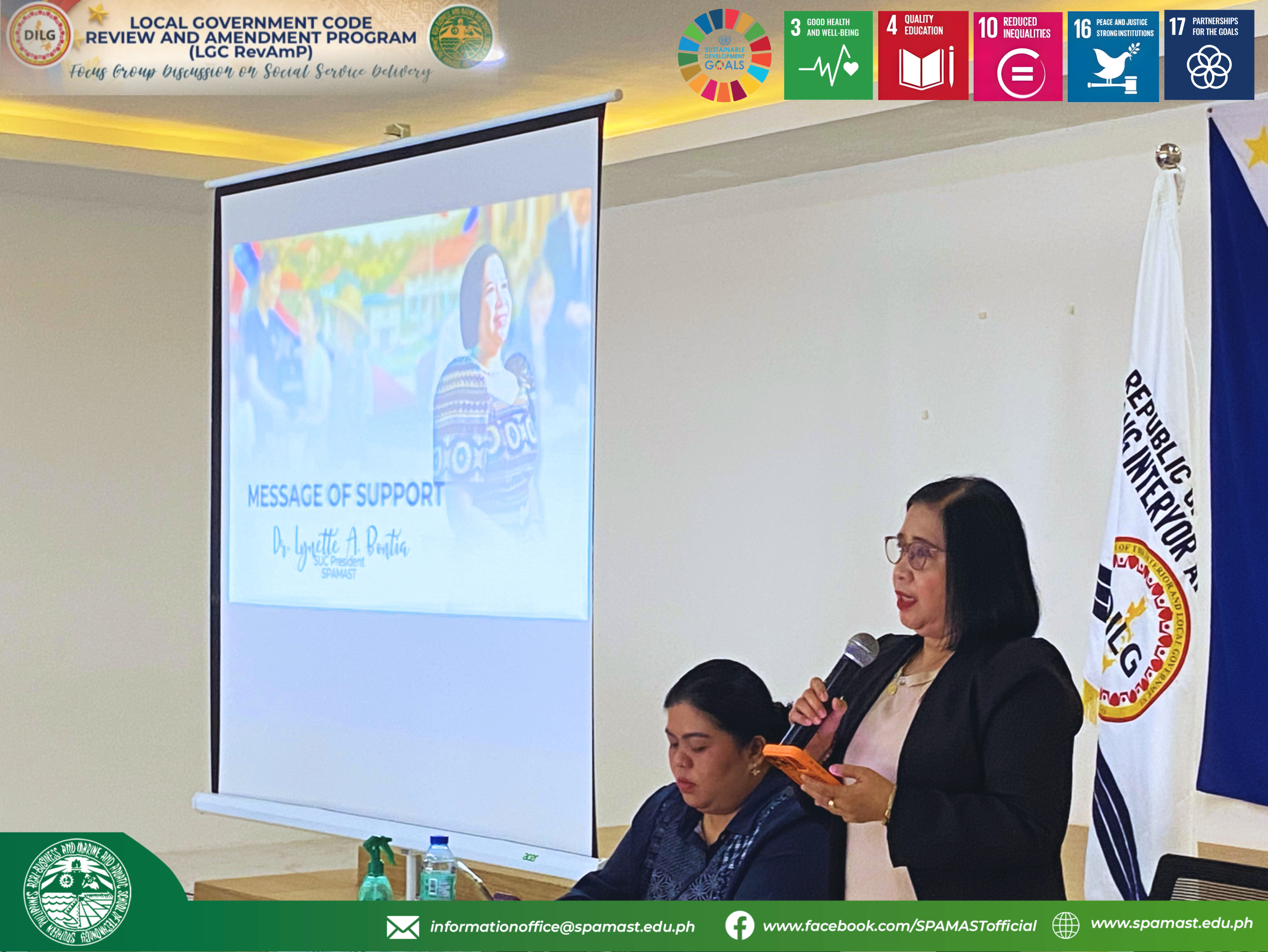
A message of support was delivered by Dr. Lynette A. Bontia, President of SPAMAST, highlighting the institution’s dedication to advancing good governance through research, extension, and community partnerships.
In her Message of Support, Dr. Lynette A. Bontia, President of SPAMAST, underscored the vital role of collaborative governance and stakeholder participation in shaping responsive public policies. Citing the philosophy of renowned American educator and philosopher John Dewey, she emphasized that democracy is not merely a form of government but a shared “way of life” rooted in communication, participation, and community engagement. Dr. Bontia highlighted that meaningful dialogue among citizens, institutions, and government agencies strengthens democratic processes and ensures that policies reflect the genuine needs and aspirations of the people. She further affirmed SPAMAST’s commitment, as a Learning Resource Institution, to support initiatives that promote inclusive governance, evidence-based decision-making, and sustainable community development.
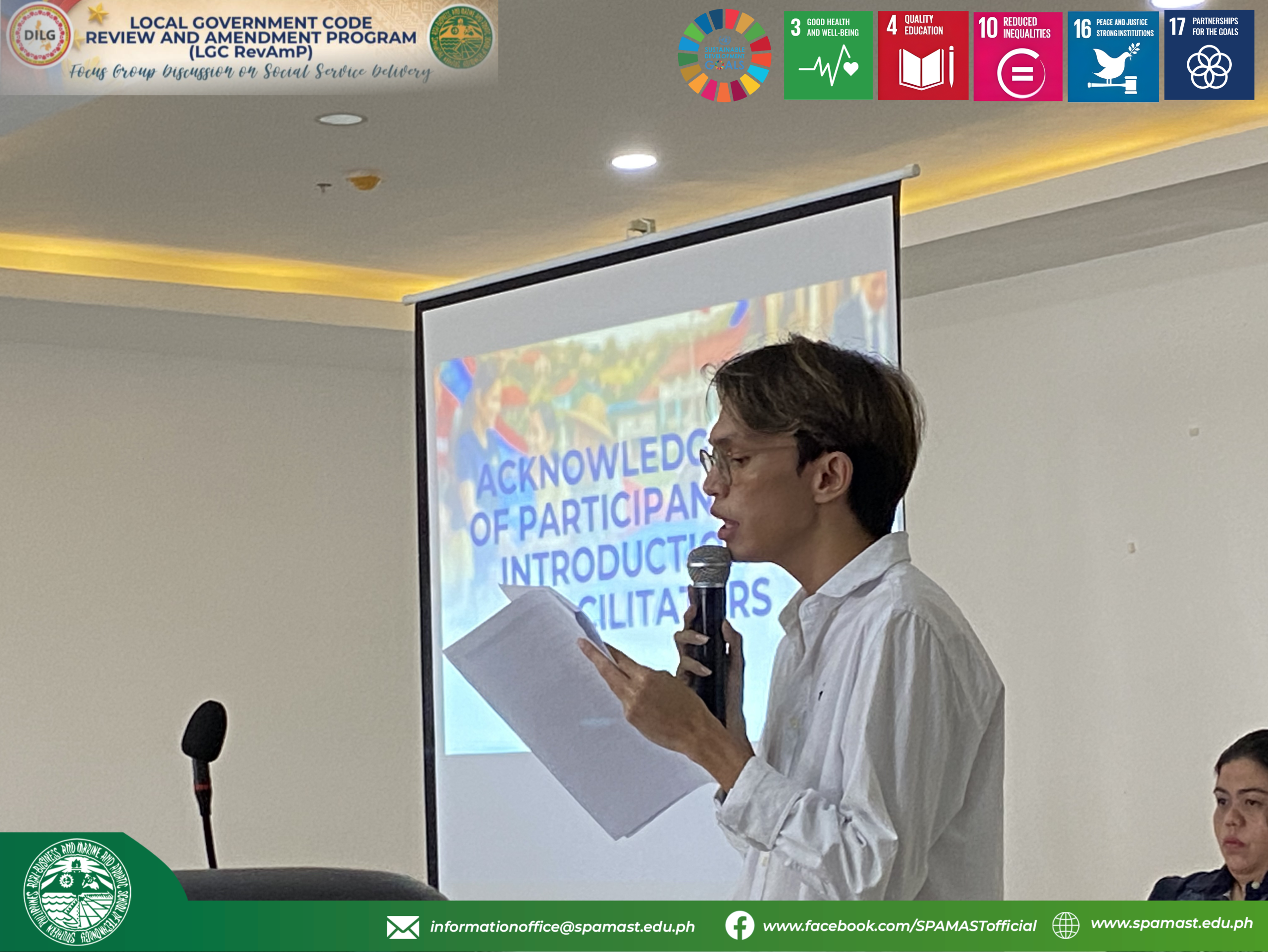
The Focus Group Discussion briefing will be facilitated by Mr. Rhenmar M. Galvez, MPA, Dean of the Institute of Business Management and Governance (IBMG) of SPAMAST. As part of the Learning Resource Institution team, SPAMAST will guide the participants through the discussion process, ensuring meaningful stakeholder engagement and the systematic gathering of insights and recommendations.
The partnership between DILG and SPAMAST demonstrates the crucial role of higher education institutions in fostering participatory governance, policy innovation, and community-centered development. Through its engagement as a Learning Resource Institution, SPAMAST continues to strengthen its contribution to nation-building by providing technical expertise, facilitating knowledge-sharing, and promoting inclusive dialogue among stakeholders.
The activity concluded with a renewed commitment from all participants to support governance reforms that will enhance the accessibility, responsiveness, and effectiveness of social services for the people of Davao Occidental. Through the collaborative efforts of DILG, SPAMAST, and various stakeholders, the initiative reinforced the principles of participatory governance, evidence-based policymaking, and institutional strengthening. Moreover, the conduct of this activity significantly contributed to the attainment of the United Nations Sustainable Development Goals (SDGs), particularly SDG 16 (Peace, Justice and Strong Institutions) through the promotion of accountable and inclusive governance, SDG 17 (Partnerships for the Goals) through strengthened multi-sectoral collaboration, and supporting SDG 3 (Good Health and Well-Being), SDG 4 (Quality Education), and SDG 10 (Reduced Inequalities) by advancing policies that improve social service delivery and ensure that no sector of society is left behind.