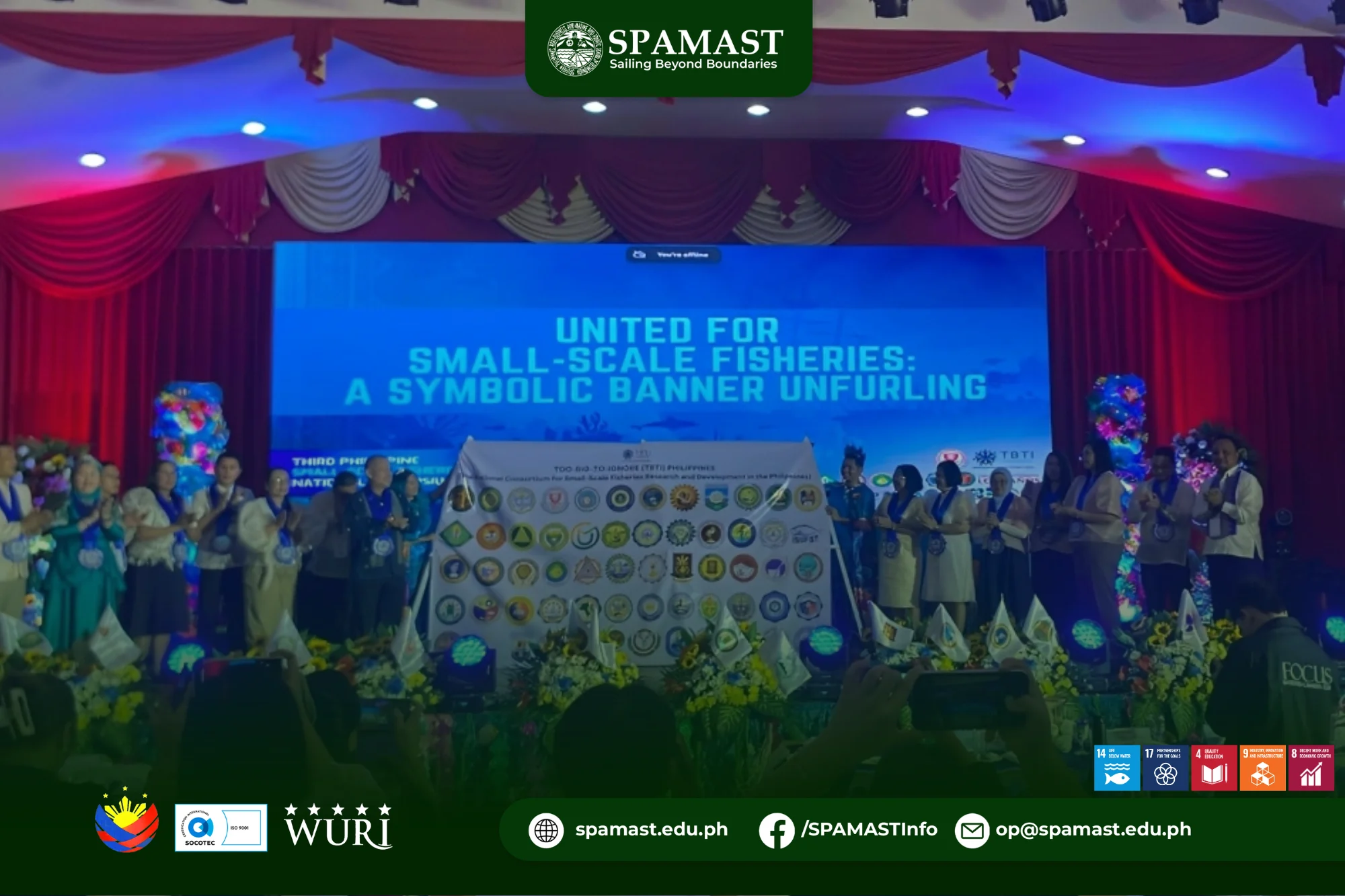
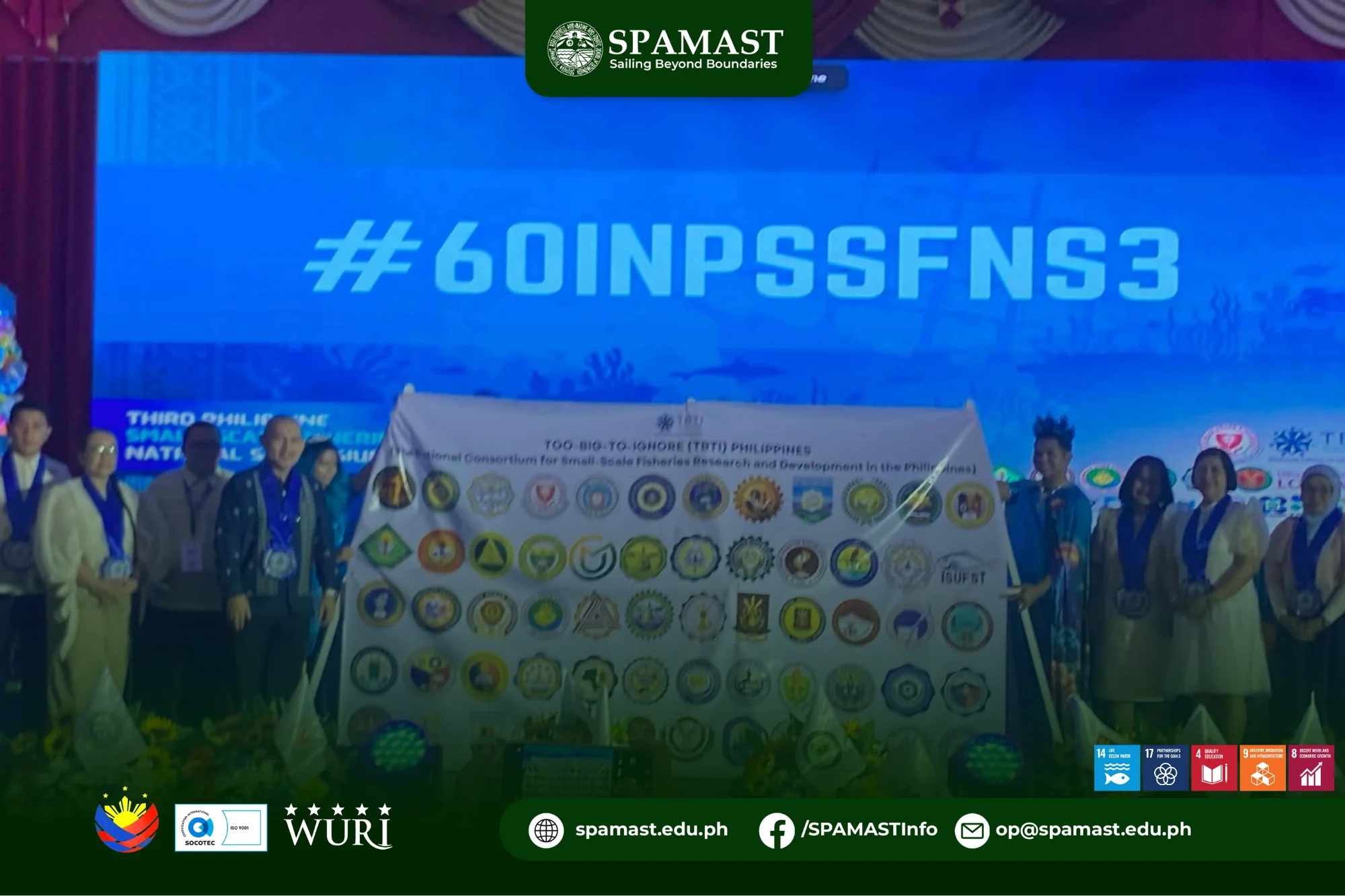
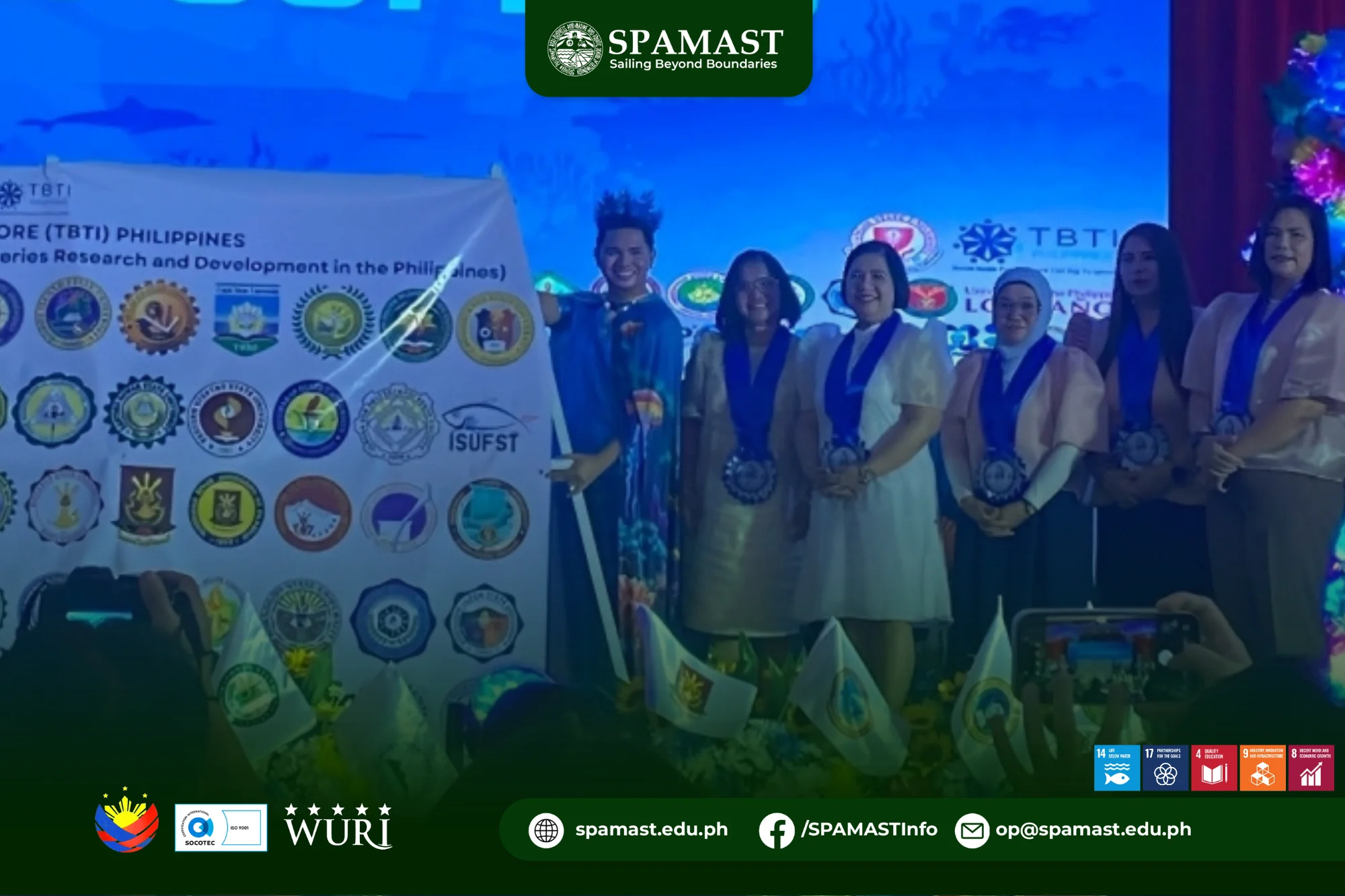
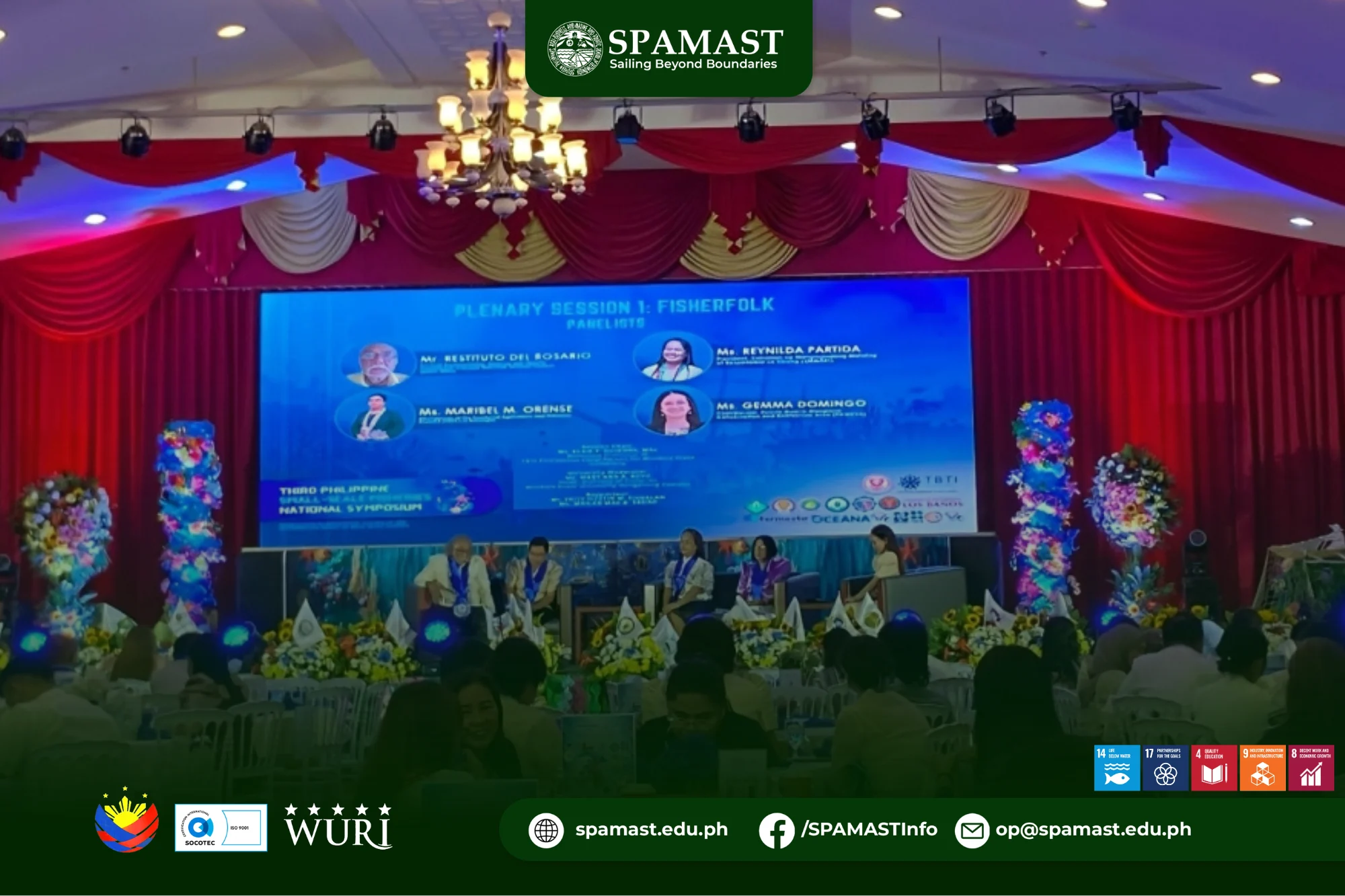
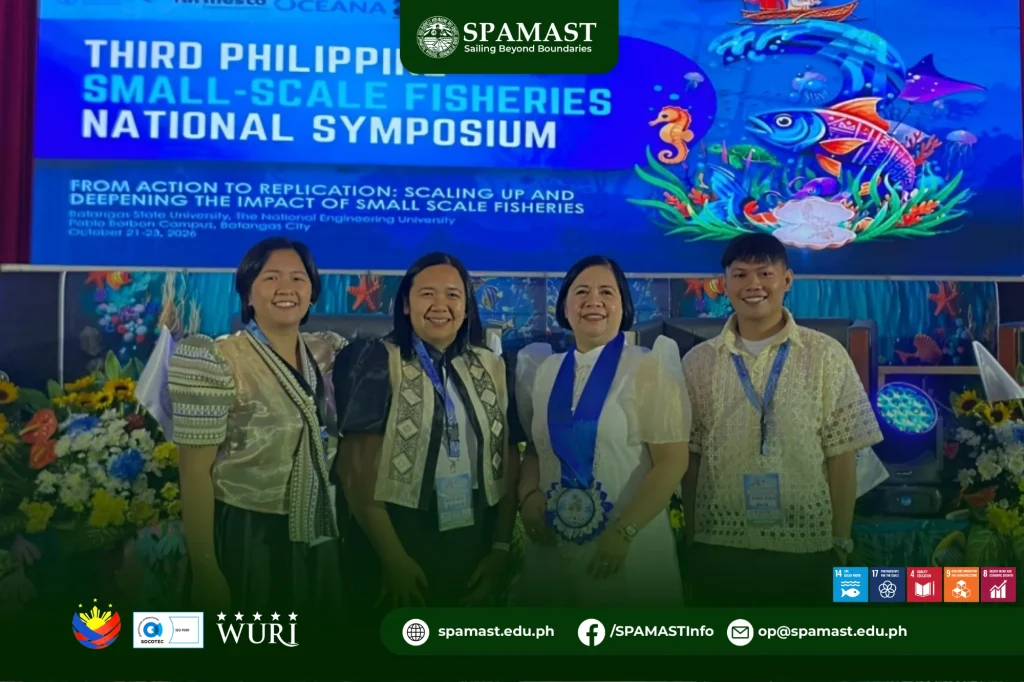
 The Southern Philippines Agri-Business and Marine and Aquatic School of Technology (SPAMAST) joins fellow higher education institutions, researchers, policymakers, and fisheries stakeholders in the Third Philippine Small-Scale Fisheries National Symposium (PSSFNS 3), held on October 21–23, 2026, at Narra Hall, 5/F Jose Rizal Building, Batangas State University Pablo Borbon, Batangas City.
Anchored on the theme, “From Action to Replication: Scaling Up and Deepening the Impact of Small-Scale Fisheries,” the symposium provides a national platform for sharing research findings, exchanging innovative practices, and strengthening collaborative efforts toward sustainable small-scale fisheries and resilient coastal communities.
Representing SPAMAST are Dr. Lynette A. Bontia, College President; Prof. Jessa May D. Marquez, Dean of the Institute of Fisheries and Marine Sciences (IFMS); Prof. Chelmarie Clavano, Program Head of Fisheries; and Mr. Ryan C. Milla, IFMS faculty member. Their participation underscores the College’s commitment to advancing fisheries education, research, innovation, and community-centered development.
The three-day gathering brings together diverse stakeholders to discuss strategies for strengthening the sustainability, economic viability, and governance of small-scale fisheries in the Philippines. It also highlights the importance of evidence-based and replicable initiatives that respond to the needs of fishing communities while promoting the responsible management of marine and coastal resources.
For SPAMAST, participation in the symposium reinforces its role as a higher education institution committed to producing relevant knowledge, developing competent fisheries professionals, and supporting communities whose livelihoods depend on aquatic and marine resources. Through engagement in national academic platforms, the College strengthens opportunities for institutional collaboration, research dissemination, and the adoption of innovative approaches that can create lasting benefits for the fisheries sector.
The activity advances several United Nations Sustainable Development Goals (SDGs). SDG 14: Life Below Water is central to the symposium’s focus on sustainable fisheries and the conservation of marine resources. SDG 17: Partnerships for the Goals highlights the importance of collaboration among higher education institutions, government agencies, researchers, and fisheries stakeholders. SDG 4: Quality Education is reflected in knowledge sharing, research dissemination, and professional development, while SDG 9: Industry, Innovation and Infrastructure supports the promotion of research-based solutions and scalable innovations in fisheries. The symposium also contributes to SDG 8: Decent Work and Economic Growth by encouraging sustainable livelihoods and strengthening the economic resilience of small-scale fishing communities.
As the symposium brings together knowledge, experience, and shared aspirations, SPAMAST continues to strengthen its commitment to sustainable fisheries development—translating academic engagement into meaningful action for fishers, coastal communities, and future generations.