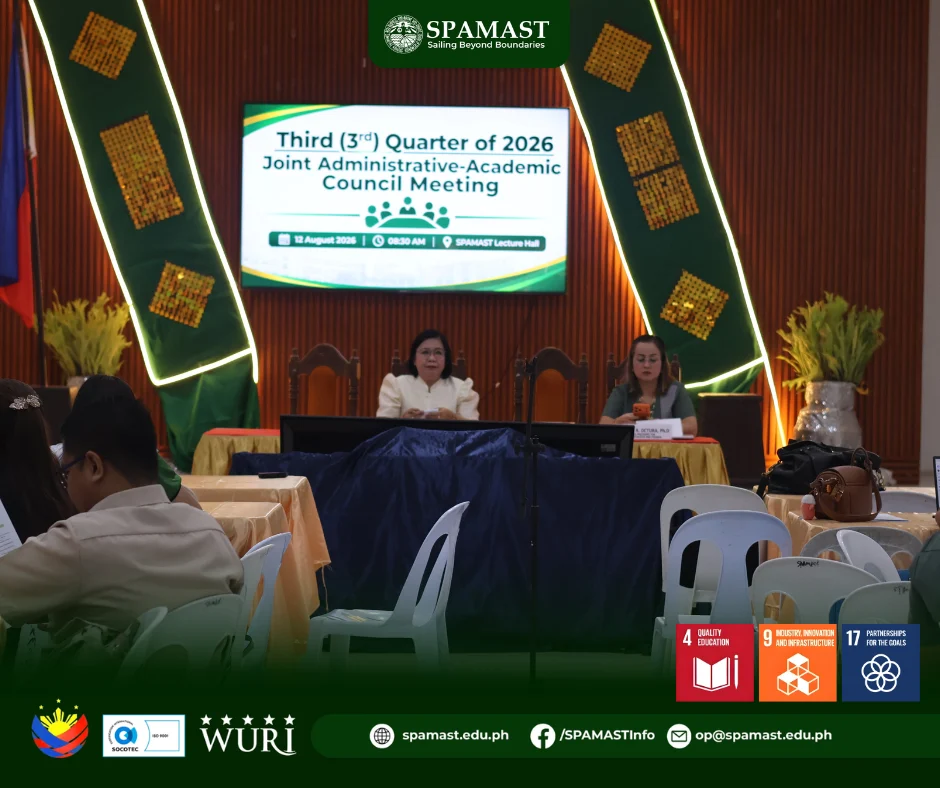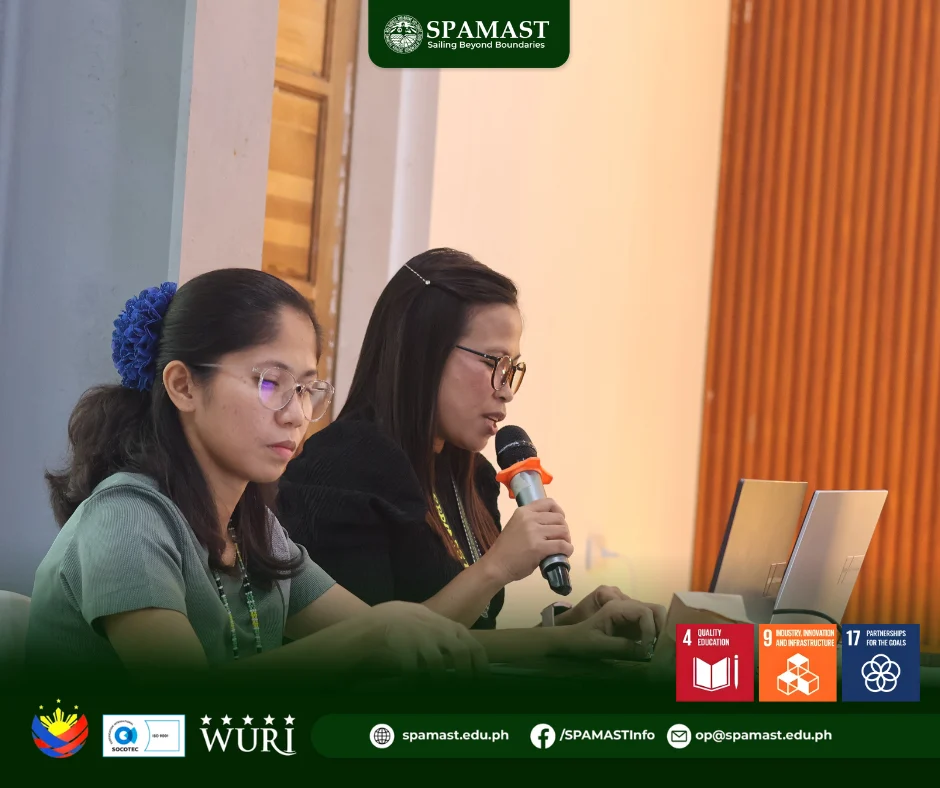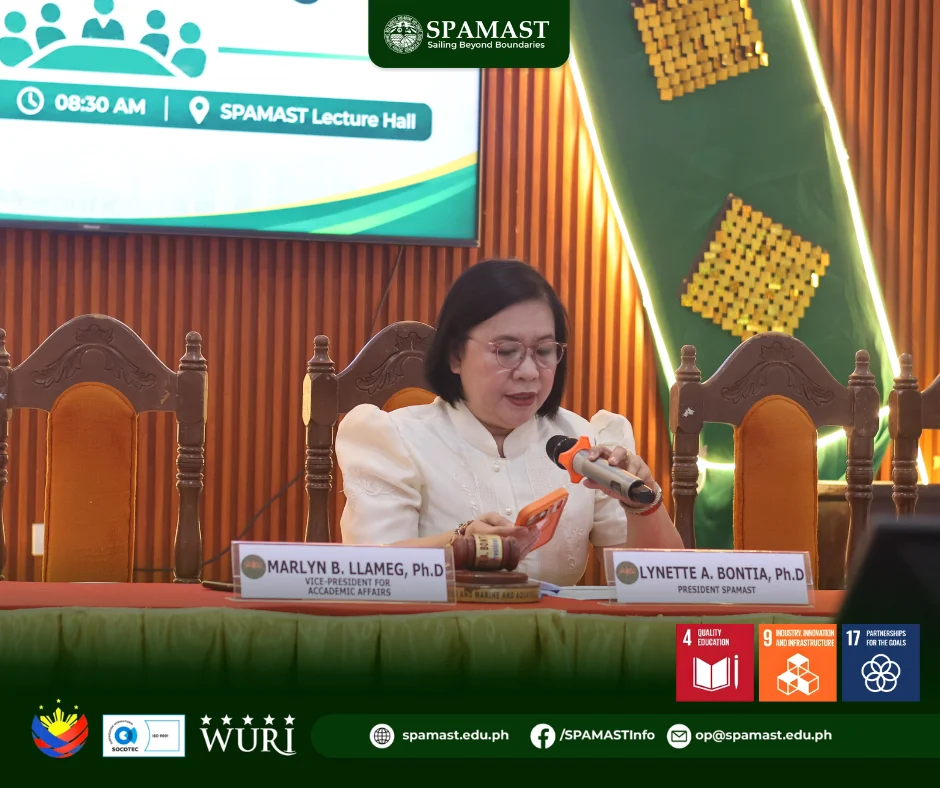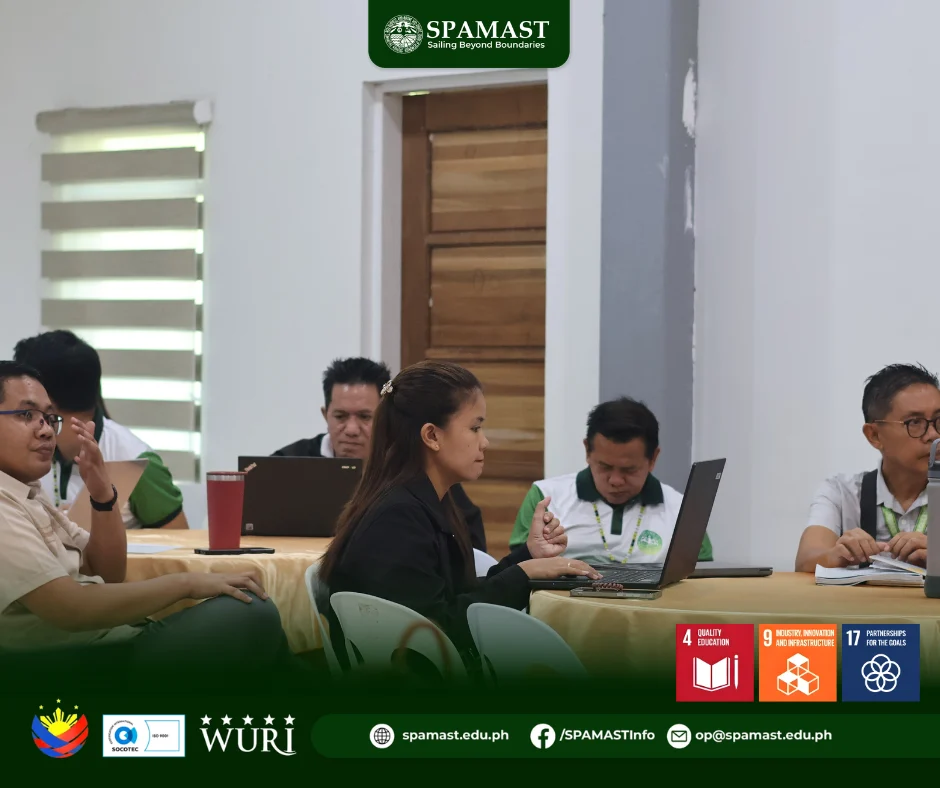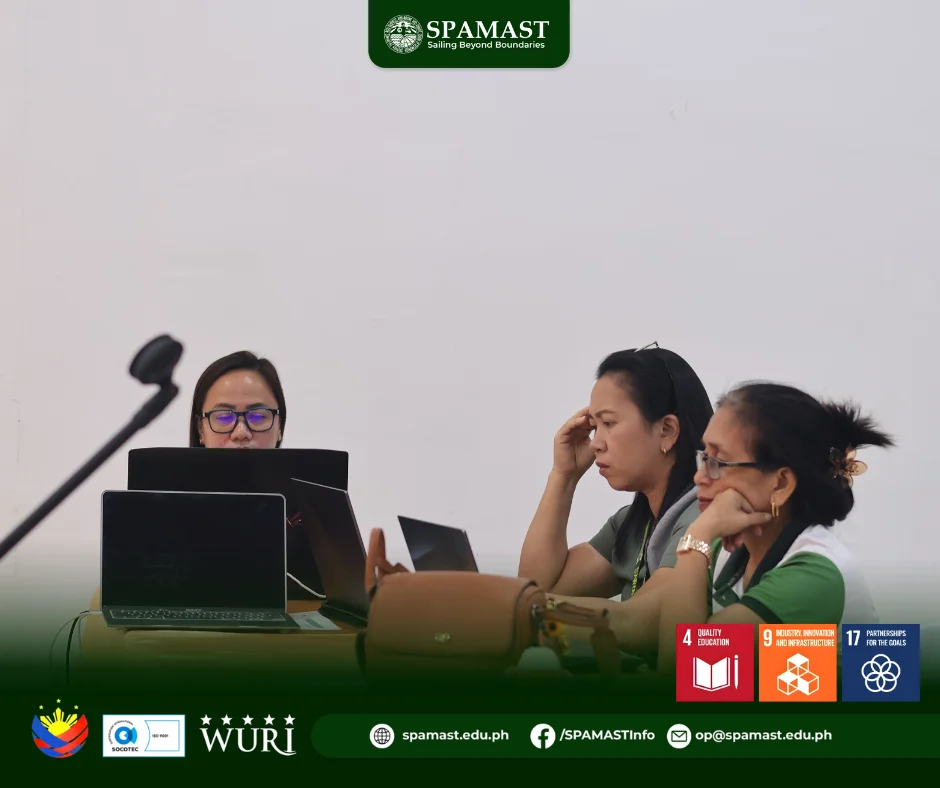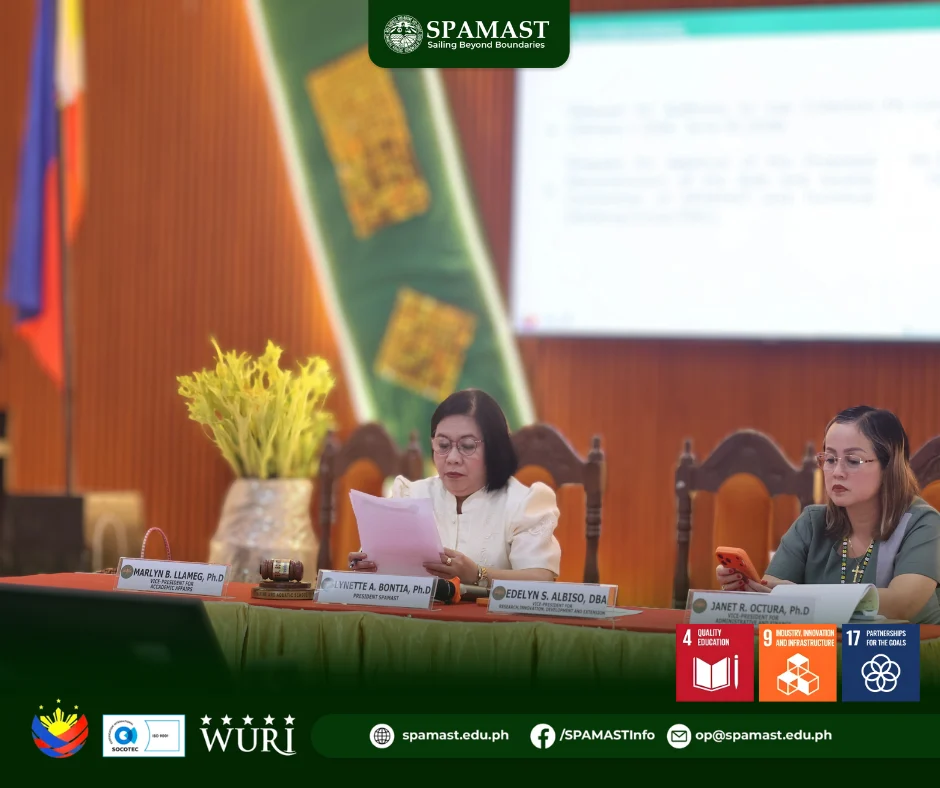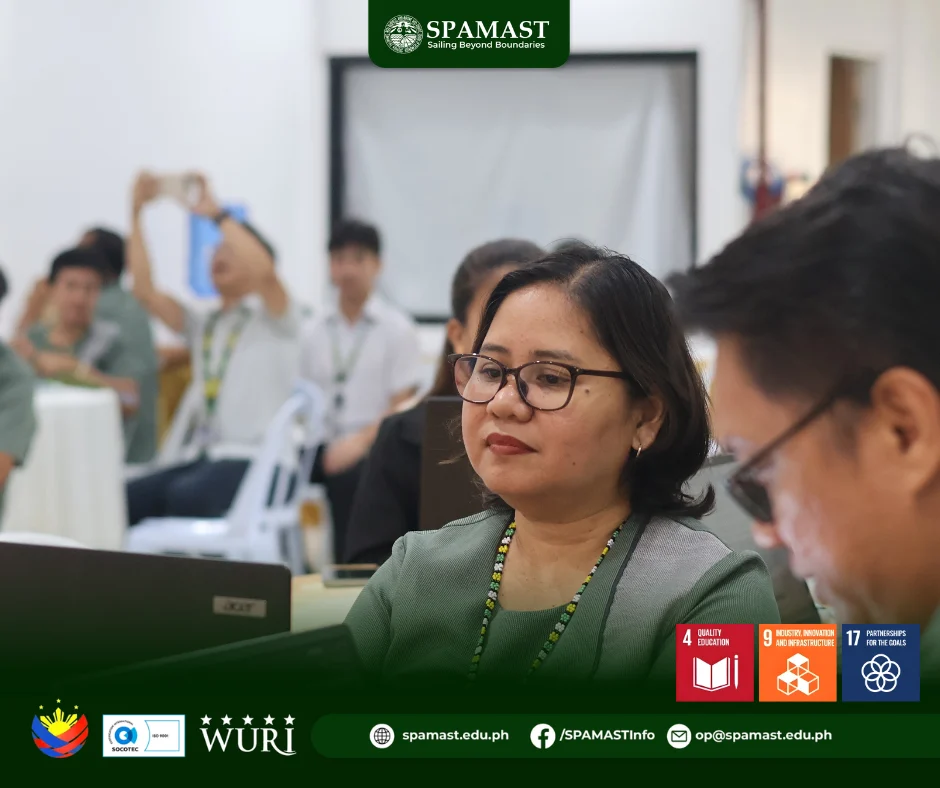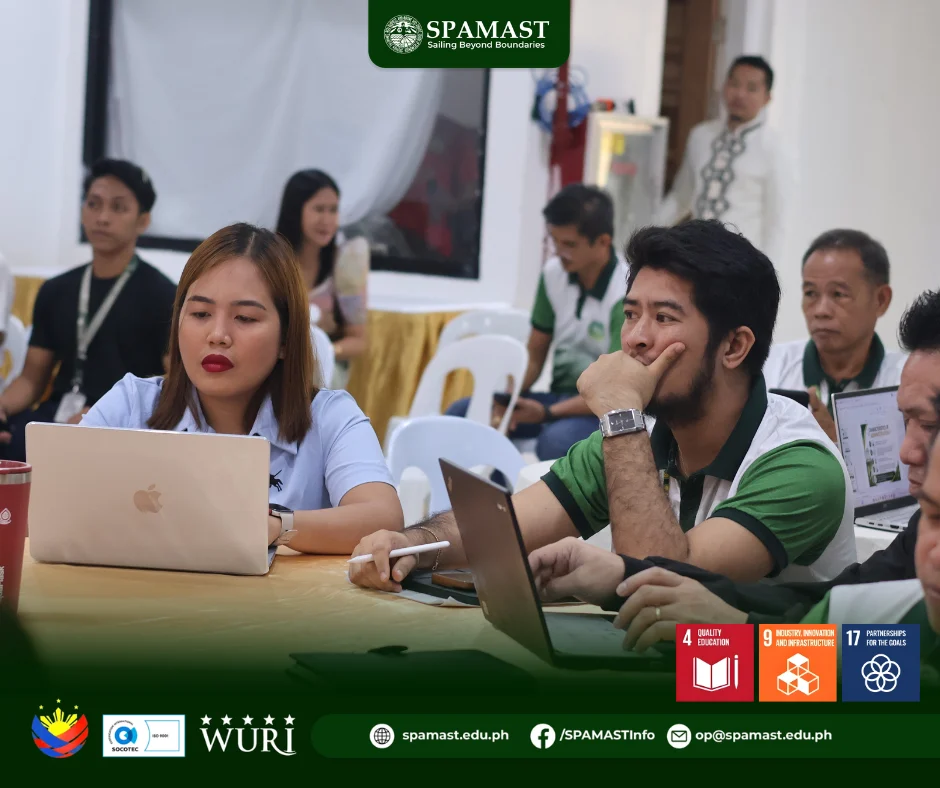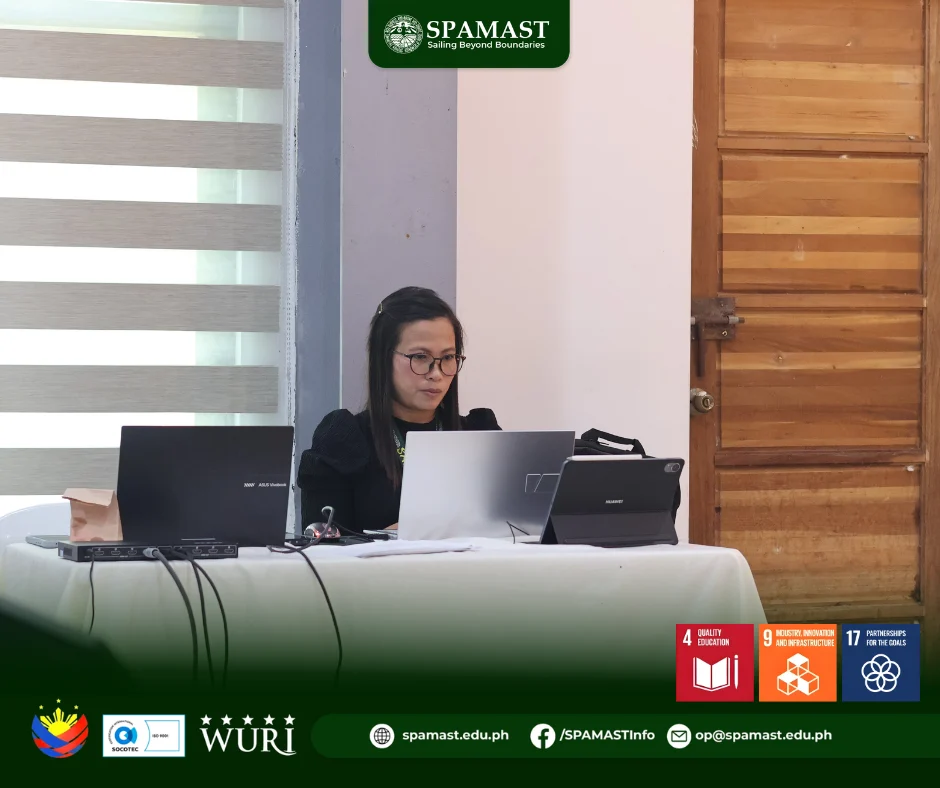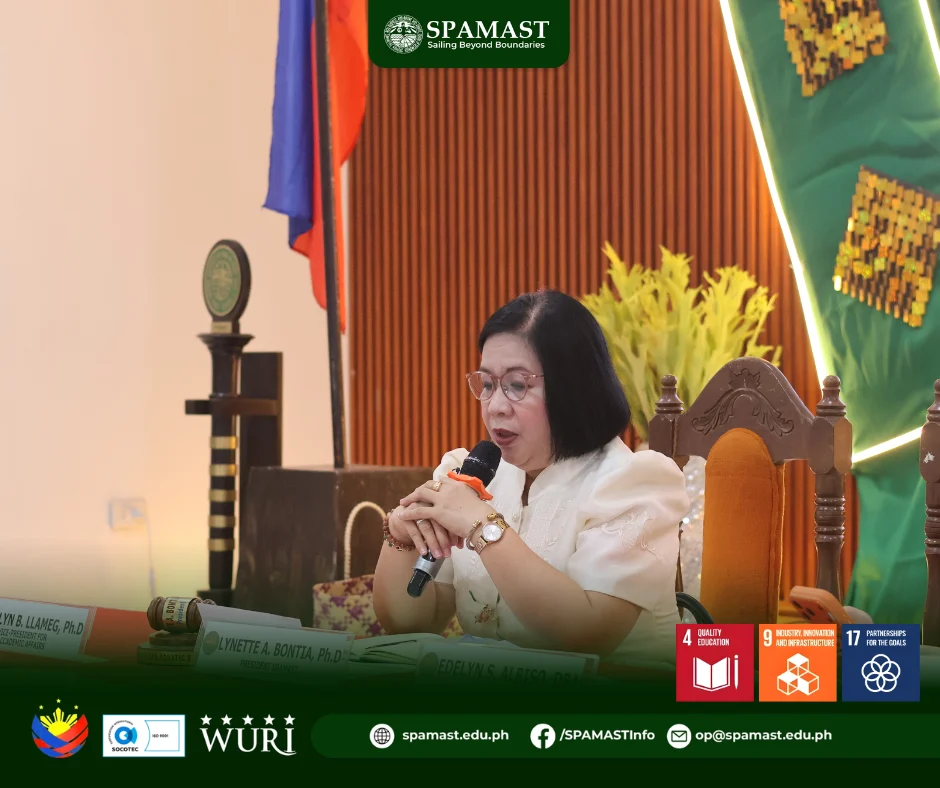
The Southern Philippines Agri-Business, Marine and Aquatic School of Technology (SPAMAST) conducted its Third Quarter 2026 Joint Administrative and Academic Councils Meeting on August 12, 2026, at 8:30 AM at the SPAMAST Lecture Hall.
The meeting was spearheaded by SPAMAST College President Dr. Lynette A. Bontia, who led the council members in discussing key institutional matters, ongoing programs and initiatives, and priorities for the succeeding quarter.
The joint meeting brought together members of the Administrative and Academic Councils to strengthen coordination among the College’s different offices and academic units and to ensure that institutional plans, programs, and activities remain aligned with SPAMAST’s strategic directions.
The meeting served as a venue for the presentation and discussion of important updates, concerns, recommendations, and matters requiring collective action to support the effective delivery of the College’s academic, administrative, research, extension, and support services.
Under the leadership of Dr. Bontia, the discussions emphasized collaborative governance, informed decision-making, accountability, and continuous institutional improvement. Council members actively participated in addressing matters relevant to the College’s operations and in identifying appropriate actions to further advance institutional goals.
The conduct of the meeting contributes to the College’s commitment to the United Nations Sustainable Development Goals (SDGs), particularly SDG 4: Quality Education, through efforts to strengthen academic and institutional systems; SDG 9: Industry, Innovation and Infrastructure, through the continuous improvement of institutional processes, programs, and support systems; and SDG 17: Partnerships for the Goals, through strengthened collaboration, coordination, and shared governance among the College’s offices and academic units.
The Third Quarter Joint Administrative and Academic Councils Meeting reflects SPAMAST’s continuing commitment to responsive, participatory, and strategic governance in pursuit of quality higher education, innovation, institutional excellence, and sustainable development.