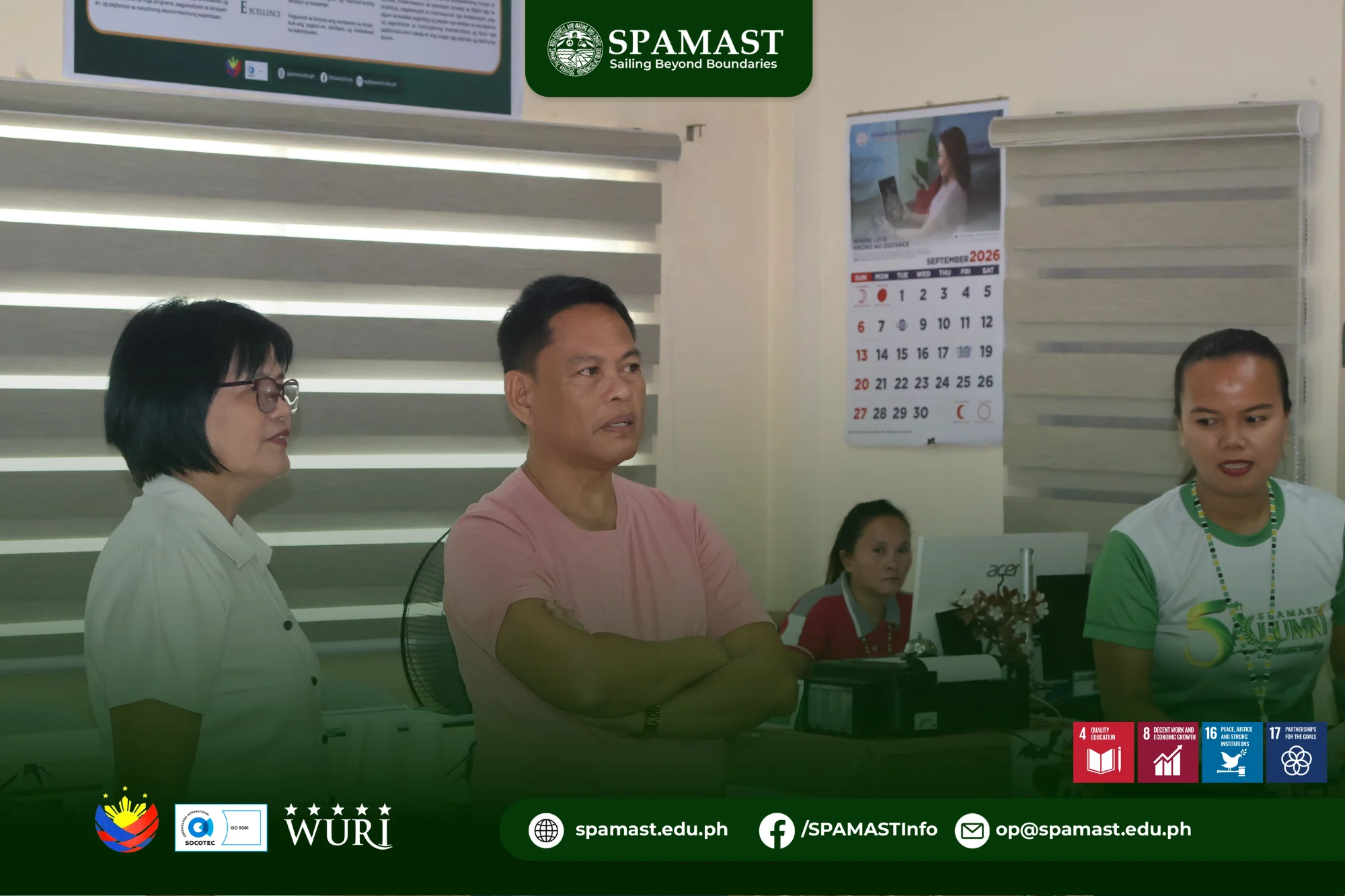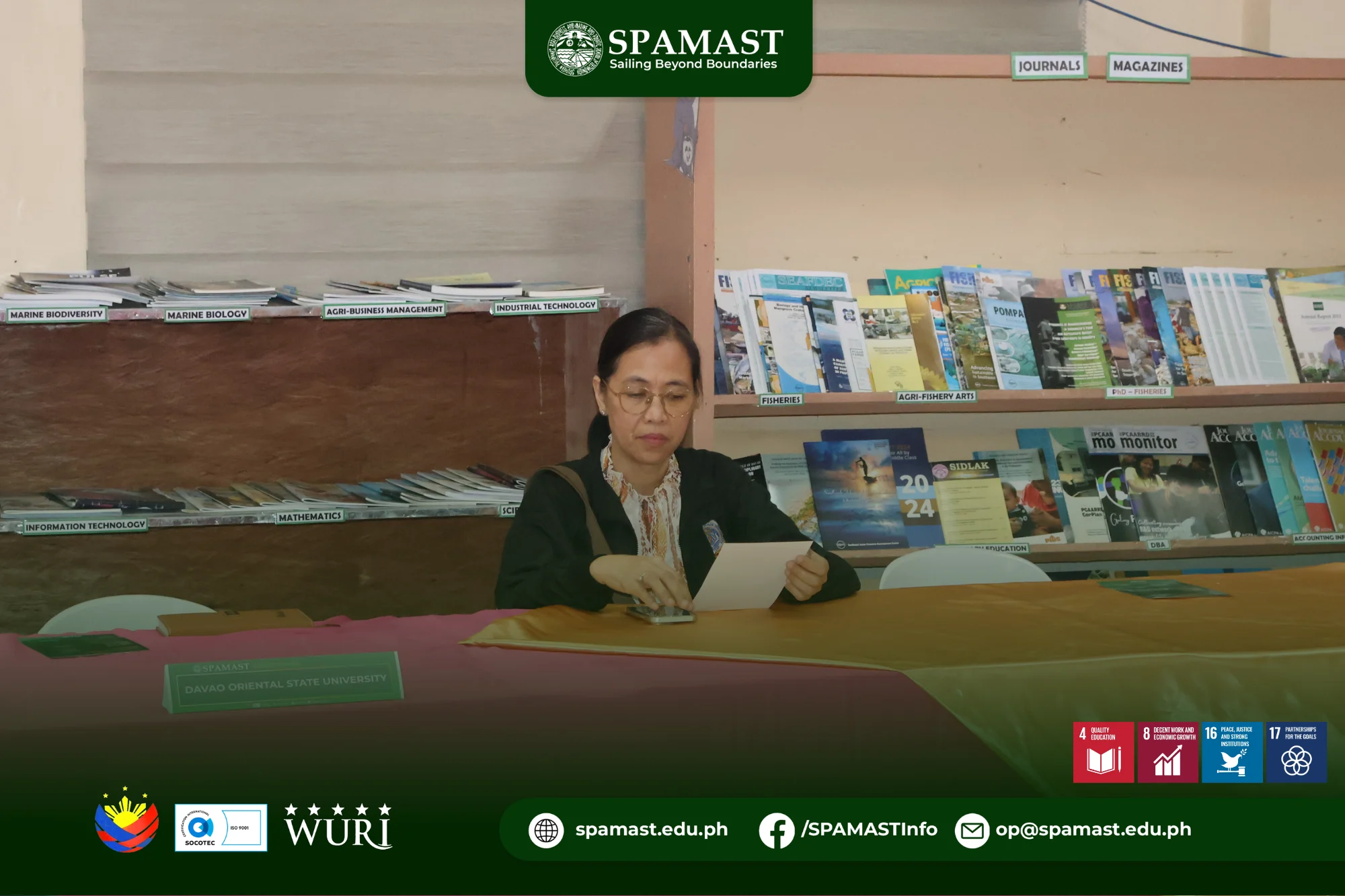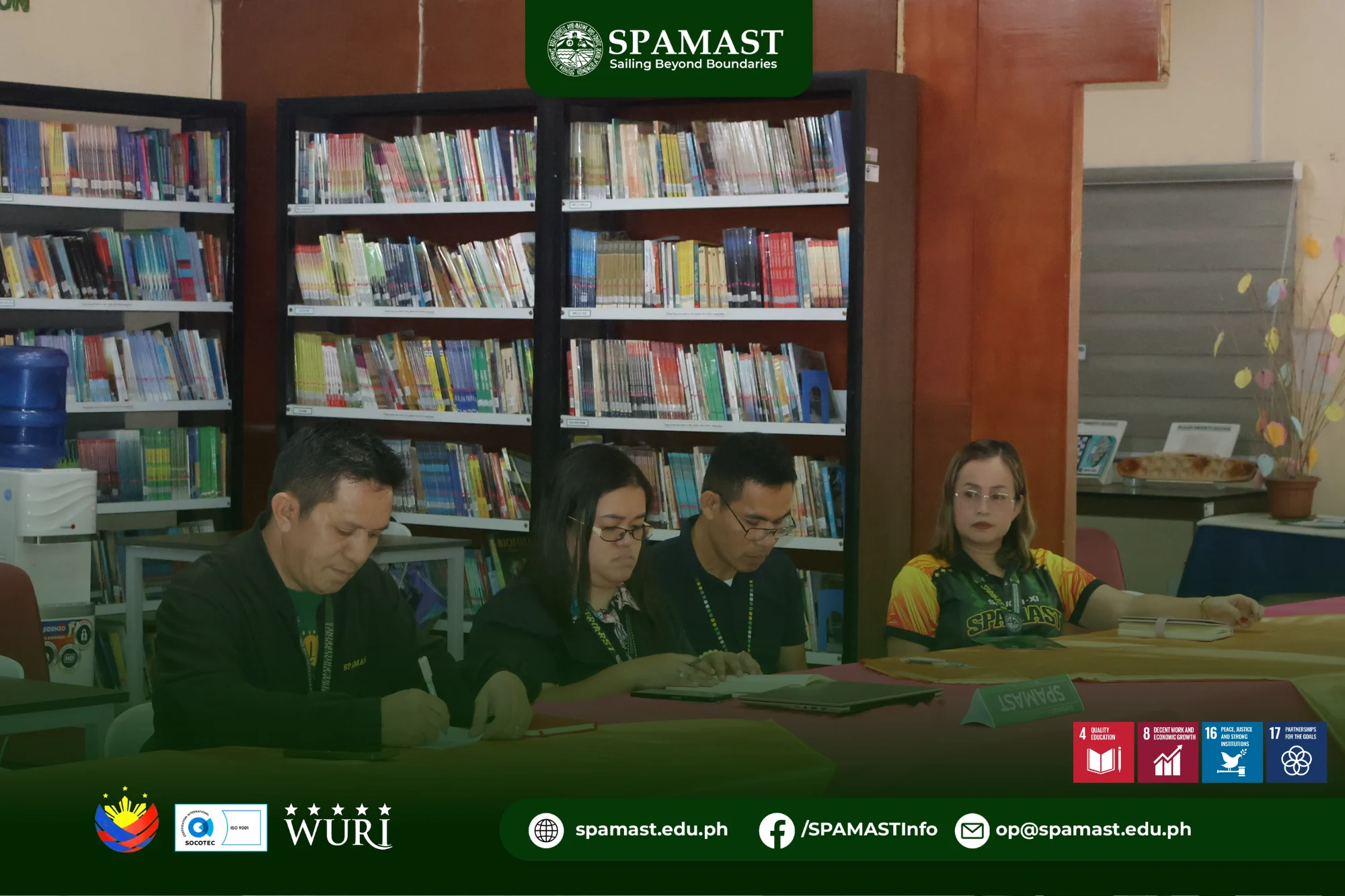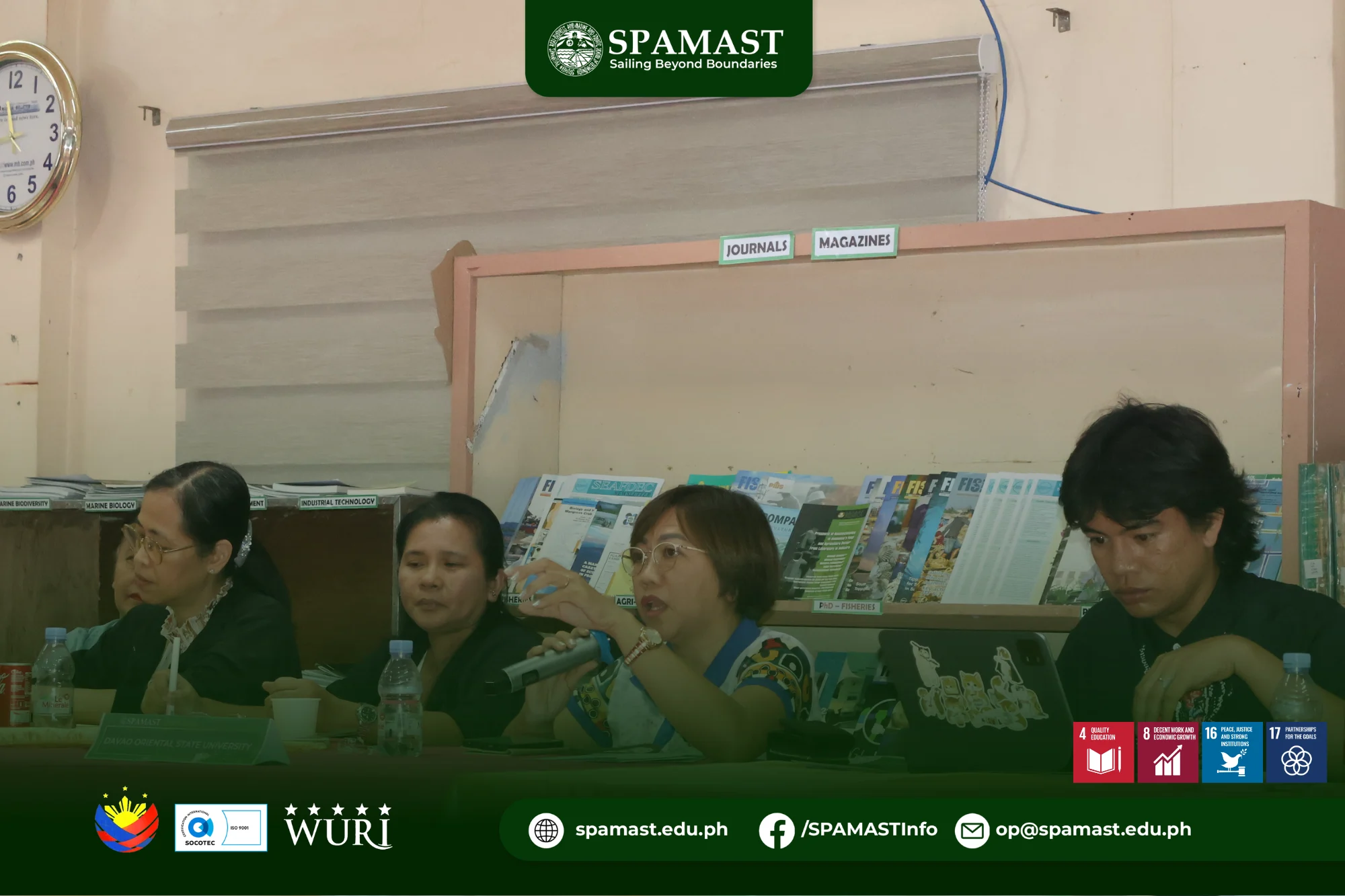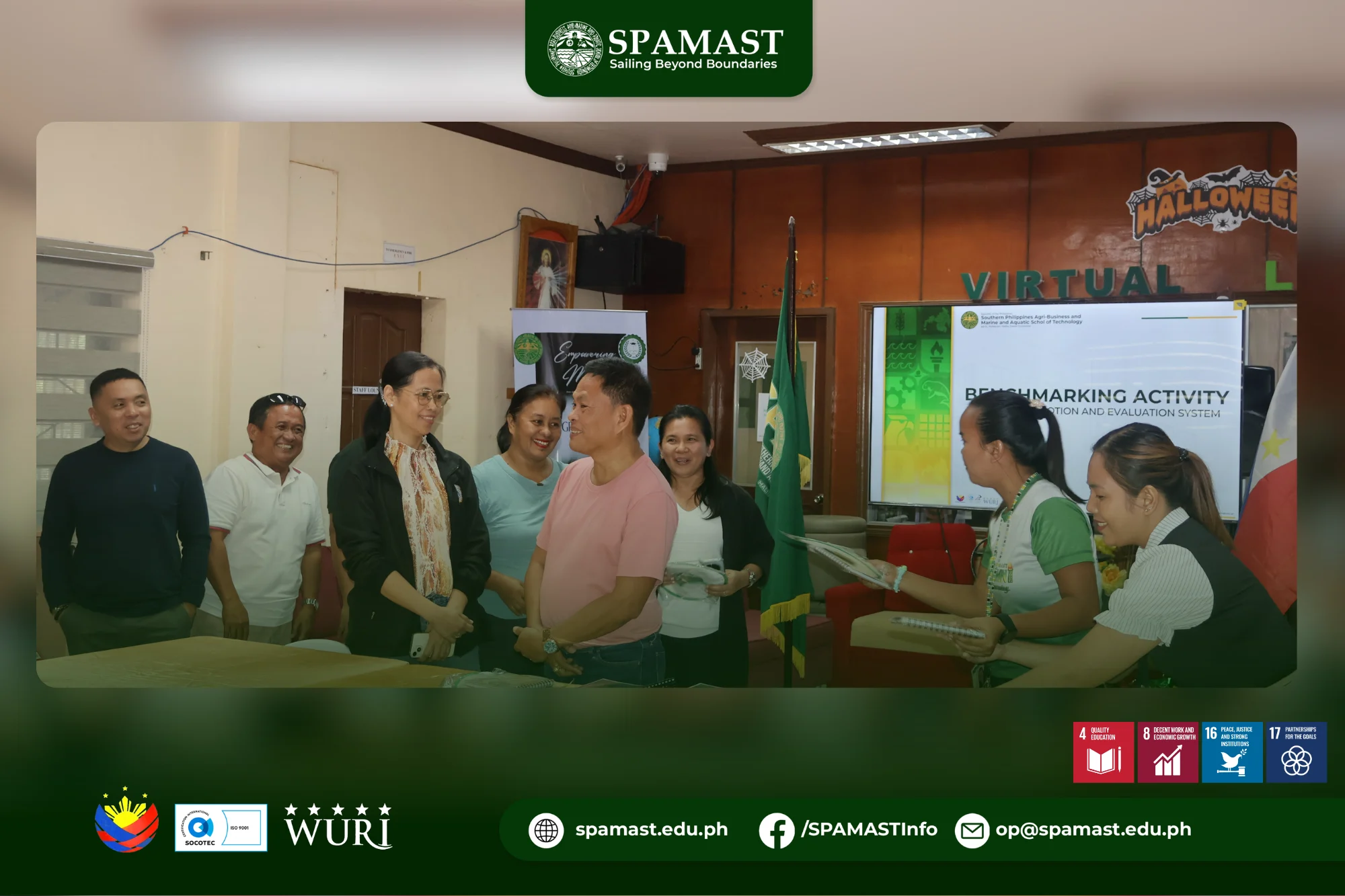
MALITA, Davao Occidental | October 22, 2026 — The Southern Philippines Agri-Business and Marine and Aquatic School of Technology (SPAMAST) hosted a benchmarking activity with Davao Oriental State University (DOrSU) on October 22 at the SPAMAST Main Campus in Malita, Davao Occidental, to exchange institutional practices and strengthen procedures for faculty promotion and evaluation.
The activity provided an avenue for both institutions to discuss policies, evaluation procedures, documentary requirements, and administrative mechanisms governing faculty promotion. It also highlighted the importance of transparent, consistent, and well-coordinated processes in recognizing faculty qualifications and supporting professional advancement within higher education institutions.
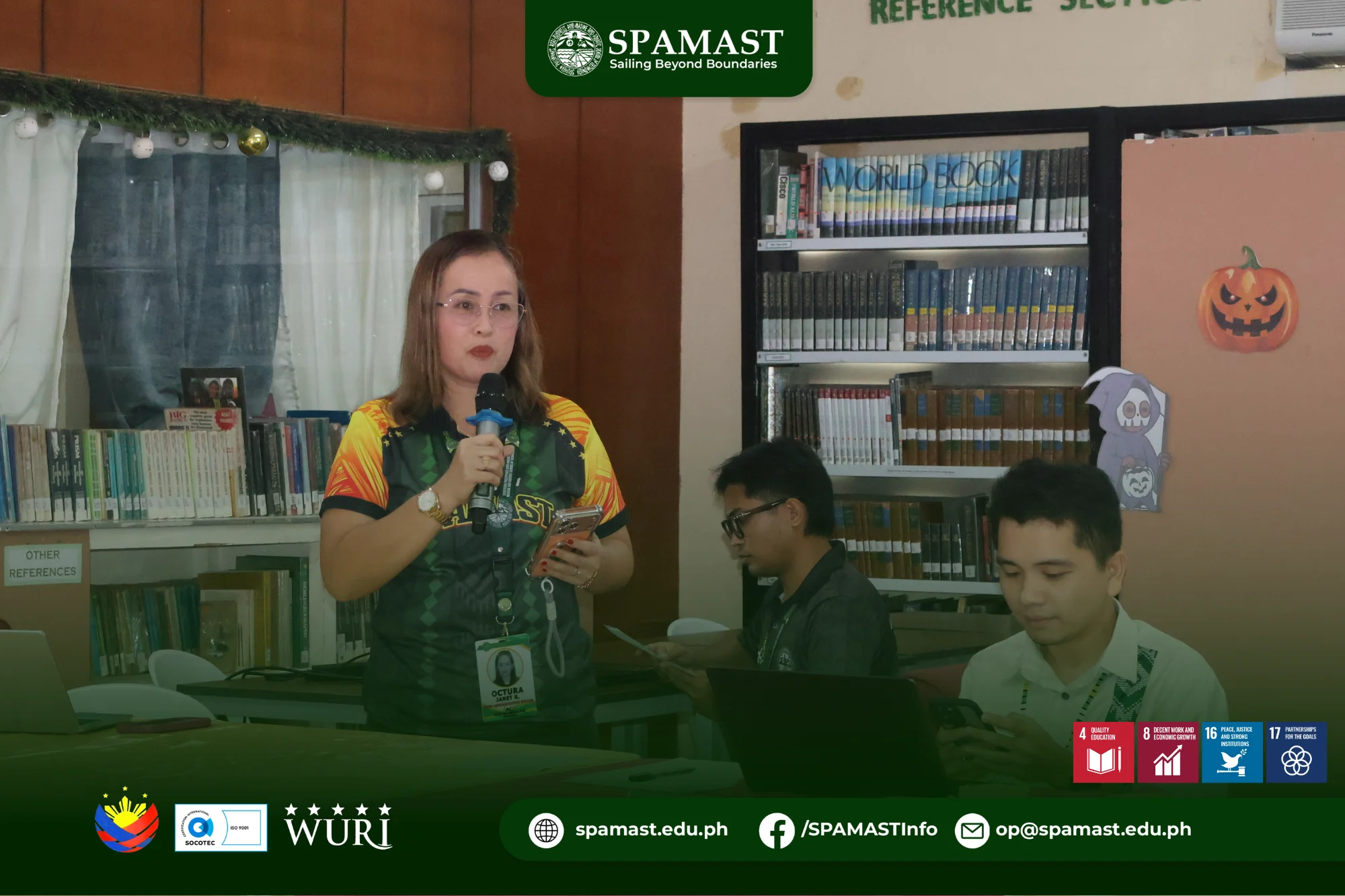
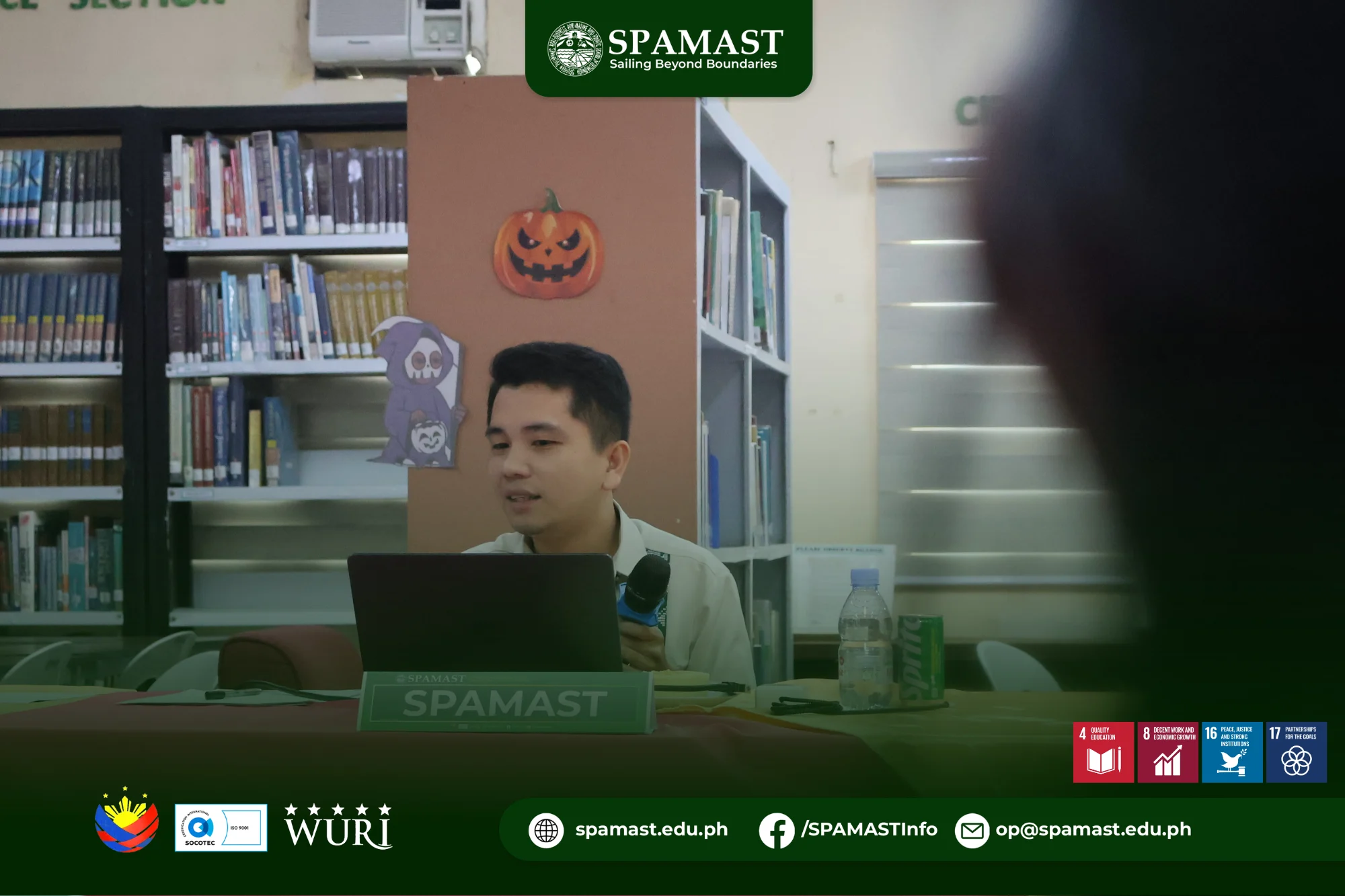
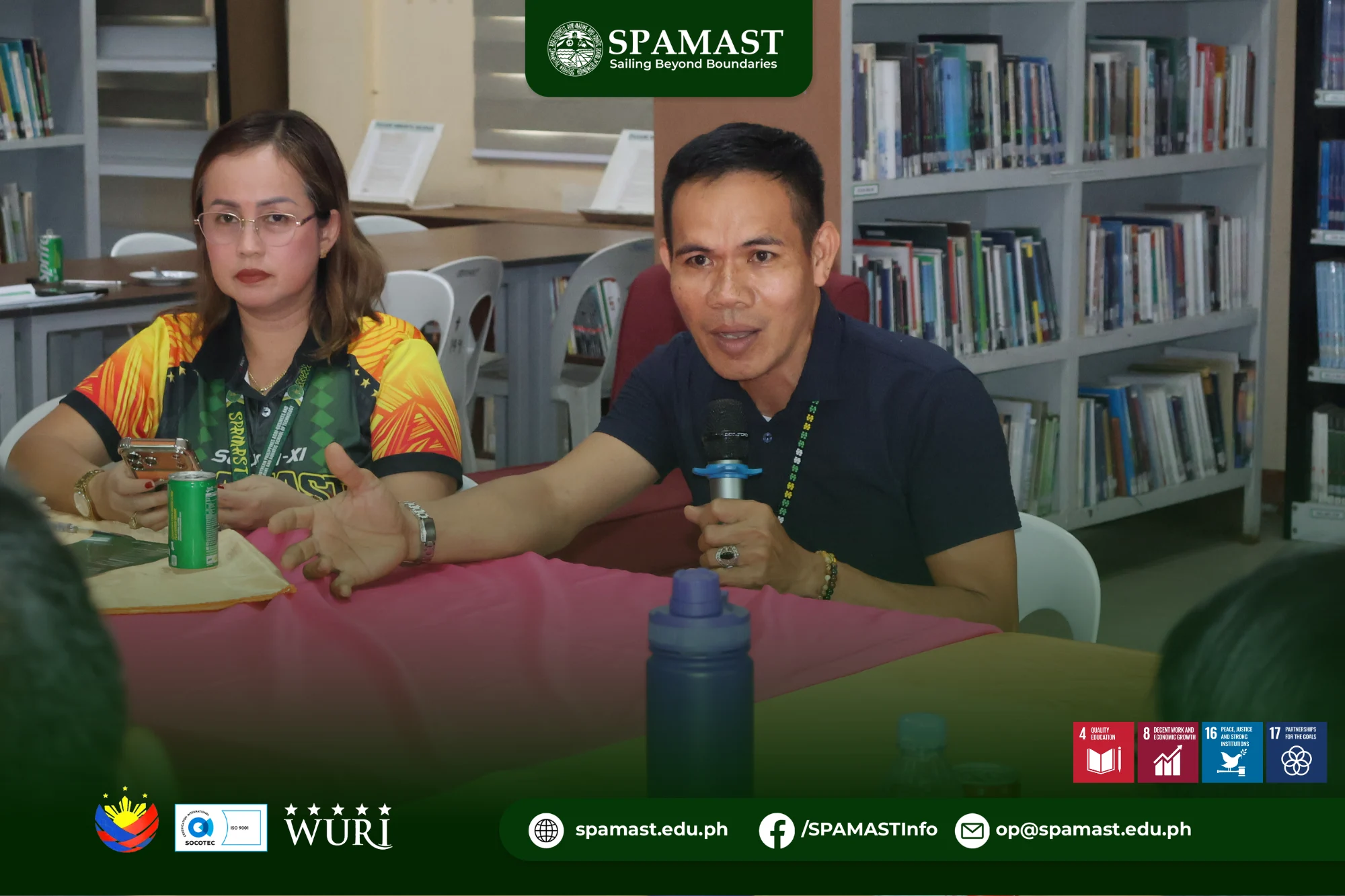
Representing SPAMAST President Dr. Lynette A. Bontia, Vice President for Administration and Finance Dr. Janet R. Octura delivered the opening remarks. Meanwhile, Dr. Edito B. Sumile, Vice President for Academic Affairs of DOrSU, represented his institution and headed the visiting delegation. The program also featured an audio-visual presentation of SPAMAST’s institutional profile, followed by the introduction of the DOrSU delegation and the presentation of SPAMAST personnel.
The benchmarking discussions covered institutional policies and implementing guidelines on faculty chain promotion, the composition and functions of committees and offices involved in the process, and the procedures, evaluation criteria, and documentary requirements for promotion and approval.
Participants also examined monitoring mechanisms and coordination among academic units, the human resource office, and the governing board. Challenges encountered during implementation and lessons learned were included in the discussions to provide practical insights into improving institutional procedures and administrative efficiency.
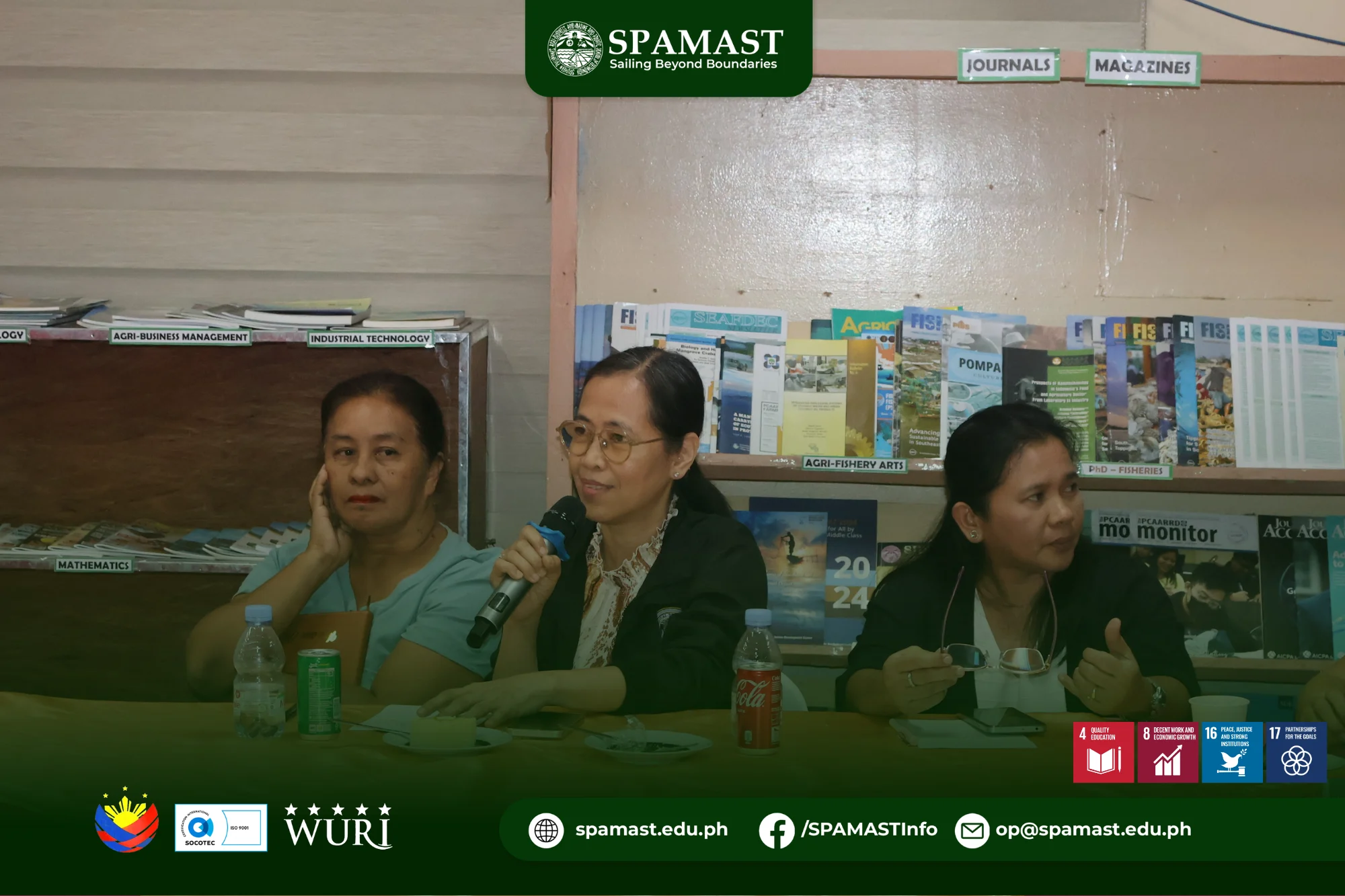
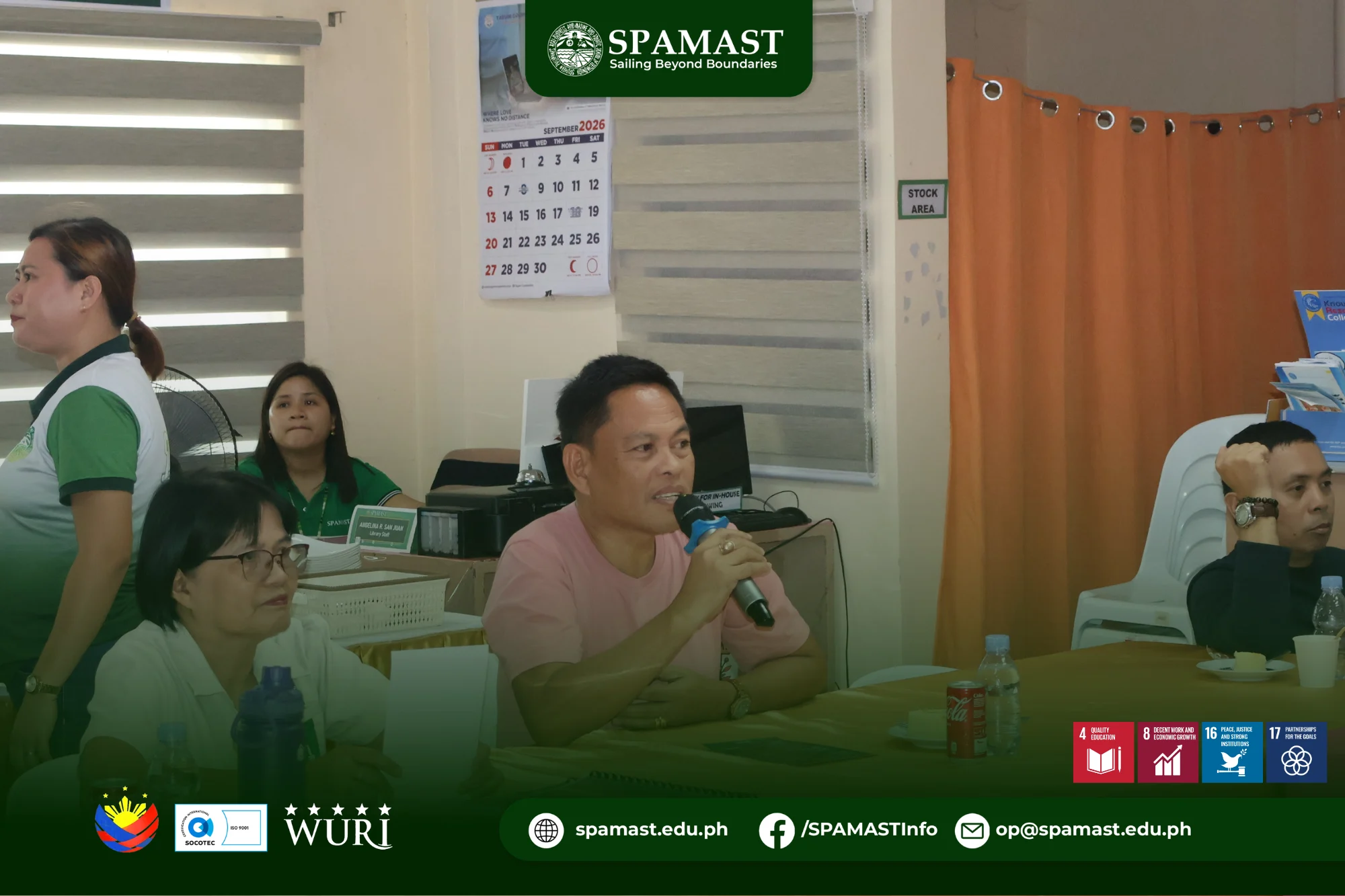
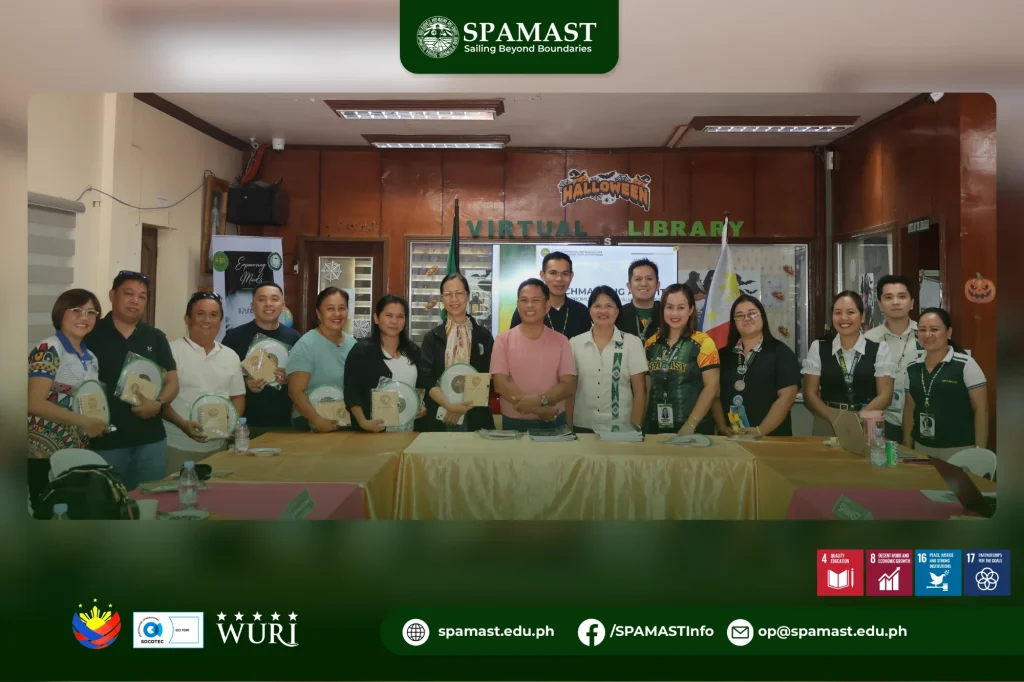
An open forum and exchange of insights allowed the participants to raise concerns, share experiences, and identify practices that could inform the continuing development of their respective faculty promotion and evaluation systems. The activity concluded with closing remarks from Vice President for Academic Affairs Dr. Marlyn B. Llameg, followed by a photo opportunity.
Through this engagement, SPAMAST reaffirmed its commitment to institutional learning, quality assurance, and the continuous improvement of human resource management practices. The exchange also underscored the value of collaboration among higher education institutions in developing fair, accountable, and effective systems that recognize faculty contributions and support academic excellence.
The benchmarking activity aligns with at least four of the United Nations Sustainable Development Goals (SDGs), particularly SDG 4: Quality Education, through the strengthening of institutional practices that support quality higher education; SDG 8: Decent Work and Economic Growth, through fair professional advancement and the development of a capable academic workforce; SDG 16: Peace, Justice and Strong Institutions, through transparent procedures, accountability, and effective institutional governance; and SDG 17: Partnerships for the Goals, through inter-institutional collaboration and the exchange of knowledge and best practices.