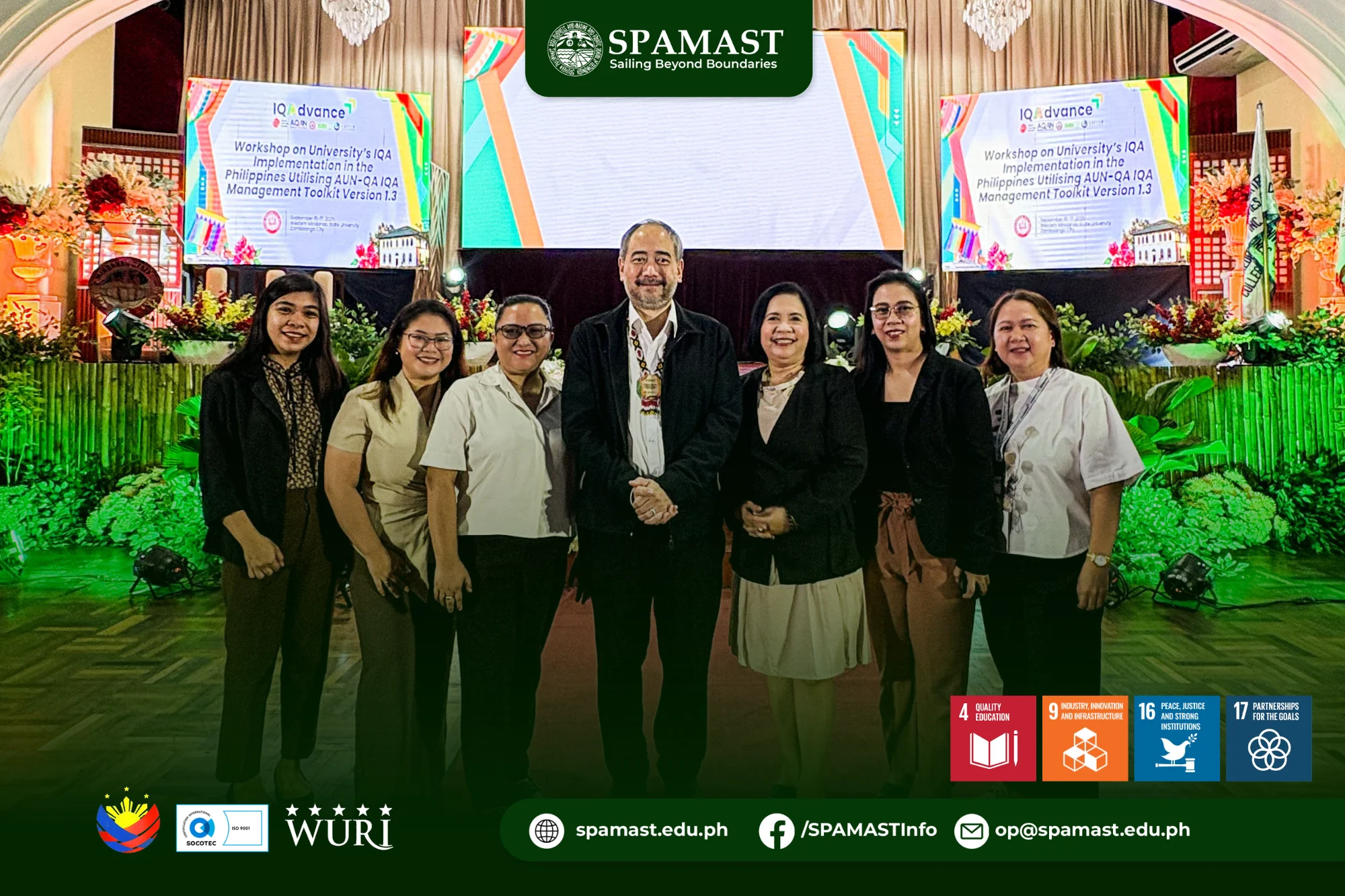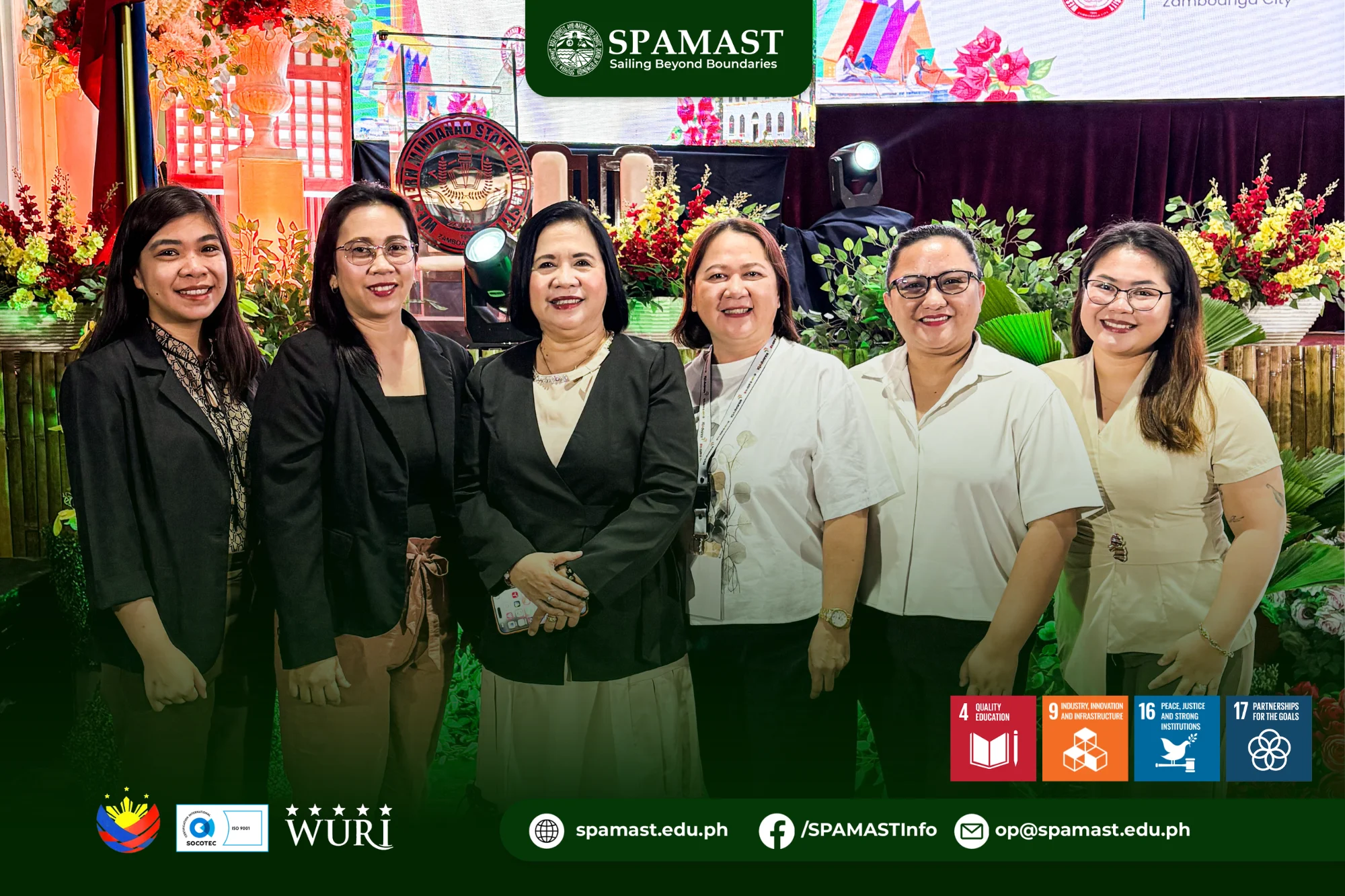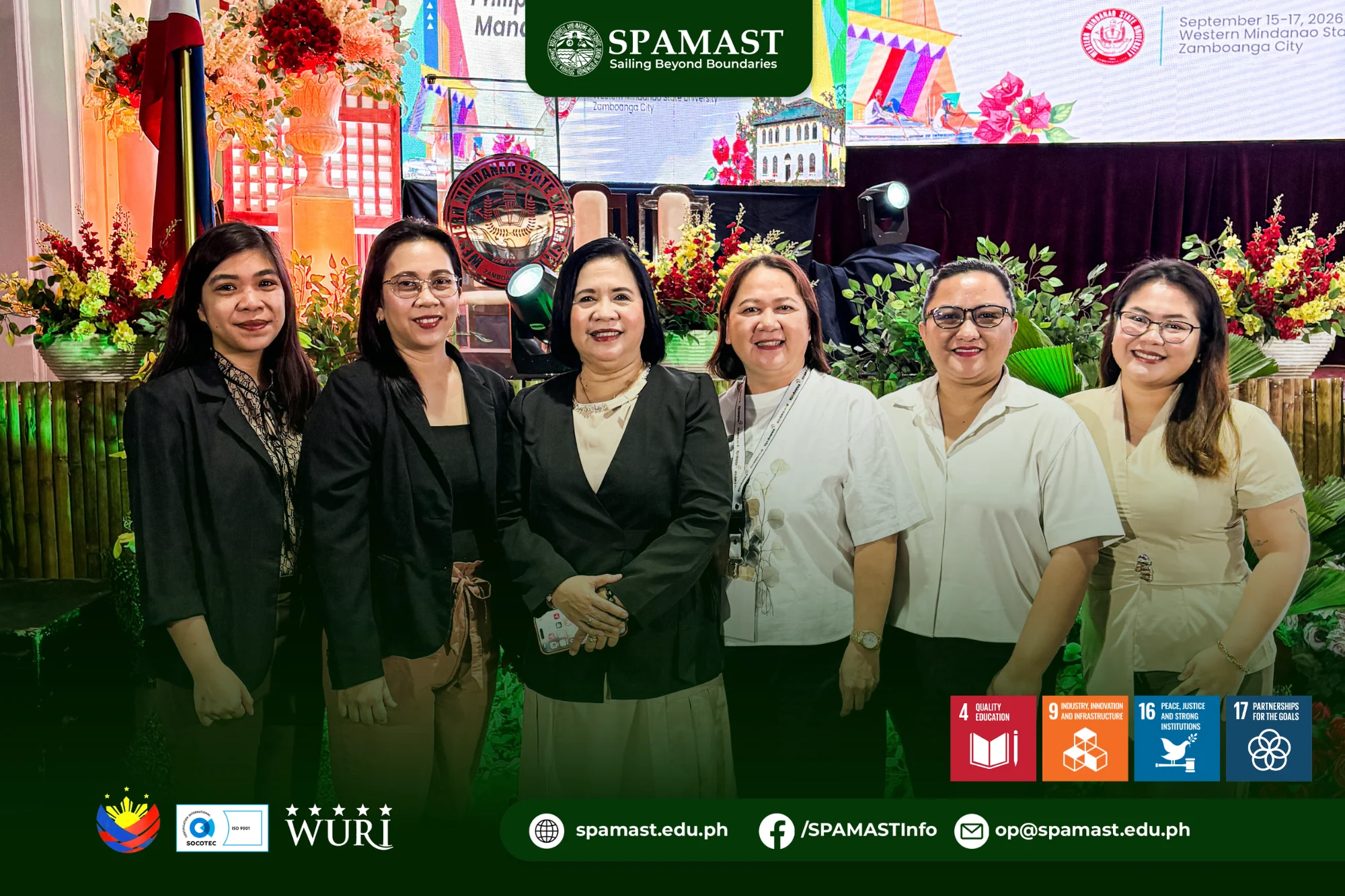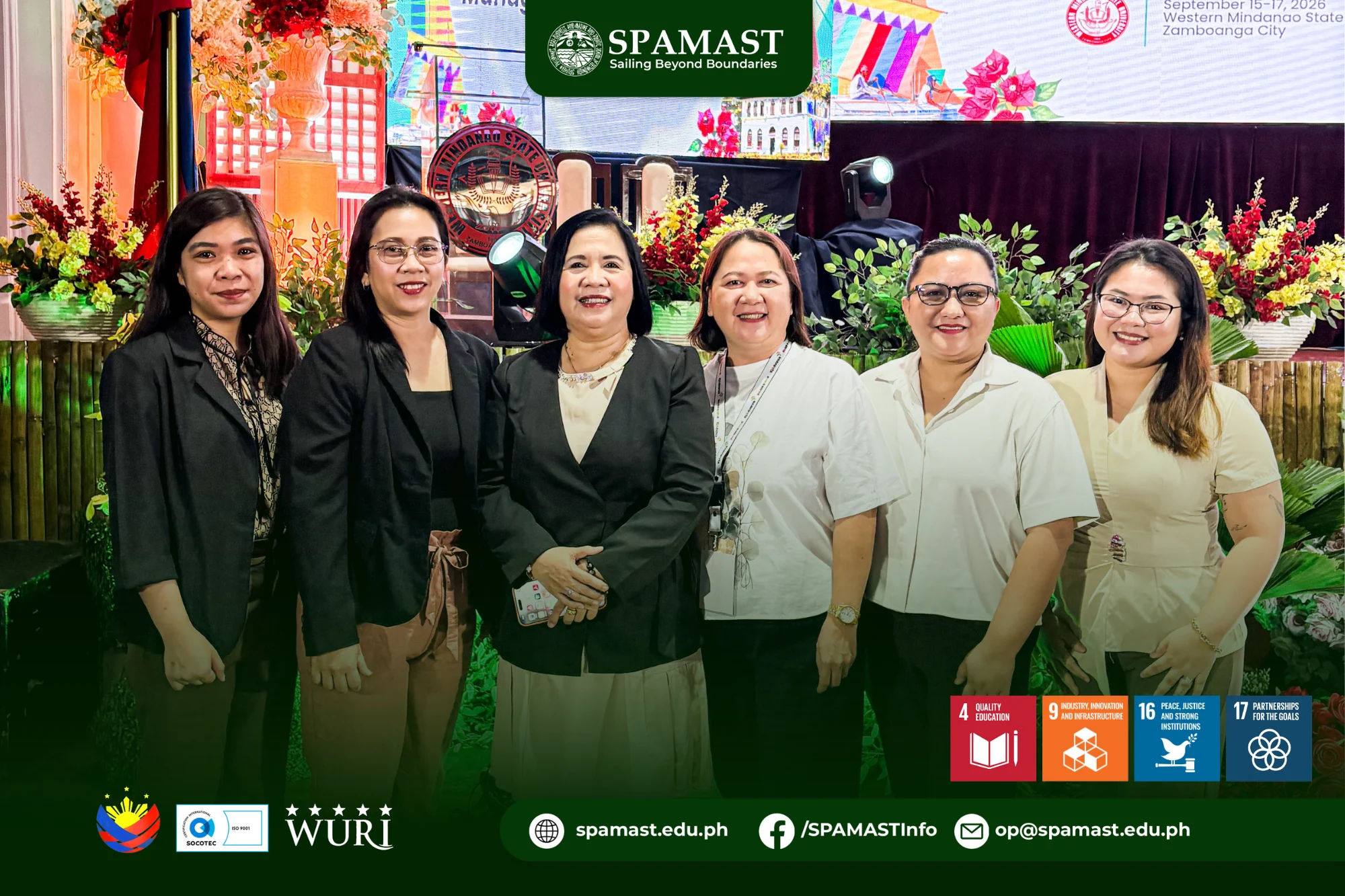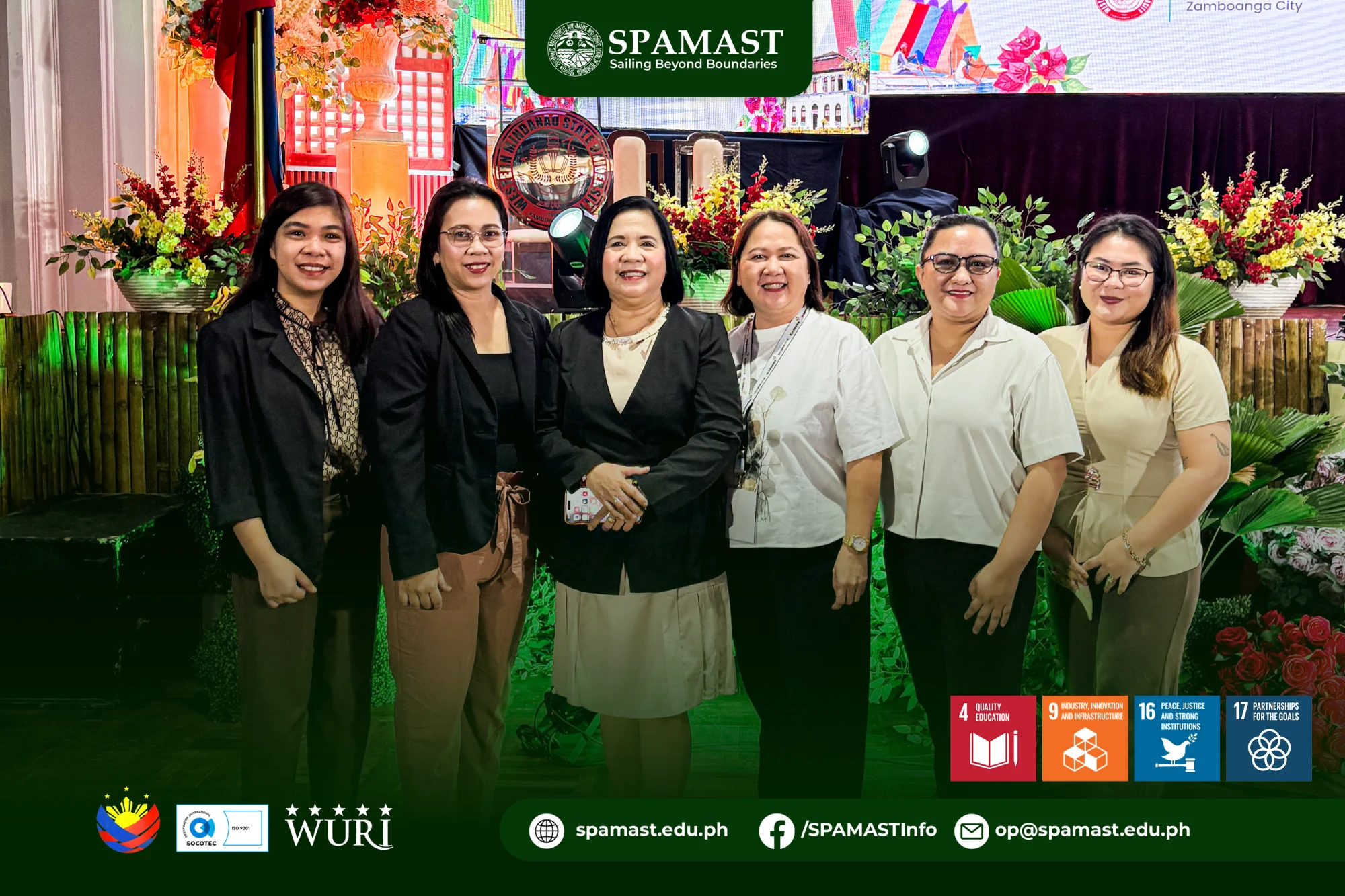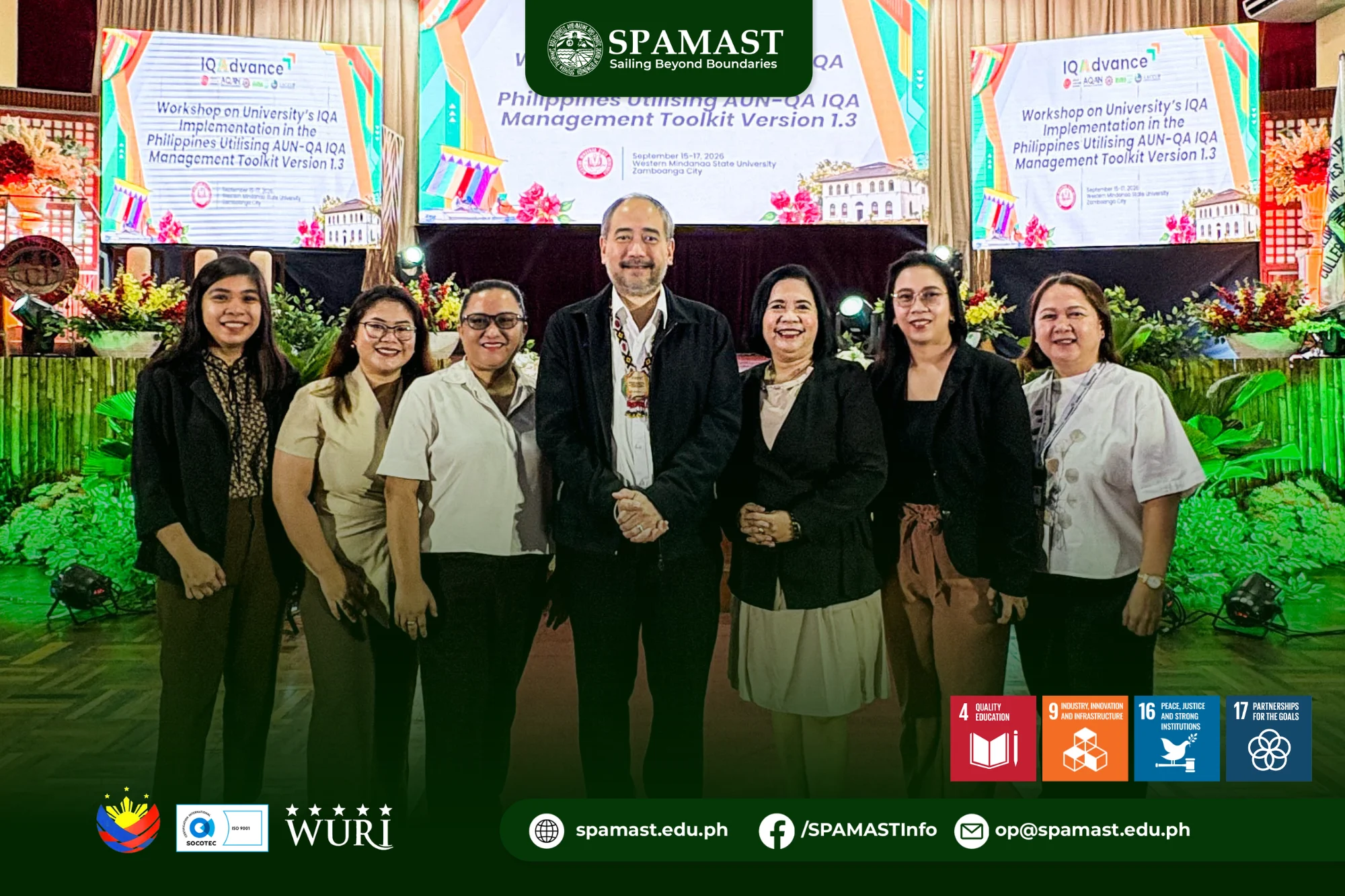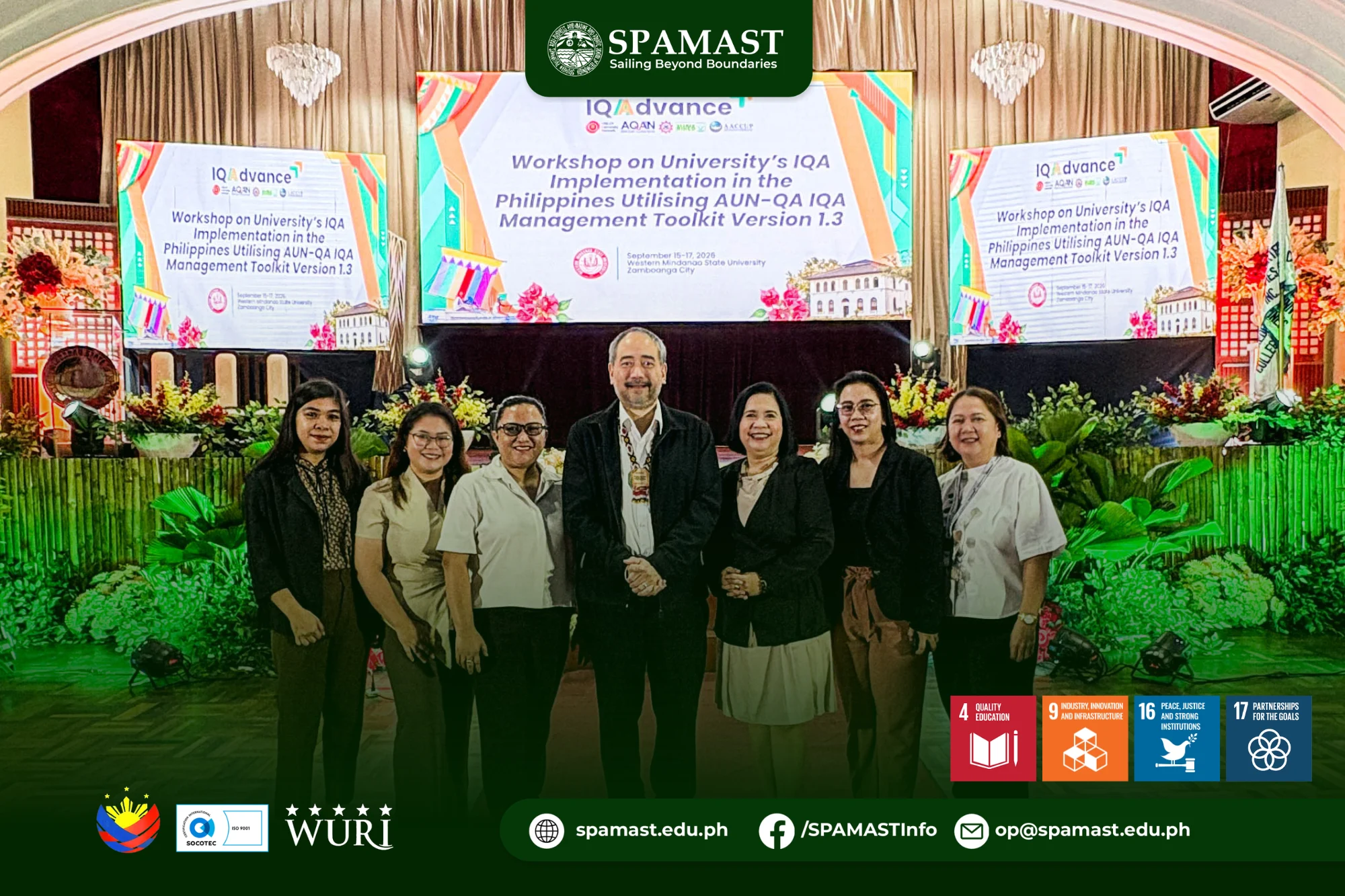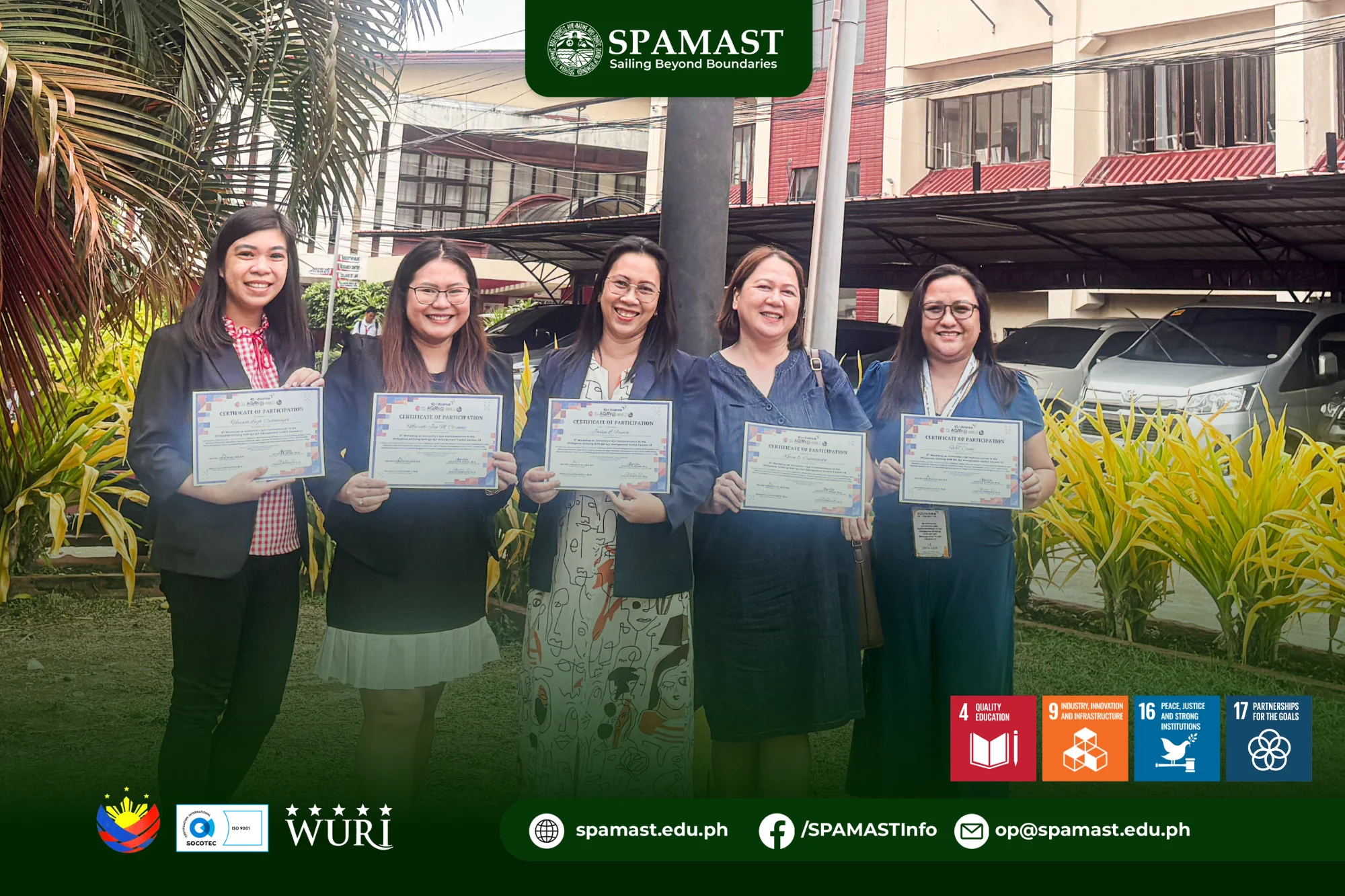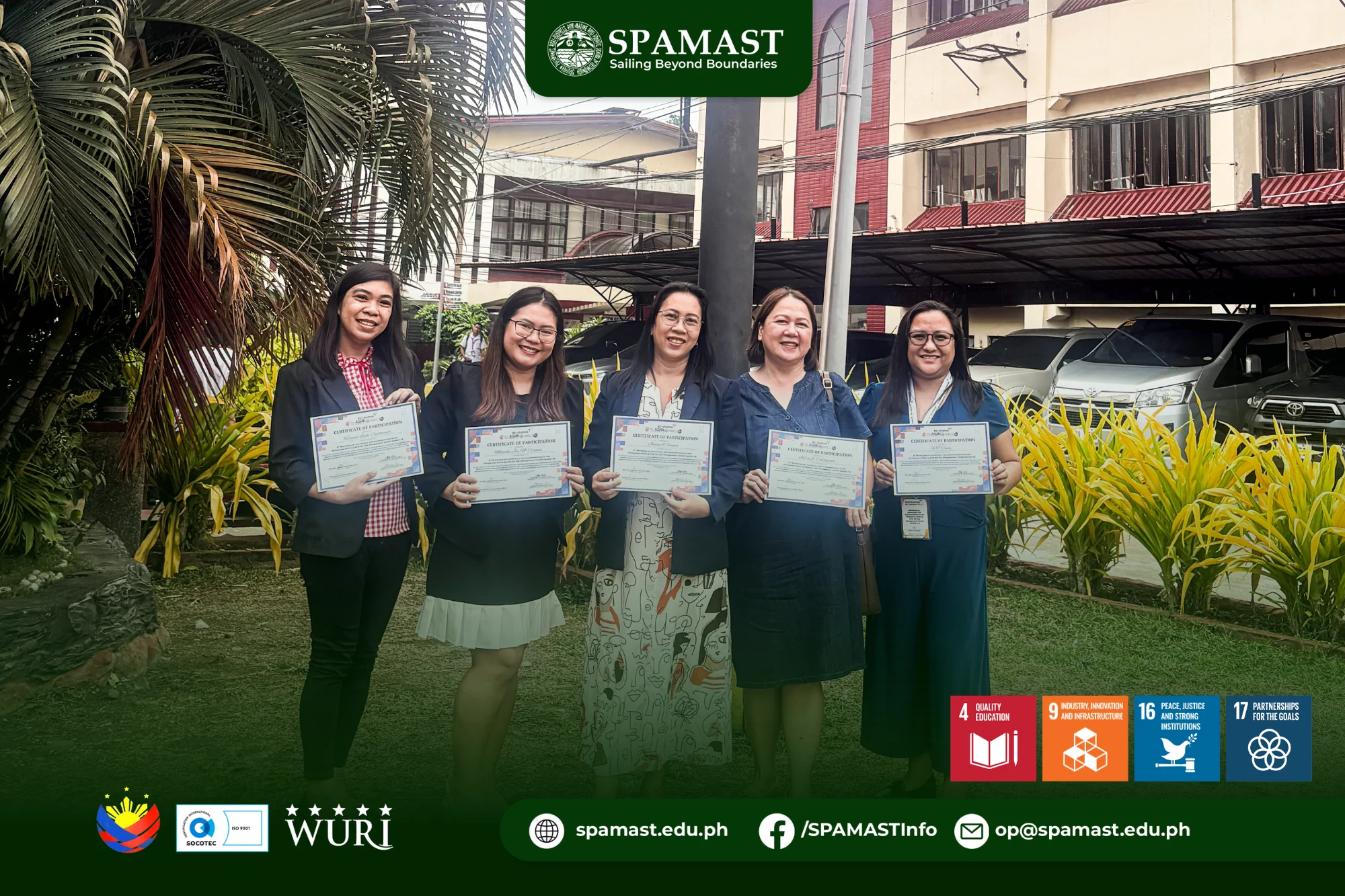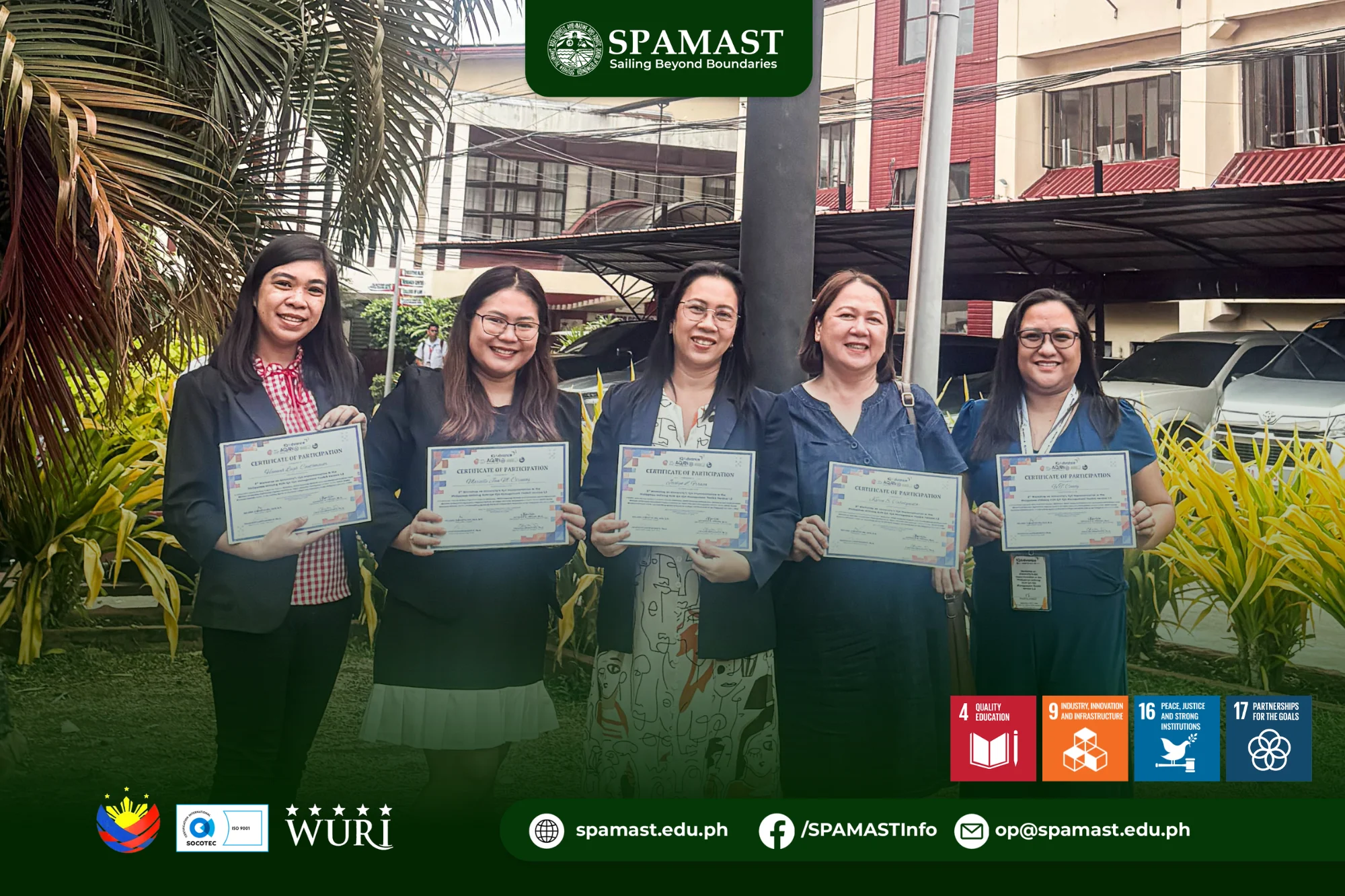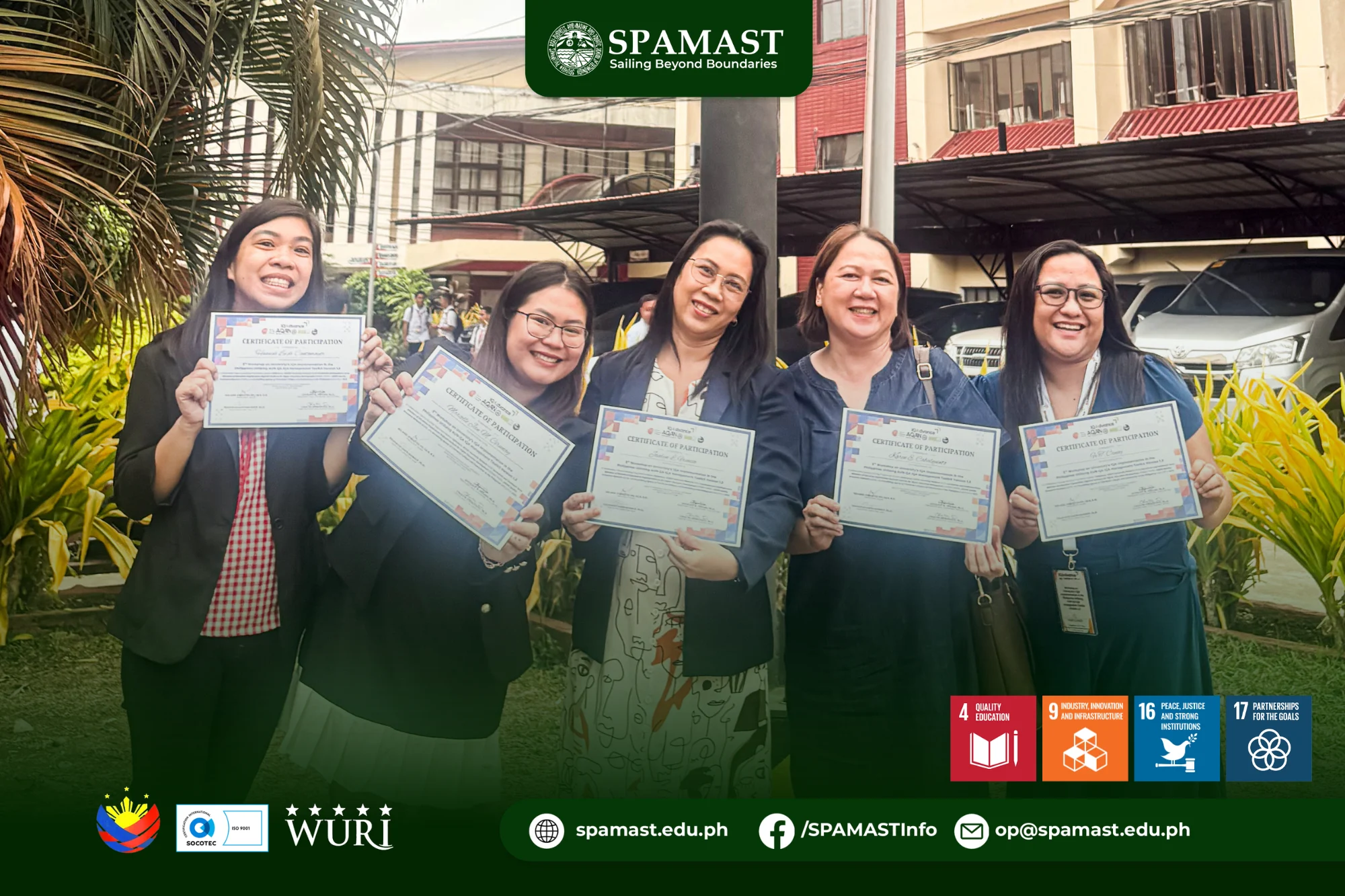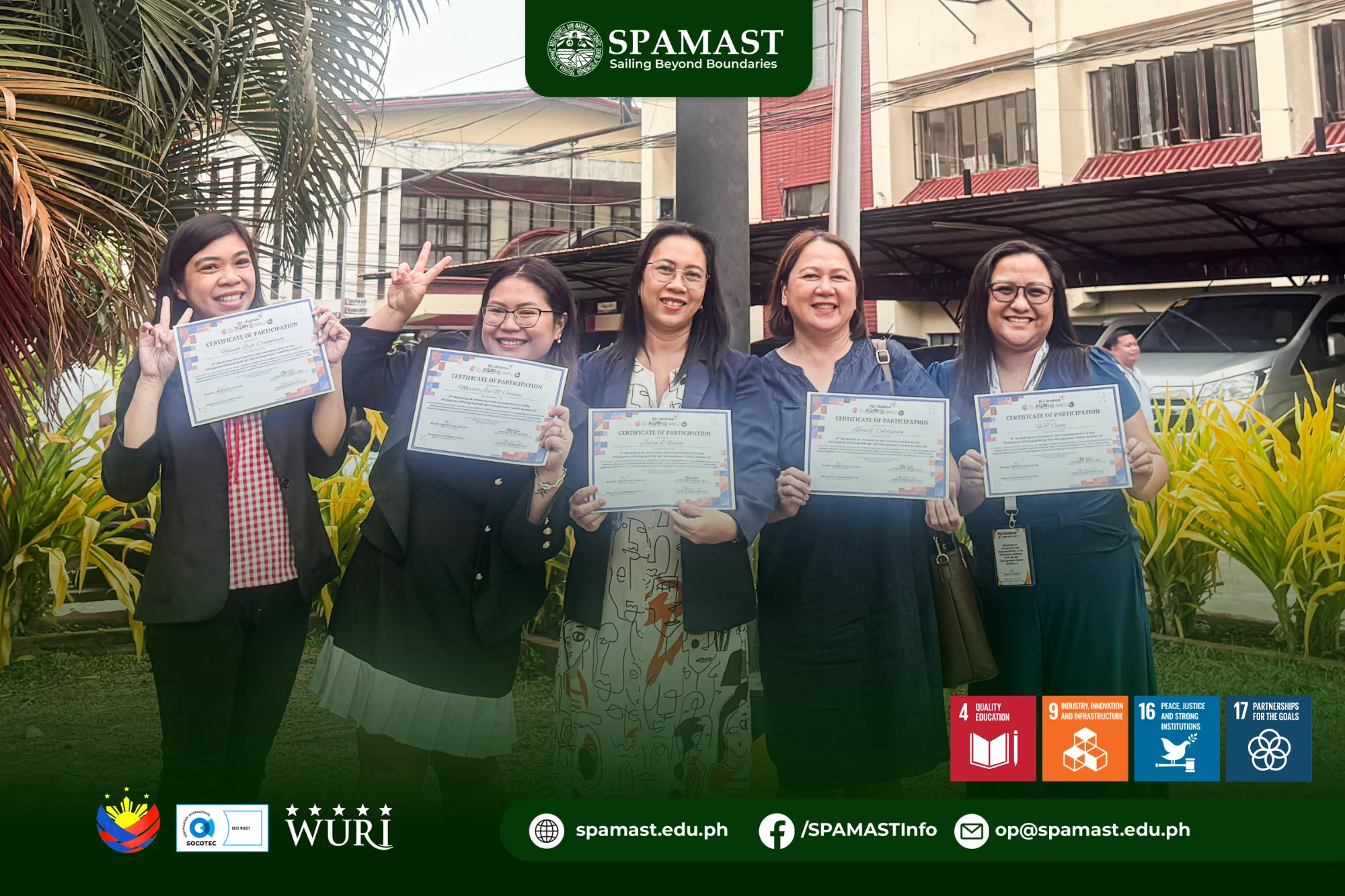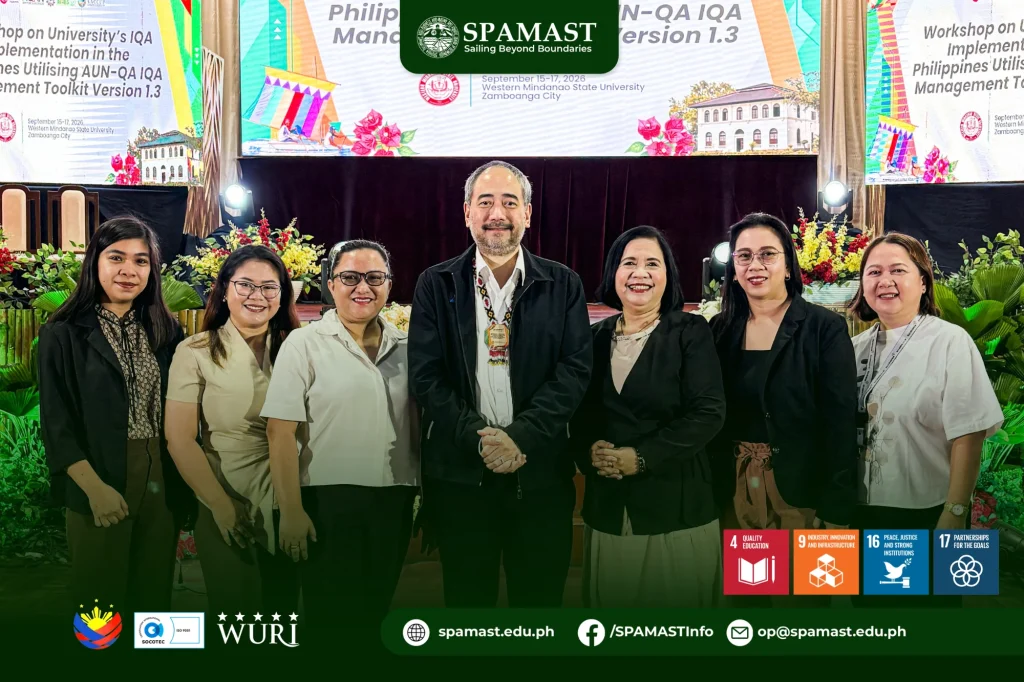
MALITA, DAVAO OCCIDENTAL — Southern Philippines Agri-Business, Marine and Aquatic School of Technology (SPAMAST) reinforced its commitment to continuous institutional improvement through the participation of its key officials and personnel in the 3rd Workshop on University’s Internal Quality Assurance (IQA) Implementation in the Philippines Utilizing the AUN-QA IQA Management Toolkit Version 1.3, held on September 15–17, 2026, at Western Mindanao State University (WMSU).
Representing SPAMAST were Dr. Lynette A. Bontia, College President; Dr. Jovelyn L. Franca, Quality Assurance Director; Dr. Karen E. Cabalquinto, Dean of the Institute of Professional and Graduate Studies; Dr. Fe T. Canoy, Director for Instruction; Quality Assurance Officers namely: Ms. Hannah Leigh Cantomayor and Ms. Marcelle Jan Cirunay.
The three-day workshop provided participating higher education institutions with opportunities to deepen their understanding and application of the AUN-QA IQA Management Toolkit Version 1.3, with emphasis on strengthening institutional processes, monitoring performance, identifying areas for improvement, and promoting a culture of continuous enhancement.
For SPAMAST, the engagement provided valuable insights that can support the refinement of its institutional systems and practices. The knowledge gained may also contribute to more systematic, evidence-based decision-making and the alignment of academic and administrative processes with established standards in higher education.
The activity further advances SPAMAST’s contribution to the United Nations Sustainable Development Goals (SDGs). It supports SDG 4: Quality Education by promoting institutional practices that contribute to improved educational delivery; SDG 9: Industry, Innovation and Infrastructure through the adoption of innovative systems and approaches; SDG 16: Peace, Justice and Strong Institutions through accountable and effective institutional governance; and SDG 17: Partnerships for the Goals by fostering collaboration, knowledge exchange, and professional networks among higher education institutions.
Beyond professional development, the workshop served as a platform for sharing experiences and practices among institutions working toward stronger and more responsive higher education systems in the Philippines. These engagements allow SPAMAST to learn from emerging practices while contributing to broader conversations on institutional development.
The participation of the SPAMAST delegation reflects the College’s continuing pursuit of excellence, innovation, good governance, and strategic partnerships as it advances its mission of providing relevant and responsive higher education to its stakeholders and communities.