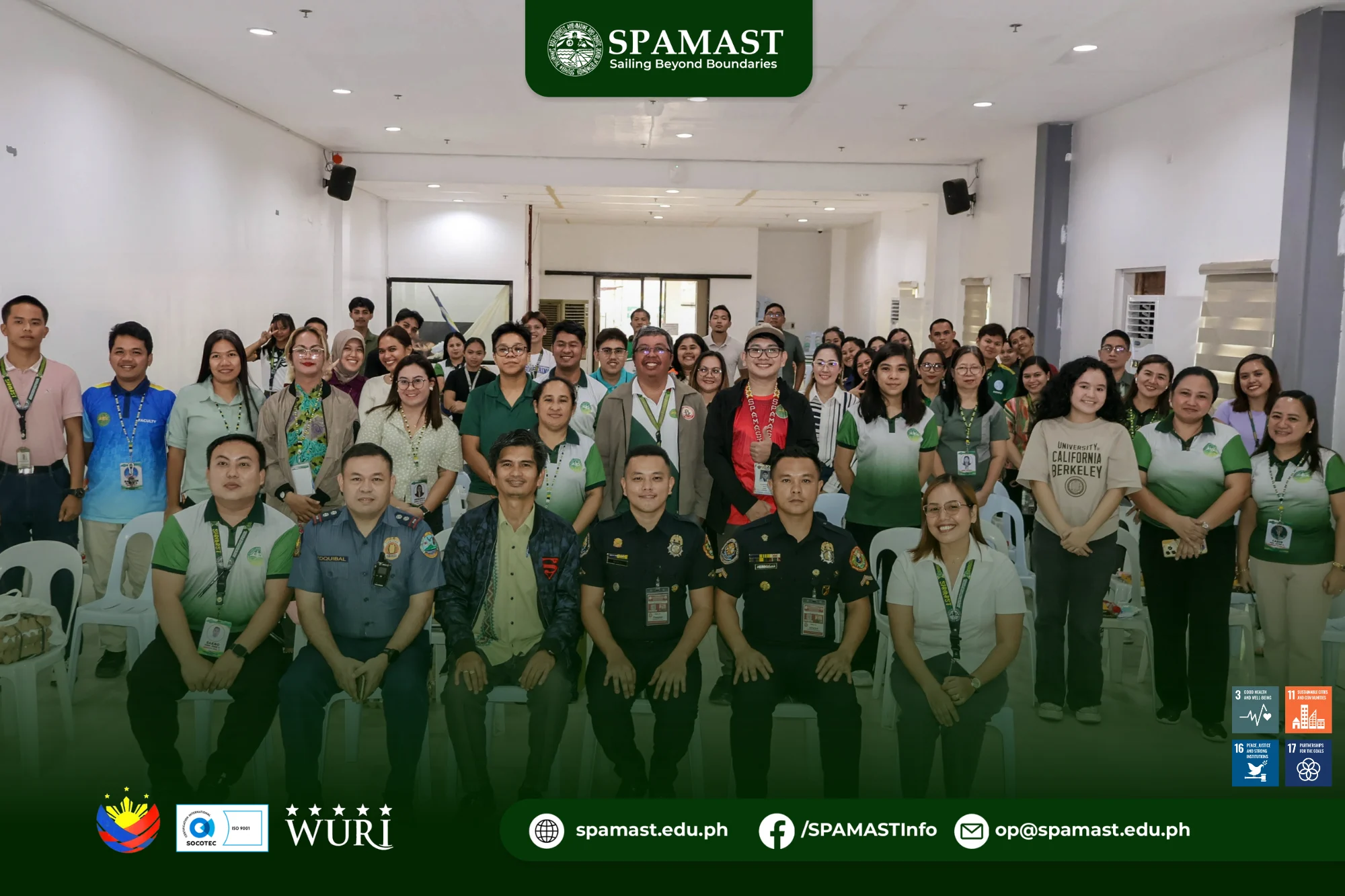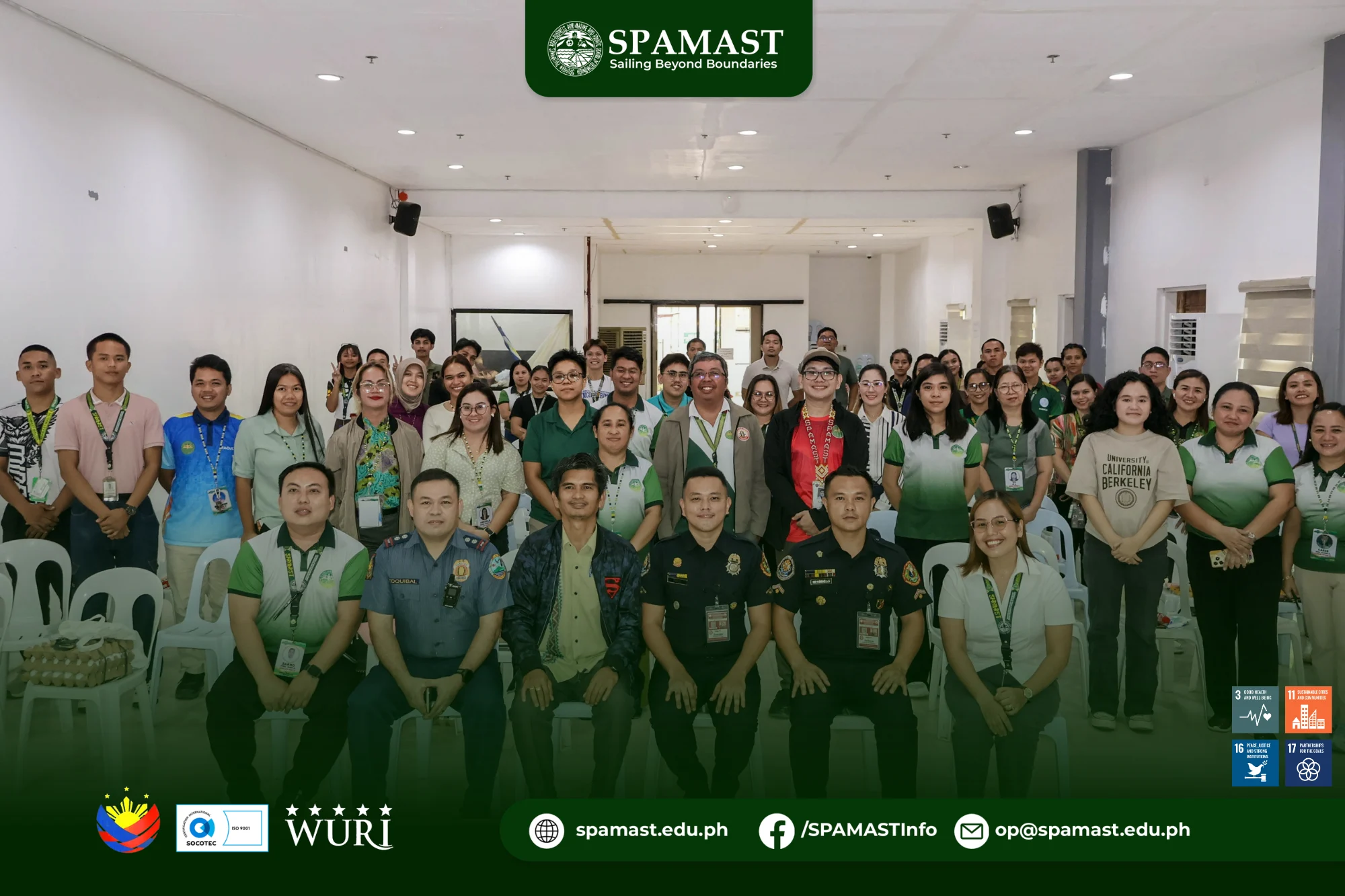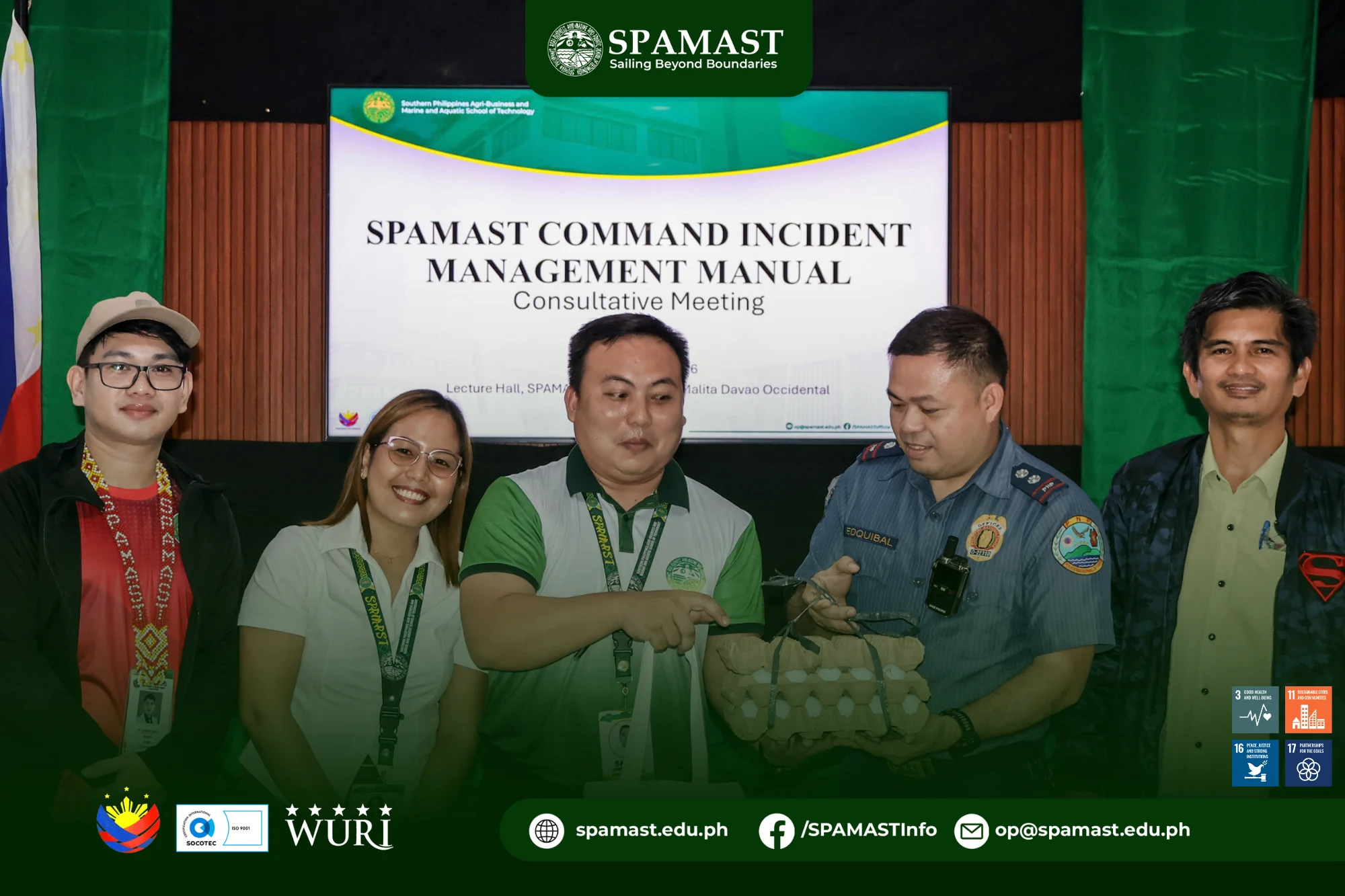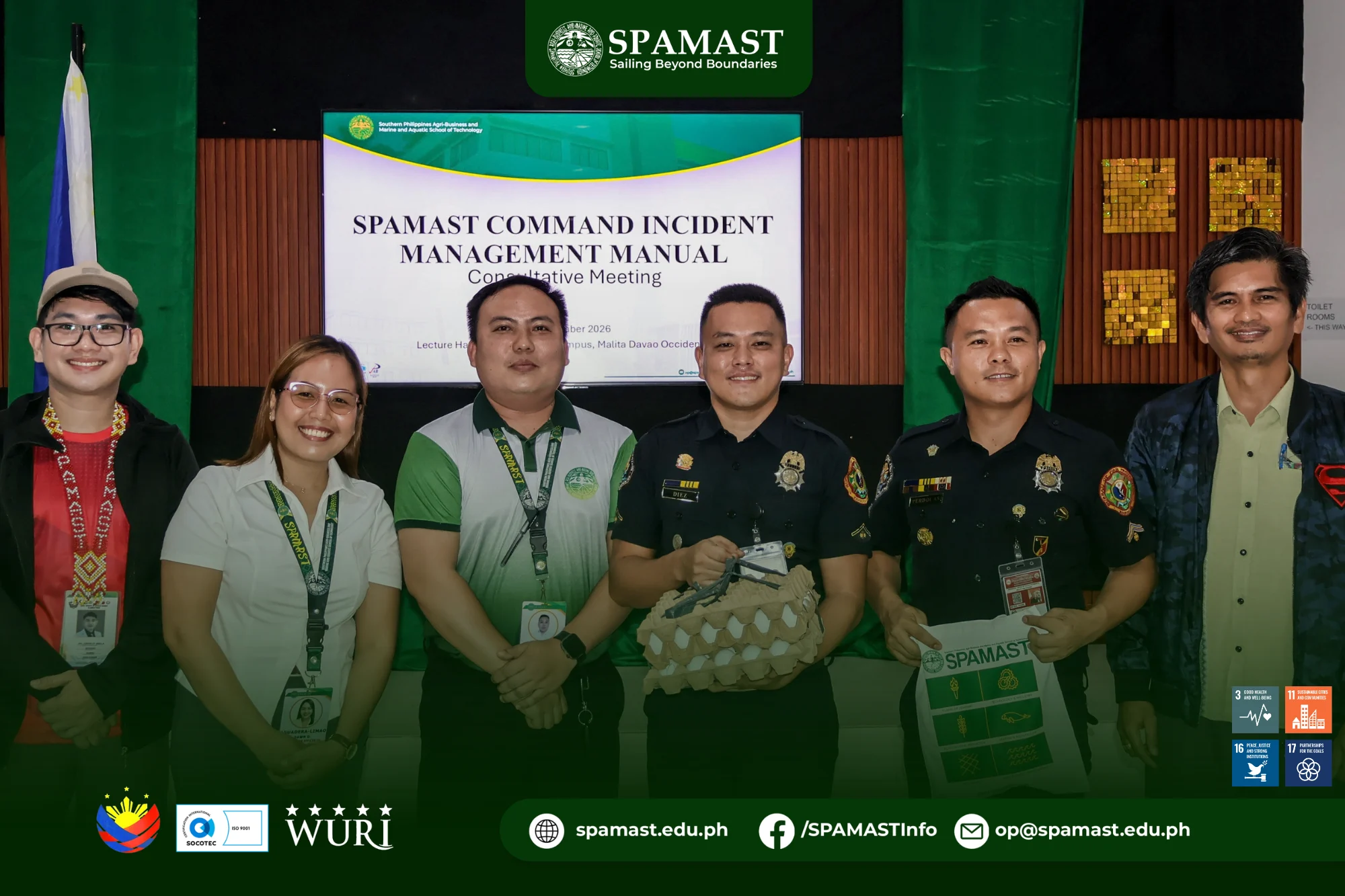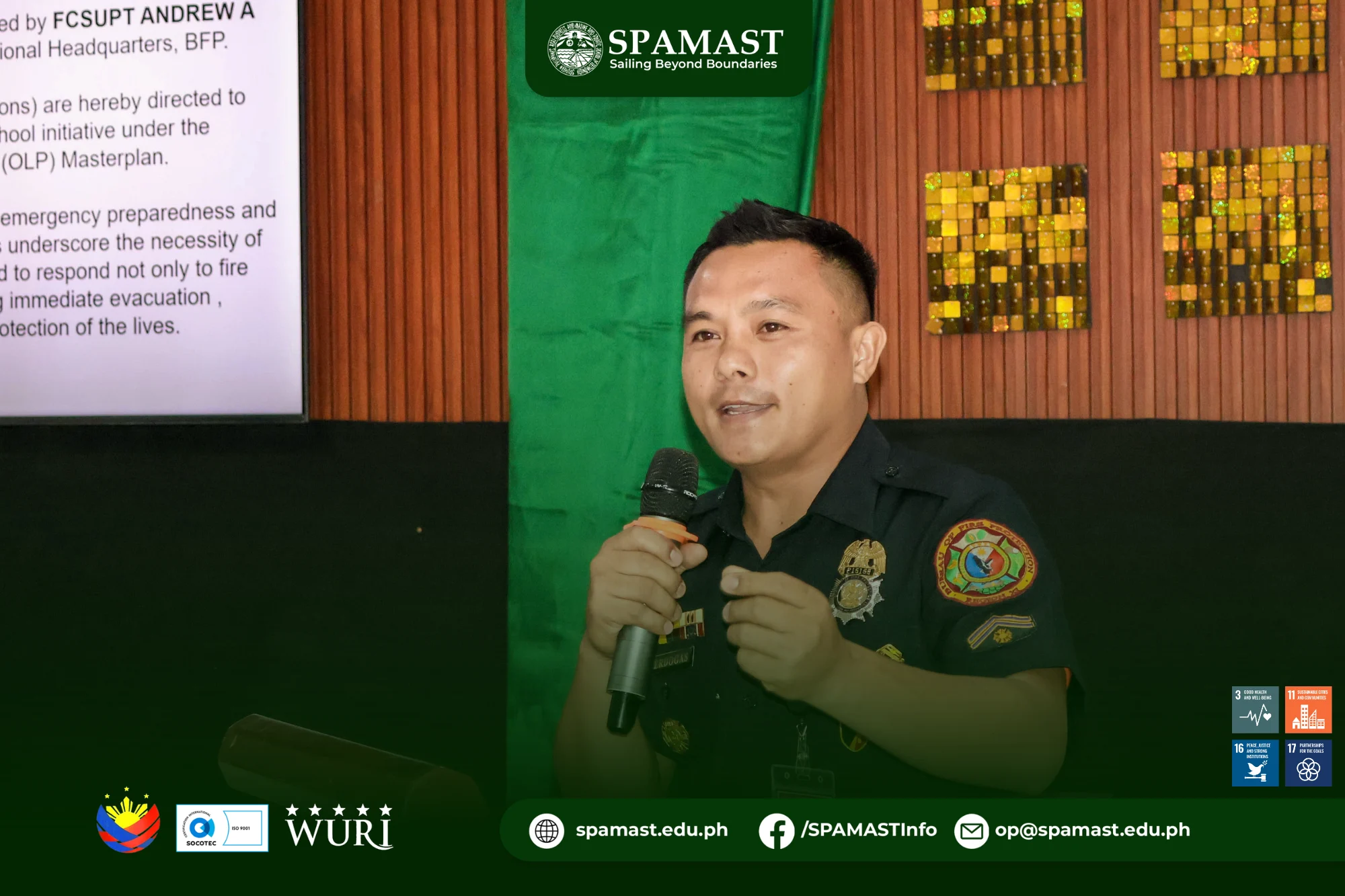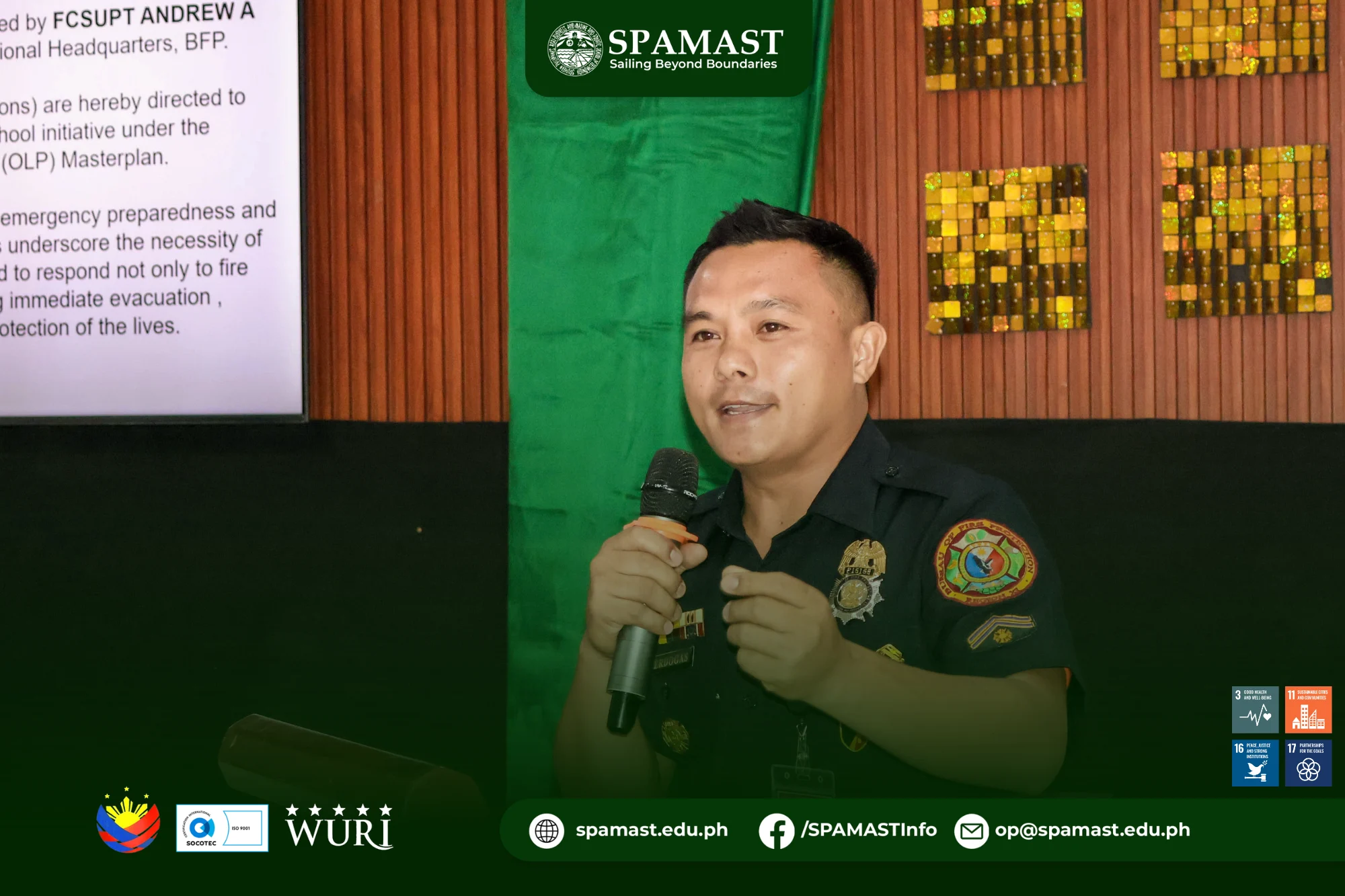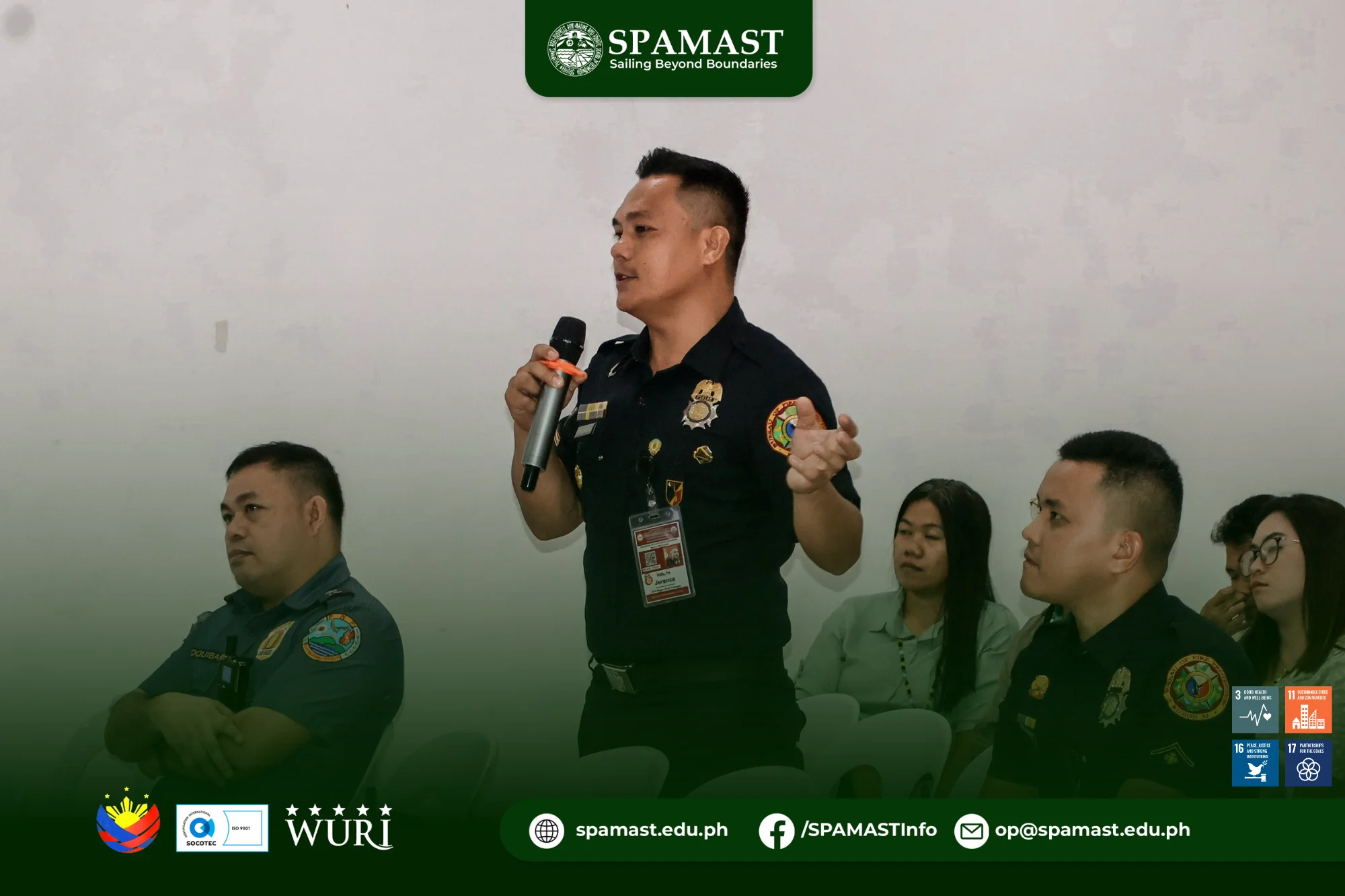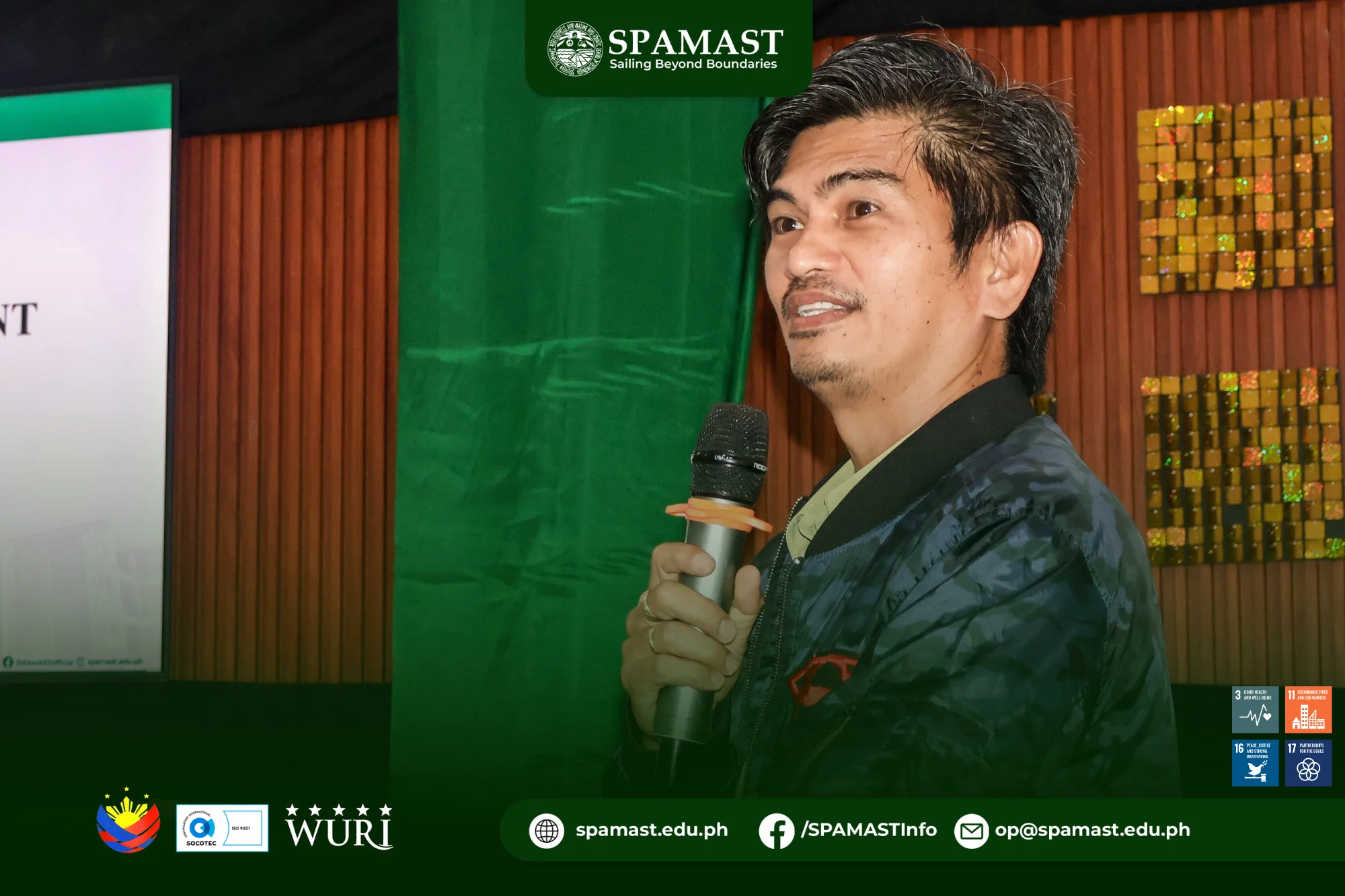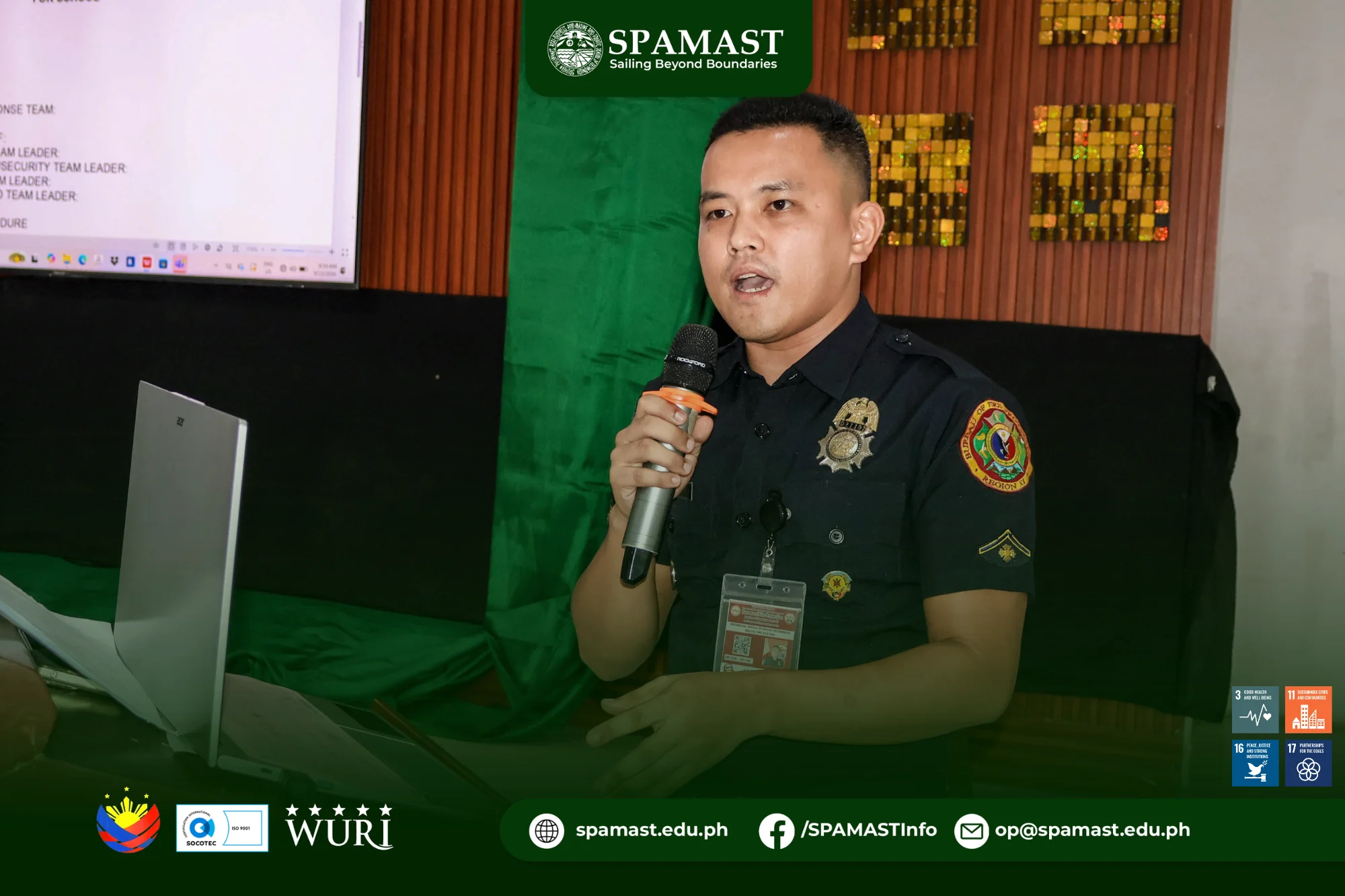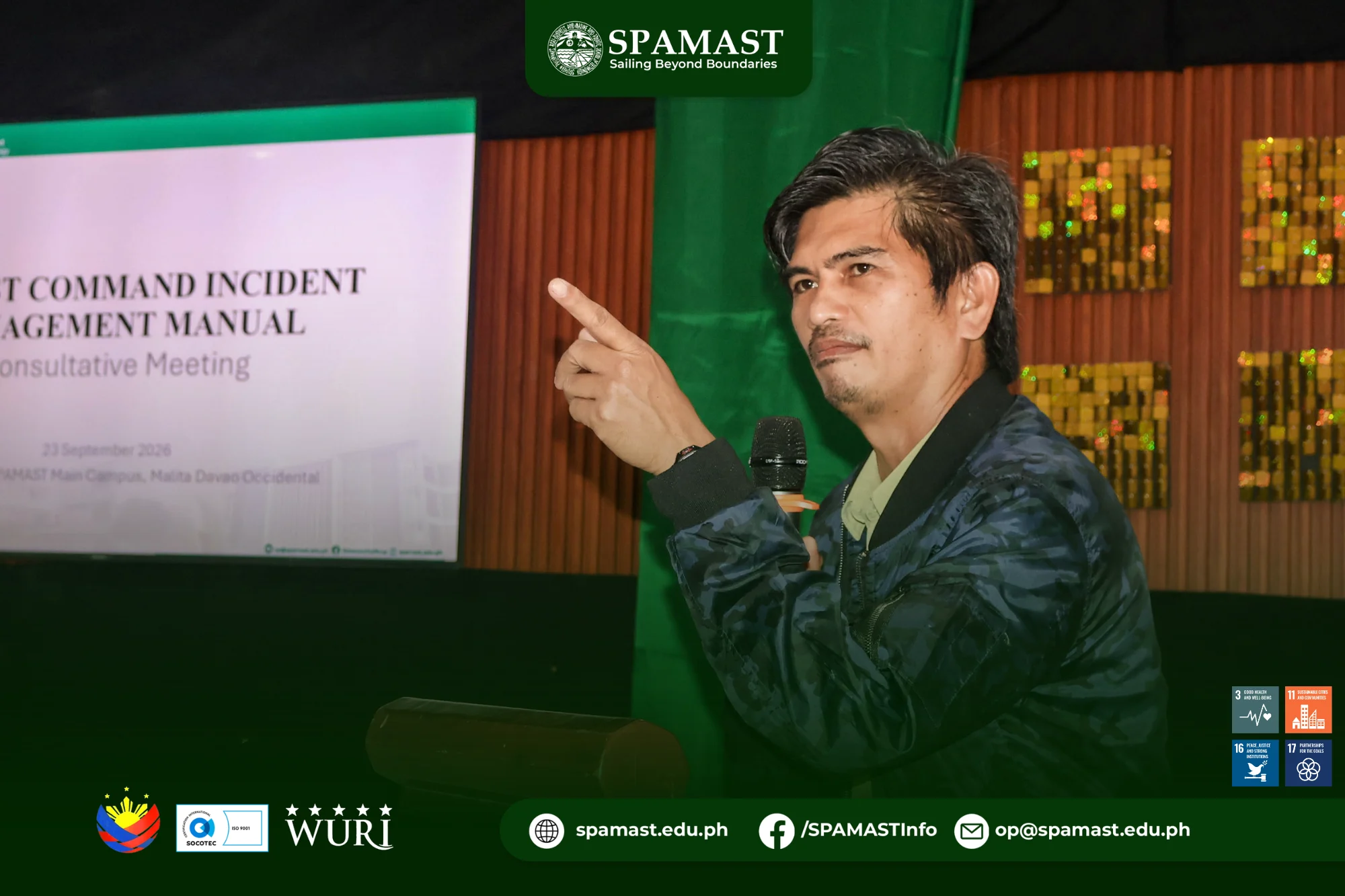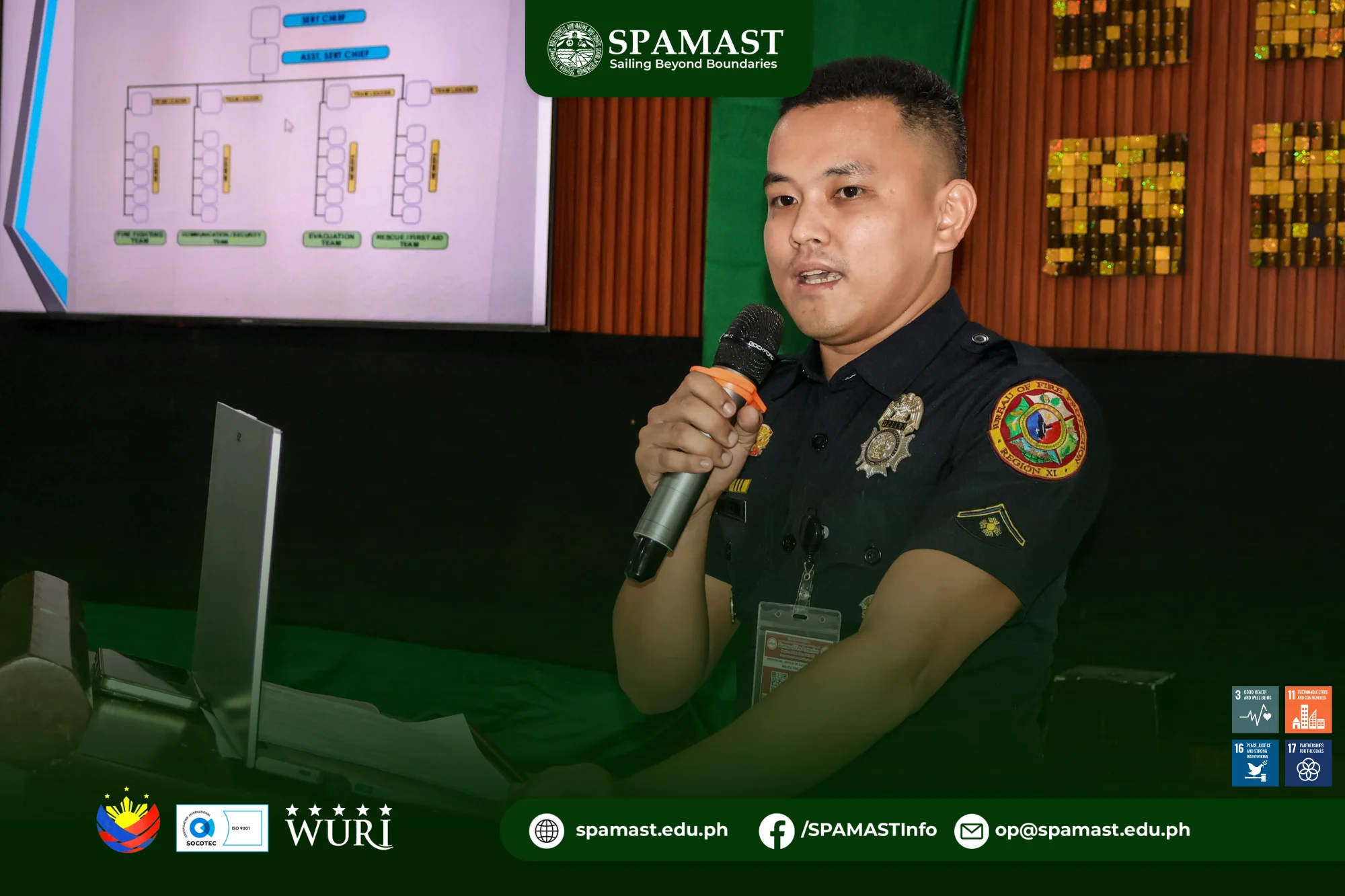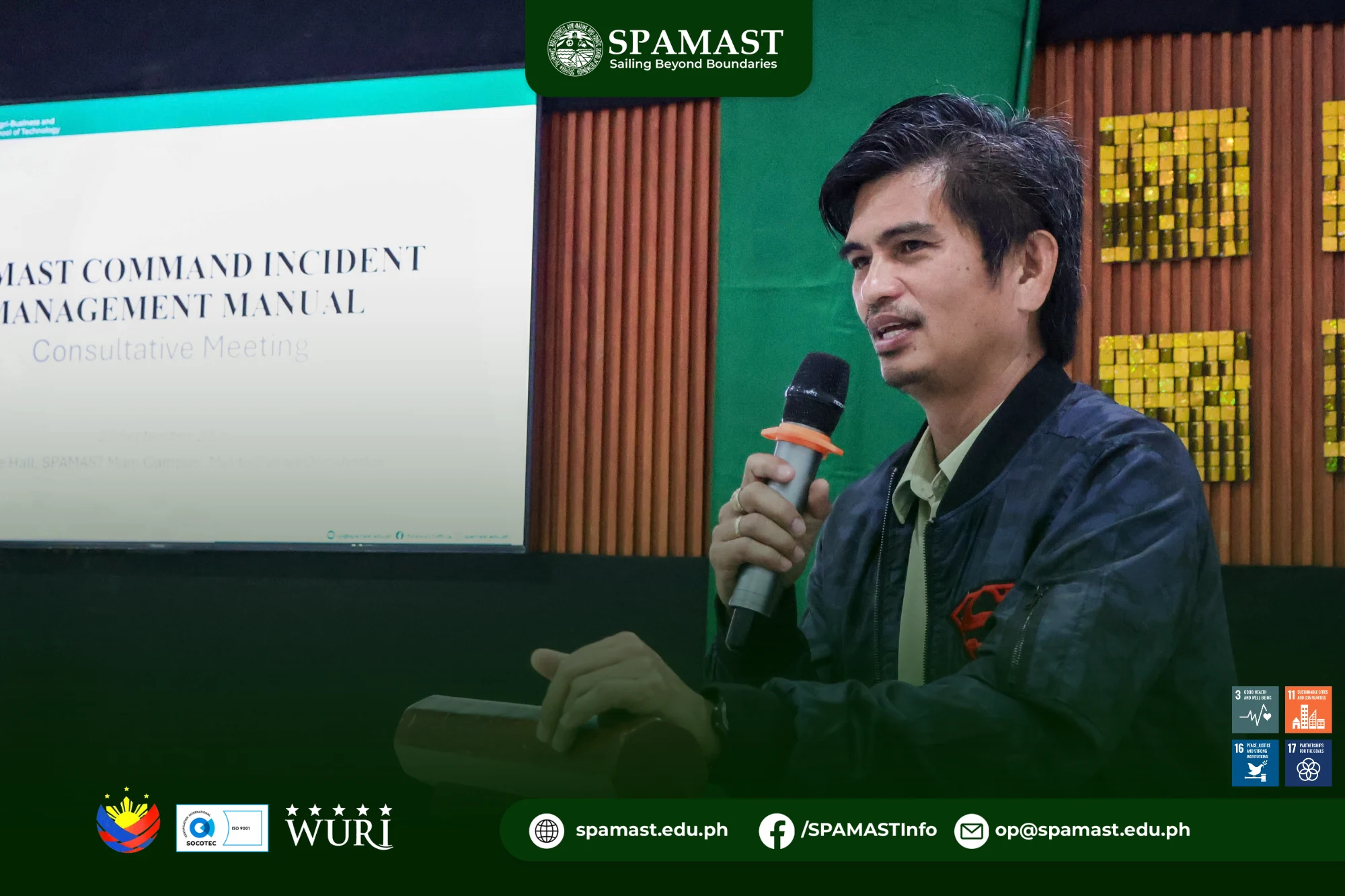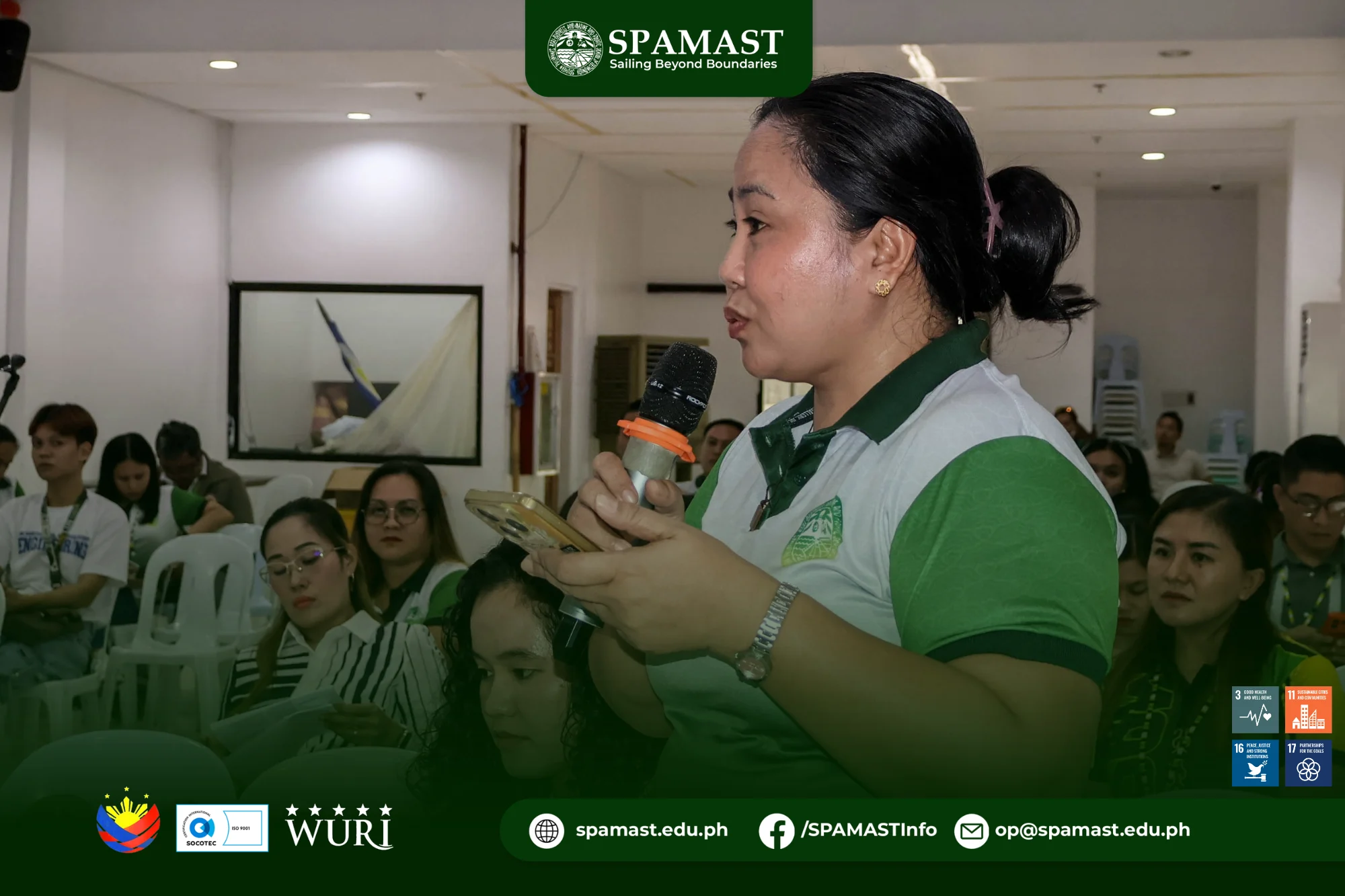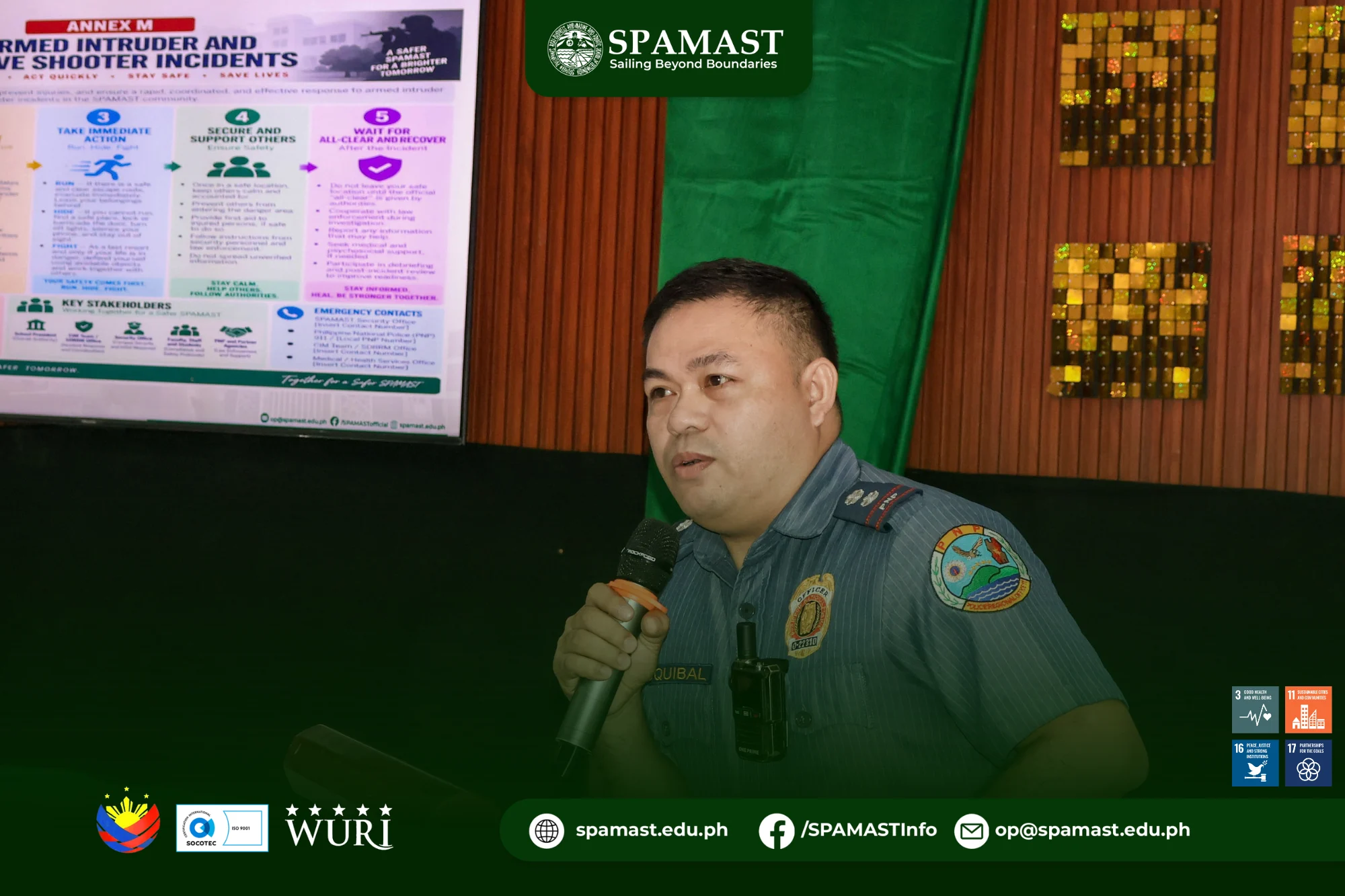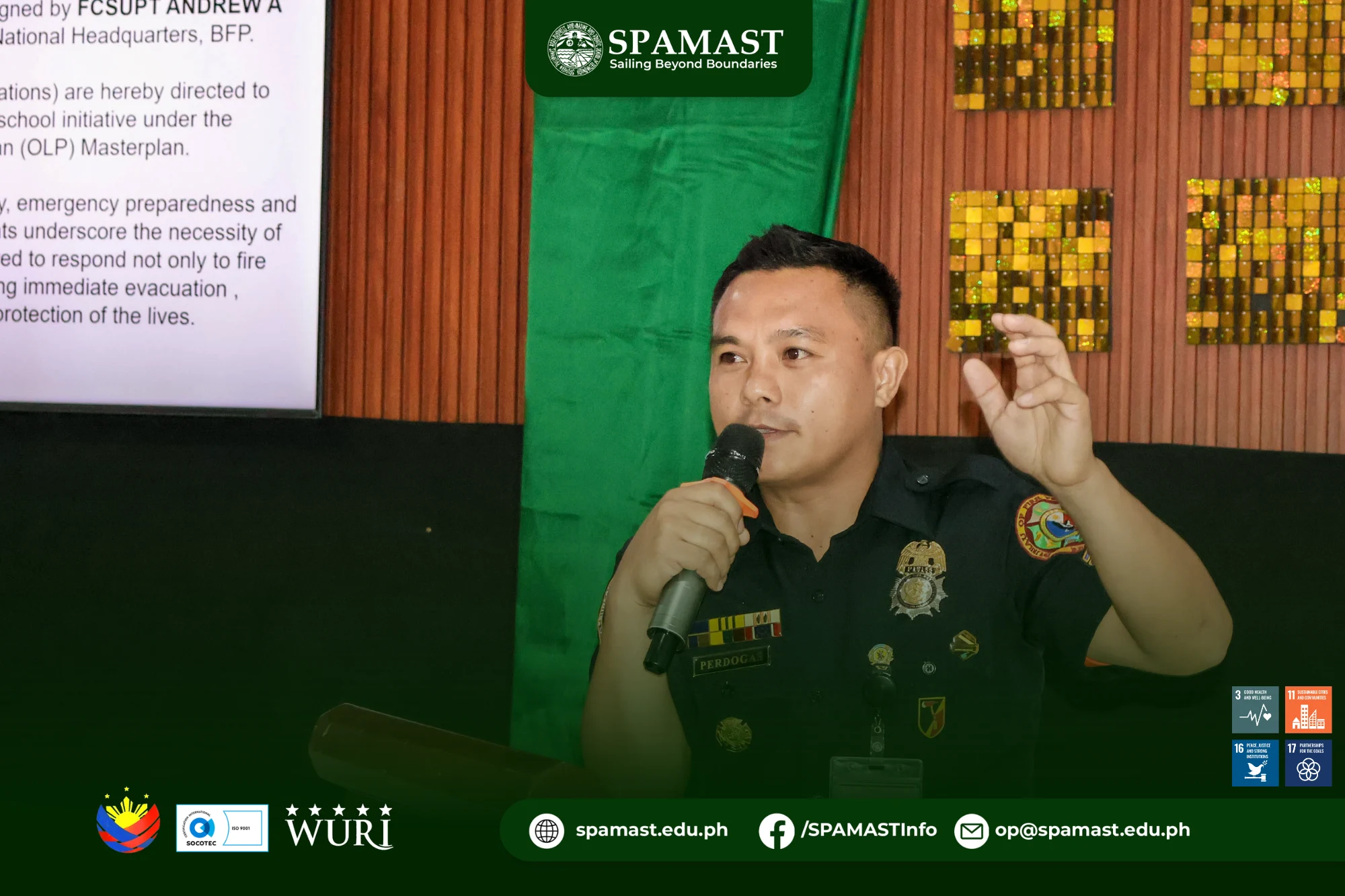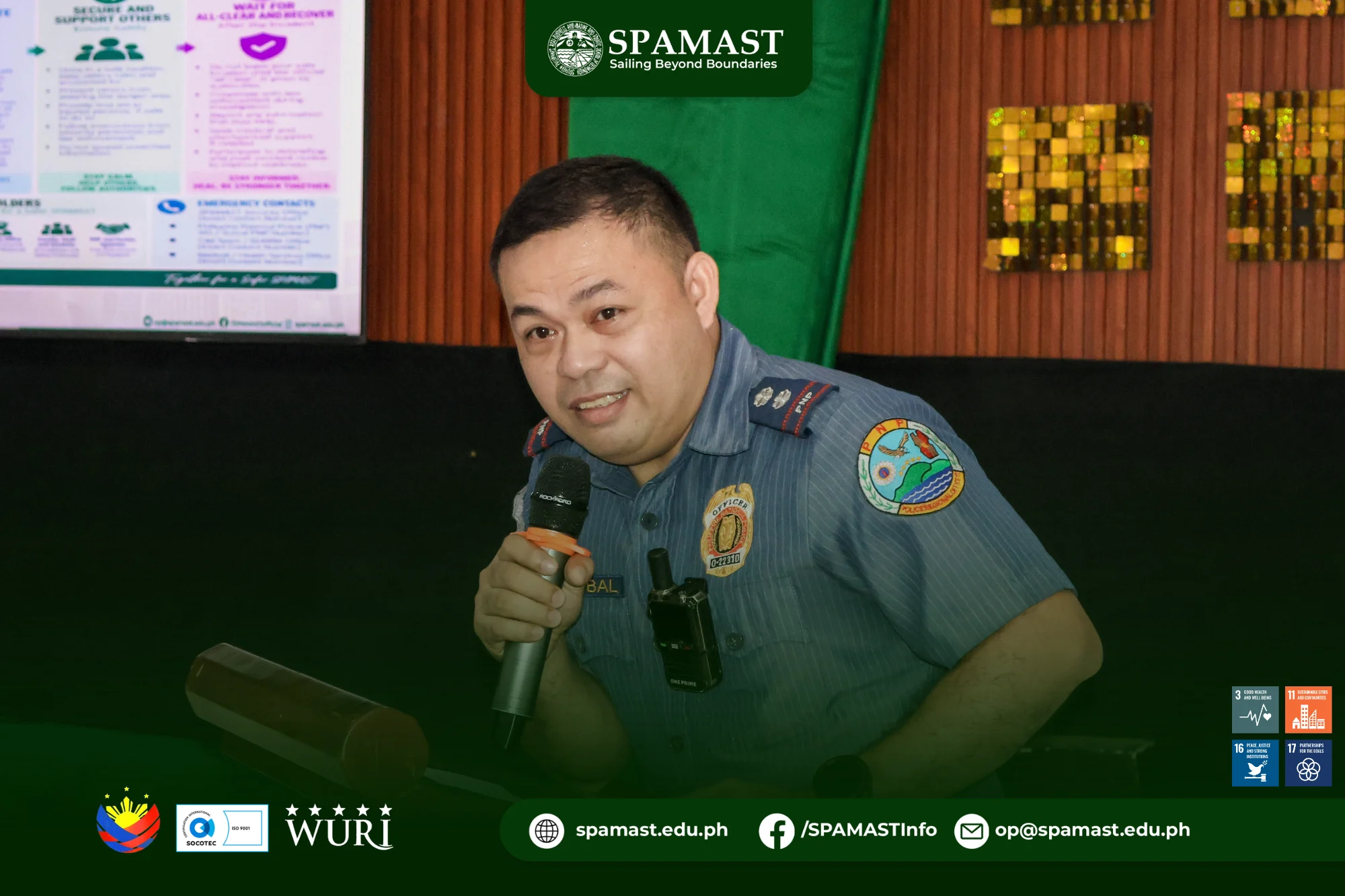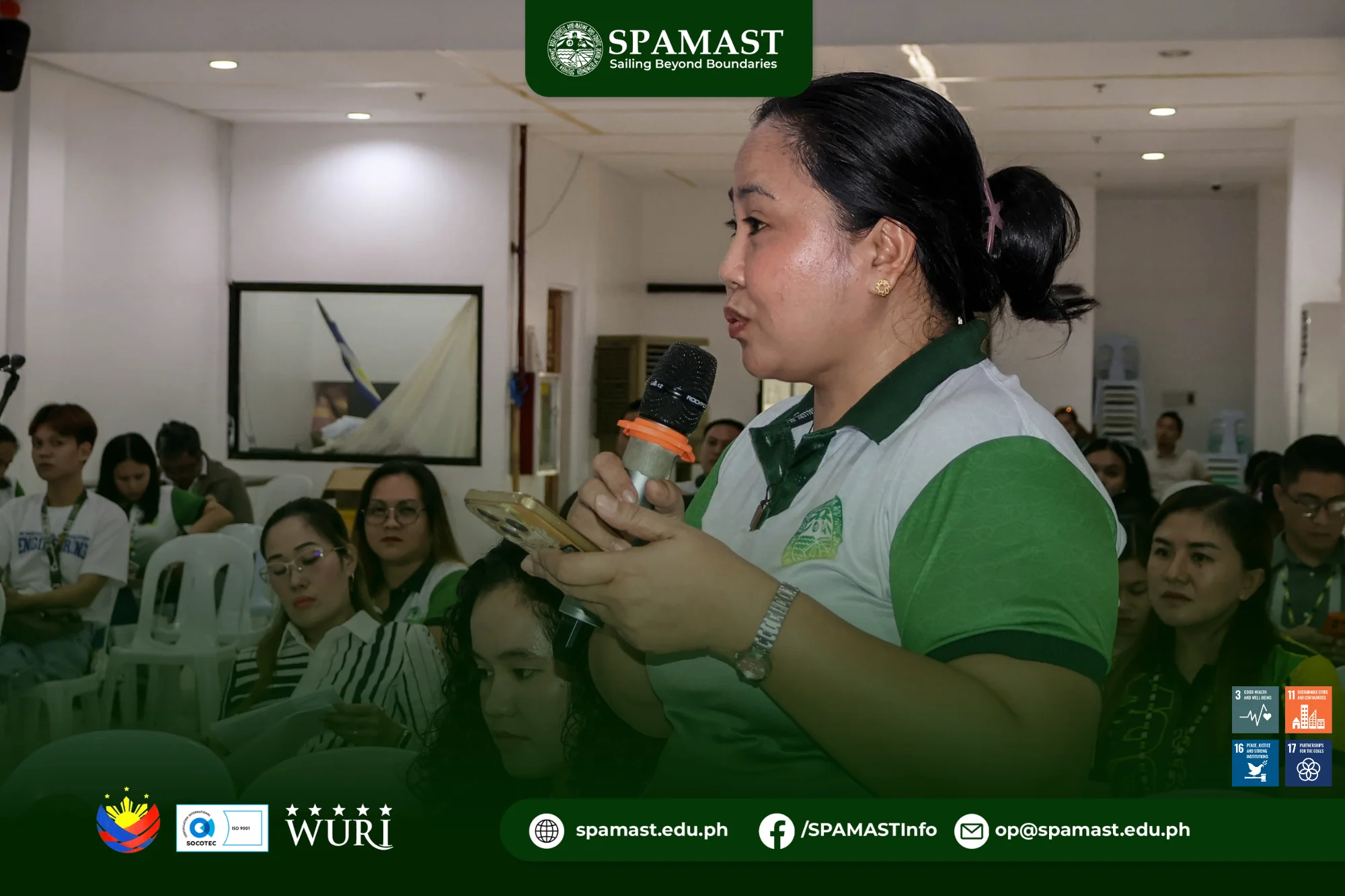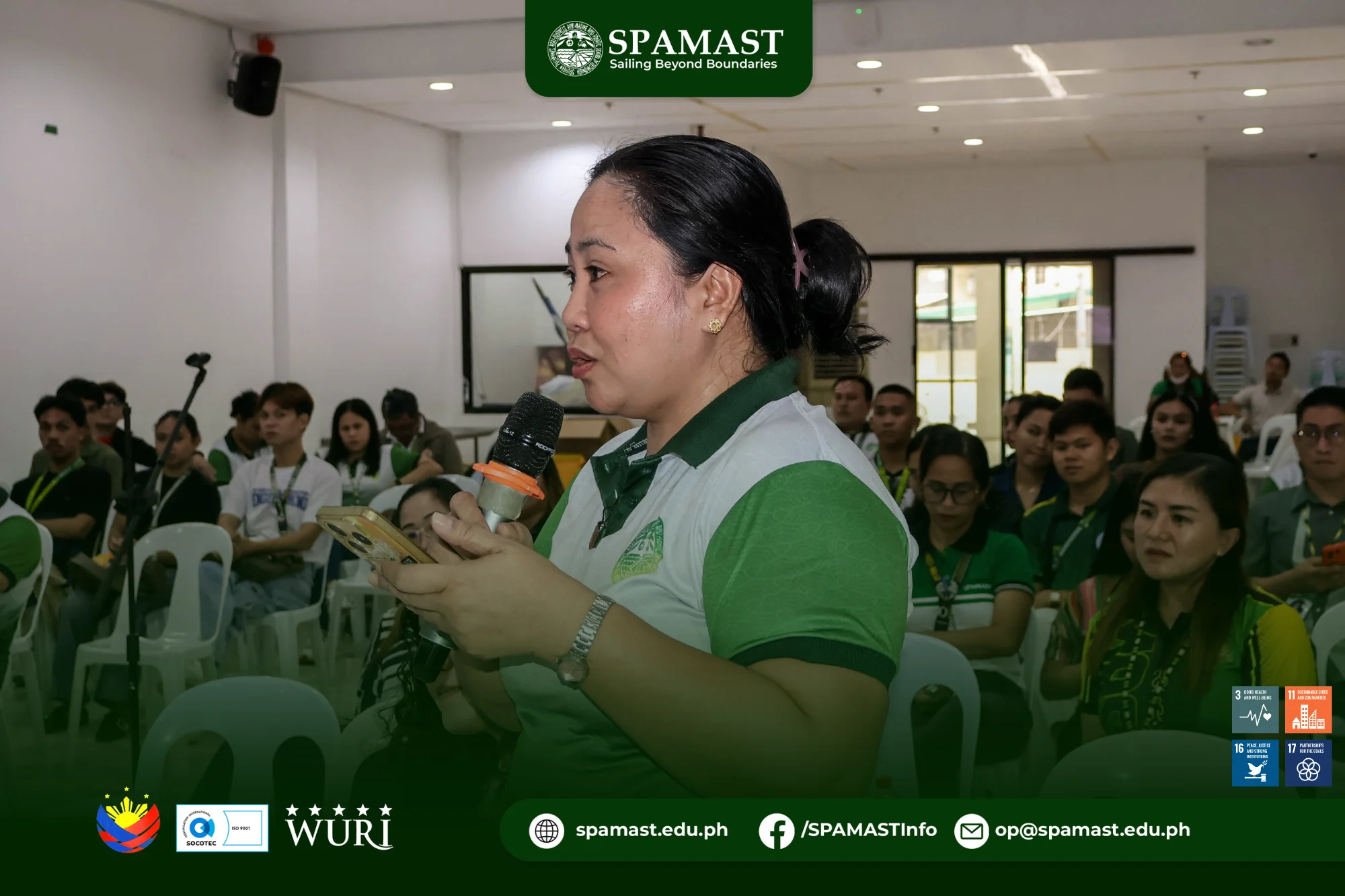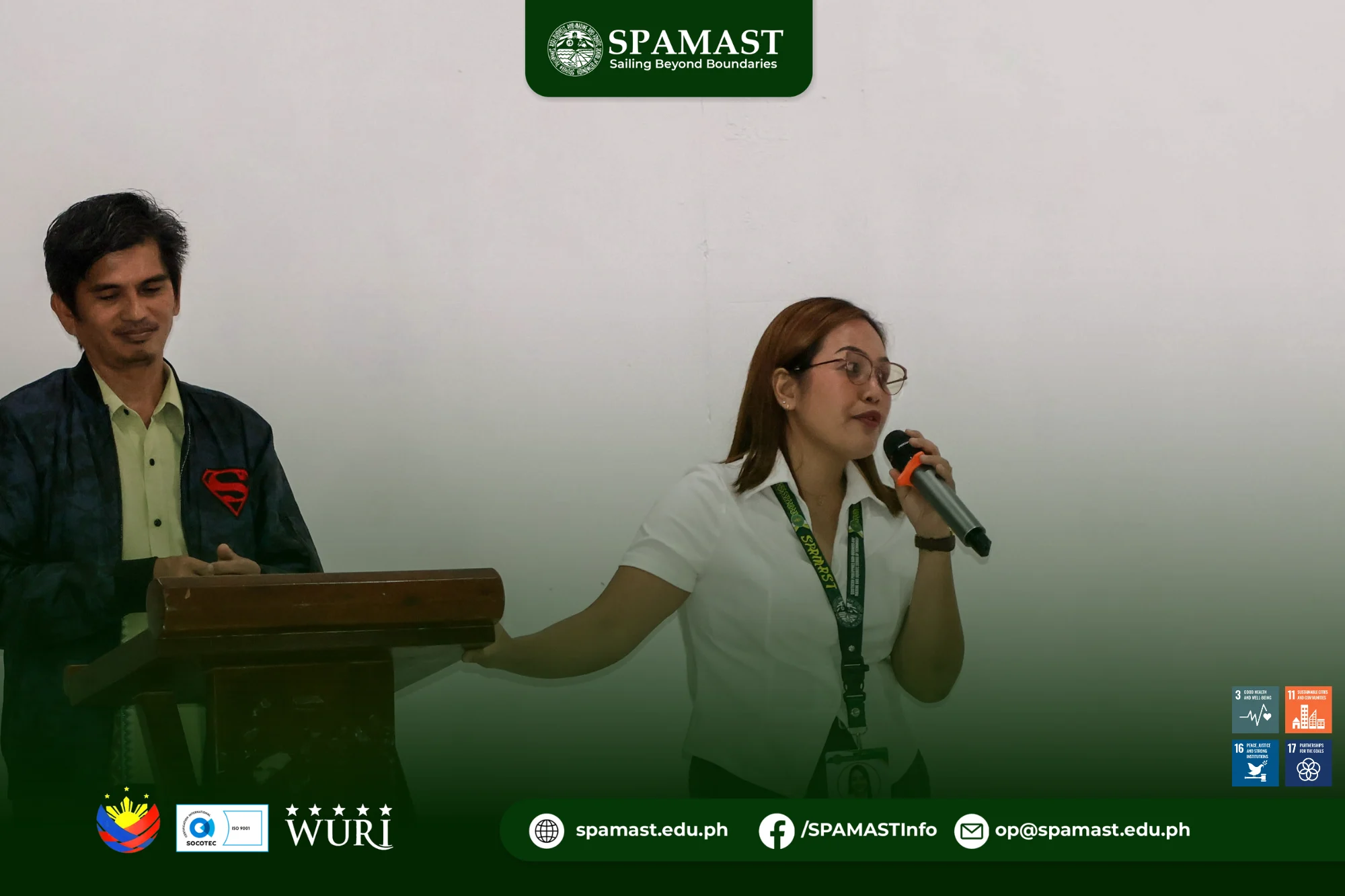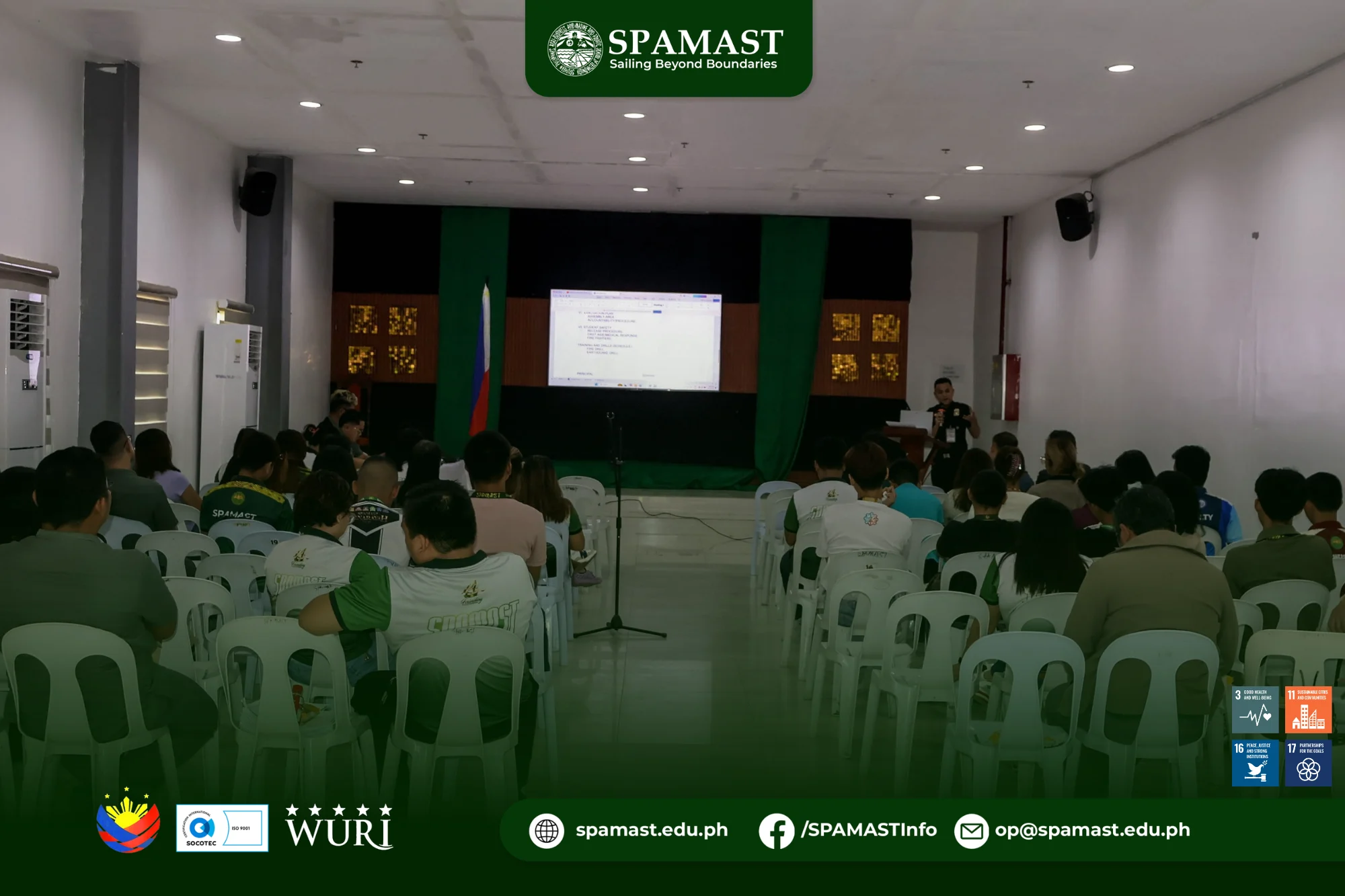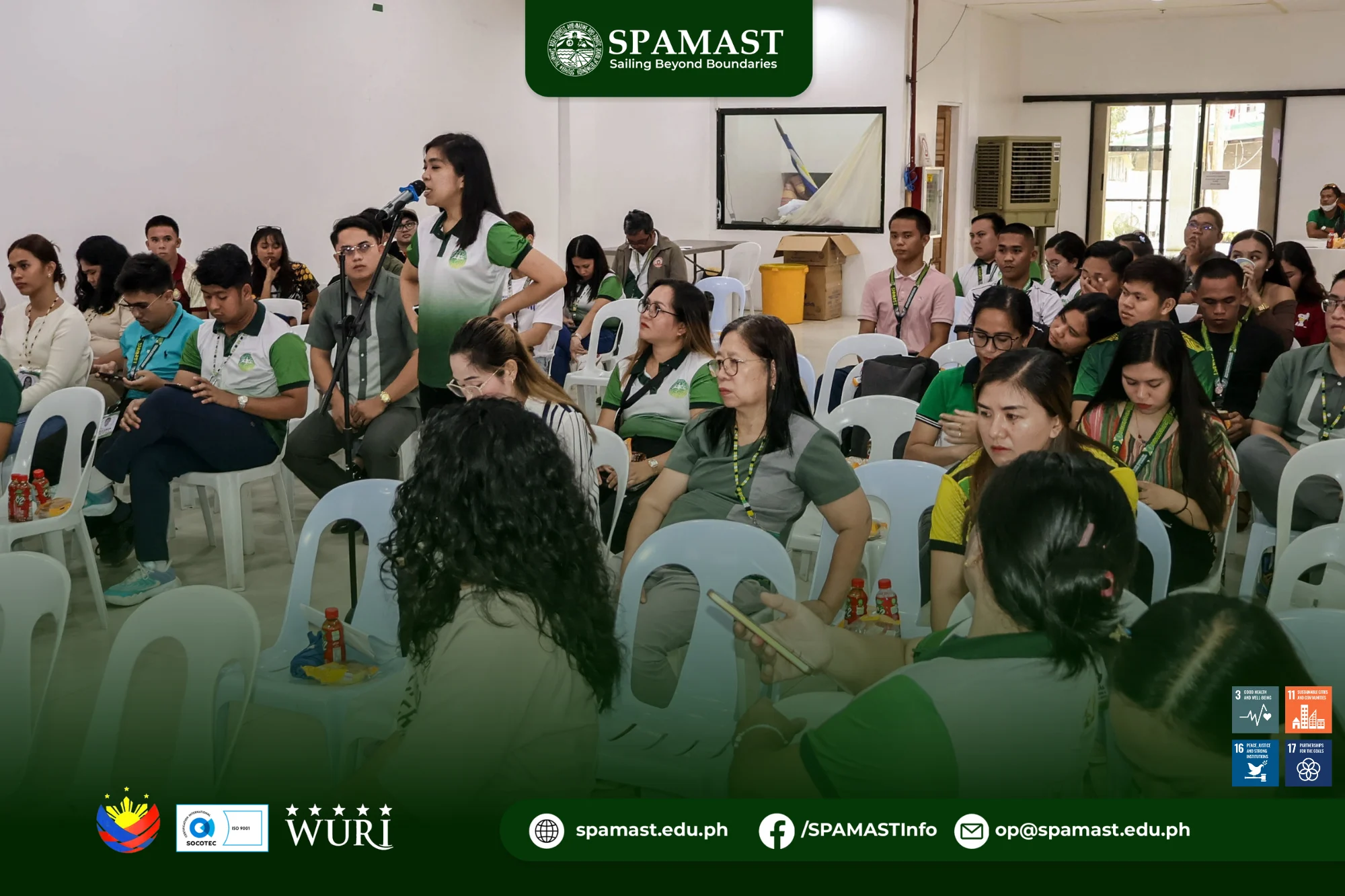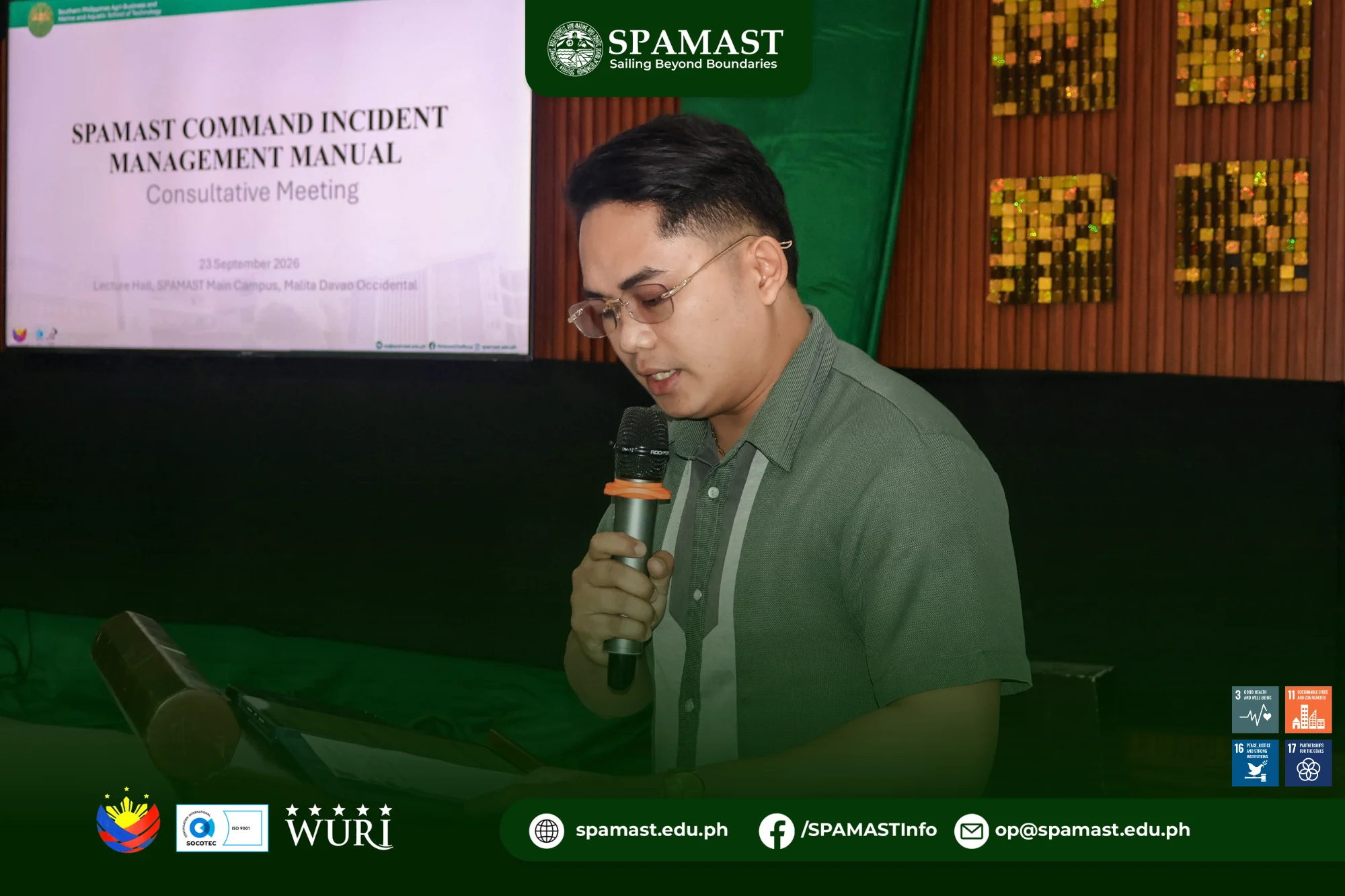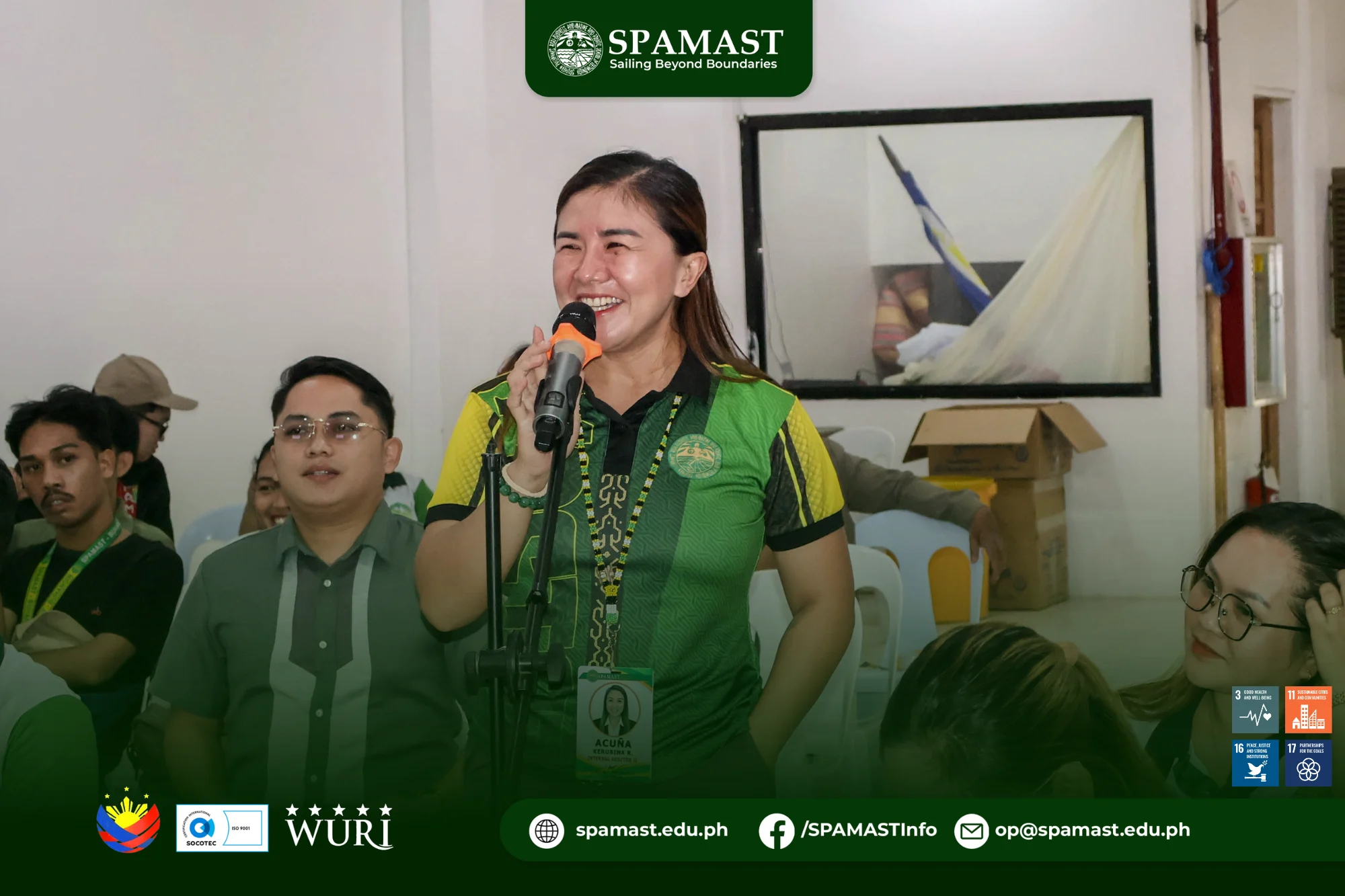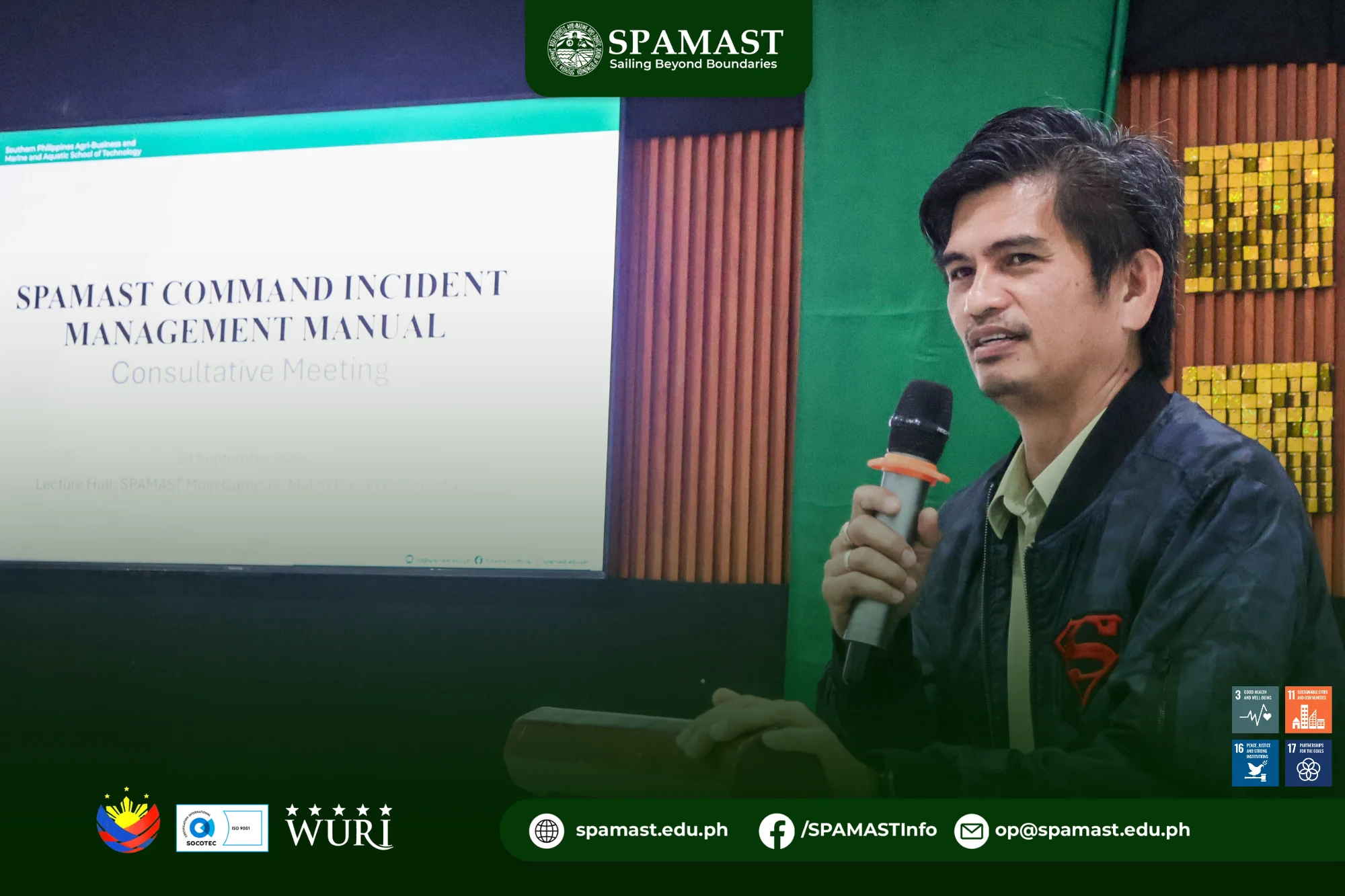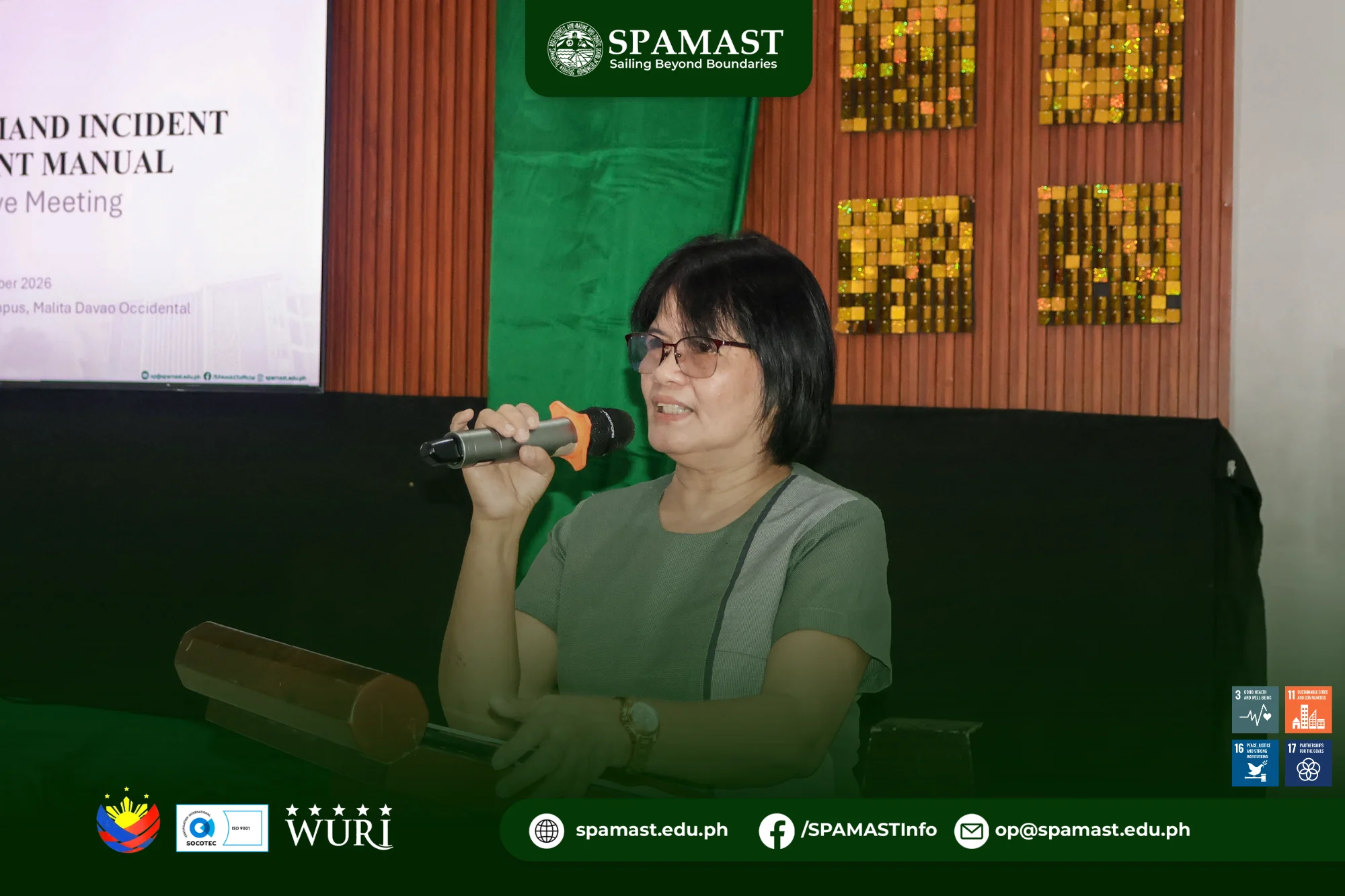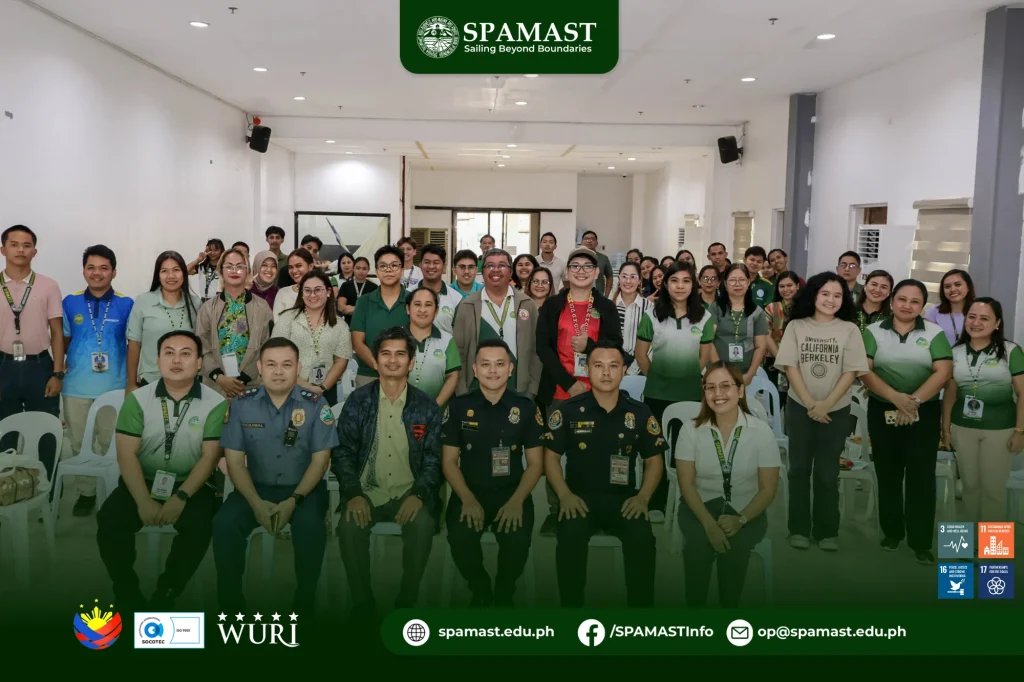
Malita, Davao Occidental | September 23, 2026 — The Southern Philippines Agri-Business and Marine and Aquatic School of Technology (SPAMAST) conducted a Consultative Conference for the proposed SPAMAST Command Incident Manual on September 23, 2026, at the SPAMAST Lecture Hall, bringing together institutional stakeholders and representatives from the Bureau of Fire Protection (BFP) and the Philippine National Police (PNP).
The conference aimed to gather valuable insights, technical inputs, and recommendations from concerned stakeholders to strengthen the proposed manual and ensure its responsiveness to the institution’s emergency preparedness, incident response, and crisis management needs.
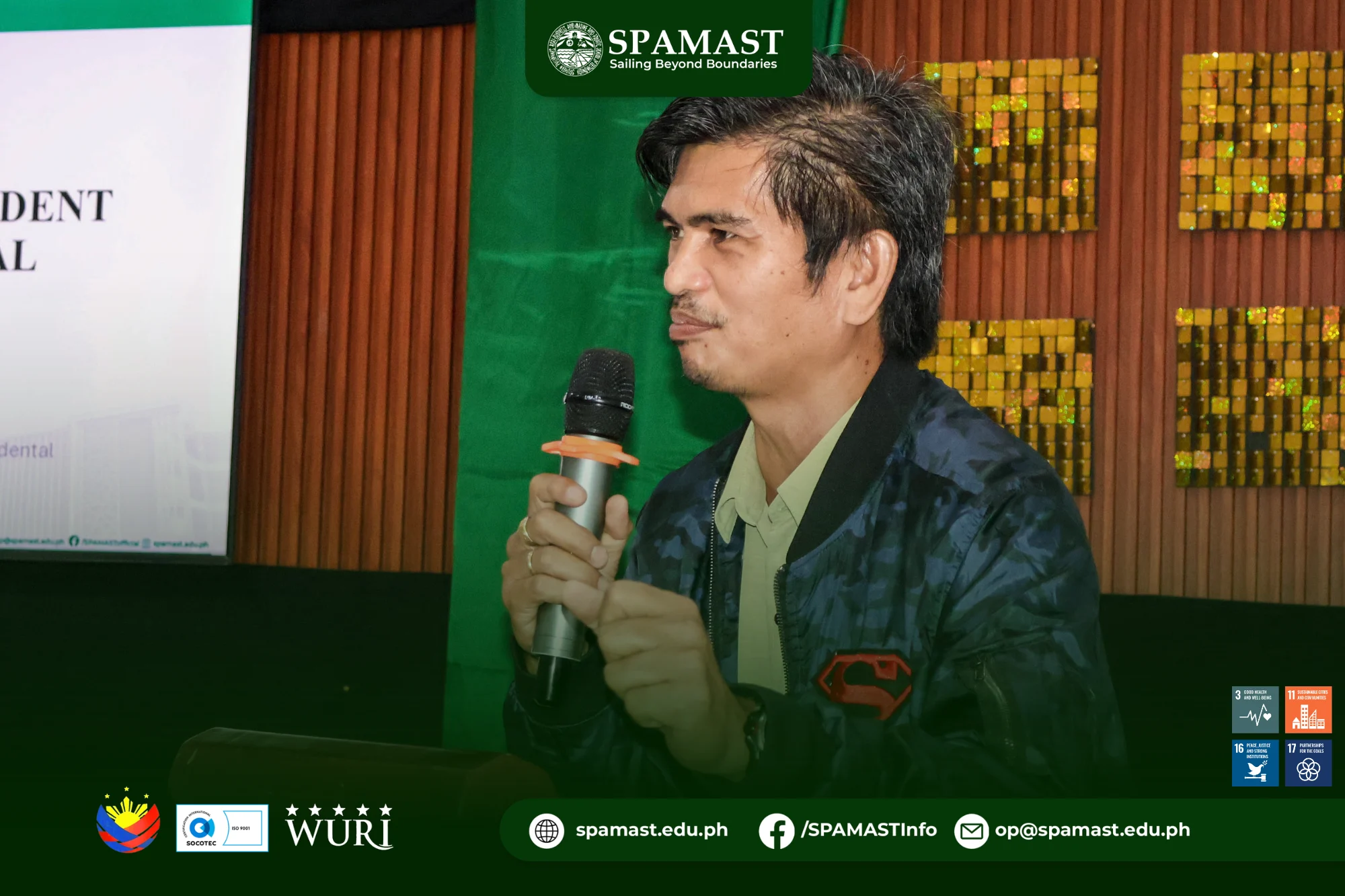
The proposed SPAMAST Command Incident Manual was presented by Mr. Pericisimo Grado Jr., Director of the School Disaster Risk Reduction and Management Office (SDRRMO), who discussed the manual’s provisions and proposed protocols for managing emergencies and critical incidents within the institution.
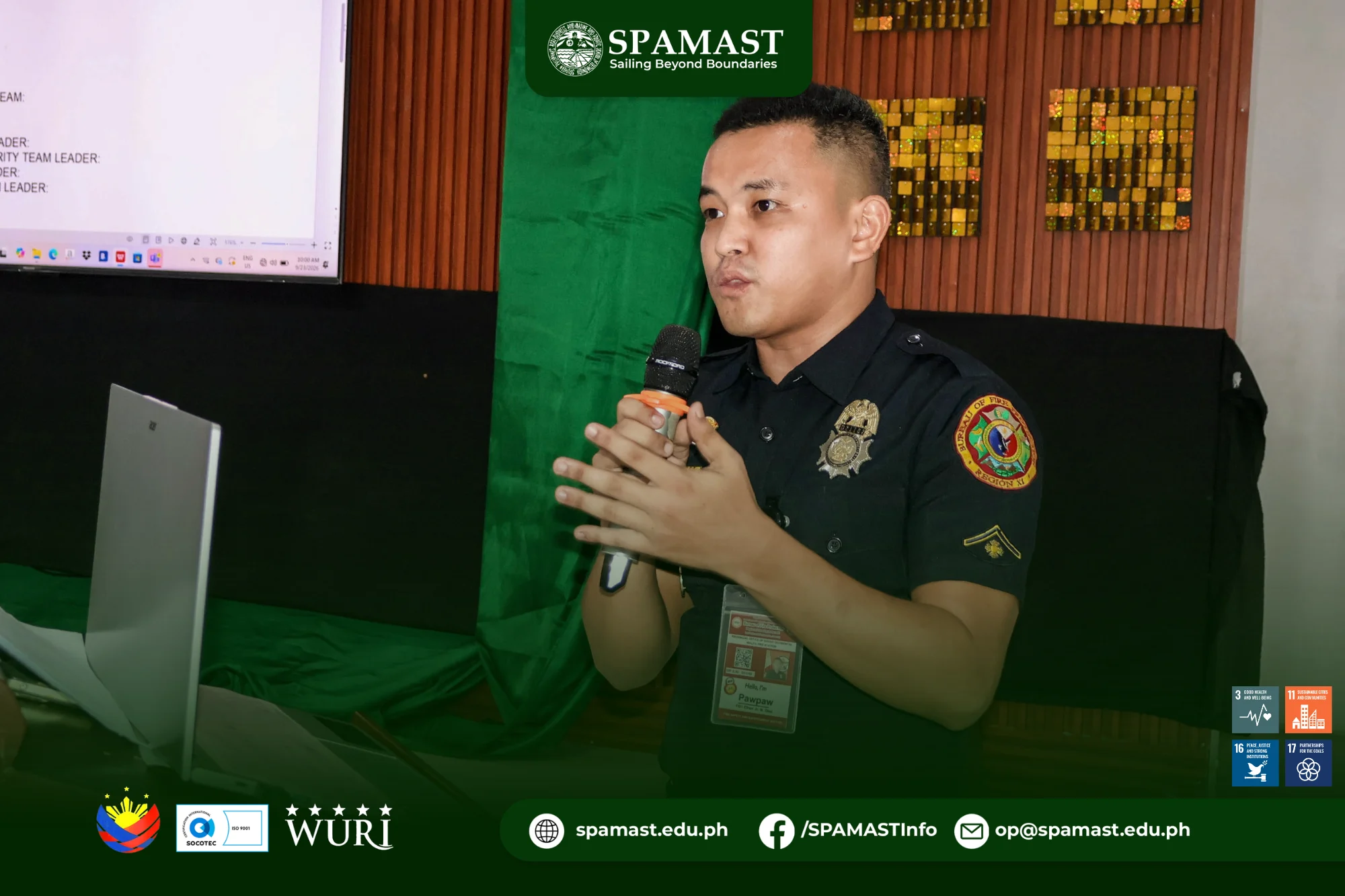
Among the partner-agency representatives who participated were FO2 Rogen Gil B. Perdogas and FO1 Efren Jr. N. Diez of the BFP, and PTCOL Mark Donnald Edquibal of the PNP.
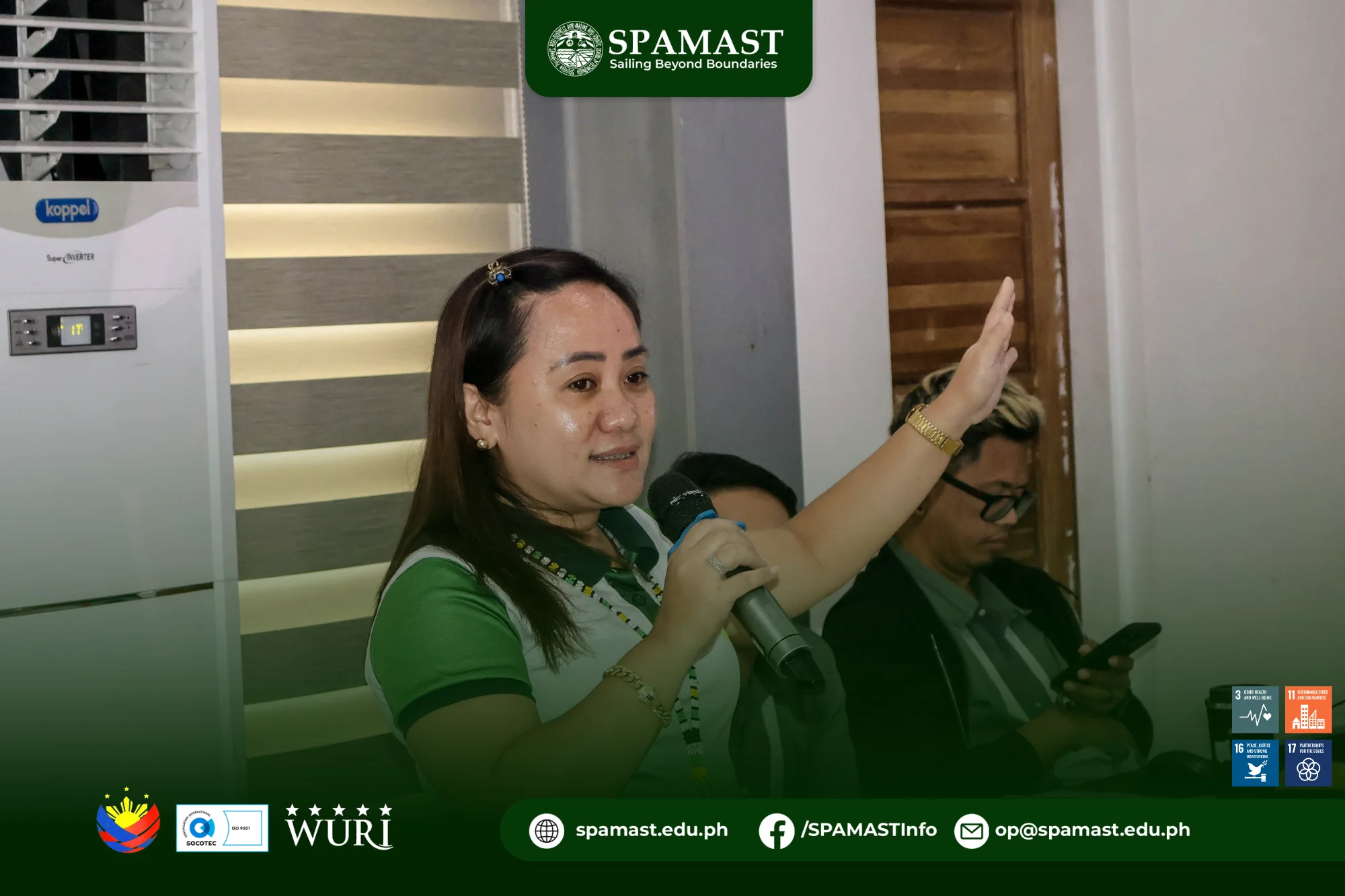
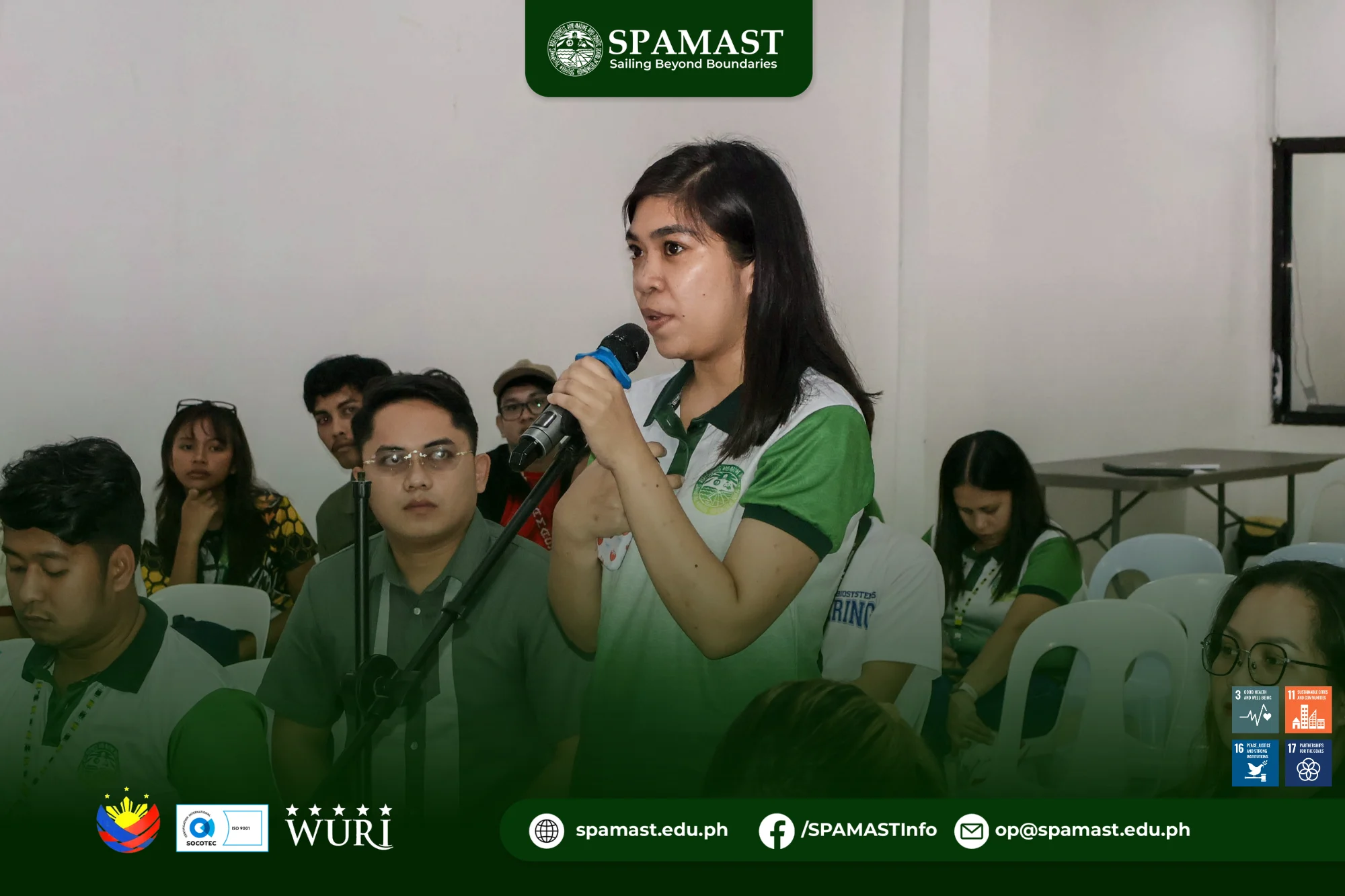
During the consultation, the BFP and PNP representatives shared their comments, suggestions, and technical recommendations on the proposed manual, drawing from their professional expertise in emergency response, public safety, and incident management. Their valuable inputs are expected to help refine response procedures, clarify protocols, and strengthen coordination among concerned offices and external agencies during emergencies and critical incidents.
The consultative activity underscores SPAMAST’s commitment to fostering a safe, secure, and disaster-resilient academic environment through collaborative planning and stakeholder engagement. The proposed Command Incident Manual is an important institutional initiative toward establishing clear, coordinated, and systematic procedures for responding to emergencies and other incidents within the College.
The activity supports the United Nations Sustainable Development Goals (SDGs), particularly SDG 3: Good Health and Well-being, by promoting the safety and welfare of the SPAMAST community; SDG 11: Sustainable Cities and Communities, through strengthened disaster preparedness and resilience; SDG 16: Peace, Justice and Strong Institutions, by advancing effective institutional response mechanisms; and SDG 17: Partnerships for the Goals, through collaboration with partner agencies and stakeholders.
Through this consultative initiative, SPAMAST continues to advance a culture of preparedness, safety, and shared responsibility, reinforcing its commitment to protecting the welfare of its academic community and ensuring a coordinated response to emergencies and critical incidents.