


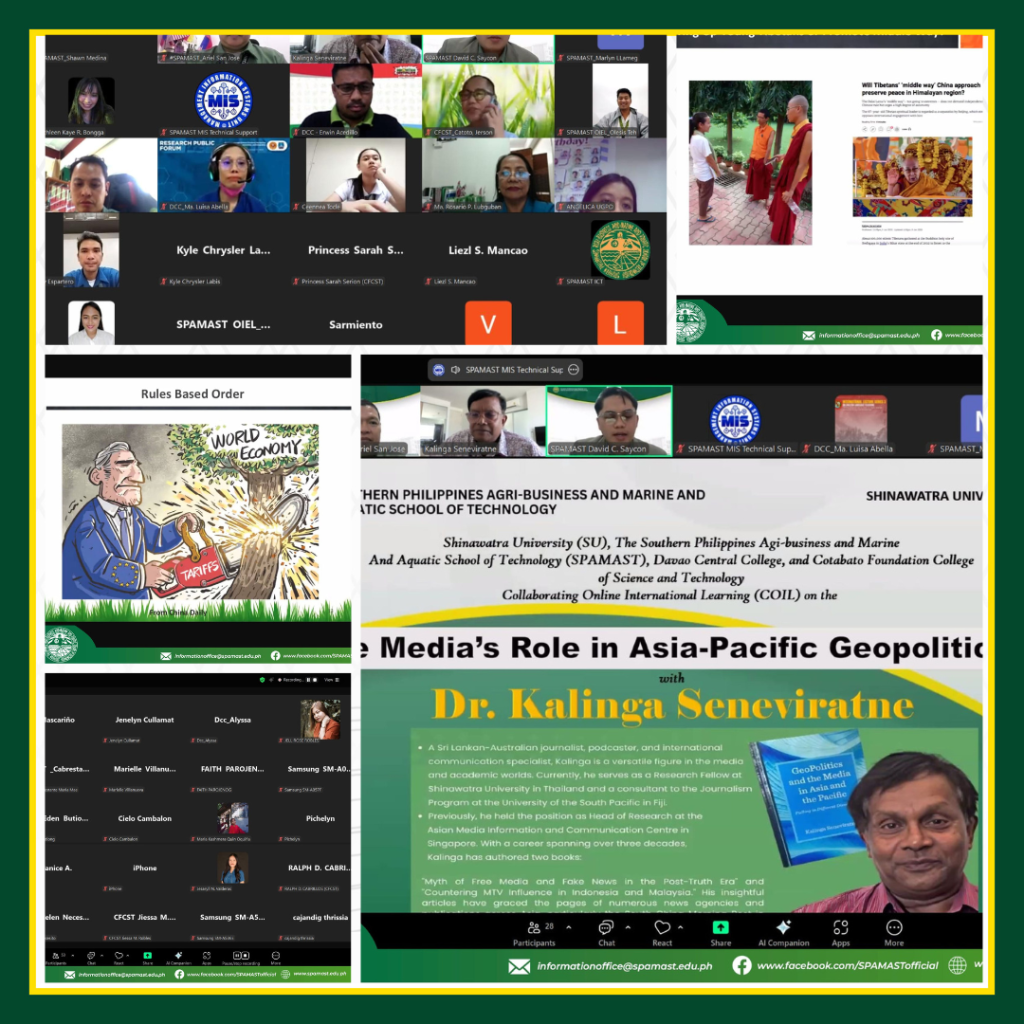
January 30, 2025—In a groundbreaking virtual forum, academic leaders, faculty, and students from across the Asia-Pacific gathered for the 𝑪𝒐𝒍𝒍𝒂𝒃𝒐𝒓𝒂𝒕𝒊𝒏𝒈 𝑶𝒏𝒍𝒊𝒏𝒆 𝑰𝒏𝒕𝒆𝒓𝒏𝒂𝒕𝒊𝒐𝒏𝒂𝒍 𝑳𝒆𝒂𝒓𝒏𝒊𝒏𝒈 (𝑪𝑶𝑰𝑳) session on “𝑻𝒉𝒆 𝑴𝒆𝒅𝒊𝒂’𝒔 𝑹𝒐𝒍𝒆 𝒊𝒏 𝑨𝒔𝒊𝒂–𝑷𝒂𝒄𝒊𝒇𝒊𝒄 𝑮𝒆𝒐𝒑𝒐𝒍𝒊𝒕𝒊𝒄𝒔.” Hosted via Zoom, the event brought together Shinawatra University (Thailand), the Southern Philippines Agri-Business and Marine and Aquatic School of Technology (SPAMAST), Davao Central College, and Cotabato Foundation College of Science and Technology (CFCST) in a shared mission to examine the media’s influence in shaping geopolitical landscapes.
The session featured a keynote lecture by Dr. Prof. Kalinga Seneviratne, a distinguished fellow at Shinawatra University, who provided an in-depth analysis of the intricate relationship between media narratives and power structures in the region. Dr. Seneviratne emphasized how digital platforms, mainstream news, and independent journalism impact political discourse, international relations, and regional stability. “The media has become a strategic tool for diplomacy and conflict alike,” he stated, underscoring the responsibility of journalists and media scholars in ensuring balanced and ethical reporting. A dynamic open forum followed the lecture, allowing participants to engage in thought-provoking discussions, raising critical questions about media bias, misinformation, and policy influence.
Dr. Marlyn B. Llameg, Vice President for Academic Affairs of SPAMAST, delivered a compelling welcome speech, highlighting the institution’s commitment to fostering international academic collaborations. She emphasized the value of COIL in expanding the intellectual horizons of students and faculty alike, ensuring that discussions on critical global issues remain accessible and inclusive. As the session drew to a close, Dr. Ariel E. San Jose, SPAMAST’s Director for Internationalization and External Linkages, delivered the closing message, reinforcing the significance of cross-border academic collaboration in navigating today’s complex media landscape. “Through COIL, we bridge nations and minds, cultivating critical thinking and global awareness among our students and scholars,” he remarked.
The event concluded with a virtual photo opportunity, symbolizing the shared commitment of the participating institutions to advancing global discourse on media and geopolitics. With a promise of future collaborations, COIL continues to pave the way for internationalized education in an increasingly interconnected world.