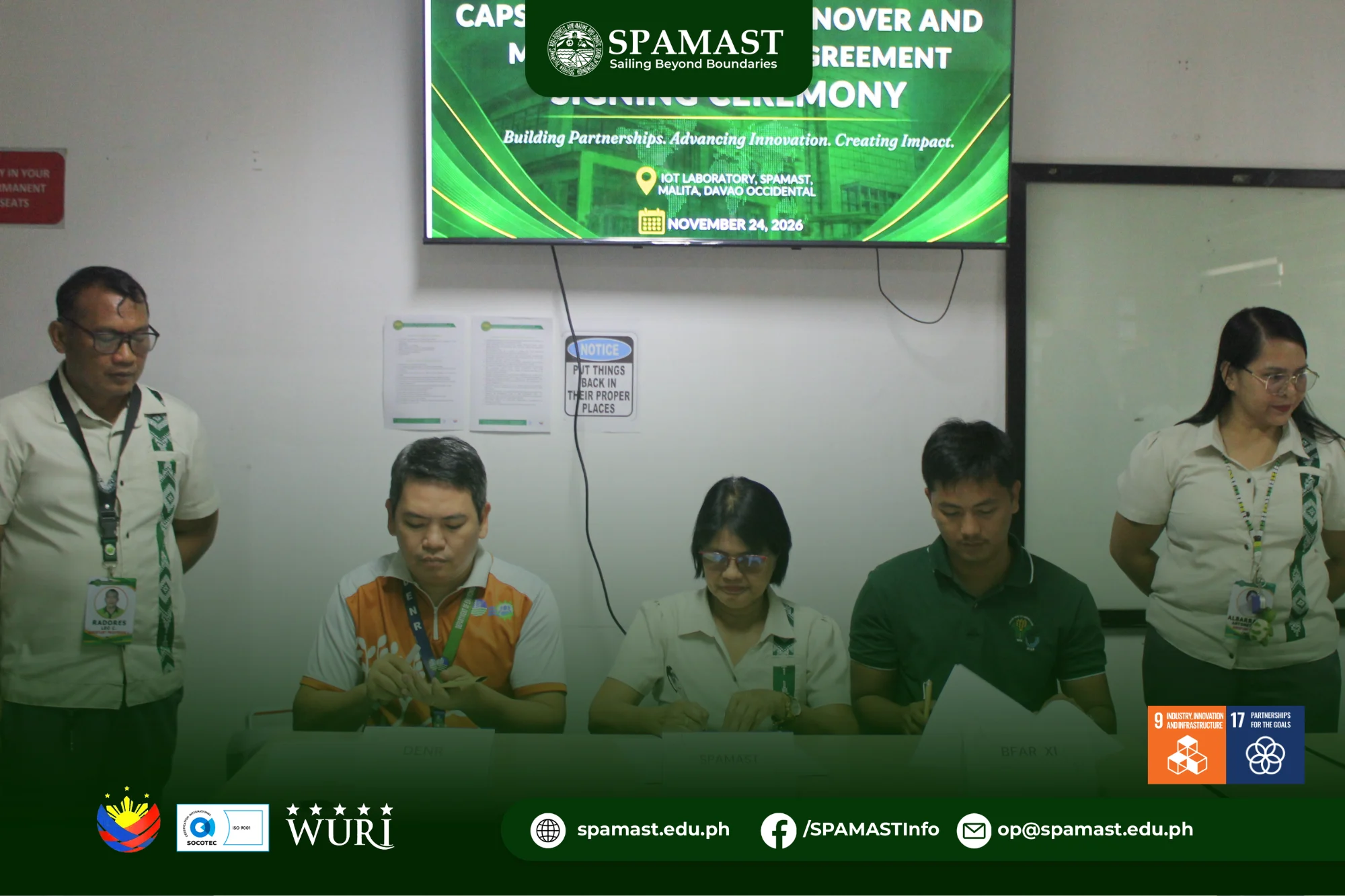
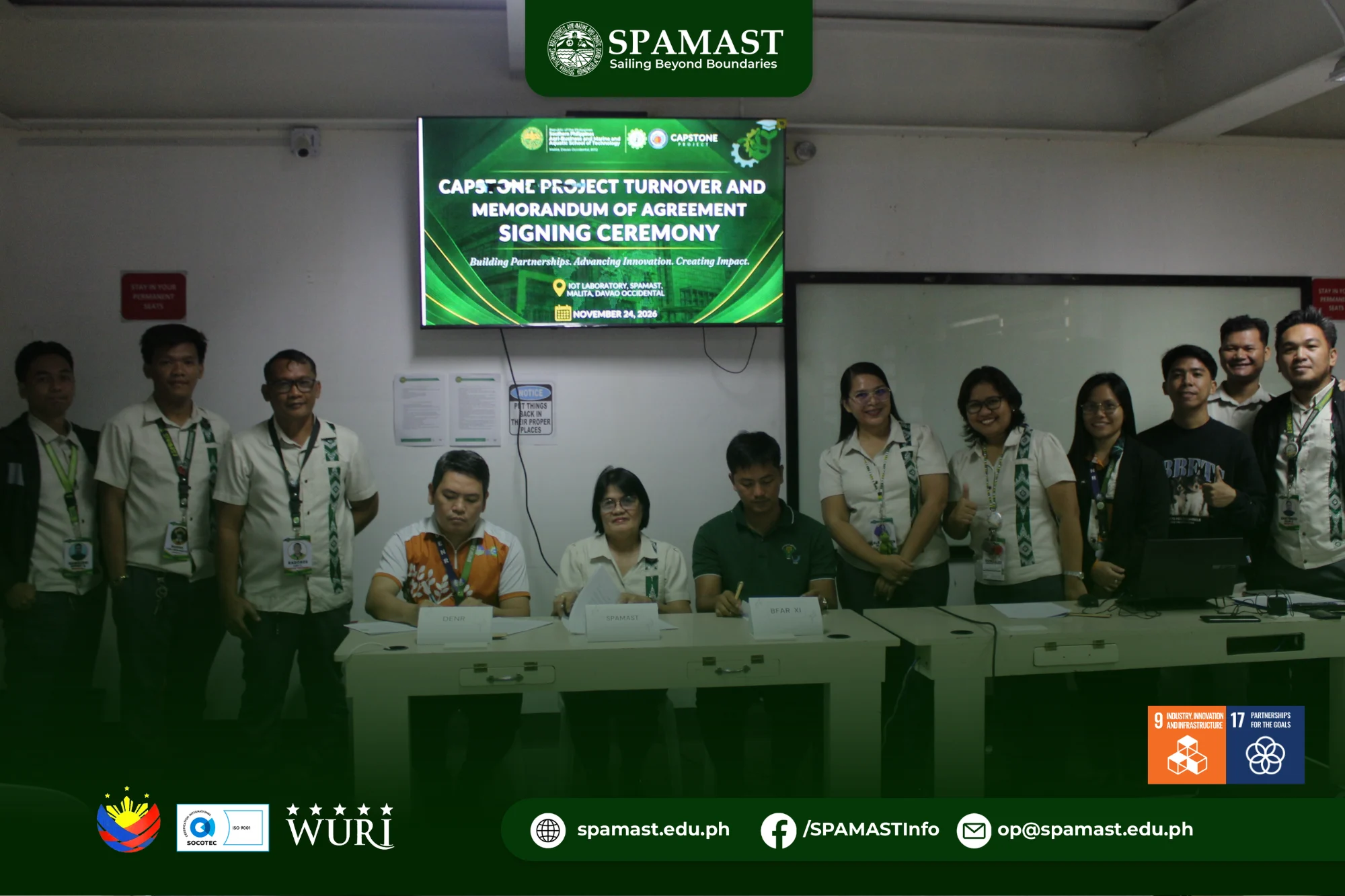
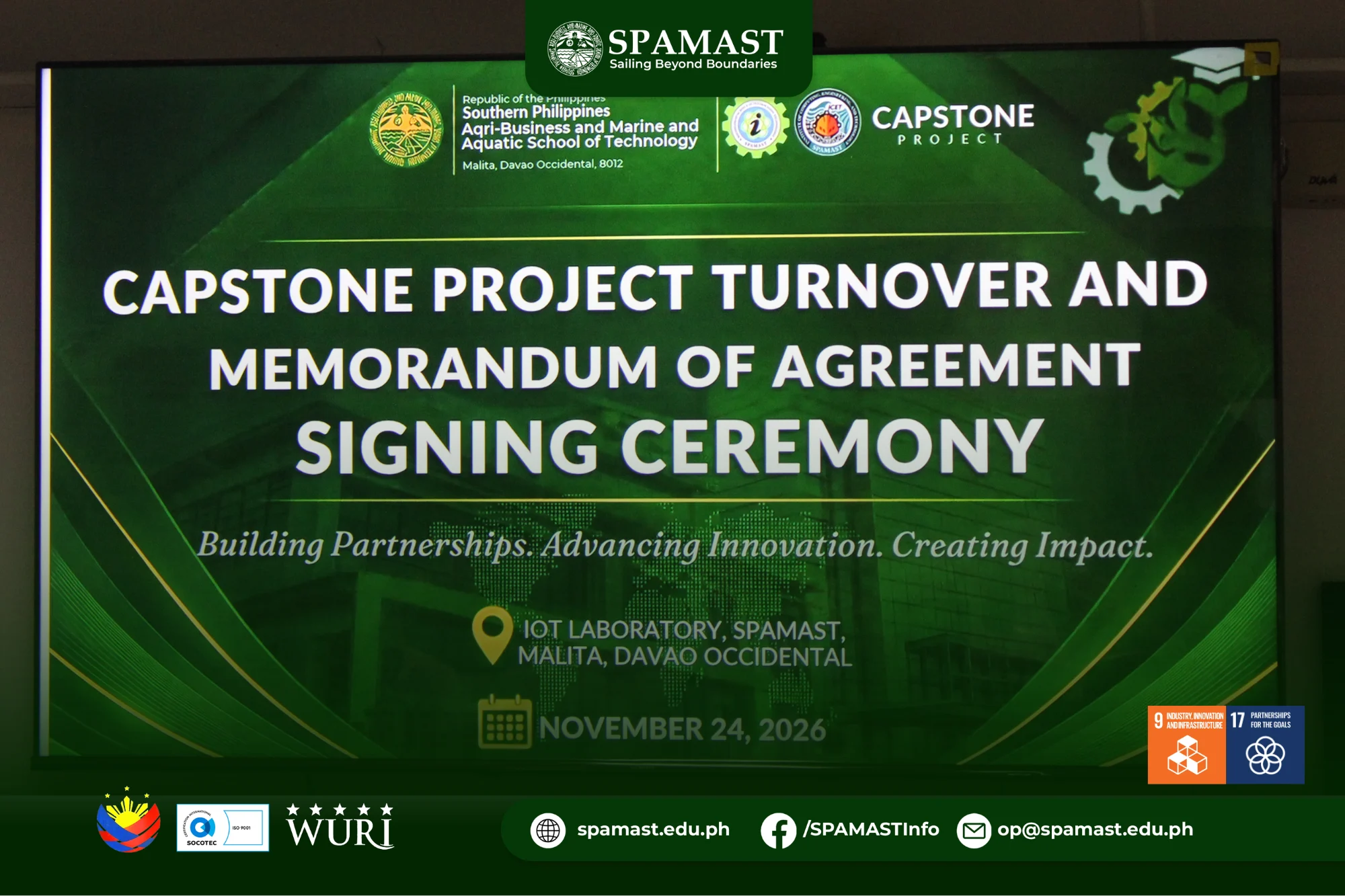
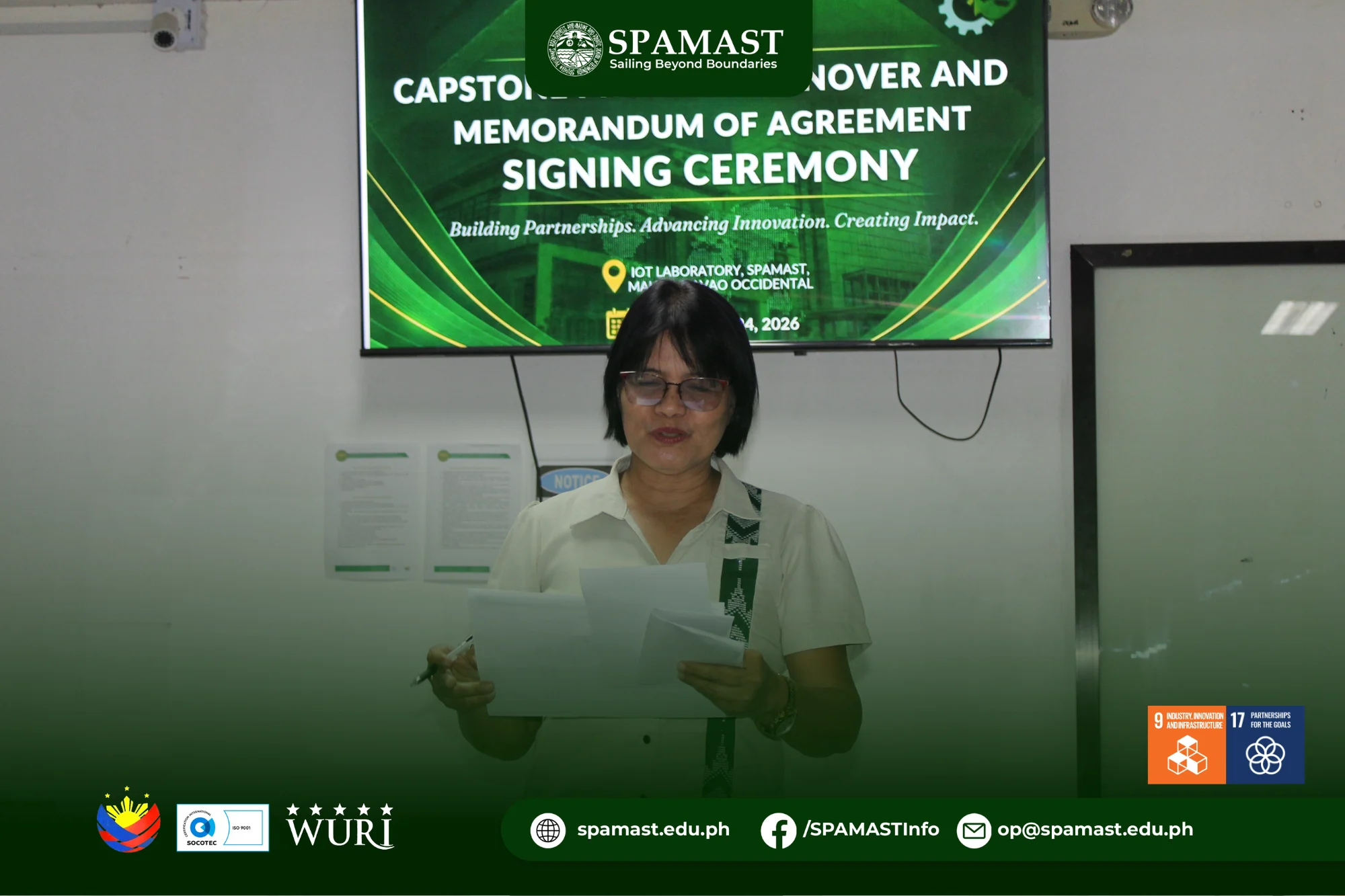
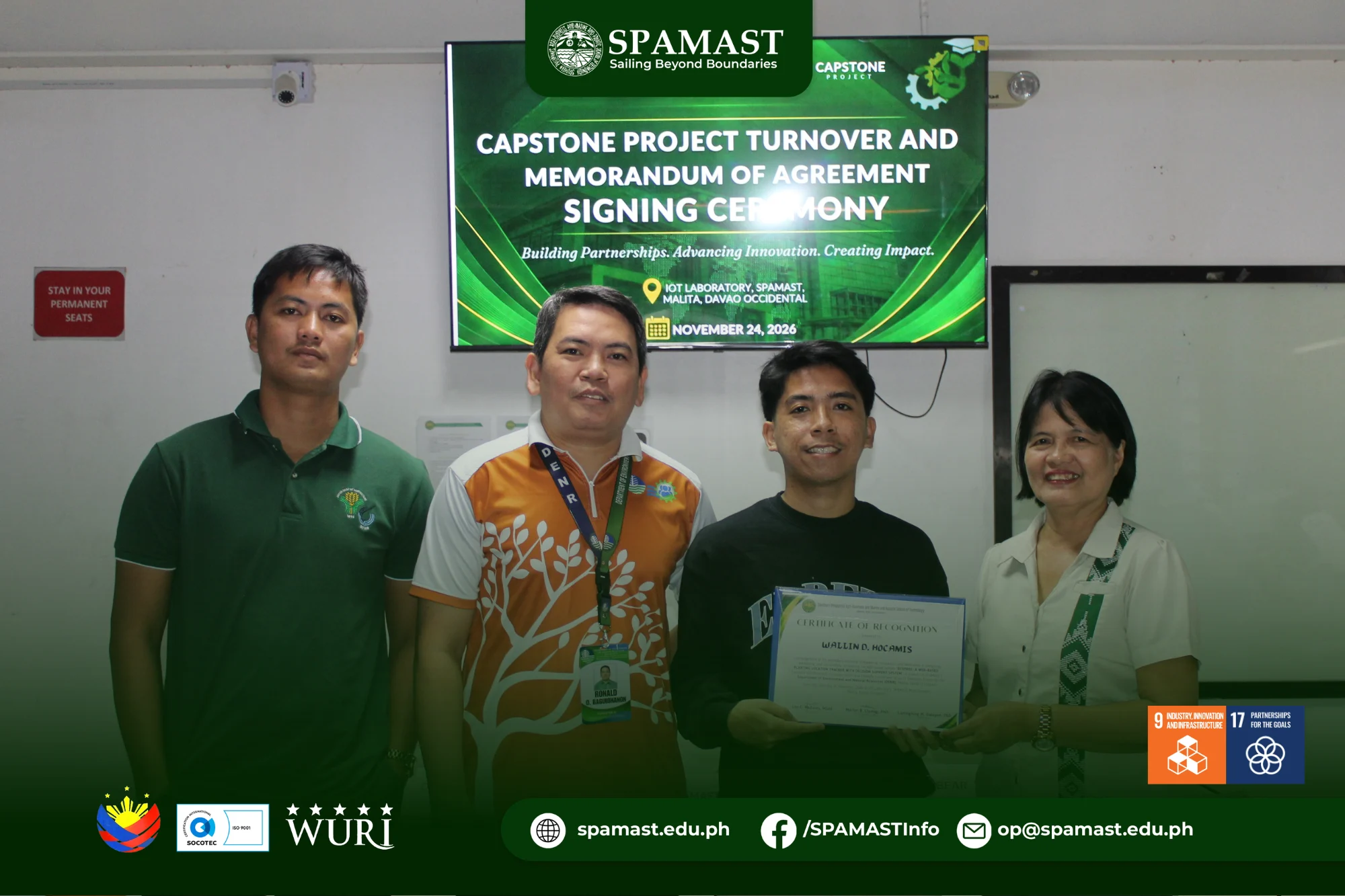
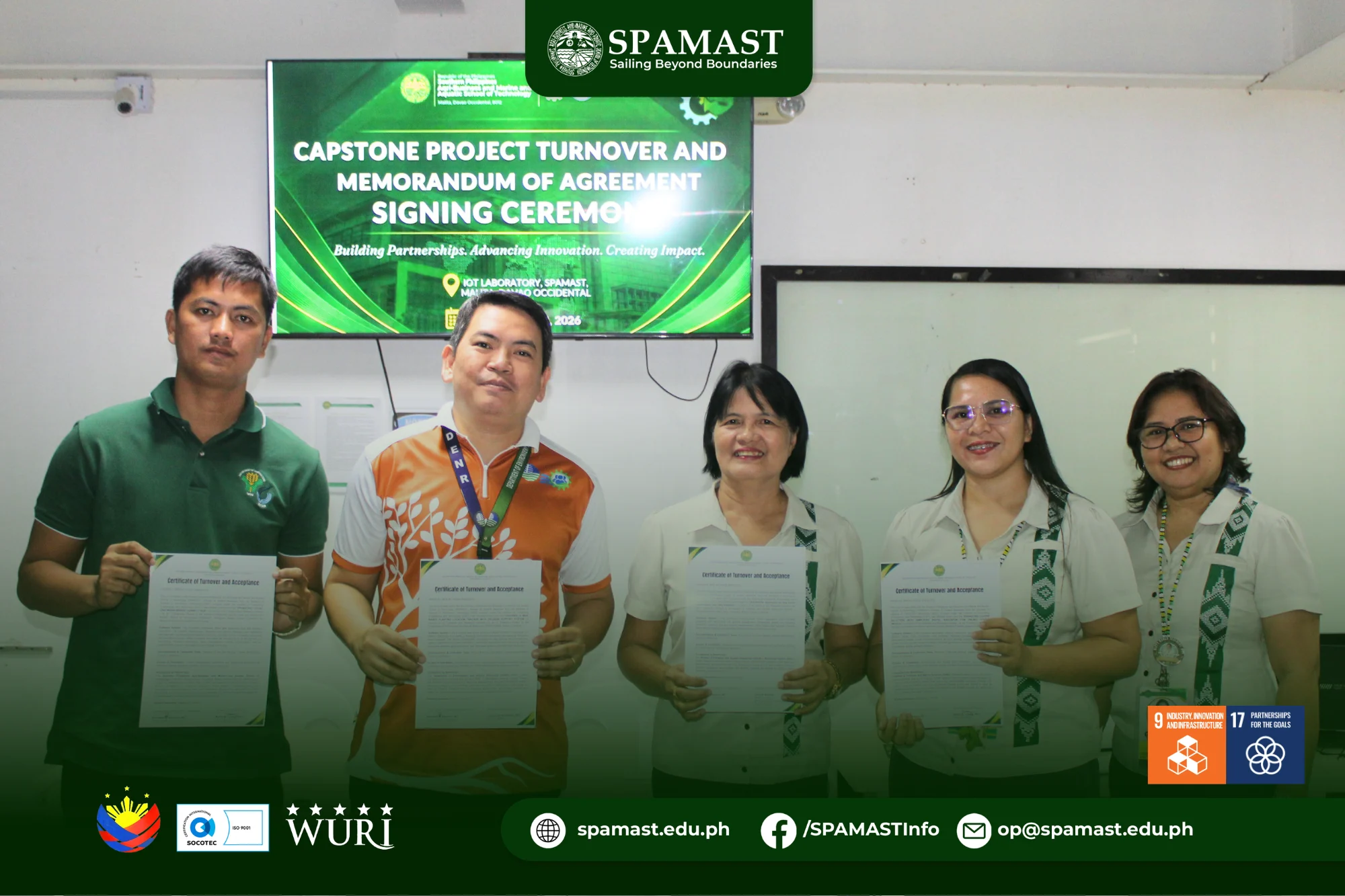
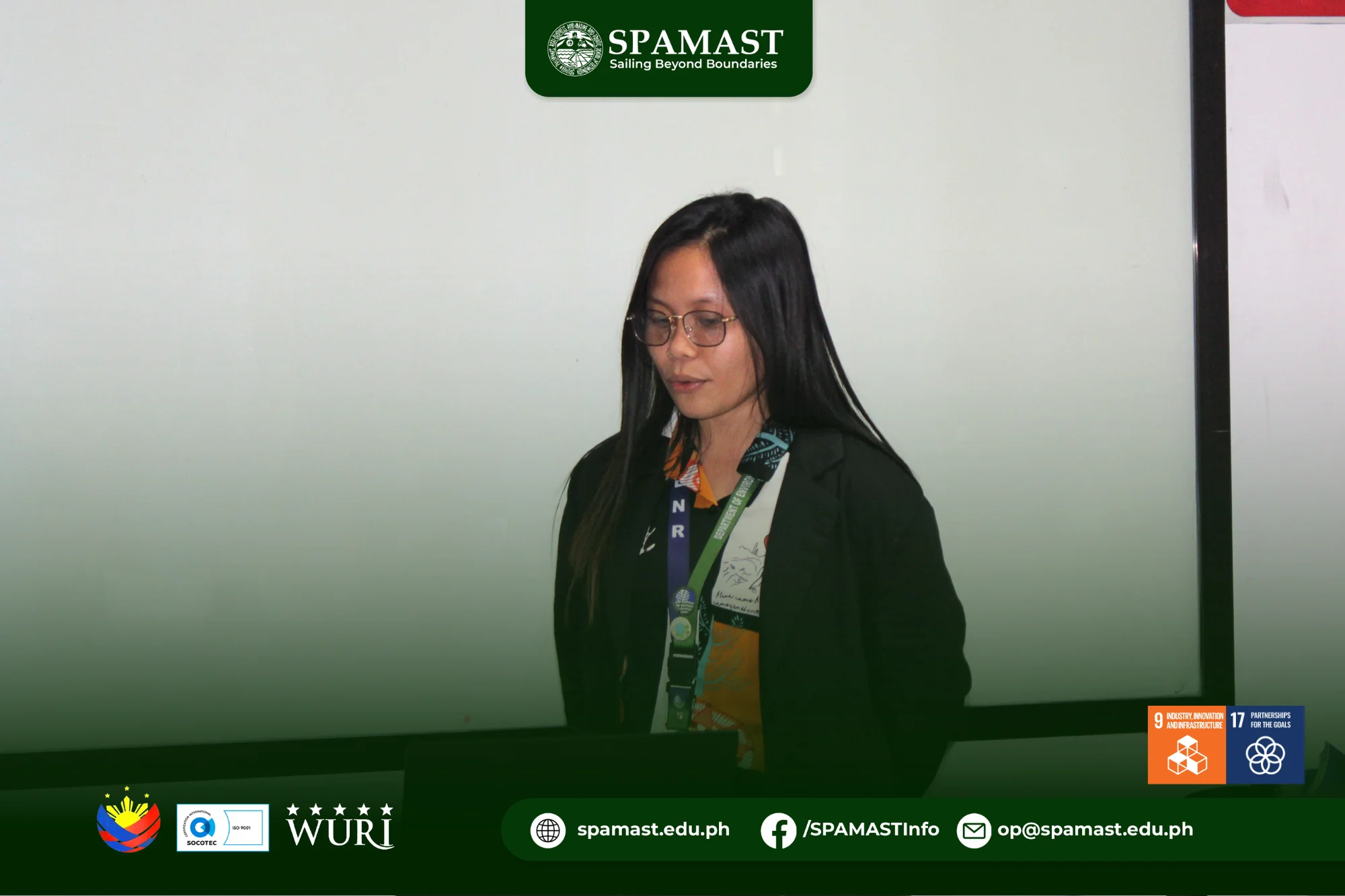
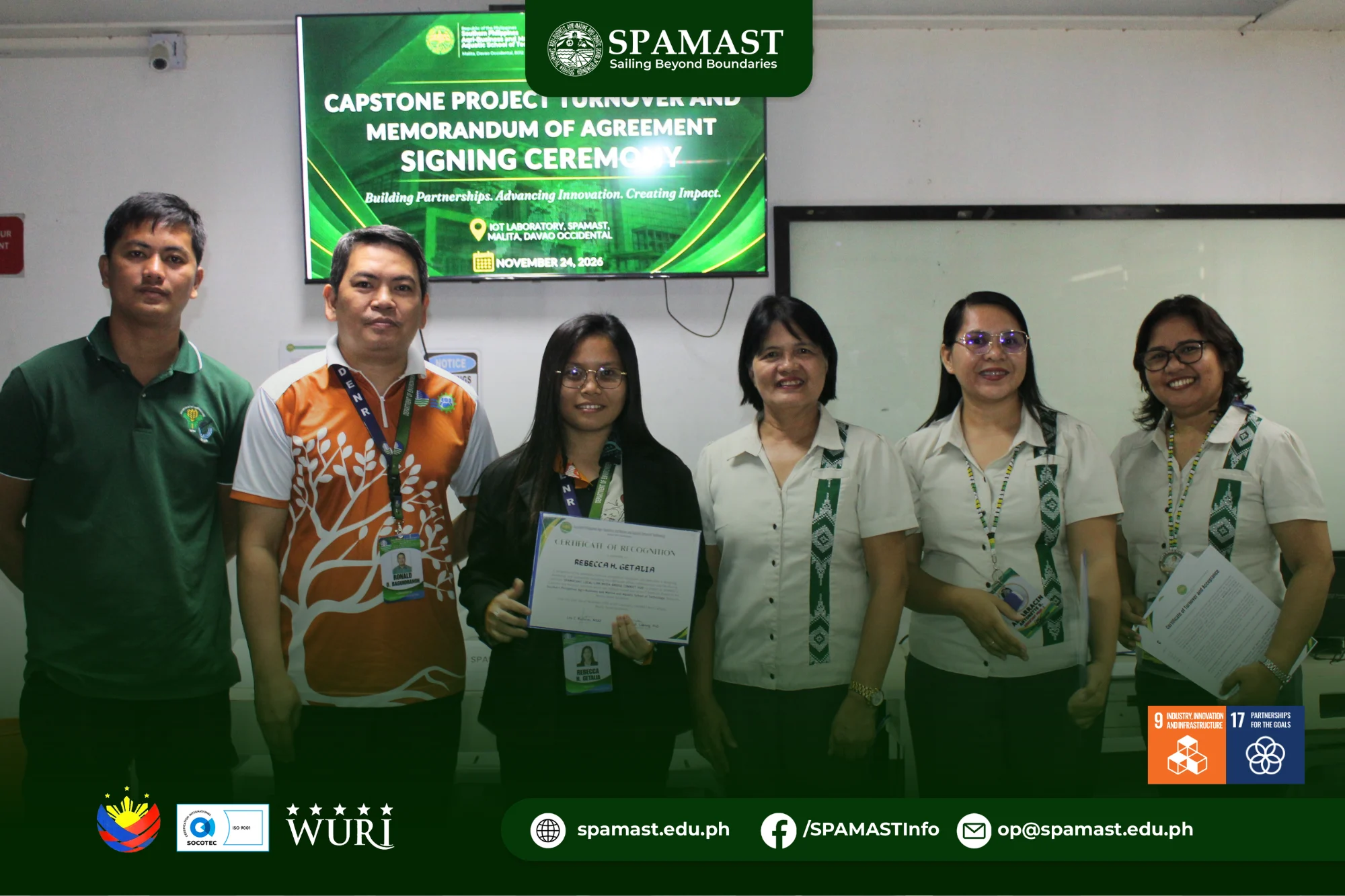
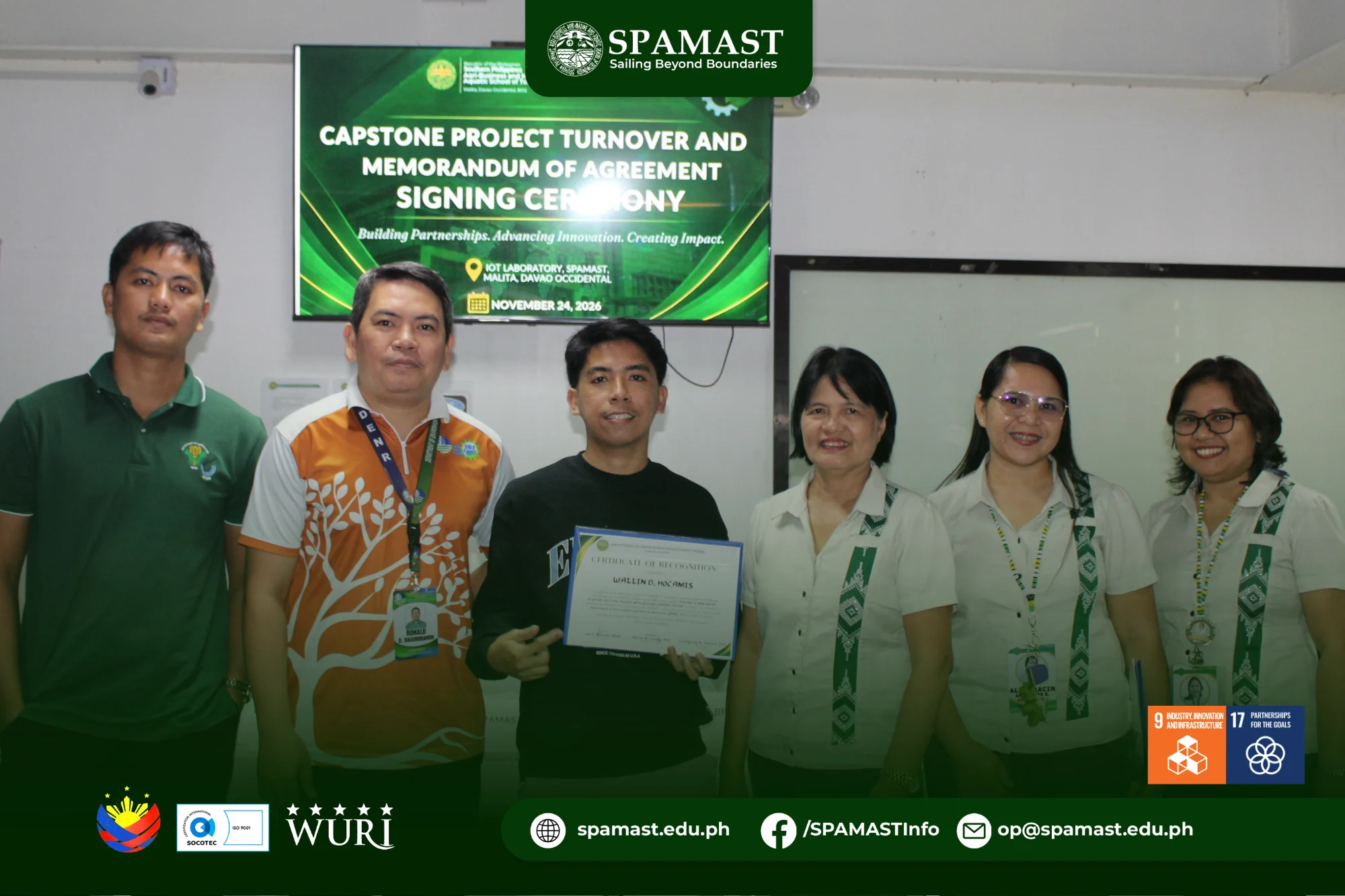
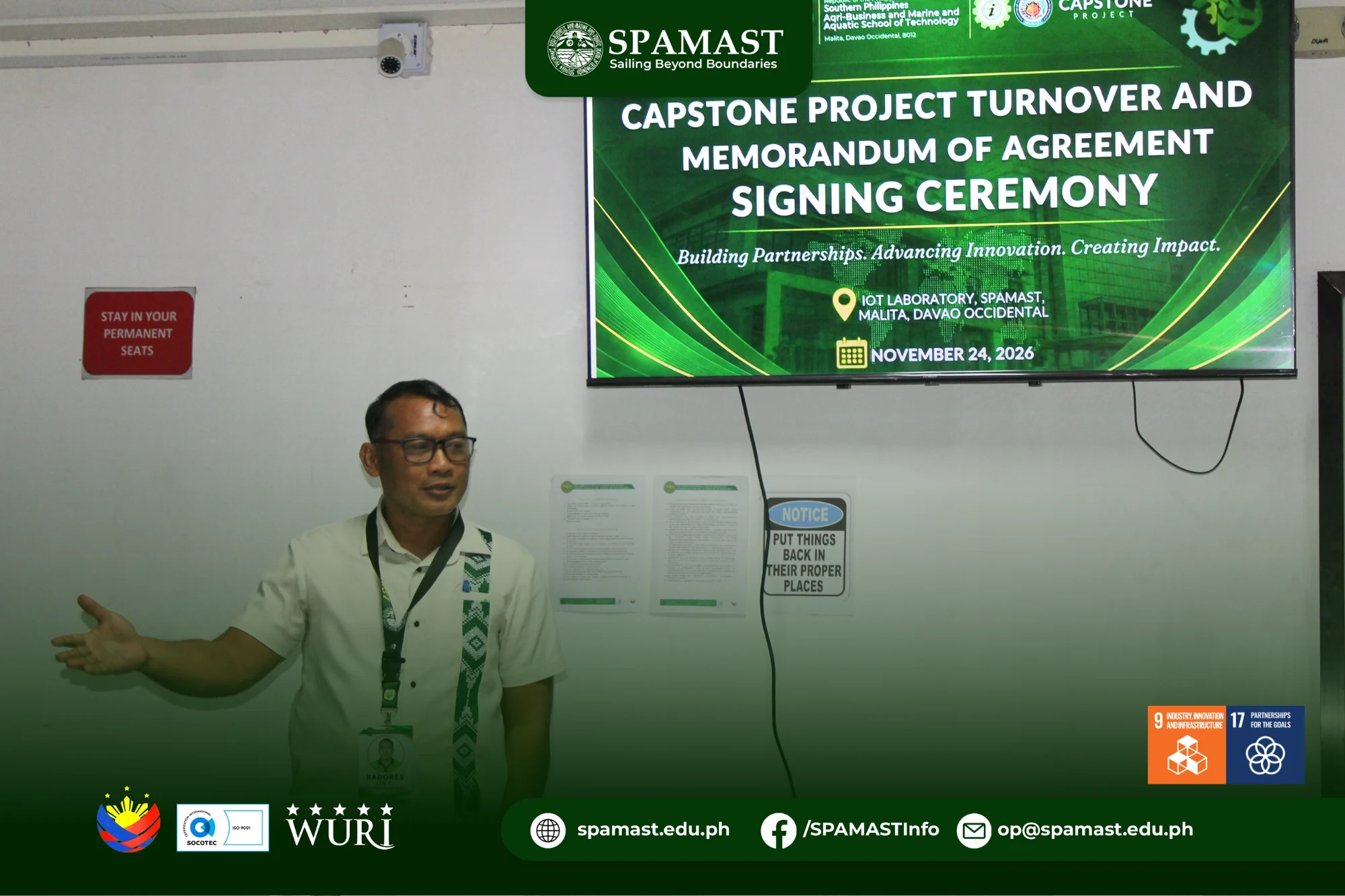
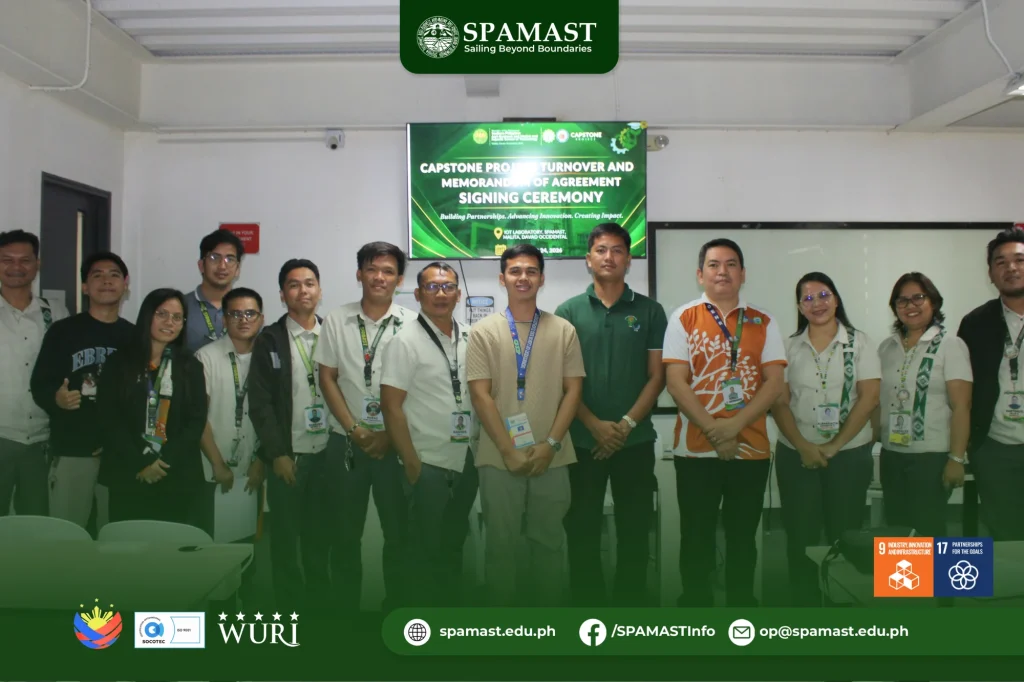
 MALITA, Davao Occidental | November 24, 2026 — Strengthening its commitment to technology-driven innovation and community engagement, the Southern Philippines Agri-Business and Marine and Aquatic School of Technology (SPAMAST), through its Institute of Computing, Engineering and Technology (ICET), particularly the Information Technology Department, conducted the Capstone Project Turnover as Extended Technology to Beneficiary and MOA Signing at the IOT Laboratory, SPAMAST, Malita, Davao Occidental.
The activity aimed to extend the practical application of student-developed technologies beyond the academic setting by formally presenting and turning over a completed capstone project to its intended beneficiary. Through this initiative, SPAMAST underscores the importance of transforming academic outputs into functional technological solutions that can address identified needs, improve existing processes, and provide meaningful benefits to stakeholders and the community.
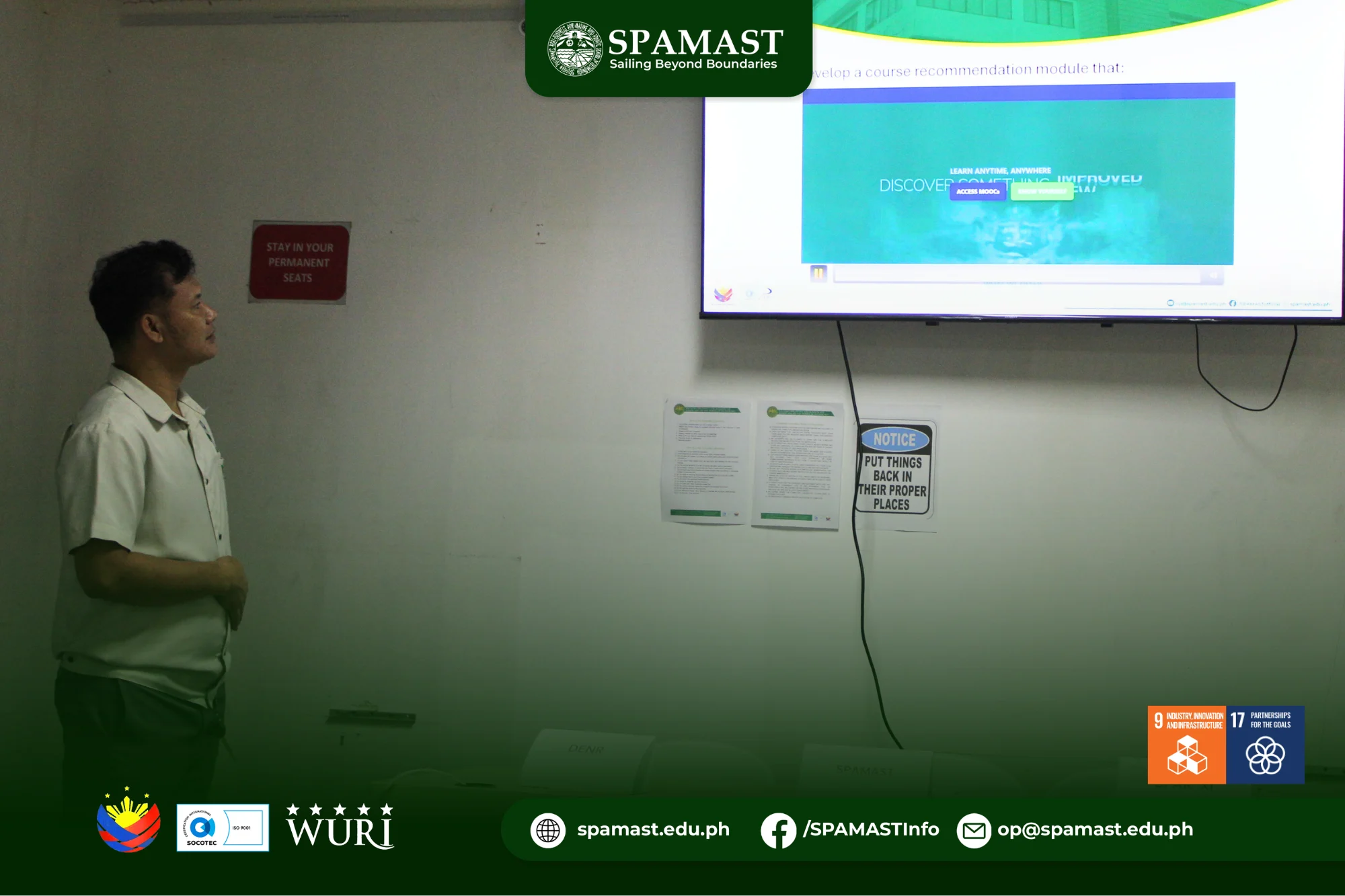
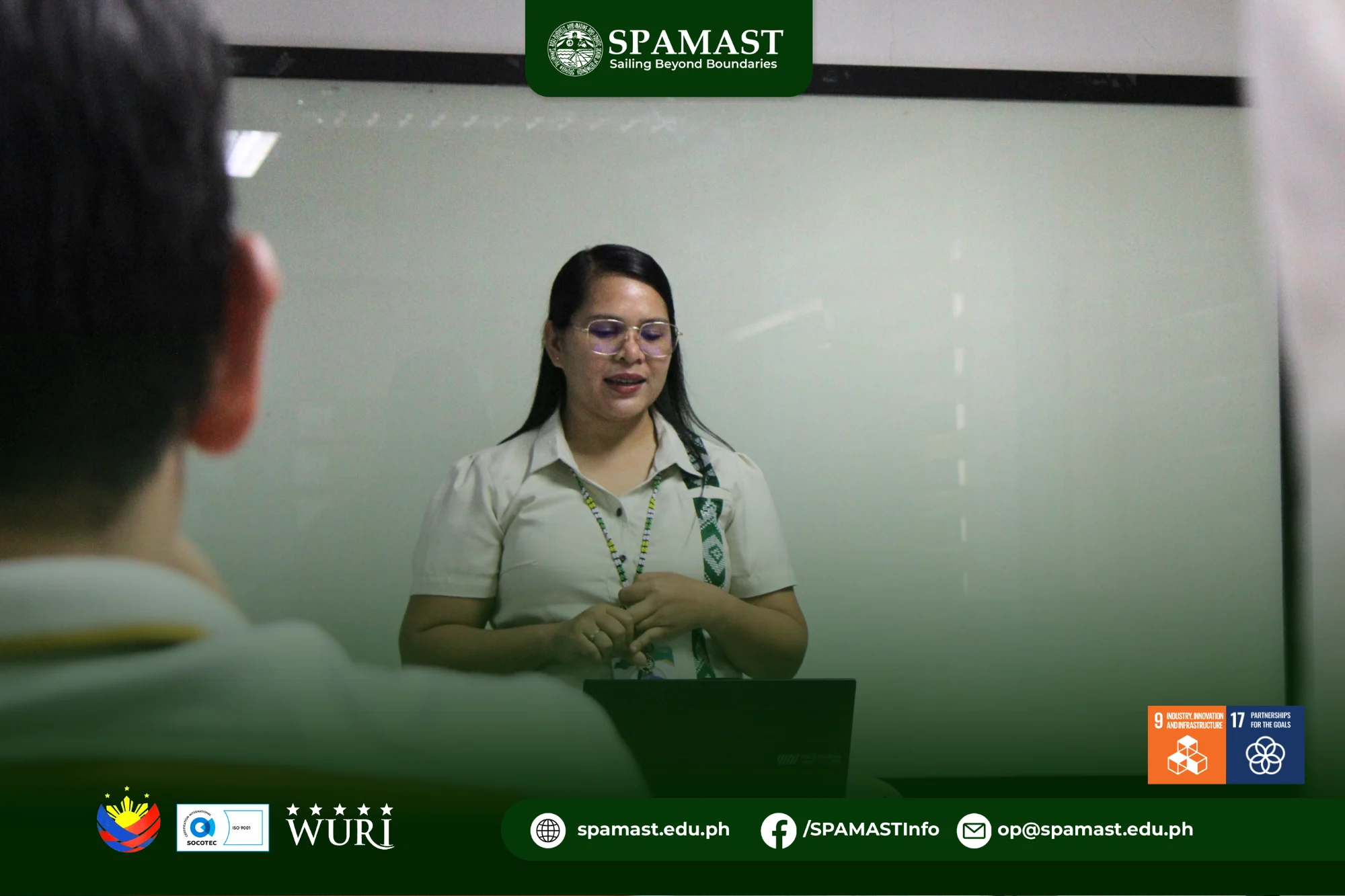
The activity featured the presentation and demonstration of the capstone project’s features, functions, and intended applications. The project team also conducted an orientation to familiarize the beneficiary and stakeholders with its proper utilization, basic operation, and maintenance. An interactive discussion provided an opportunity for the beneficiary to raise questions, share feedback, clarify operational requirements, and identify possible areas for improvement and technical support.
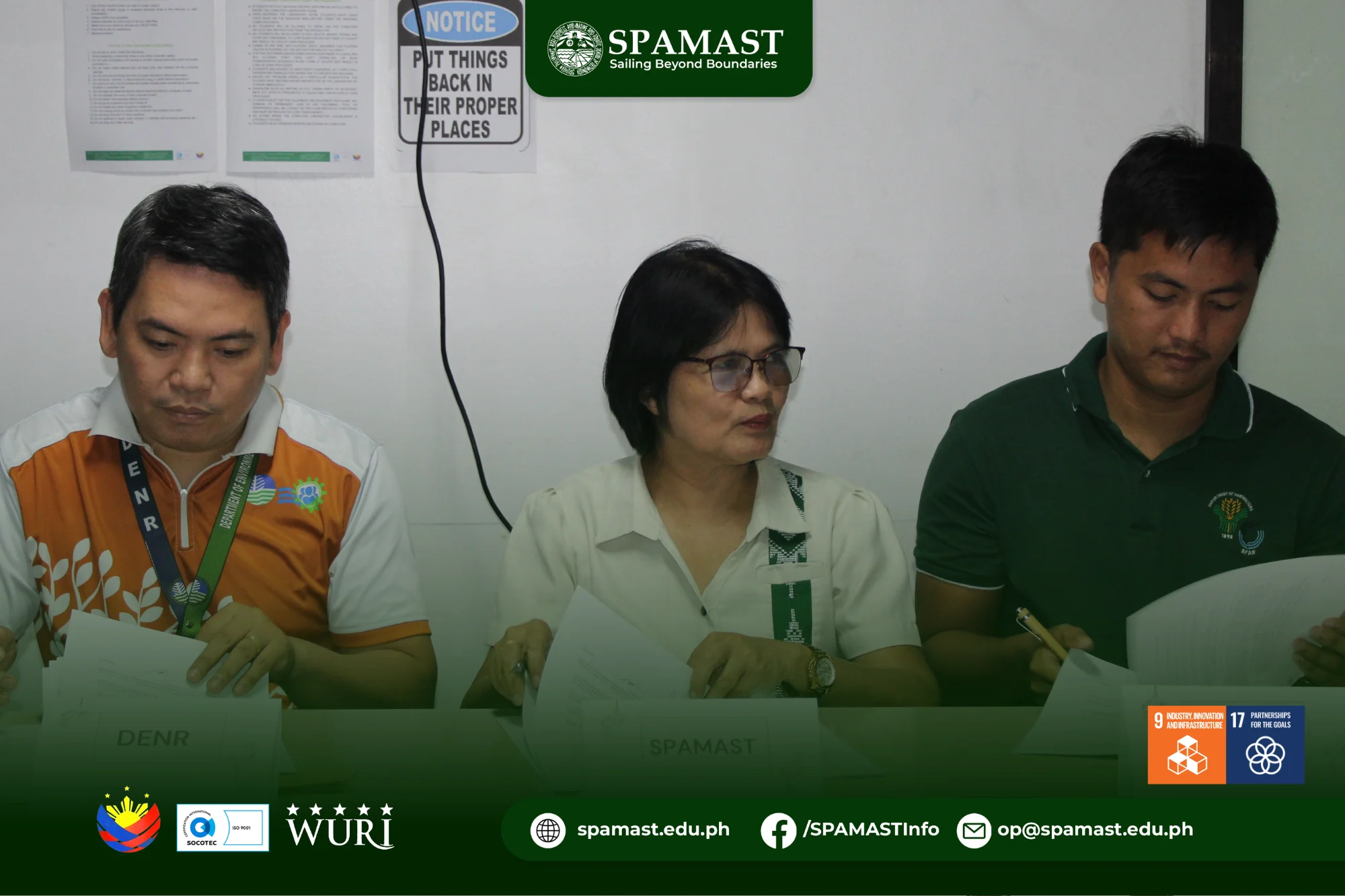
A significant highlight of the activity was the signing of a Memorandum of Agreement (MOA), establishing a formal framework for collaboration between SPAMAST and its partner agencies, particularly the DENR Provincial Office and the BFAR Provincial Office. The agreement establishes the respective roles, responsibilities, and commitments of the parties concerning the utilization, management, maintenance, and sustainability of the transferred technology, subject to applicable institutional approval procedures.
The activity brought together ten IT faculty members, student innovators, and representatives from the DENR Provincial Office and BFAR Provincial Office, reflecting the collaborative efforts of the academe and government agencies in ensuring that technology-based innovations are translated into practical applications.
Through this initiative, SPAMAST reinforces its commitment to outcomes-based education, innovation, knowledge transfer, and responsive community engagement. It also provides students with opportunities to see their academic endeavors create value beyond the classroom, emphasizing that technological innovation becomes more meaningful when it addresses real-world needs.
The initiative contributes to Sustainable Development Goal (SDG) 9: Industry, Innovation and Infrastructure, by promoting technological innovation and the practical application of information technology; and SDG 17: Partnerships for the Goals, through strengthened institutional collaboration and shared commitments among SPAMAST, the DENR Provincial Office, and the BFAR Provincial Office.
Ultimately, the capstone project turnover demonstrates SPAMAST’s continuing efforts to bridge academic learning and community needs, ensuring that student-developed innovations serve not only as academic accomplishments but also as instruments for sustainable development and technological advancement.