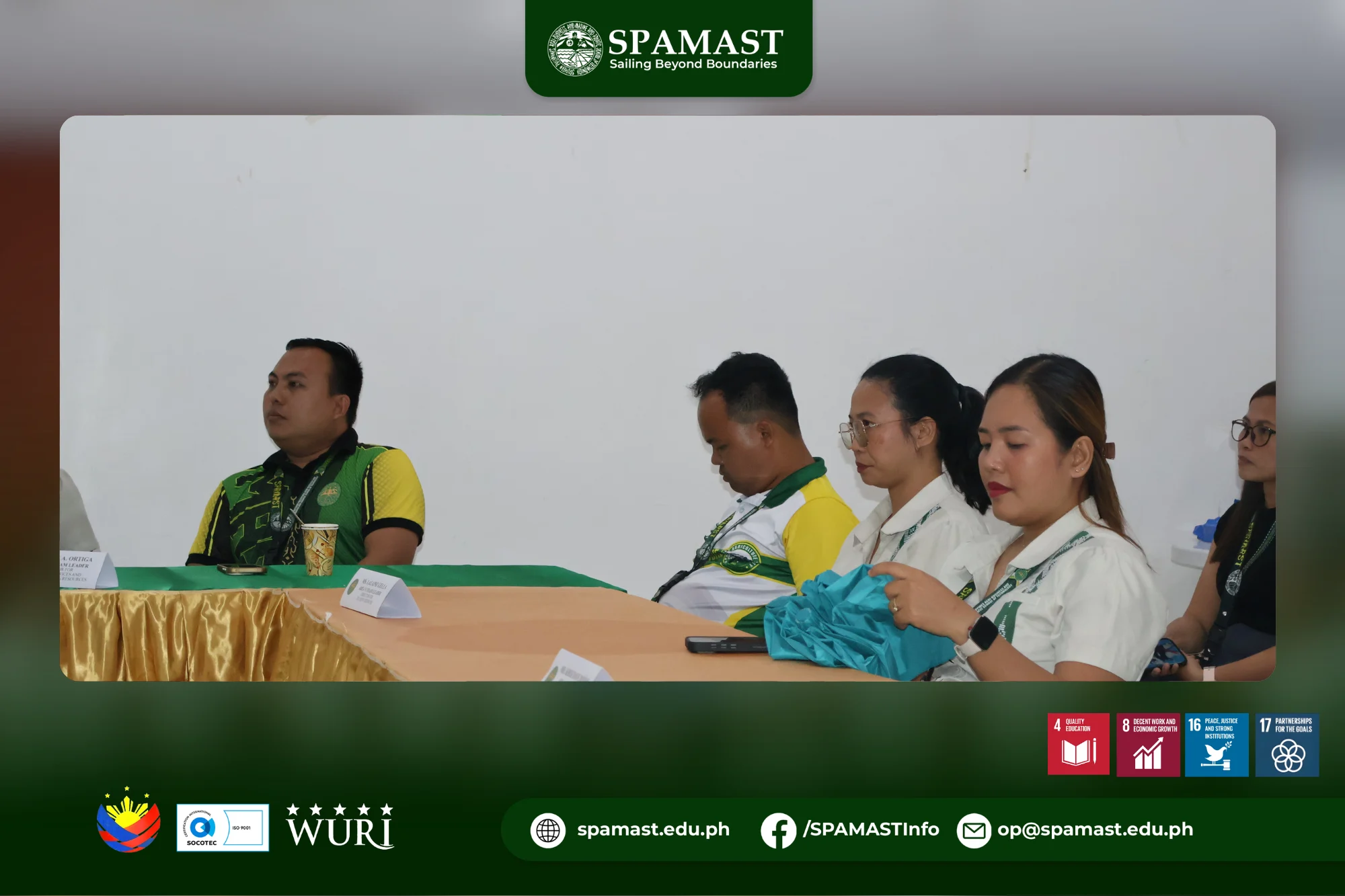
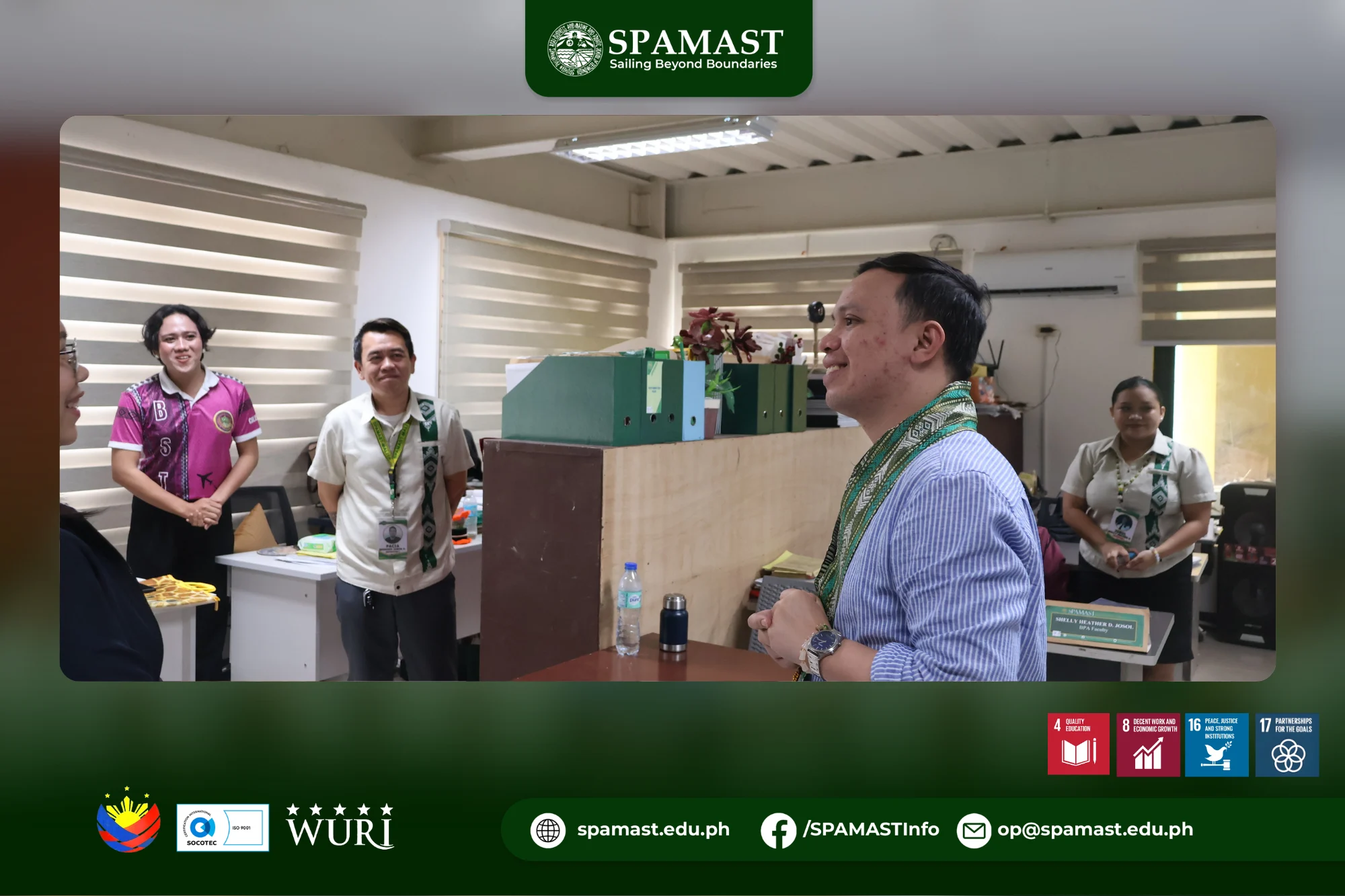
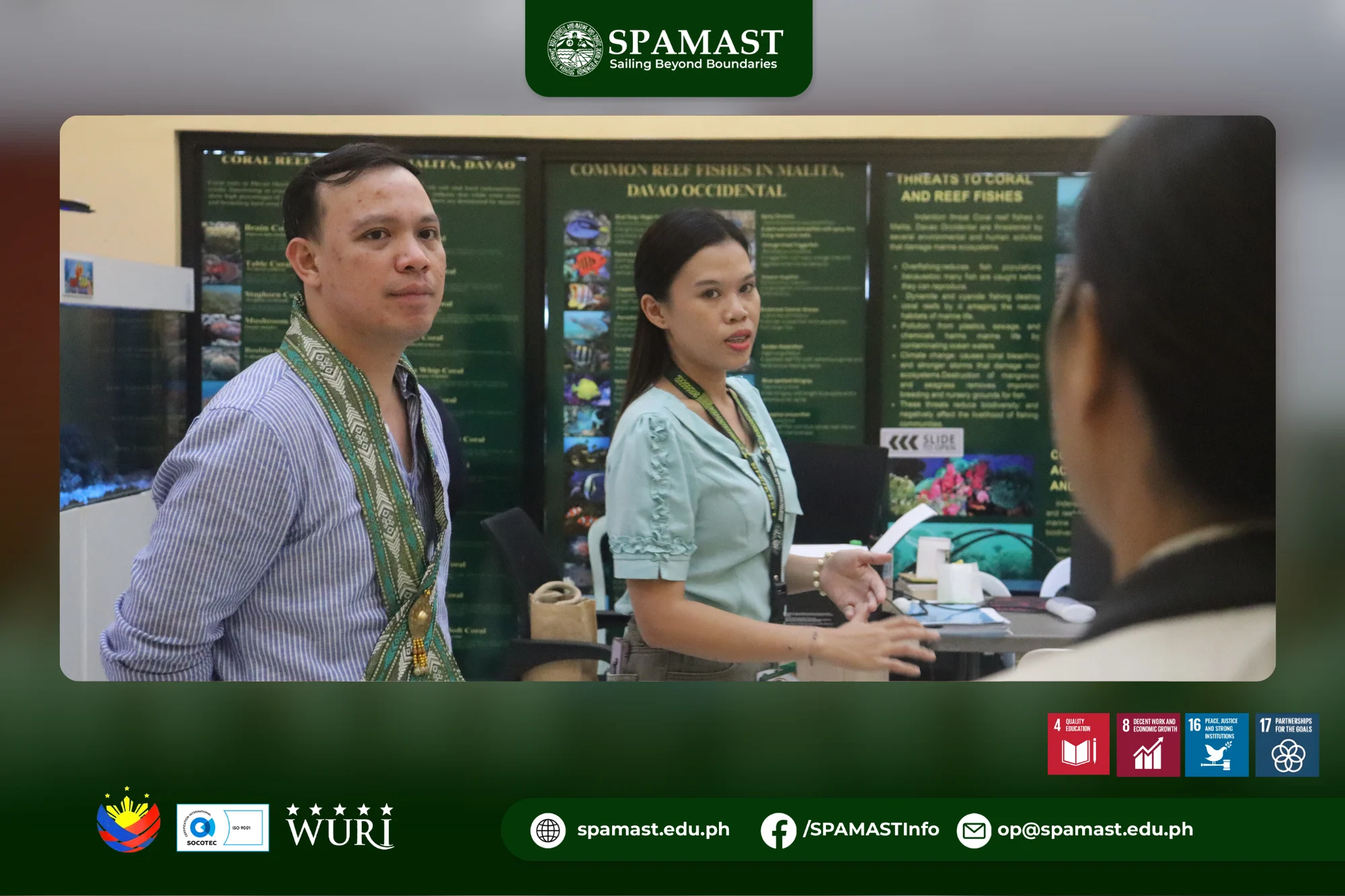
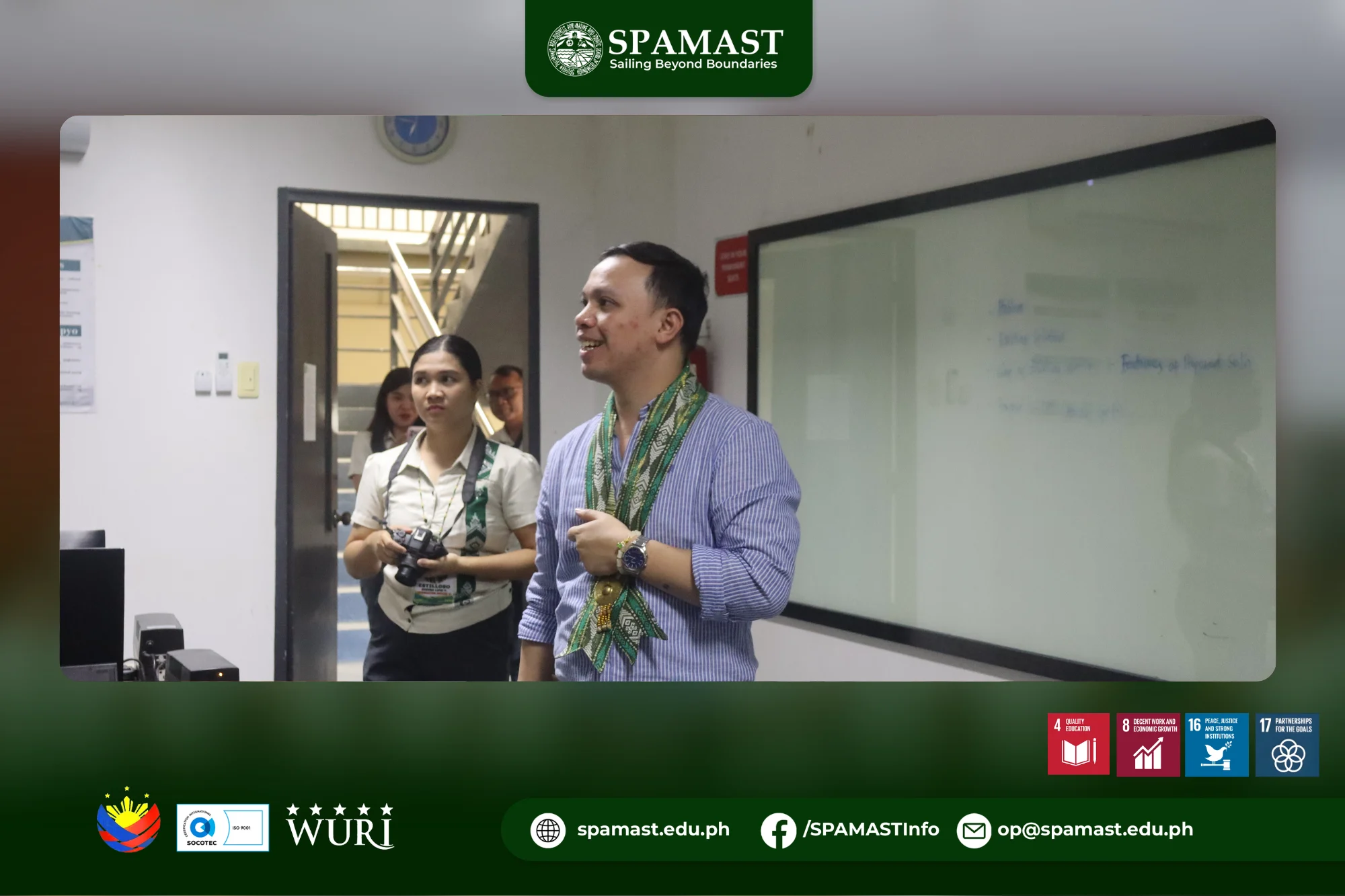
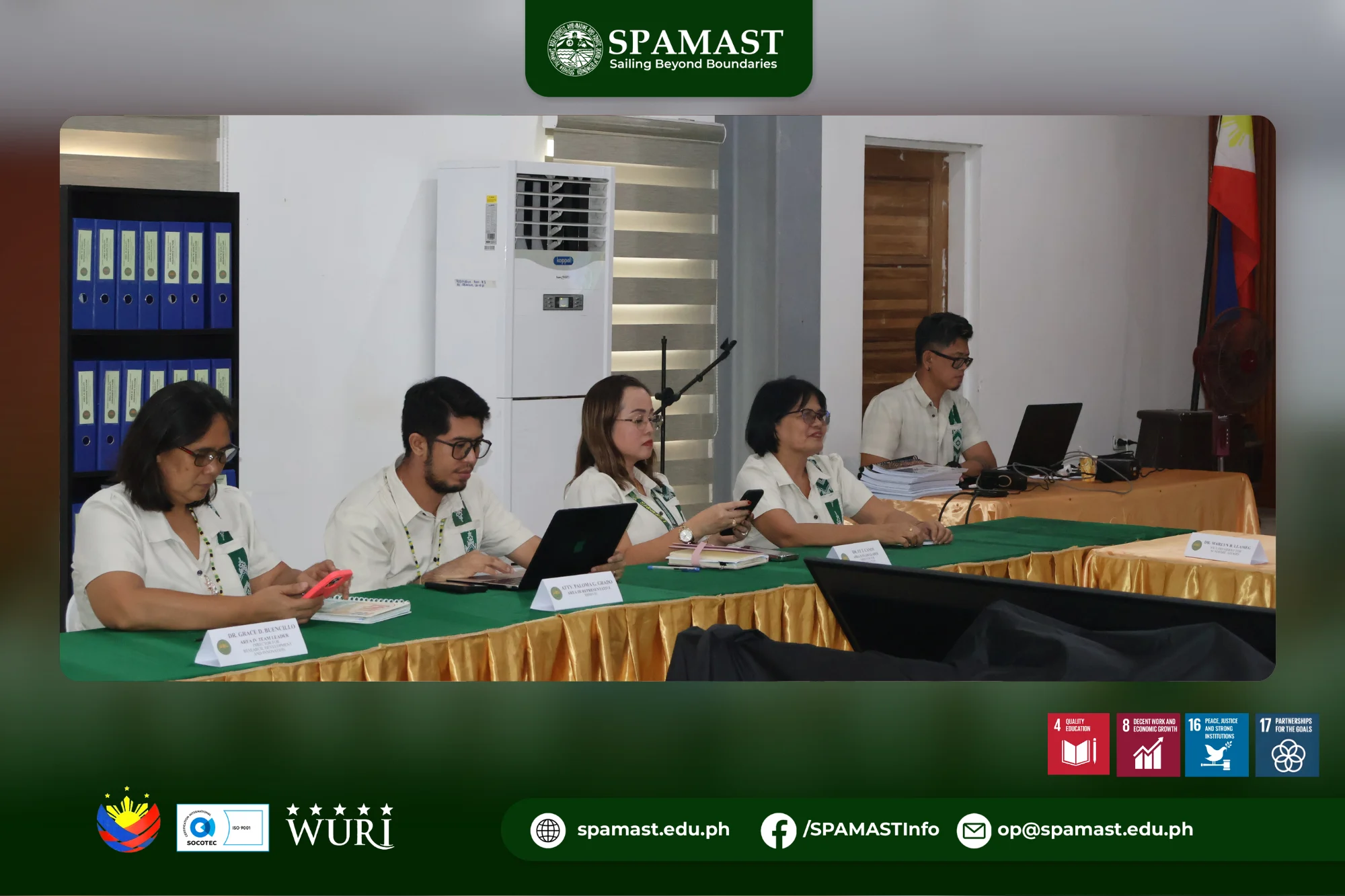
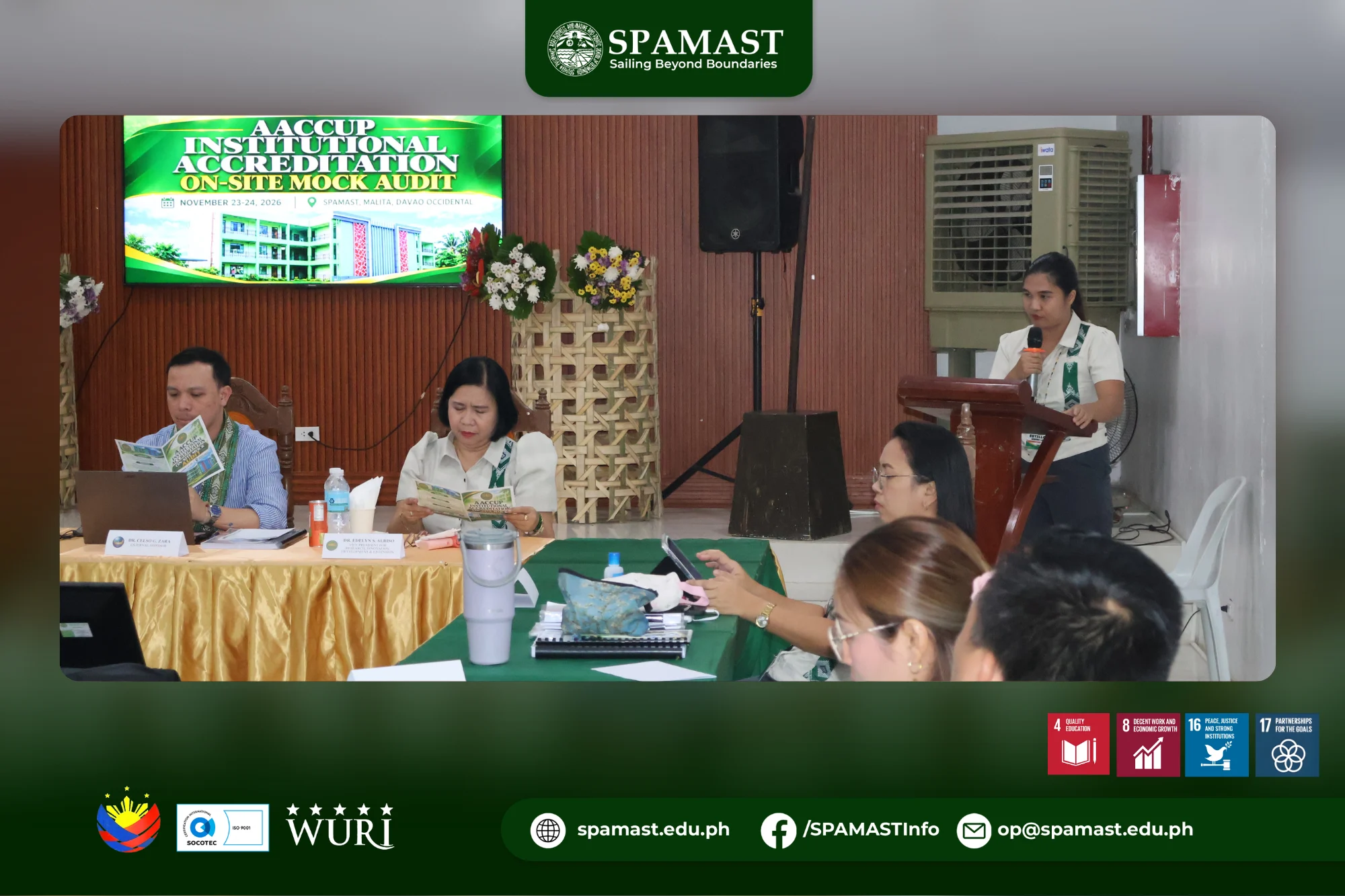
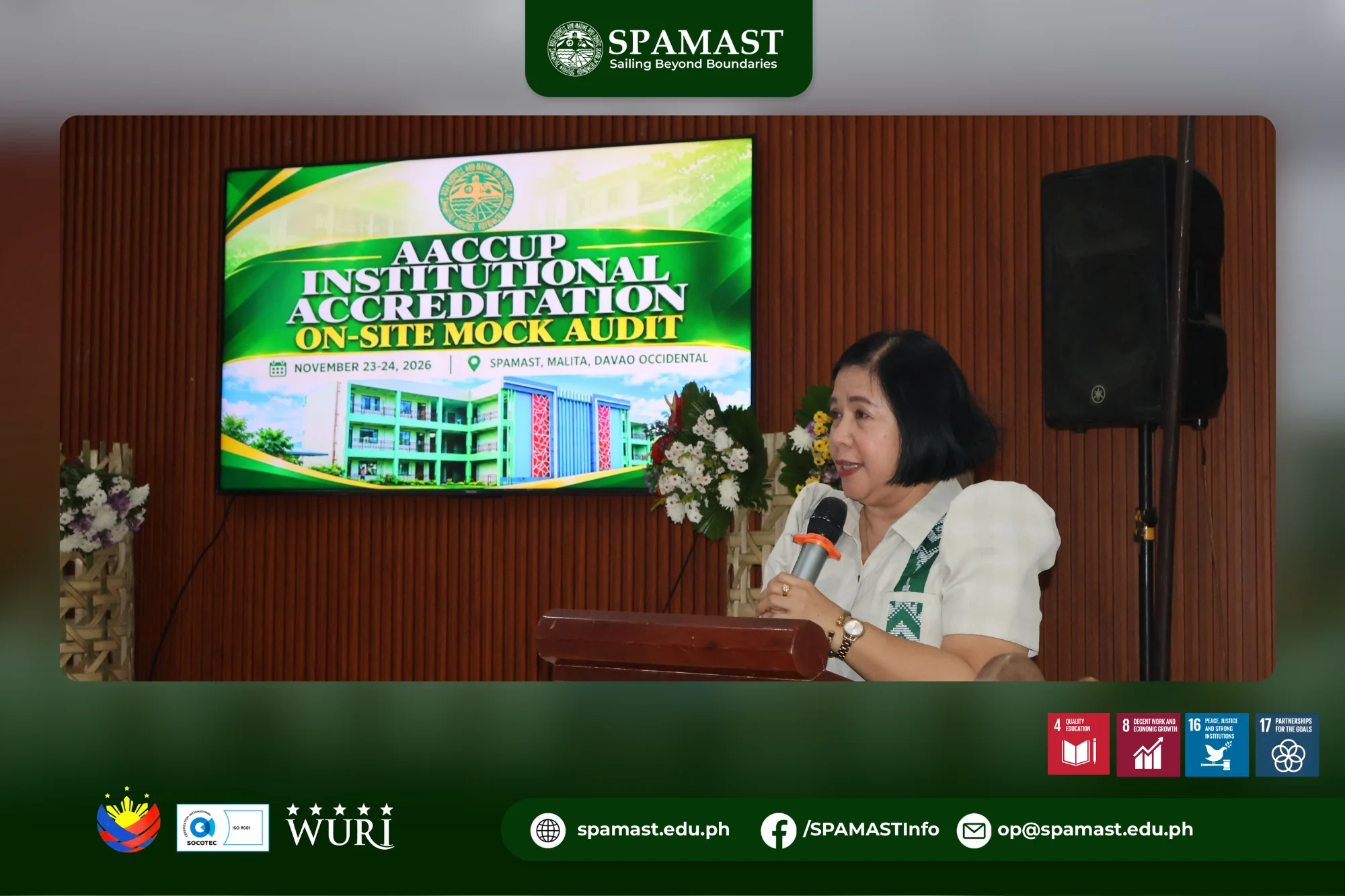
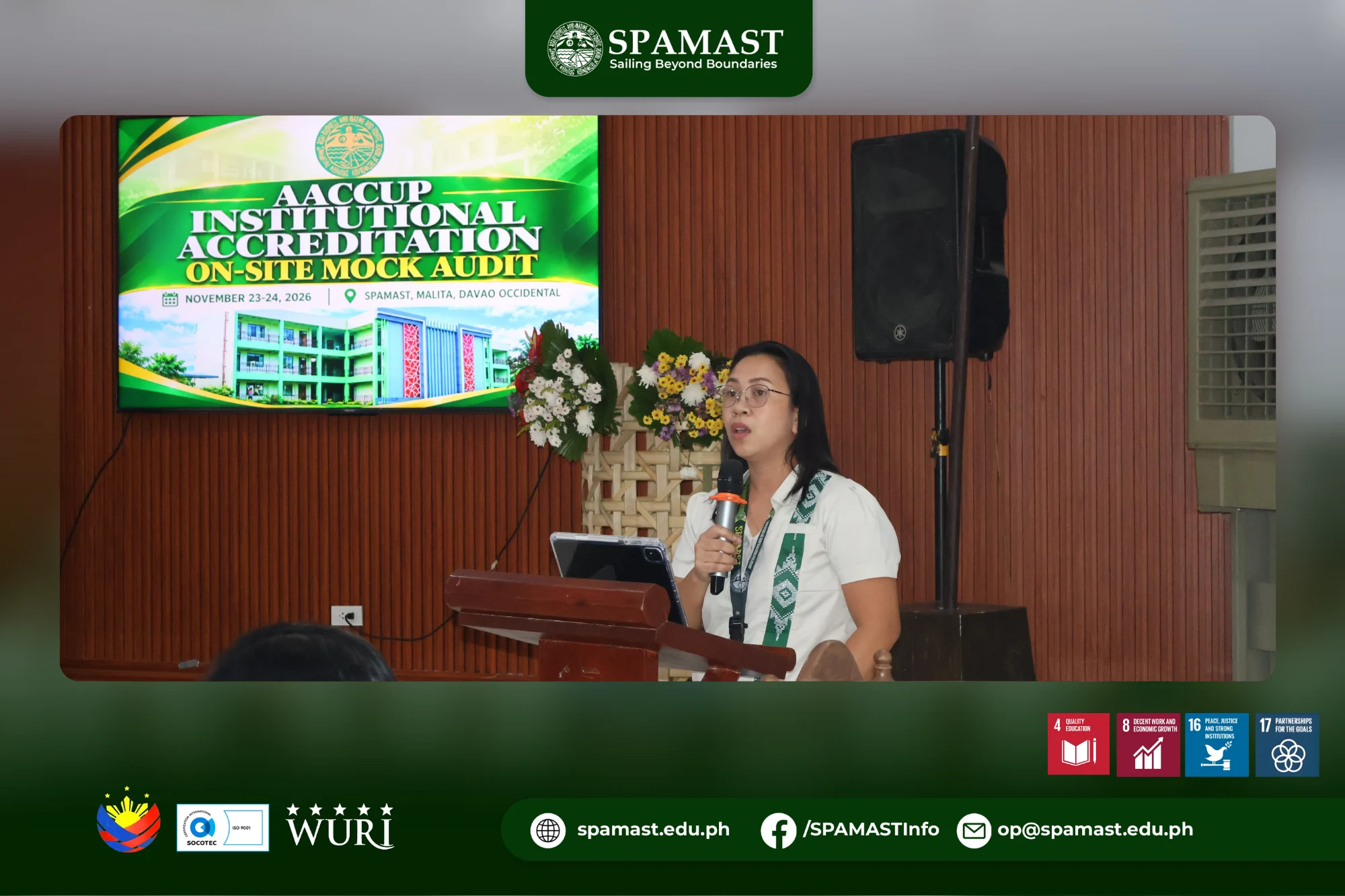
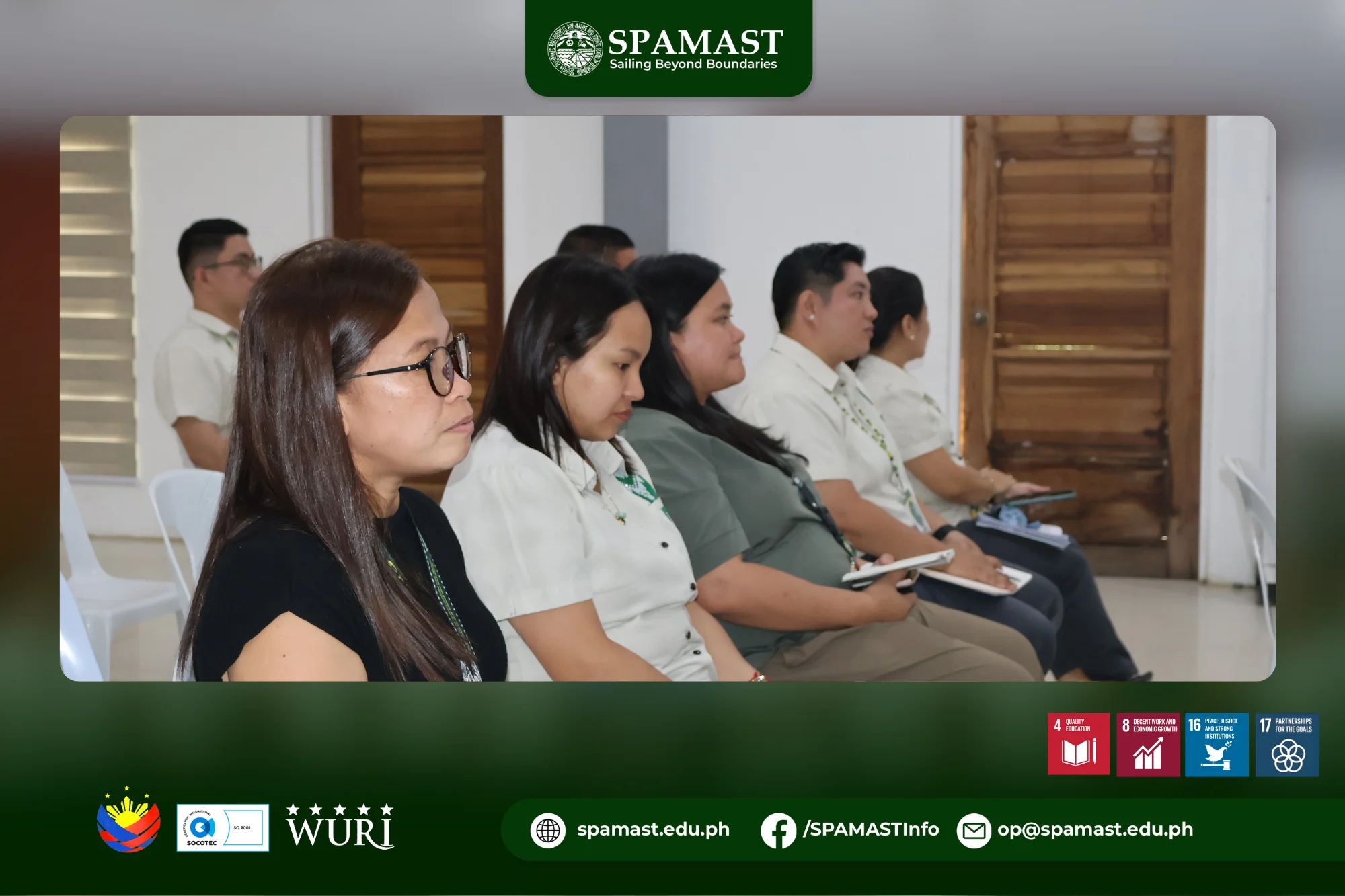
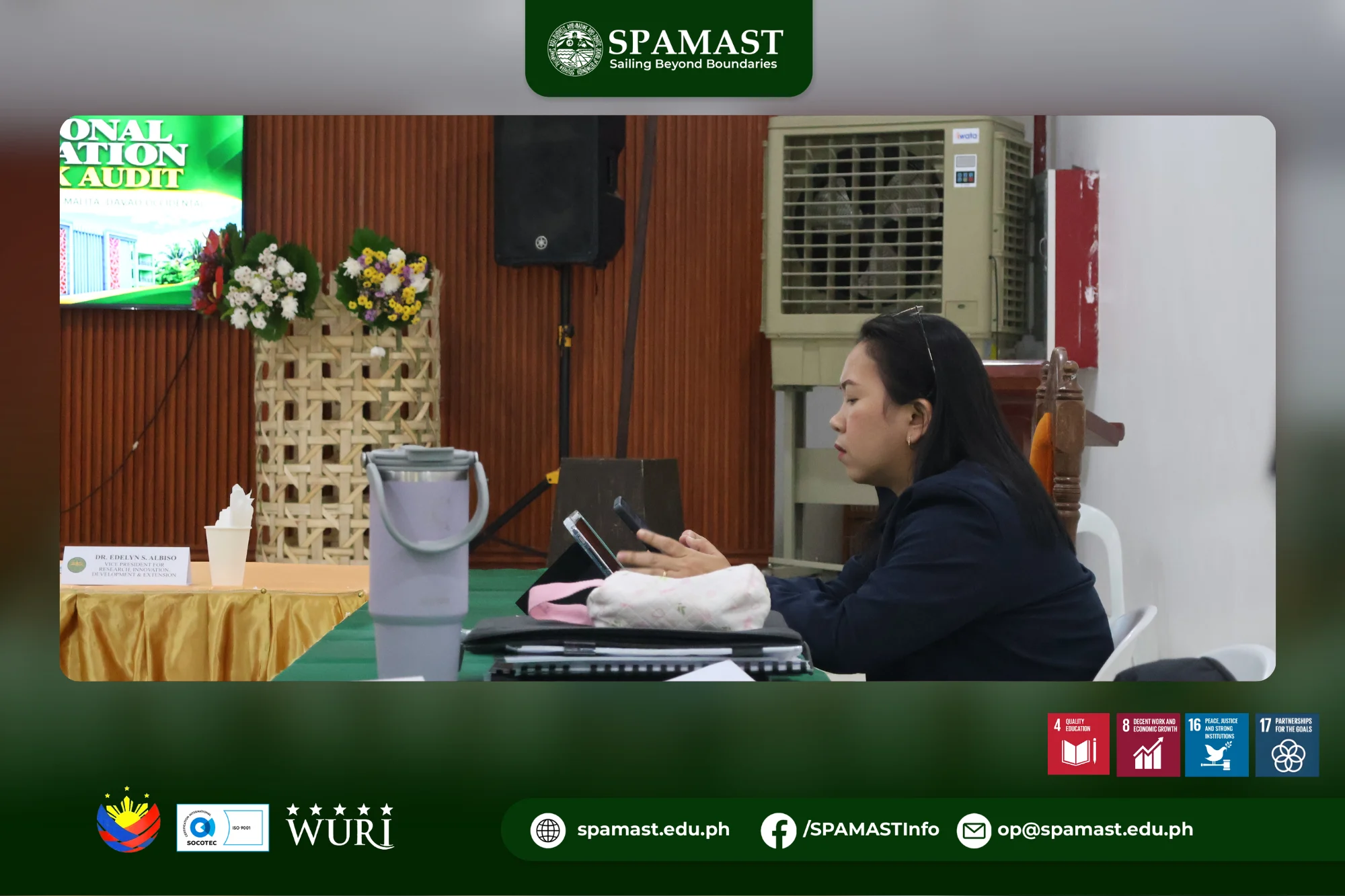
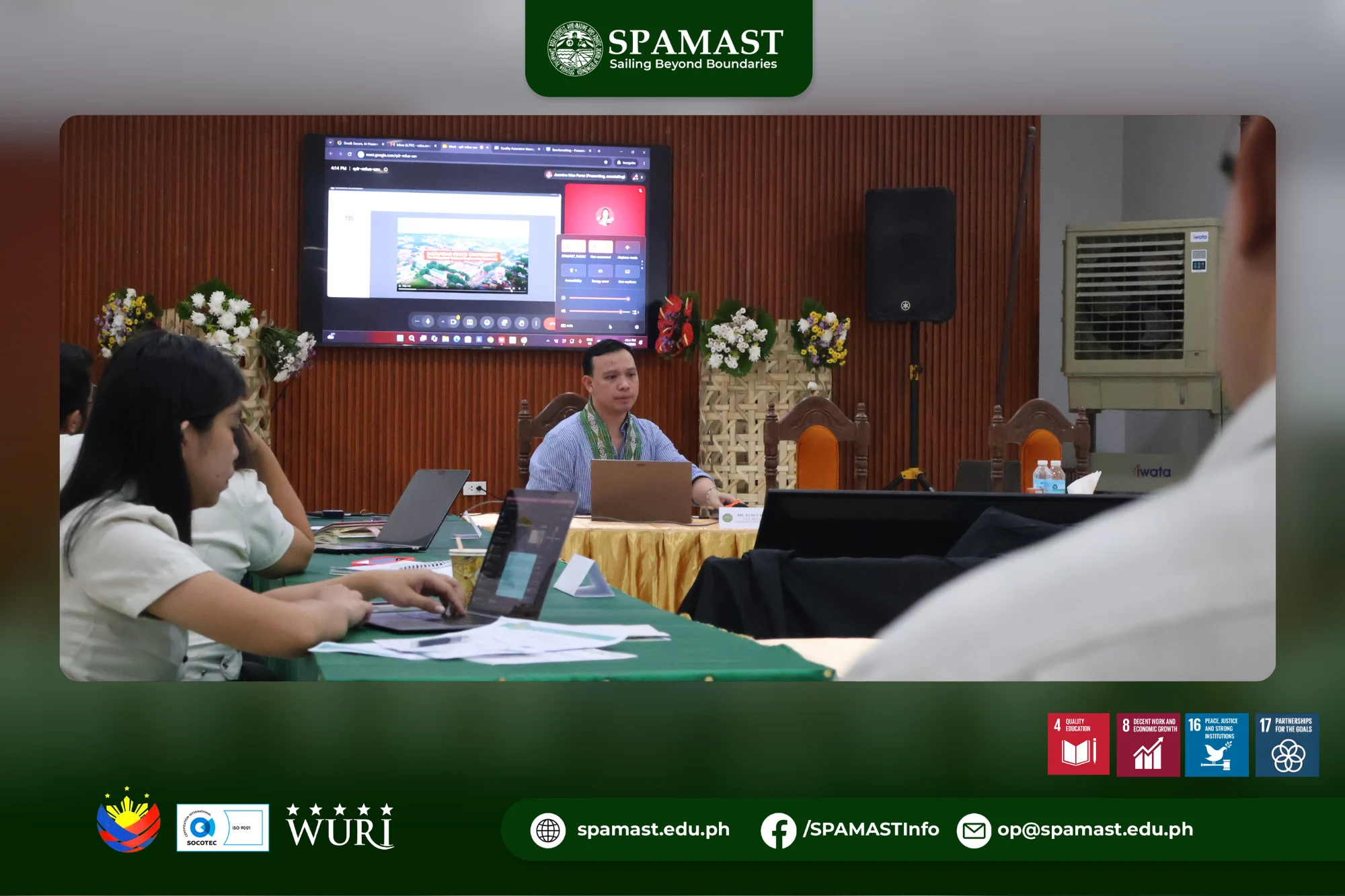
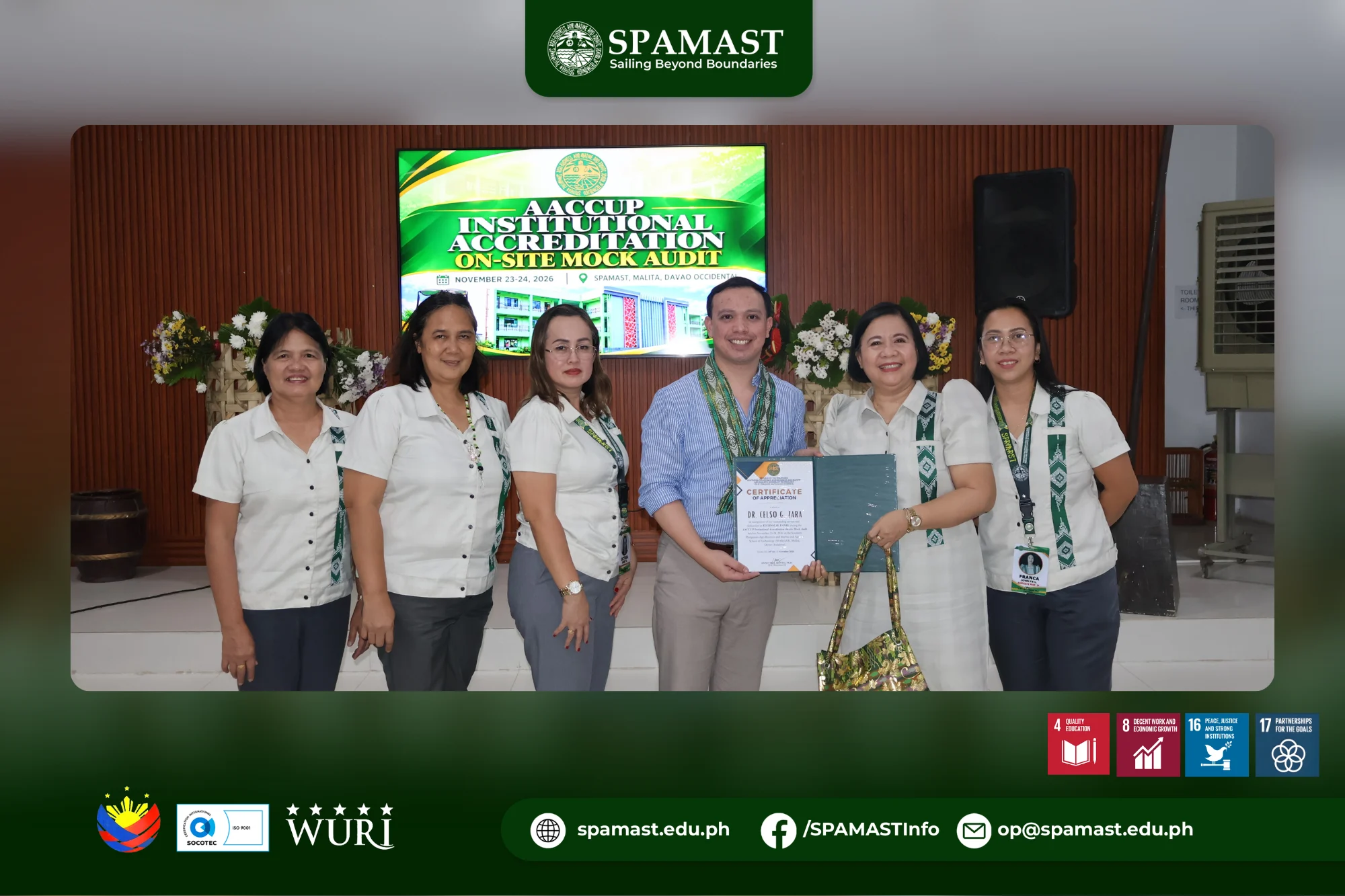
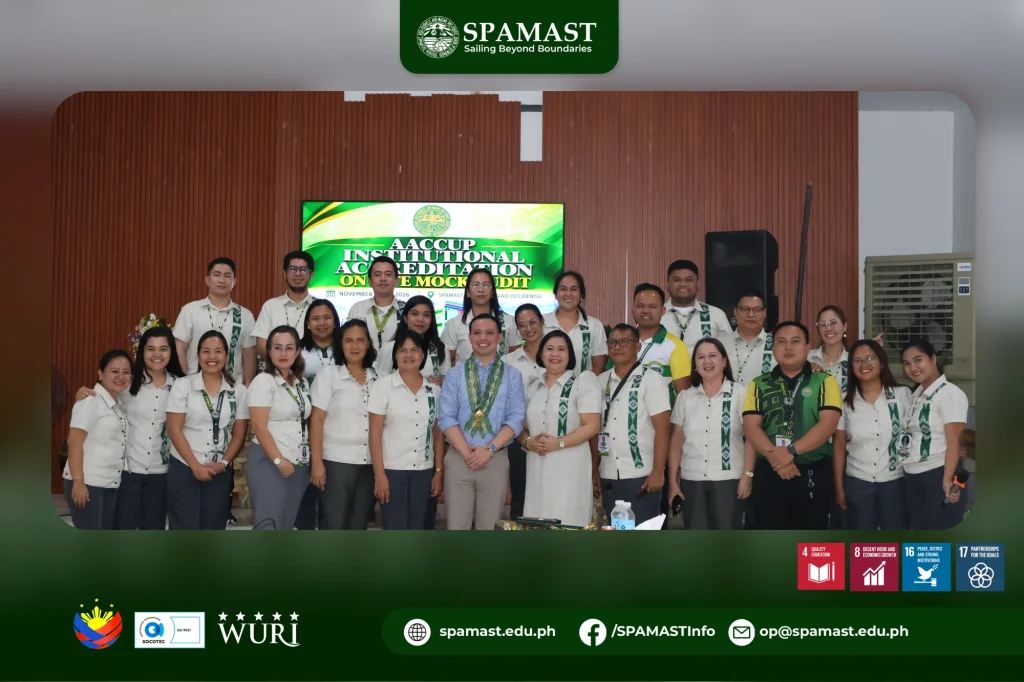
 MALITA, Davao Occidental | November 24, 2026 — The Southern Philippines Agri-Business and Marine and Aquatic School of Technology (SPAMAST) completed its two-day Institutional Accreditation On-Site Mock Audit on November 24, 2026, concluding the evaluation of the College’s nine institutional areas as part of its continuing efforts to strengthen quality assurance, institutional effectiveness, and academic excellence.
Following the first-day evaluation of Areas I to VI, the second day focused on the remaining three institutional areas: Area VII: Library; Area VIII: Infrastructure and Other Learning Resources; and Area IX: Quality Assurance Culture. These areas examined the adequacy of learning resources, the condition and accessibility of institutional facilities, and the integration of quality assurance practices into the College’s academic and administrative operations.
Specifically, Area VII: Library assessed the availability, accessibility, and adequacy of library resources, including printed and electronic references, learning materials, and services that support instruction, research, and independent learning. Area VIII: Infrastructure and Other Learning Resources examined the suitability, safety, accessibility, and maintenance of physical facilities, classrooms, laboratories, equipment, and other resources necessary for effective teaching and learning. Meanwhile, Area IX: Quality Assurance Culture focused on the College’s institutional commitment to continuous improvement, emphasizing the implementation of quality assurance mechanisms, stakeholder participation, accountability, and the integration of quality standards into institutional practices.
Following the evaluation, Dr. Celso G. Zara, AACCUP Senior Program and Institutional Accreditor, conducted an ocular visit around the SPAMAST campus before the scheduled closing meeting. The campus inspection provided an opportunity to observe the College’s physical facilities, learning environments, and other institutional resources in relation to the areas covered during the mock audit. This activity complemented the document-based evaluation by providing an actual view of the College’s facilities and institutional environment.
The two-day undertaking provided SPAMAST with an opportunity to assess its institutional strengths, examine areas requiring improvement, and further align its operations with established accreditation standards. It also highlighted the collective efforts of the College administration, faculty members, administrative personnel, and the Institutional Accreditation Team in preparing institutional documents, presenting implemented practices, and supporting the evaluation process.
The activity formally concluded through a closing meeting held at 3:00 PM at the SPAMAST Lecture Hall. Mrs. Sheena Love P. Estilloso served as the master of ceremonies. The programme opened with the preliminaries, including the invocation, National Anthem, Provincial Hymn, and Malita Hymn, presented through an audio-visual presentation.
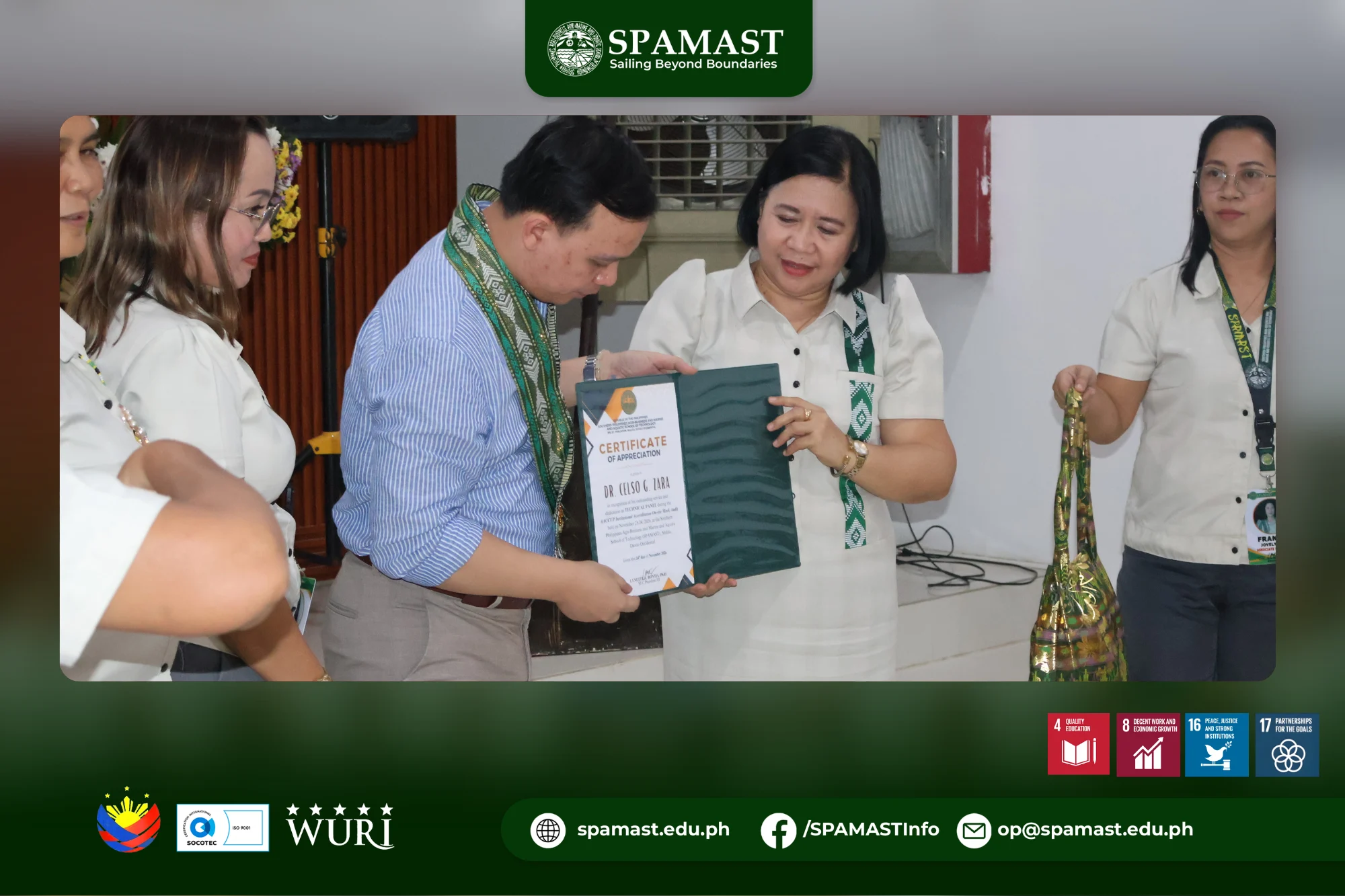
Dr. Janet R. Octura, Vice President for Administration and Finance, delivered the opening remarks, followed by the presentation of results by Dr. Zara. SPAMAST President Dr. Lynette A. Bontia then delivered the College’s statement of commitment, affirming the institution’s dedication to addressing recommendations and sustaining its efforts toward institutional development. Dr. Jovelyn L. Franca, Director of Quality Assurance, delivered the closing remarks. The programme concluded with the SPAMAST Hymn and a photo opportunity.
Beyond the completion of the mock audit, the activity reinforces the importance of institutional collaboration, accountability, and continuous improvement in delivering quality higher education. The evaluation results and recommendations serve as important references for strengthening the College’s policies, programs, services, facilities, and overall institutional performance.
The initiative is aligned with four United Nations Sustainable Development Goals (SDGs), particularly SDG 4: Quality Education, through the continuous enhancement of educational services and learning resources; SDG 9: Industry, Innovation and Infrastructure, through the improvement of institutional facilities and research-support infrastructure; SDG 16: Peace, Justice and Strong Institutions, through transparent governance, accountability, and effective institutional quality assurance; and SDG 17: Partnerships for the Goals, through collaboration between SPAMAST and AACCUP in advancing institutional standards. These commitments underscore the College’s continuing pursuit of quality education, institutional excellence, and sustainable development.