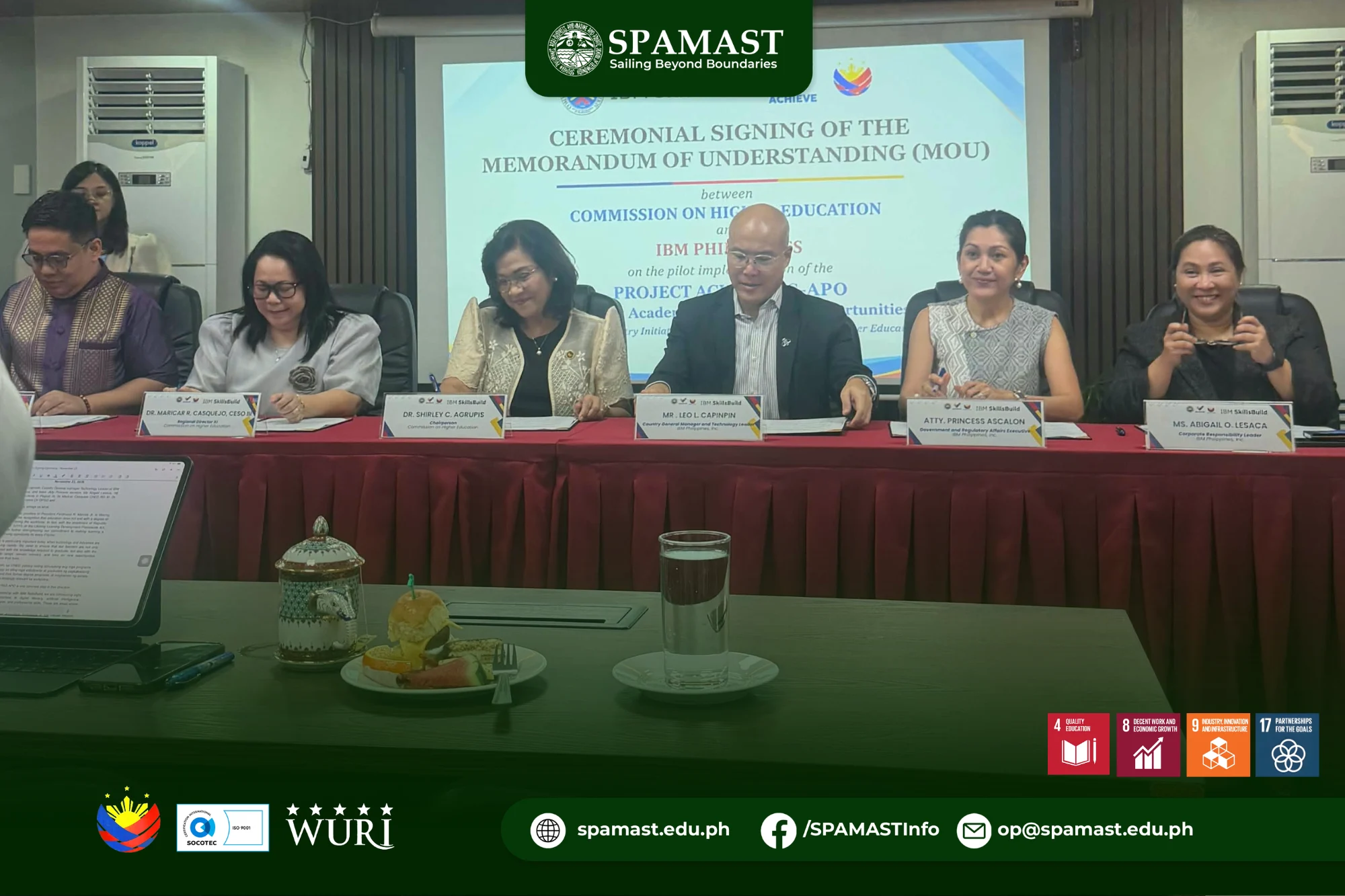
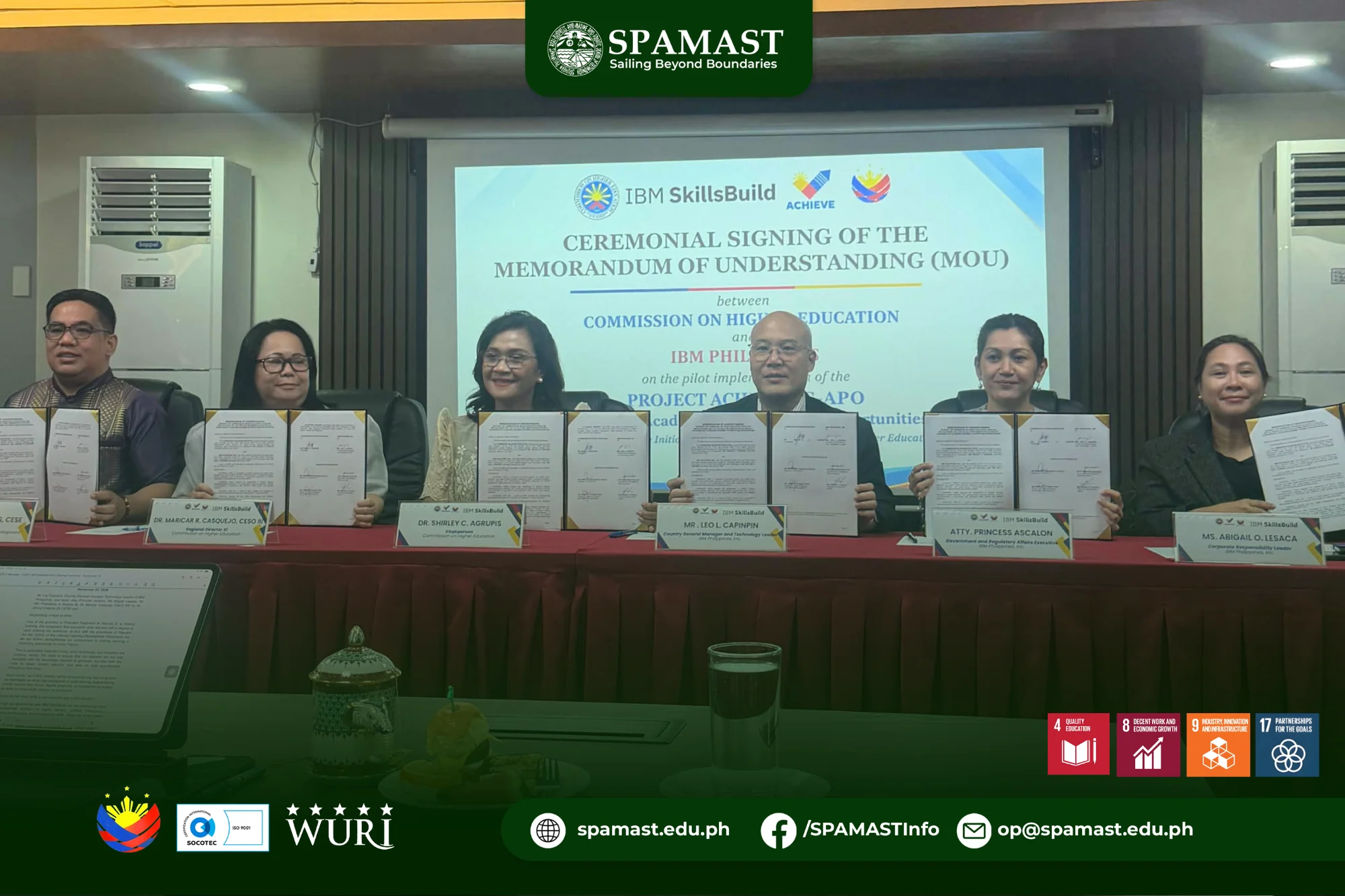
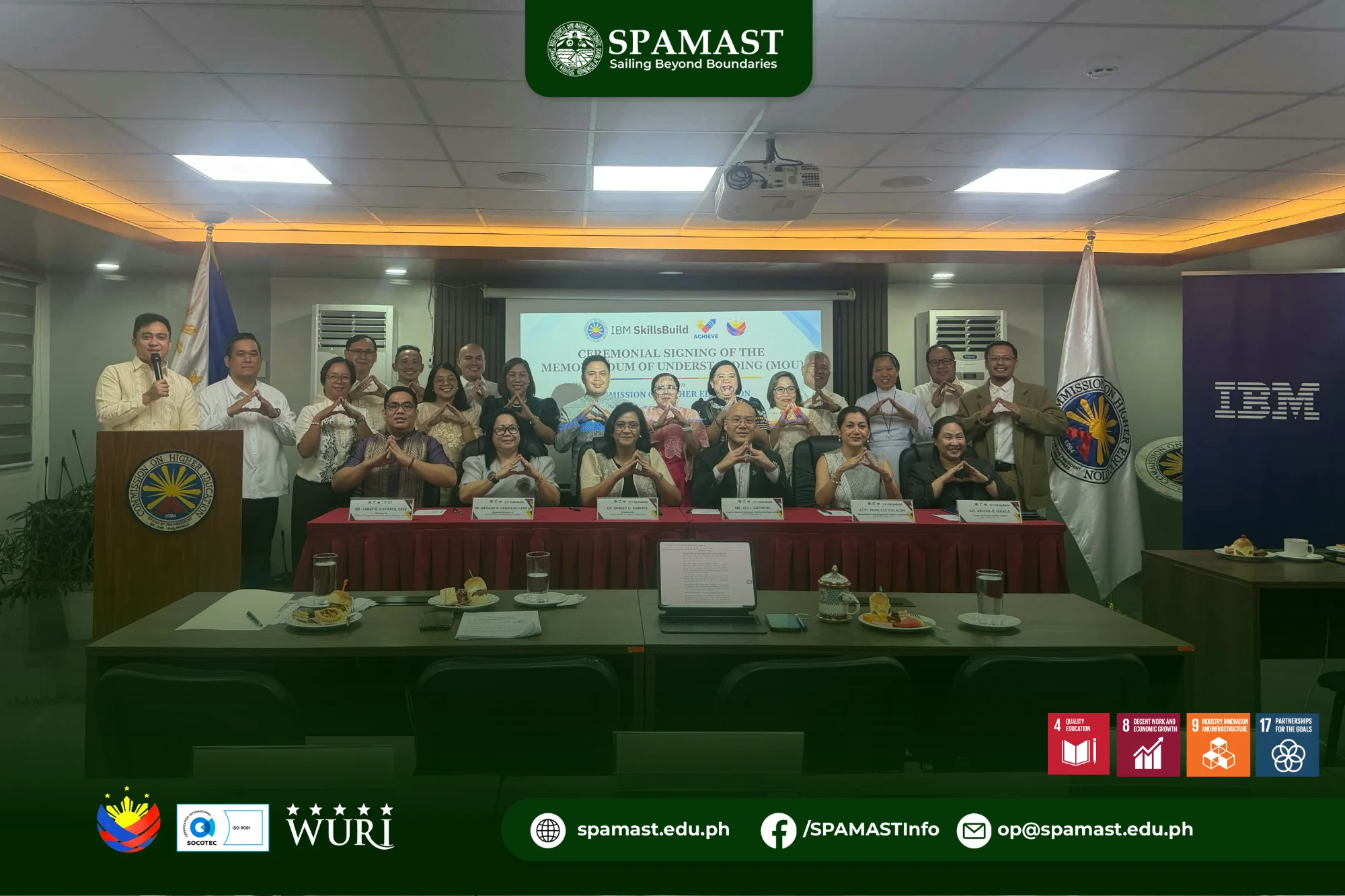
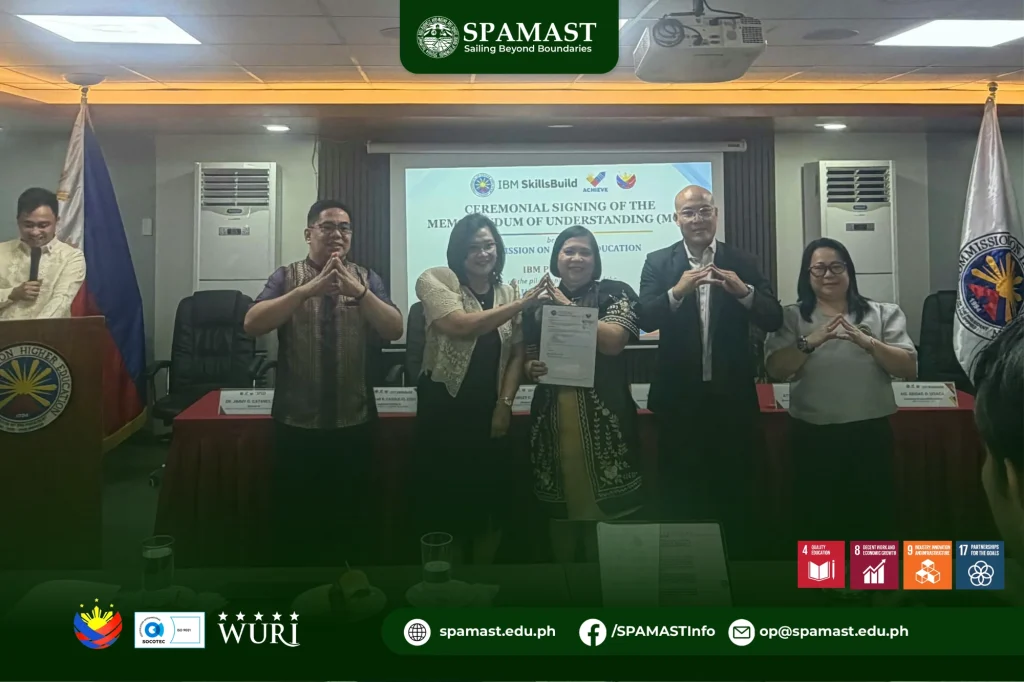
 QUEZON CITY, November 23, 2026 — The Southern Philippines Agri-Business and Marine and Aquatic School of Technology (SPAMAST), represented by its President, Dr. Lynette A. Bontia, participated in the Ceremonial Memorandum of Understanding (MOU) Signing between the Commission on Higher Education (CHED) and IBM Philippines, held at the CHED Central Office in Quezon City.
The ceremonial signing, led by CHED Chairperson Dr. Shirley C. Agrupis and representatives of IBM Philippines, formalized a partnership aimed at advancing industry-relevant micro-credentials in Philippine higher education through the IBM SkillsBuild platform. As one of the 16 pilot higher education institutions (HEIs) under Project ACHIEVING-APO, SPAMAST was invited to witness this significant milestone and personally receive the formal acknowledgment of its approval to offer eight (8) IBM SkillsBuild Microcredentials, pursuant to CHED Memorandum Order No. 1, series of 2025.
This development marks a significant step in strengthening SPAMAST’s commitment to responsive, flexible, and industry-aligned education. Through the integration of microcredential programs, the institution aims to provide learners with additional opportunities to develop relevant competencies, enhance their digital capabilities, and acquire skills responsive to the evolving demands of the labor market. It also underscores the importance of strengthening partnerships between higher education institutions and industry stakeholders to ensure that academic learning remains relevant and aligned with current workforce requirements.
SPAMAST’s participation in this initiative reflects its continuing pursuit of quality, innovation, and lifelong learning, reinforcing its commitment to producing competent graduates equipped with the knowledge and skills necessary to contribute meaningfully to society and national development.
The initiative likewise advances the United Nations Sustainable Development Goals (SDGs), particularly SDG 4 (Quality Education) through expanded access to flexible and relevant learning opportunities; SDG 8 (Decent Work and Economic Growth) by strengthening learners’ employability and workforce readiness; SDG 9 (Industry, Innovation, and Infrastructure) through the integration of technology-driven learning and digital innovation; and SDG 17 (Partnerships for the Goals) by fostering collaboration among government, higher education institutions, and private industry.
Through this partnership, SPAMAST continues to embrace transformative educational opportunities that bridge academic learning and industry expectations, ensuring that its students are better prepared for the challenges and opportunities of an increasingly digital and interconnected world.