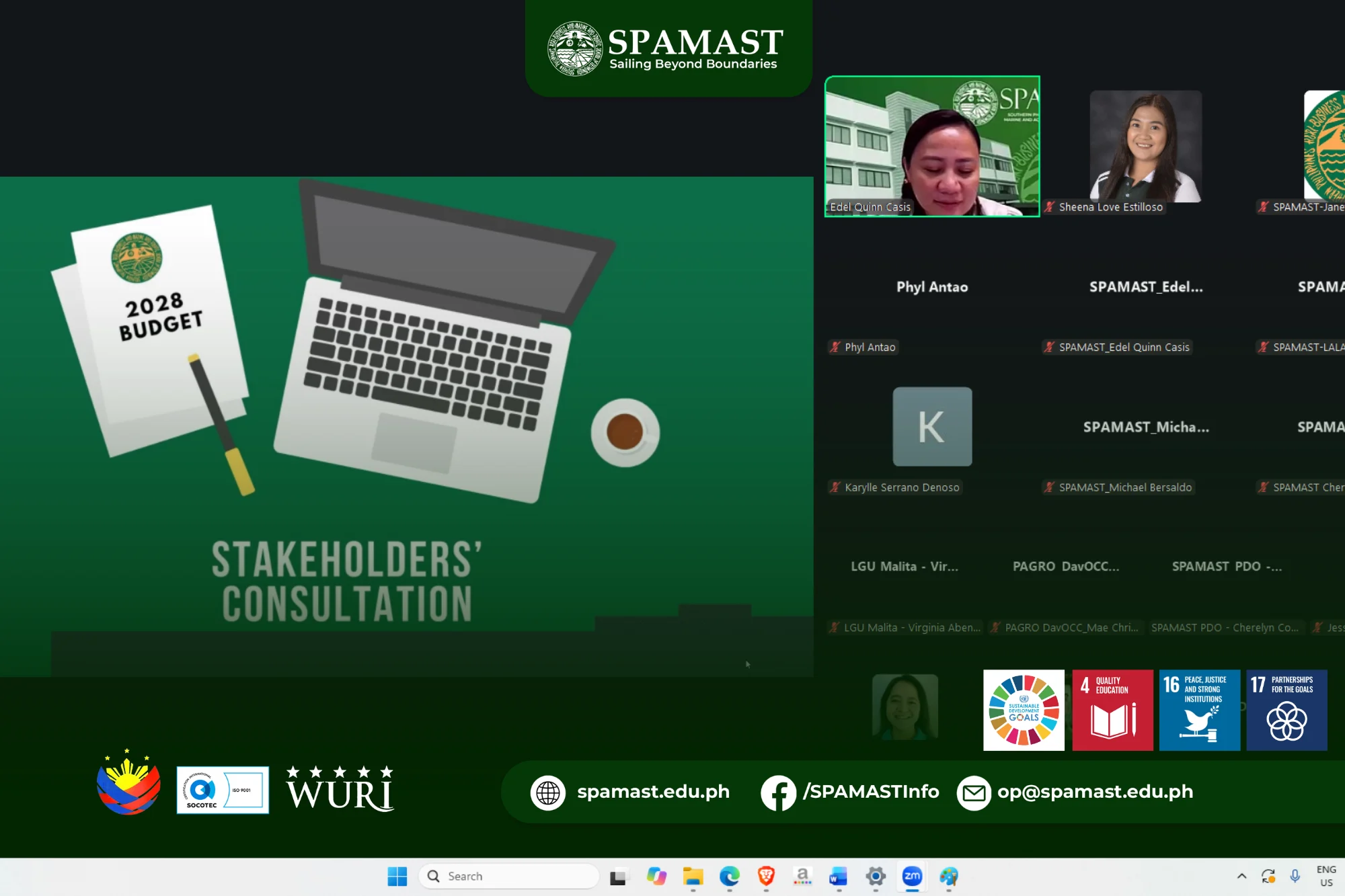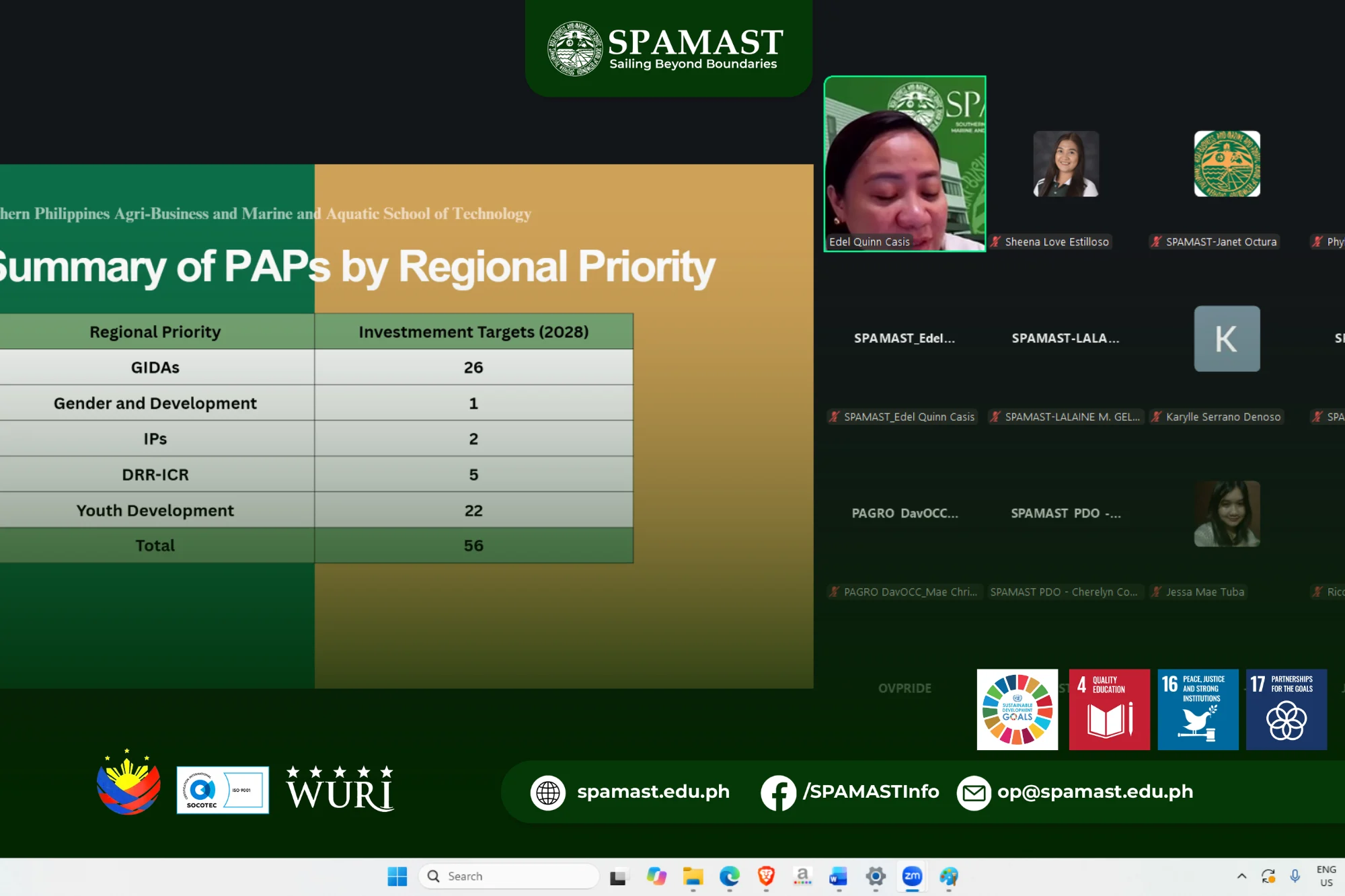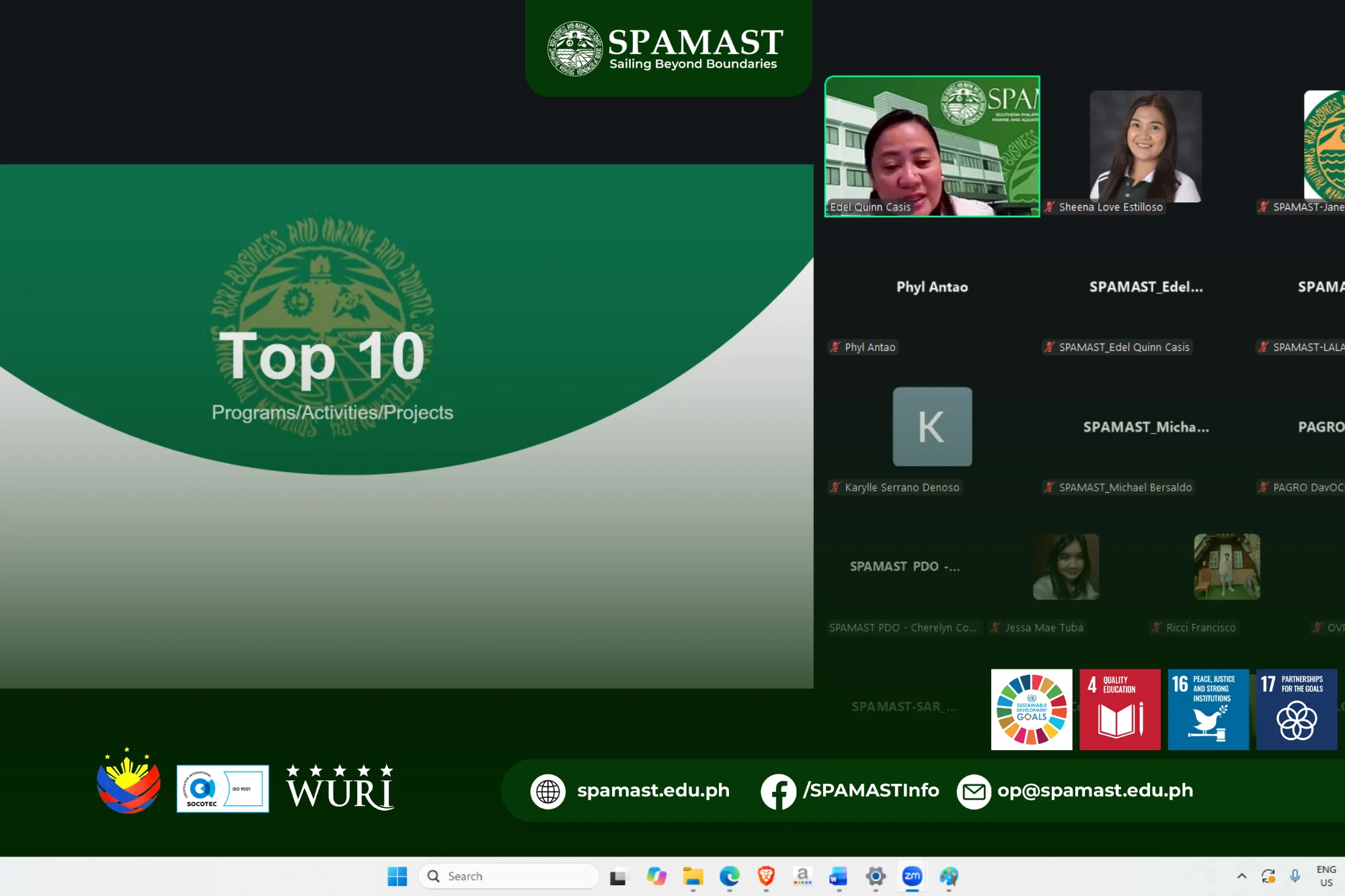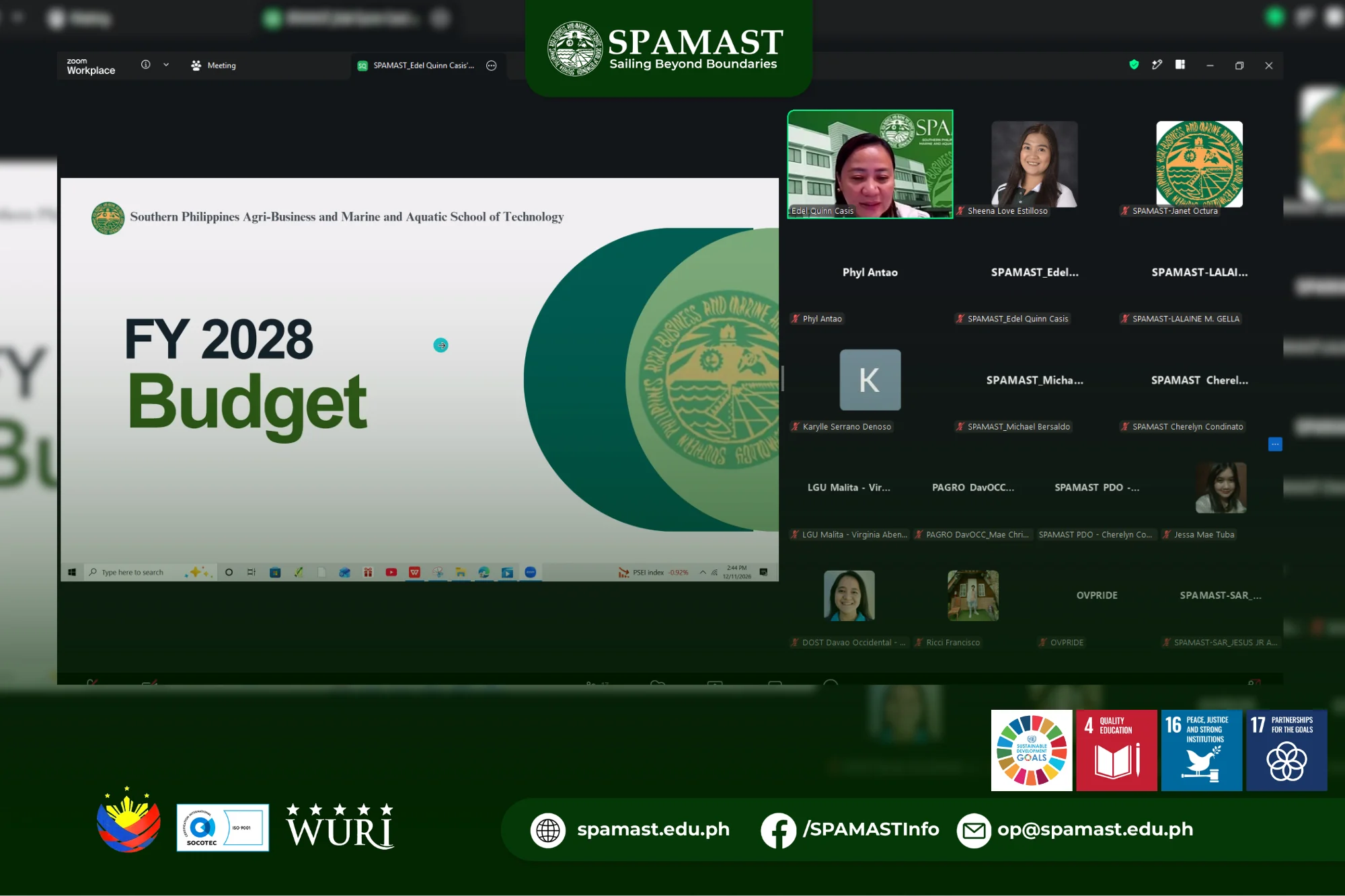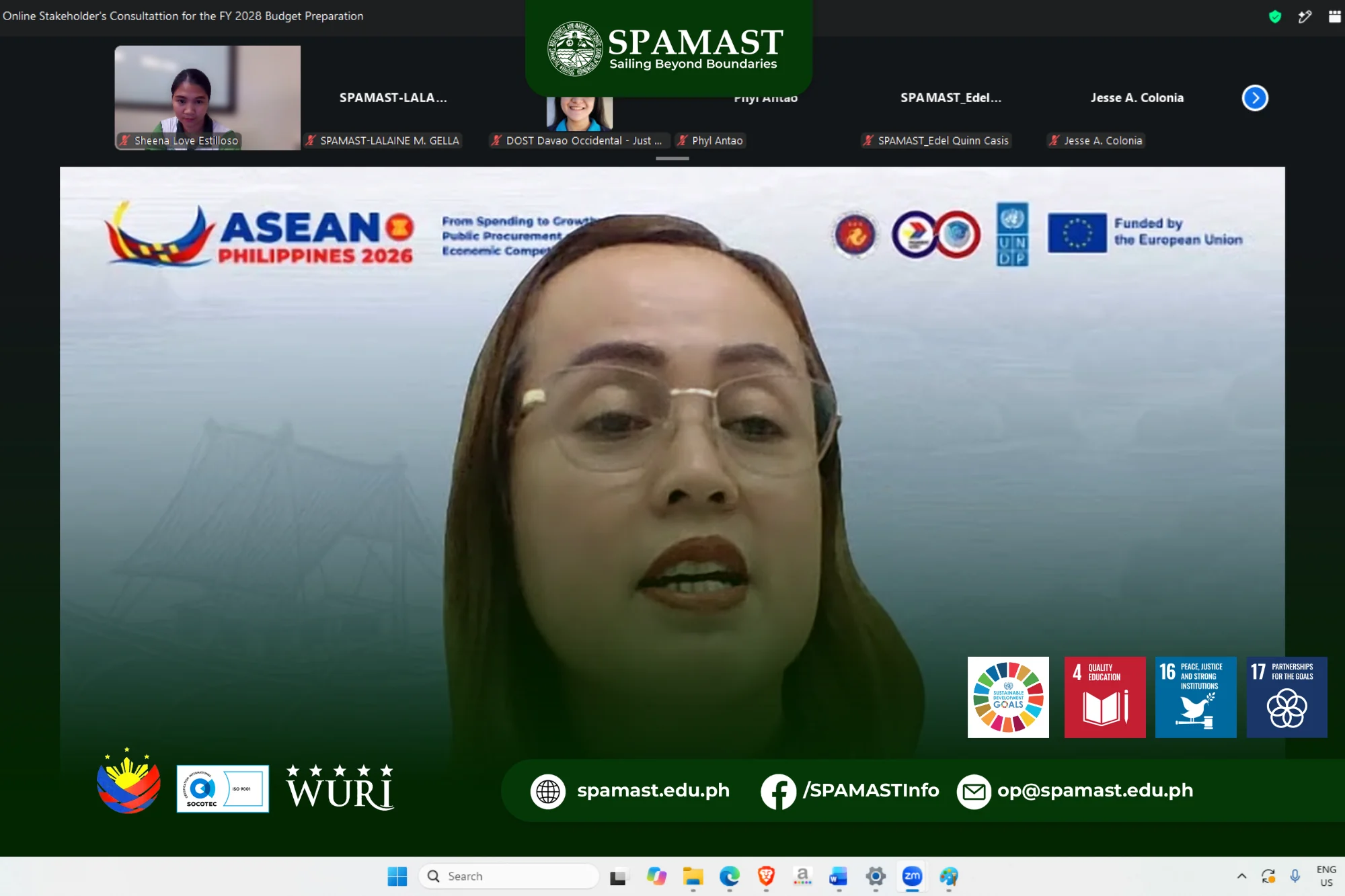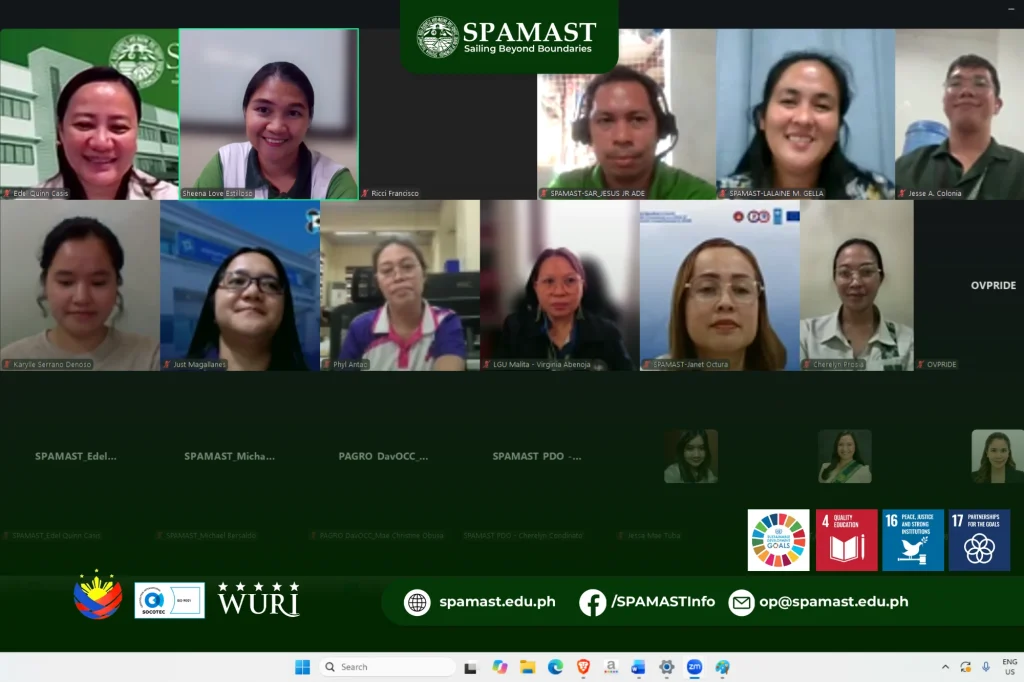
In pursuit of transparent governance, participatory planning, and strategic institutional development, the Southern Philippines Agri-Business and Marine and Aquatic School of Technology (SPAMAST) conducted its Stakeholders’ Consultation for the Fiscal Year 2028 Budget Preparation on November 12, 2026, via Zoom, gathering stakeholders, representatives from partner agencies, and SPAMAST employees.
Organized and facilitated by the Planning Office, headed by Ma’am Edel Quin D. Casis, MA, the consultation served as a platform for meaningful dialogue and collaborative assessment of the institution’s development priorities, proposed programs, projects, and budgetary requirements.
Representing the College President, Dr. Lynette A. Bontia, the Vice President for Administration and Finance, Dr. Janet R. Octura, delivered the opening message, emphasizing the importance of stakeholder participation in ensuring that institutional resources are strategically allocated to address the evolving needs and priorities of the academic community and its partner sectors.
The consultation provided stakeholders with an opportunity to express their observations, raise queries, and share insights regarding the institution’s planned projects and development initiatives for 2028. Participants also recognized and appreciated SPAMAST’s continuing efforts to enhance its instructional facilities, strengthen research and extension programs, improve infrastructure, and expand student services, among other institutional priorities.
Beyond presenting proposed budgetary directions, the activity underscored the value of inclusive decision-making, where stakeholder perspectives contribute to shaping programs and investments that generate meaningful outcomes for the institution and the communities it serves.
Through this initiative, SPAMAST reaffirms its commitment to transparent, accountable, and participatory governance, ensuring that its financial planning remains aligned with its mandate to deliver quality education, advance research and innovation, and promote responsive community development.
The consultation contributes to Sustainable Development Goal 16 (Peace, Justice, and Strong Institutions) through transparent and participatory institutional processes, and SDG 17 (Partnerships for the Goals) by strengthening collaboration among the institution, its stakeholders, and partner agencies in pursuing sustainable development.