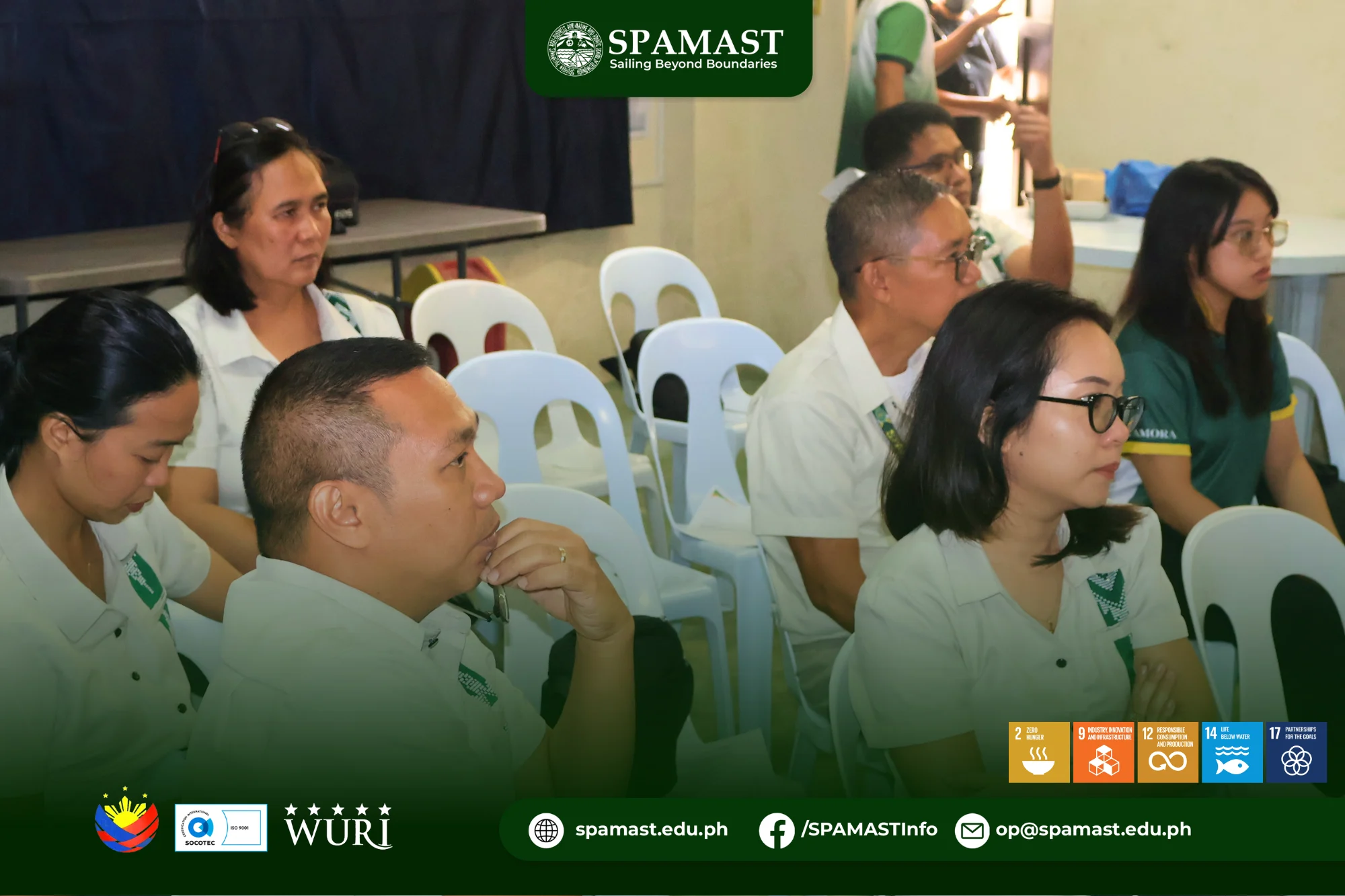
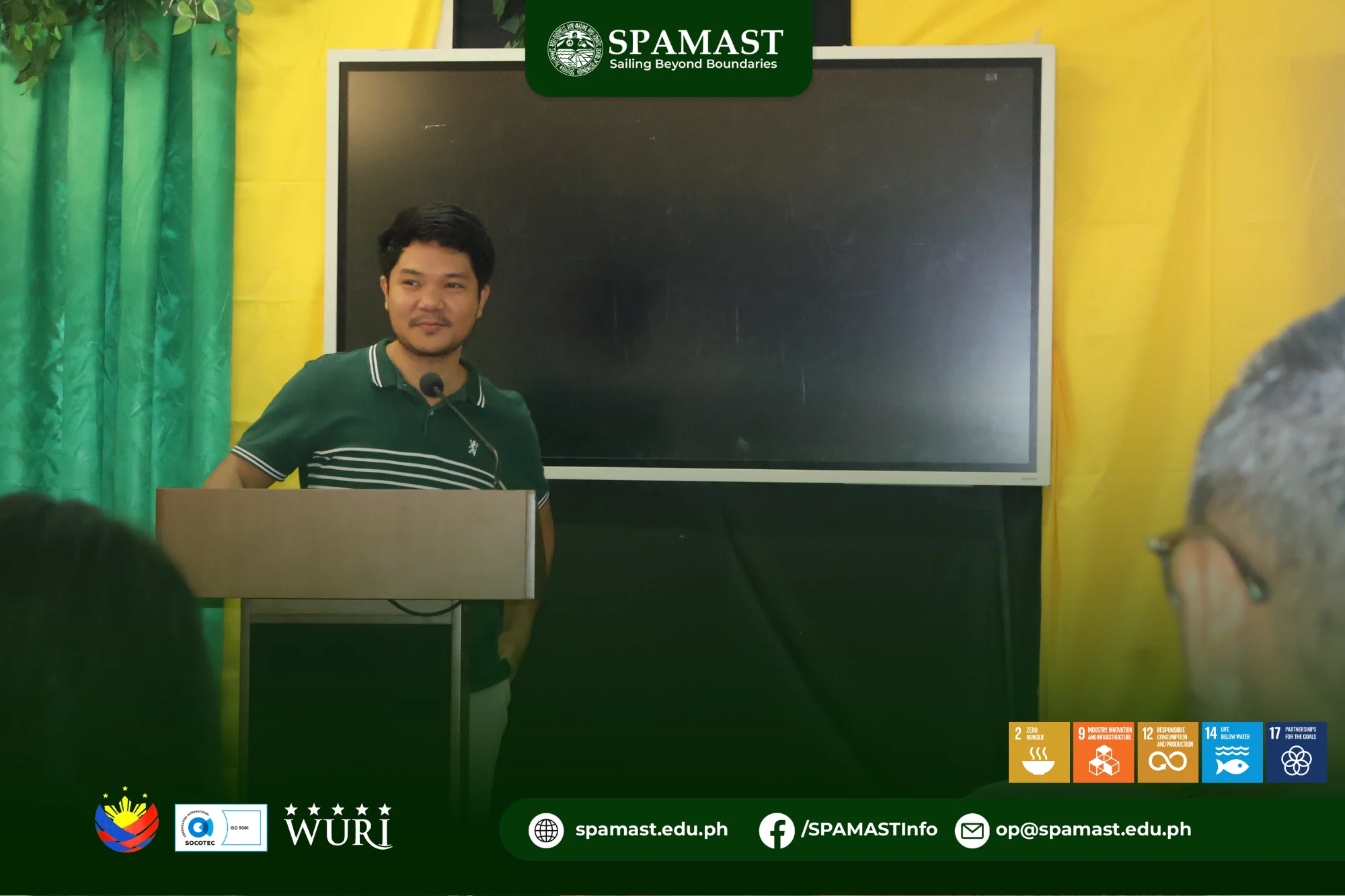
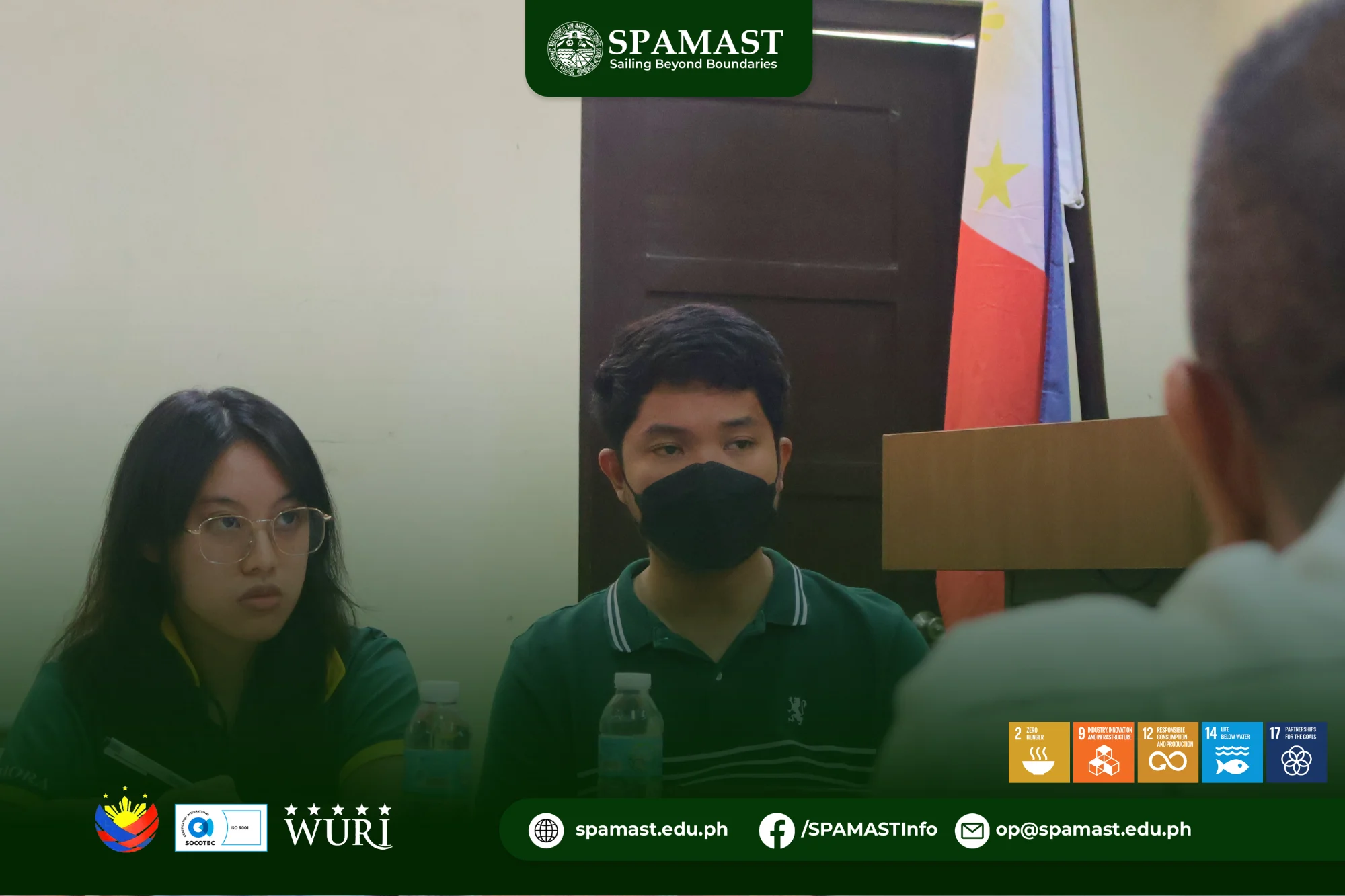
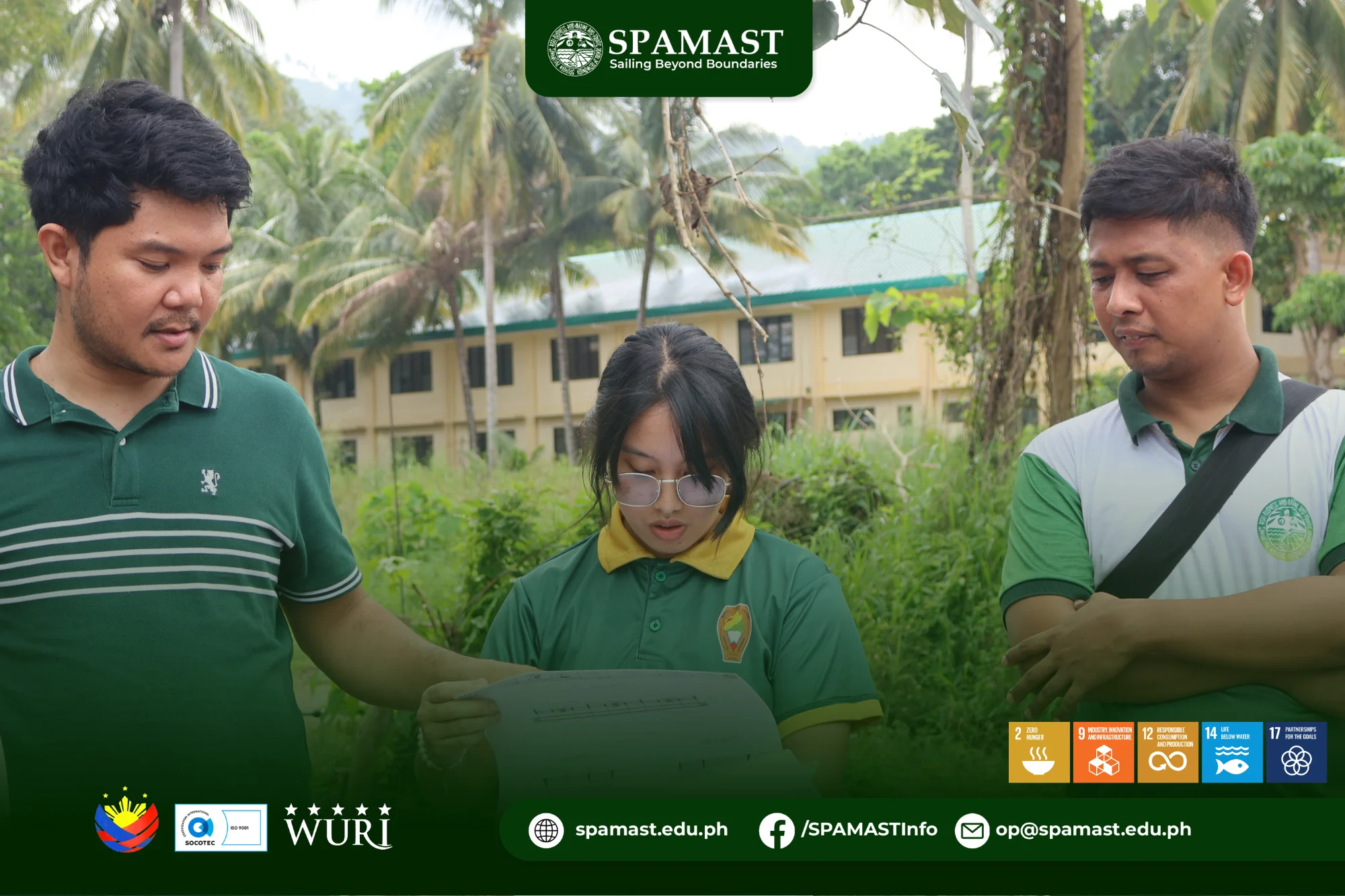
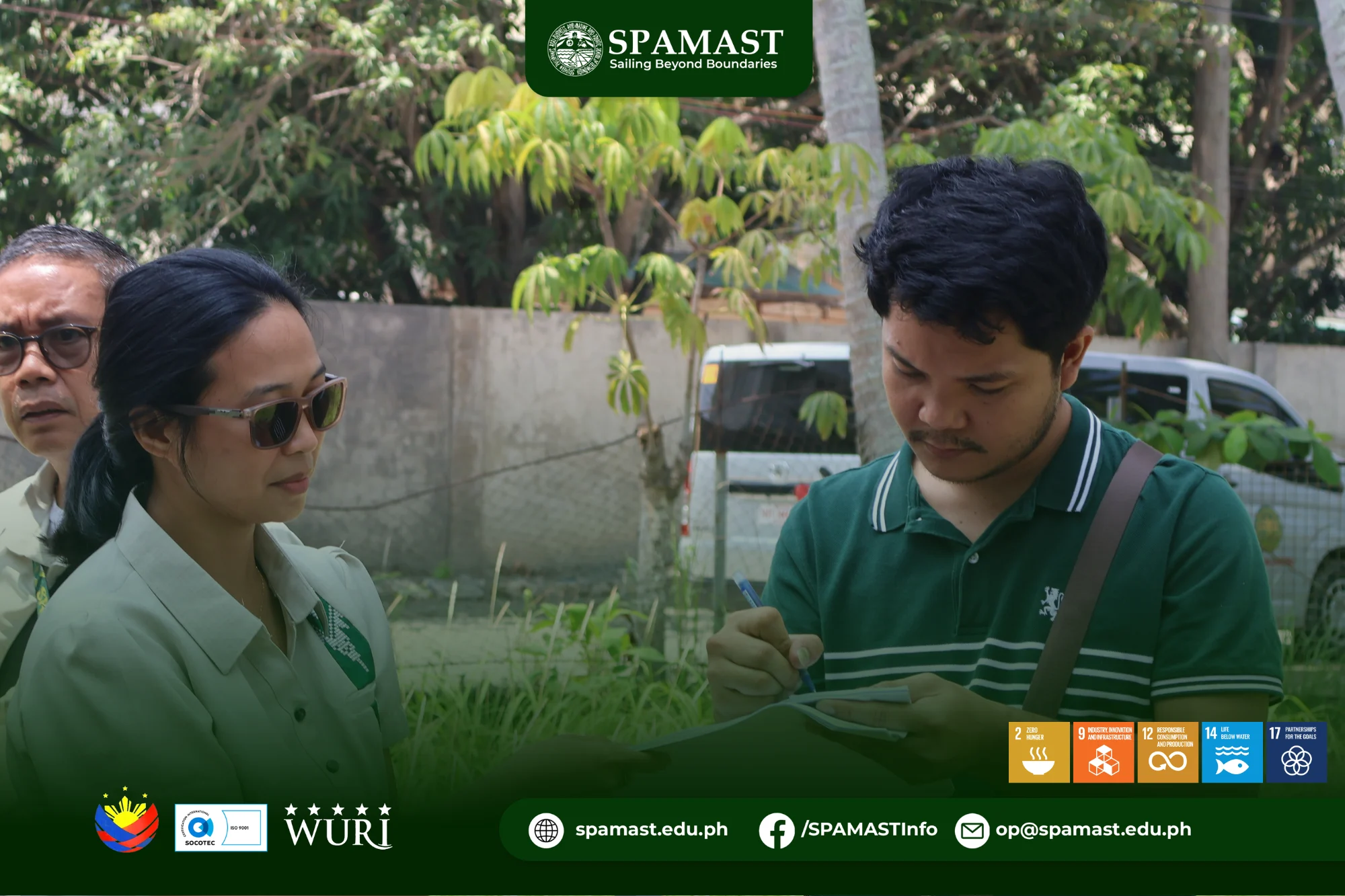
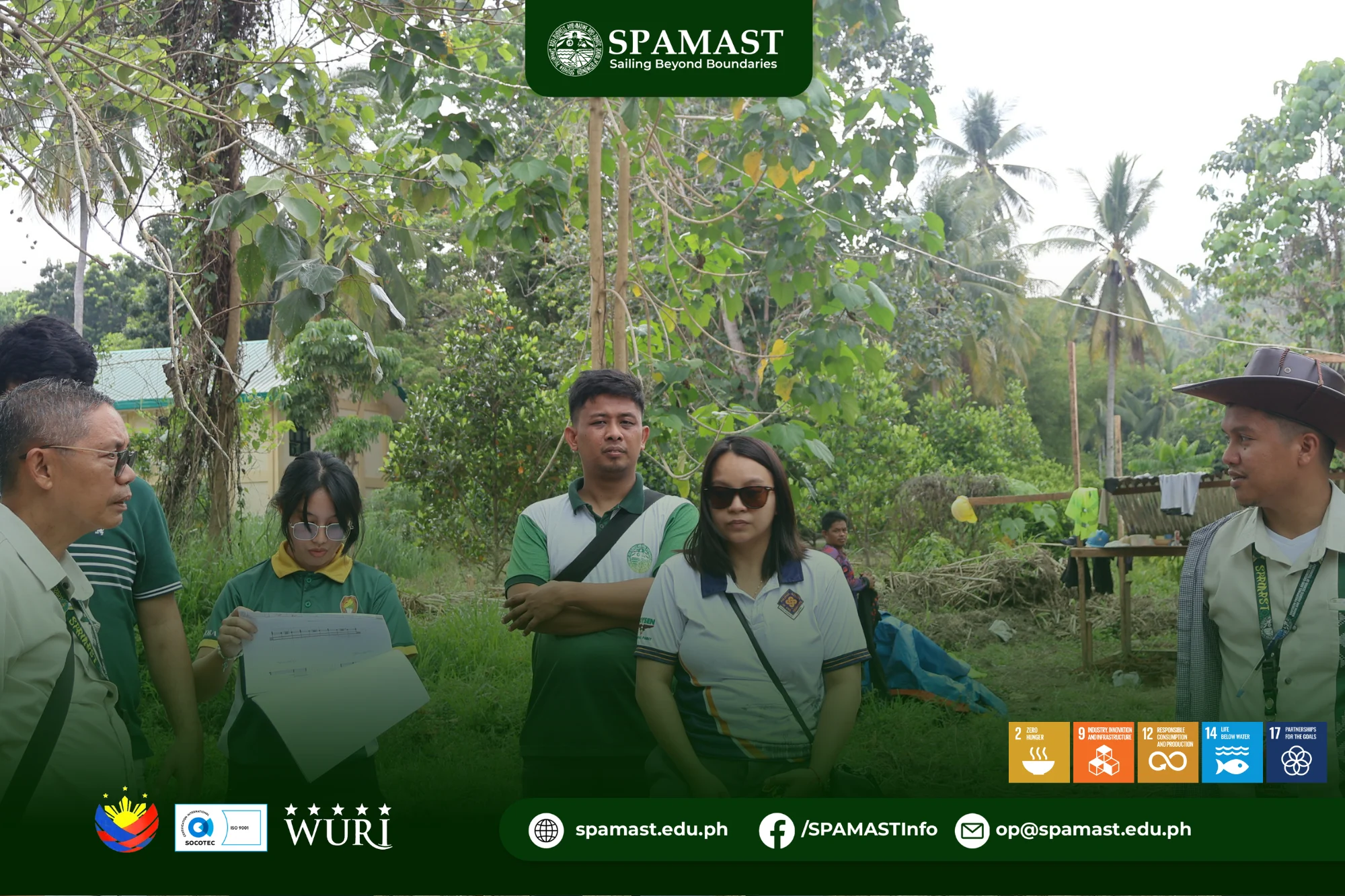
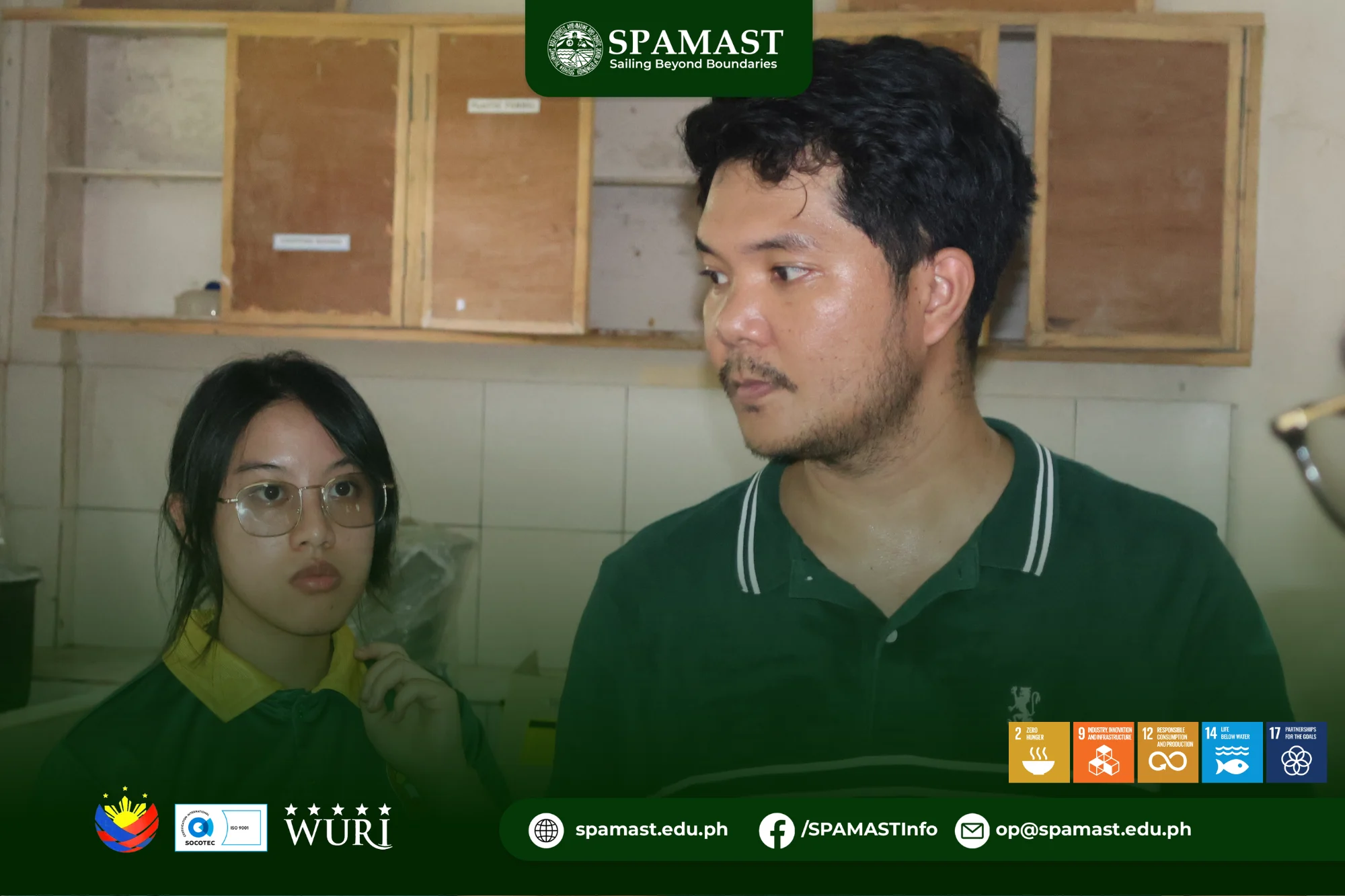
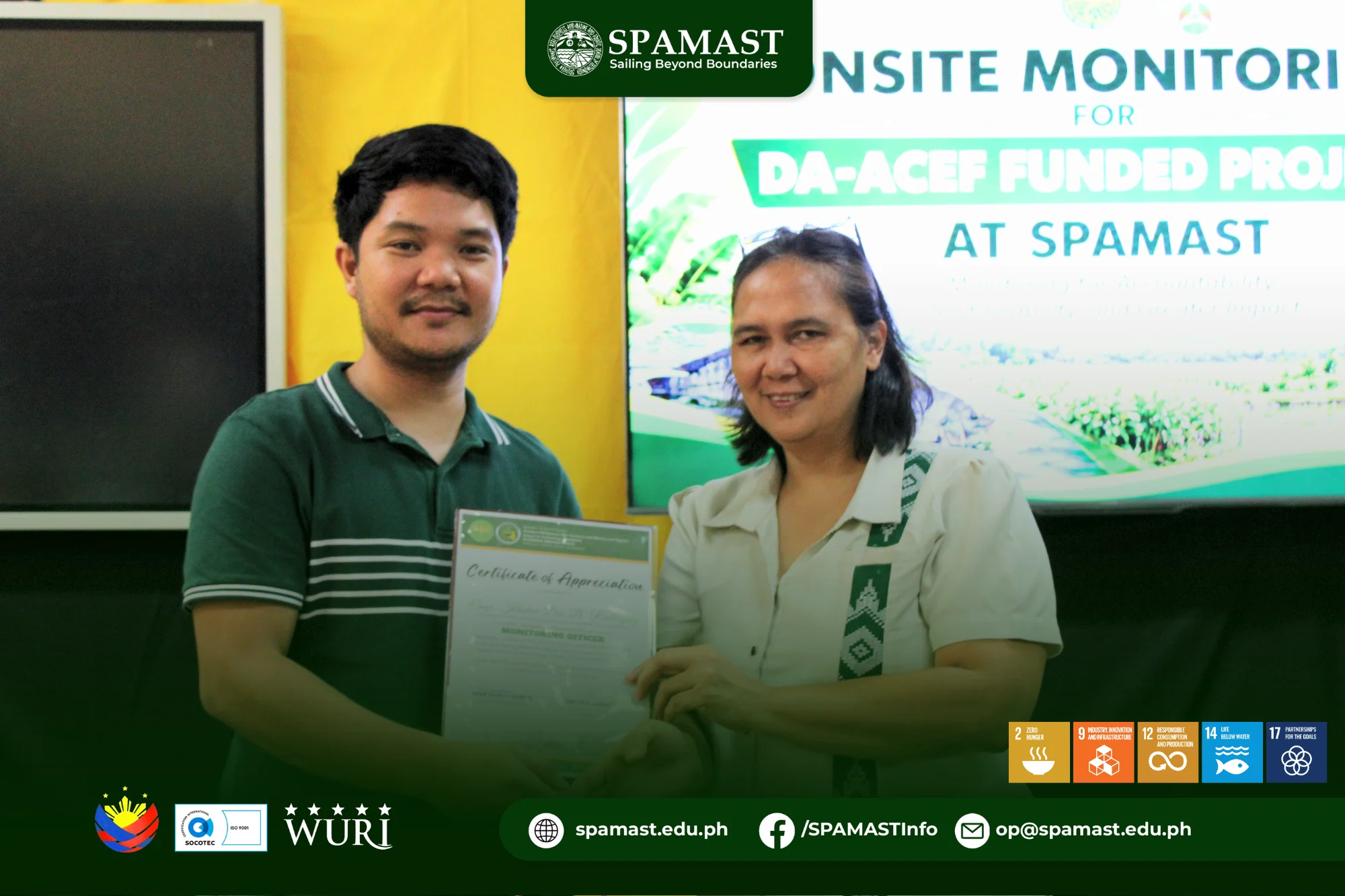
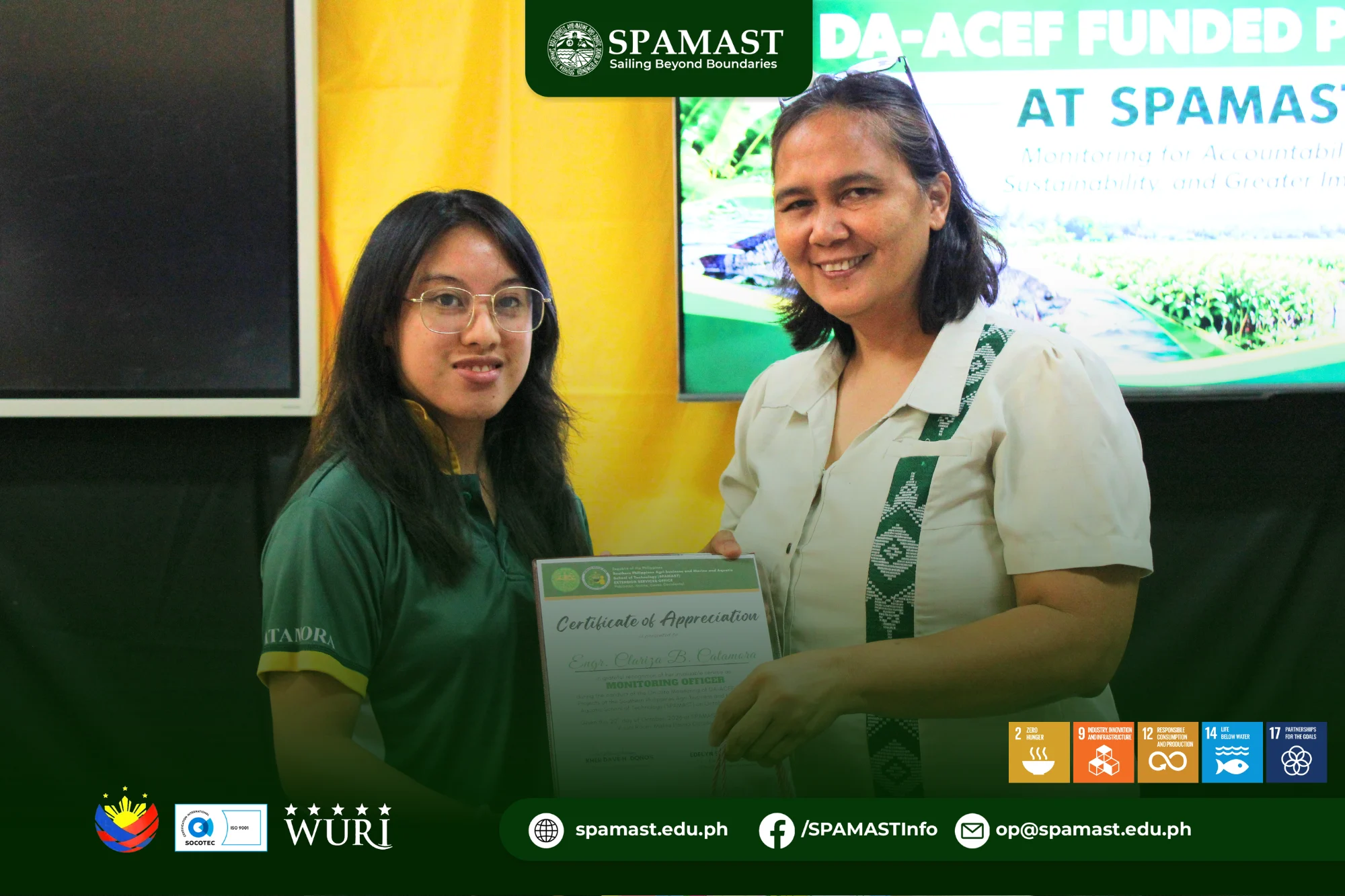
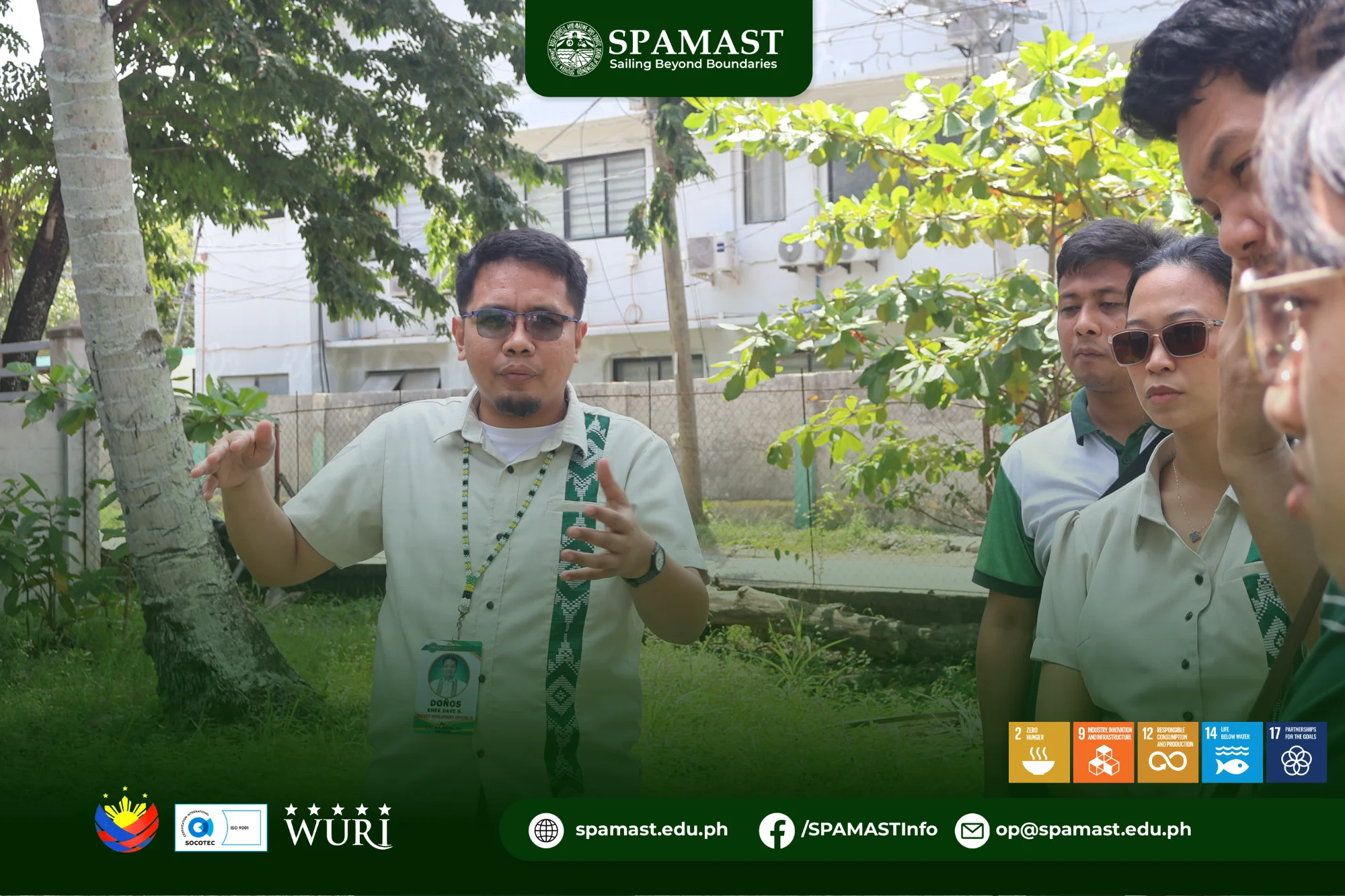
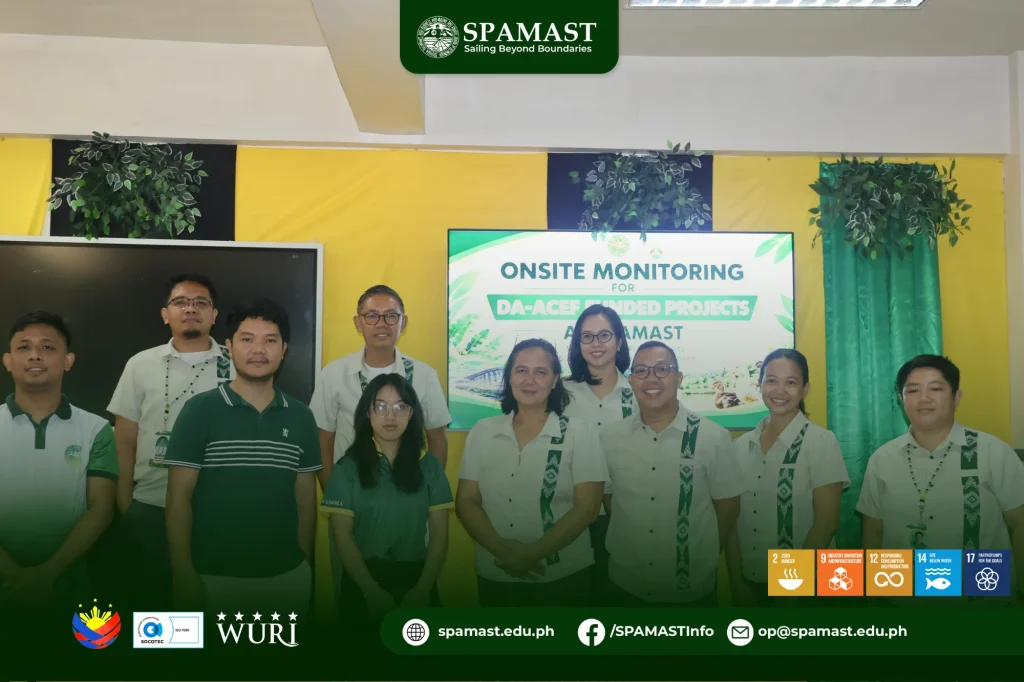
 The Southern Philippines Agri-Business and Marine and Aquatic School of Technology (SPAMAST) underwent onsite monitoring and evaluation of its Department of Agriculture-Agricultural Competitiveness Enhancement Fund (DA-ACEF)-funded projects in Malita, Davao Occidental, to assess project implementation, promote accountability, and support the sustainability of agricultural research and production facilities.
Engr. Kristan Deo B. Rodriguez and Engr. Clariza B. Catamora of the Department of Agriculture-Bureau of Agricultural Research (DA-BAR) visited the college to evaluate three key initiatives: the Upgrading of Tilapia Hatchery Facility, the Upgrading of Tissue Culture Laboratory and Nursery Facility, and the Upgrading of Duck Production Facility under the Itik-Pinas program. The monitoring focused on reviewing project implementation and assessing the facilities’ contributions to agricultural development, research capacity, and technology application.
The activity was supported by Vice President for Research, Innovation, Development, and Extension (RIDE) Dr. Edelyn S. Albiso and Extension Services Office (ESO) Director Prof. Kher Dace H. Doños, who conveyed their support for the initiatives. Their support reflects the college’s commitment to strengthening research and extension programs, improving agricultural technologies, and fostering collaboration with government agencies to advance institutional development and community-oriented agricultural initiatives.
The onsite evaluation also highlights the importance of accountability and responsible resource utilization in ensuring that government-funded projects deliver lasting benefits. Through regular monitoring and collaboration with DA-BAR, SPAMAST can identify areas for improvement, strengthen its research infrastructure, and enhance the potential of its facilities to support farmers, local communities, and the broader agricultural sector.
The initiative contributes to the United Nations’ 17 Sustainable Development Goals (SDGs), particularly SDG 2: Zero Hunger, by supporting food production and agricultural productivity; SDG 9: Industry, Innovation and Infrastructure, through the improvement of research and production facilities; SDG 12: Responsible Consumption and Production, by promoting sustainable agricultural practices; SDG 14: Life Below Water, through aquaculture development and the responsible use of aquatic resources; and SDG 17: Partnerships for the Goals, through cooperation between SPAMAST and the Department of Agriculture. These efforts underscore the value of sustained institutional support, research-driven innovation, and inter-agency partnerships in advancing a more productive and sustainable agricultural secto.