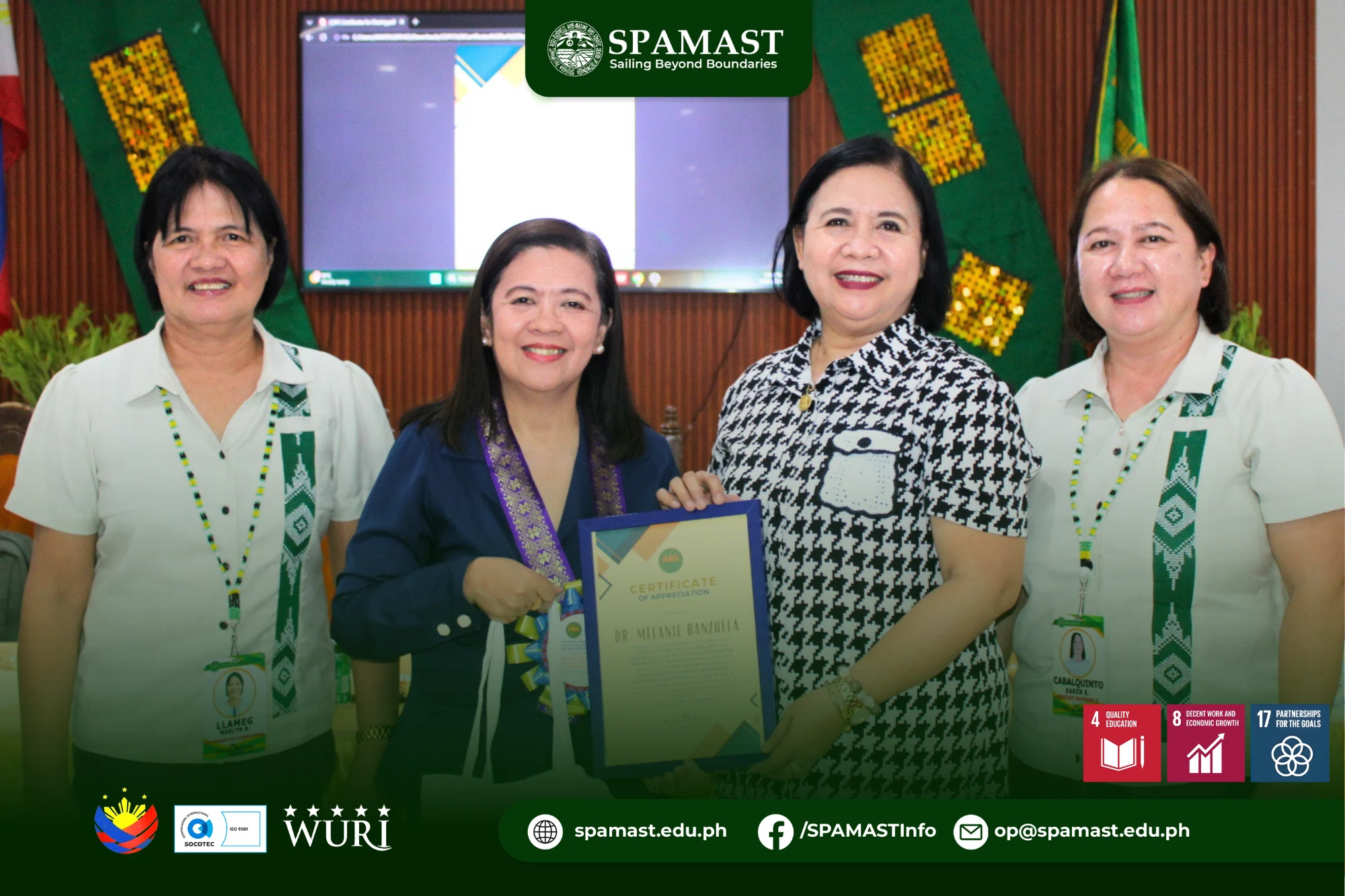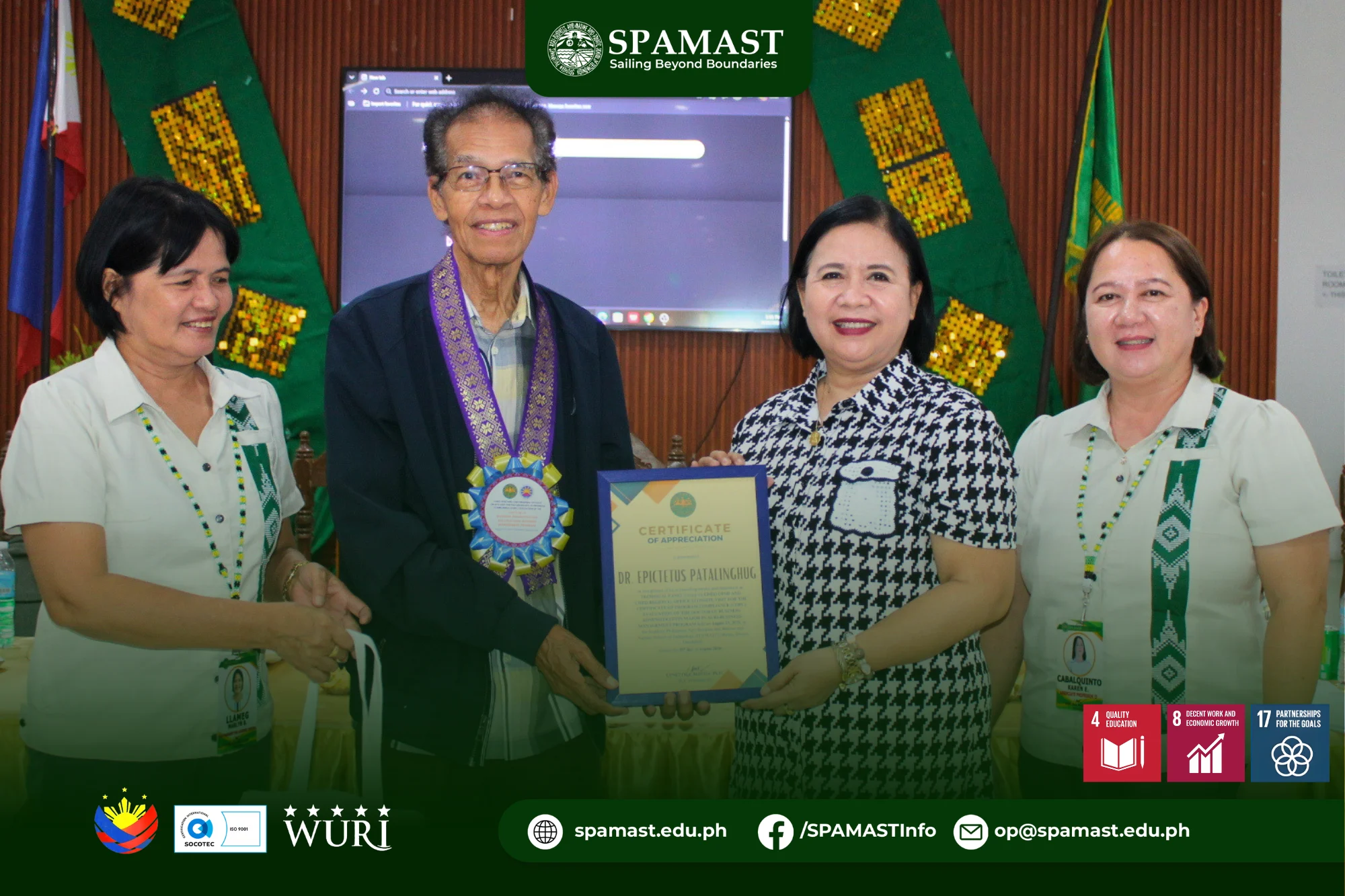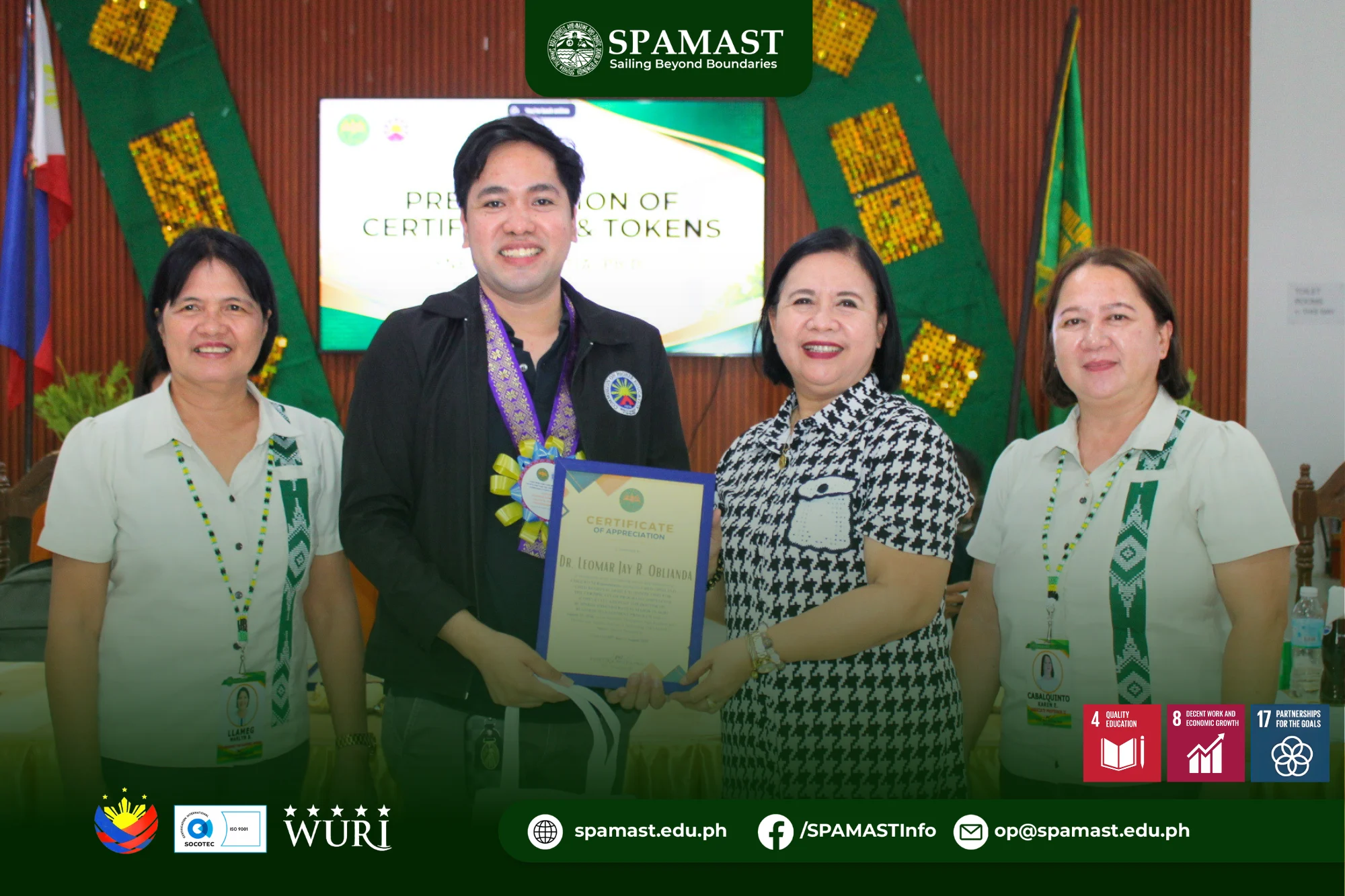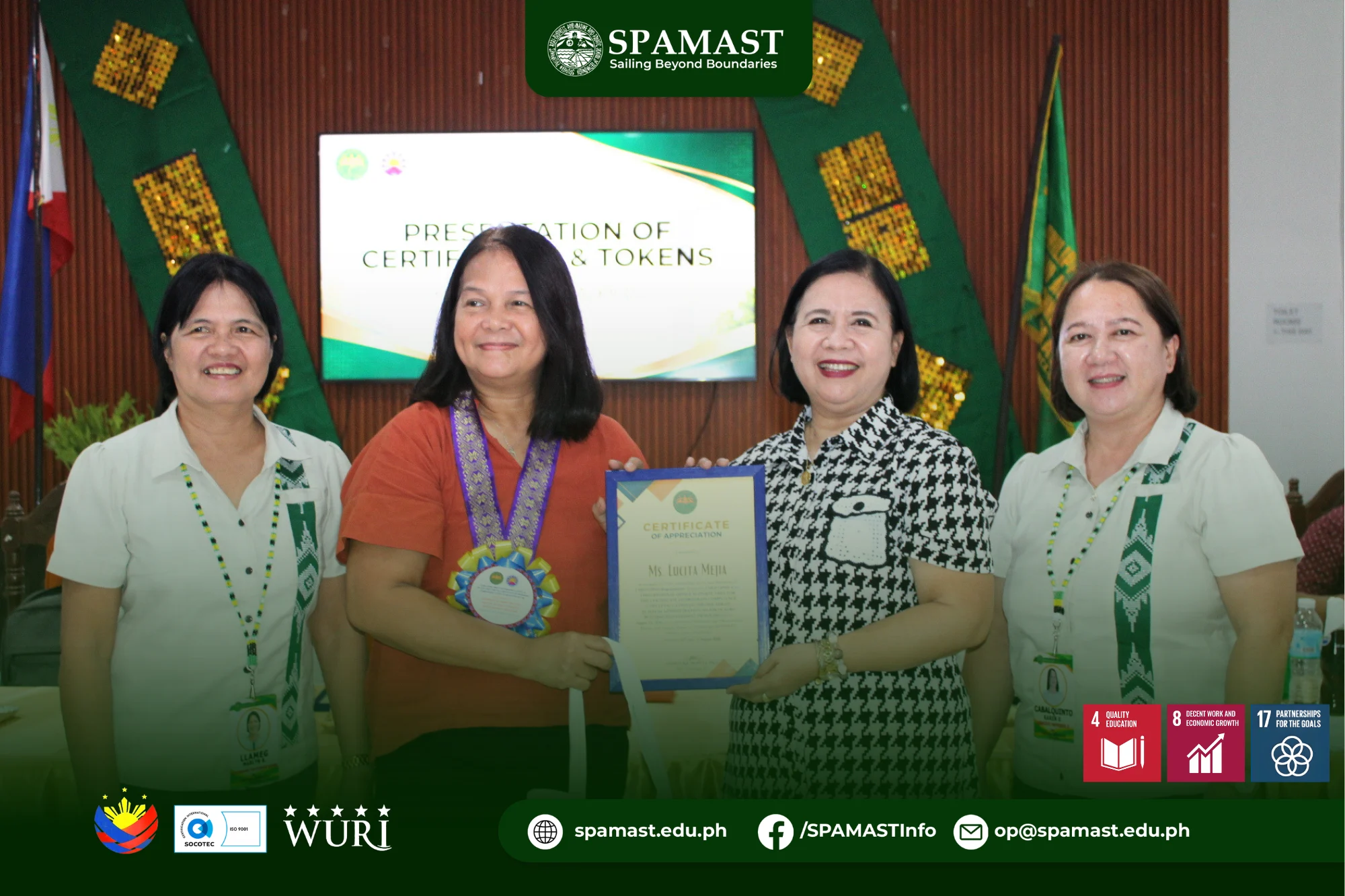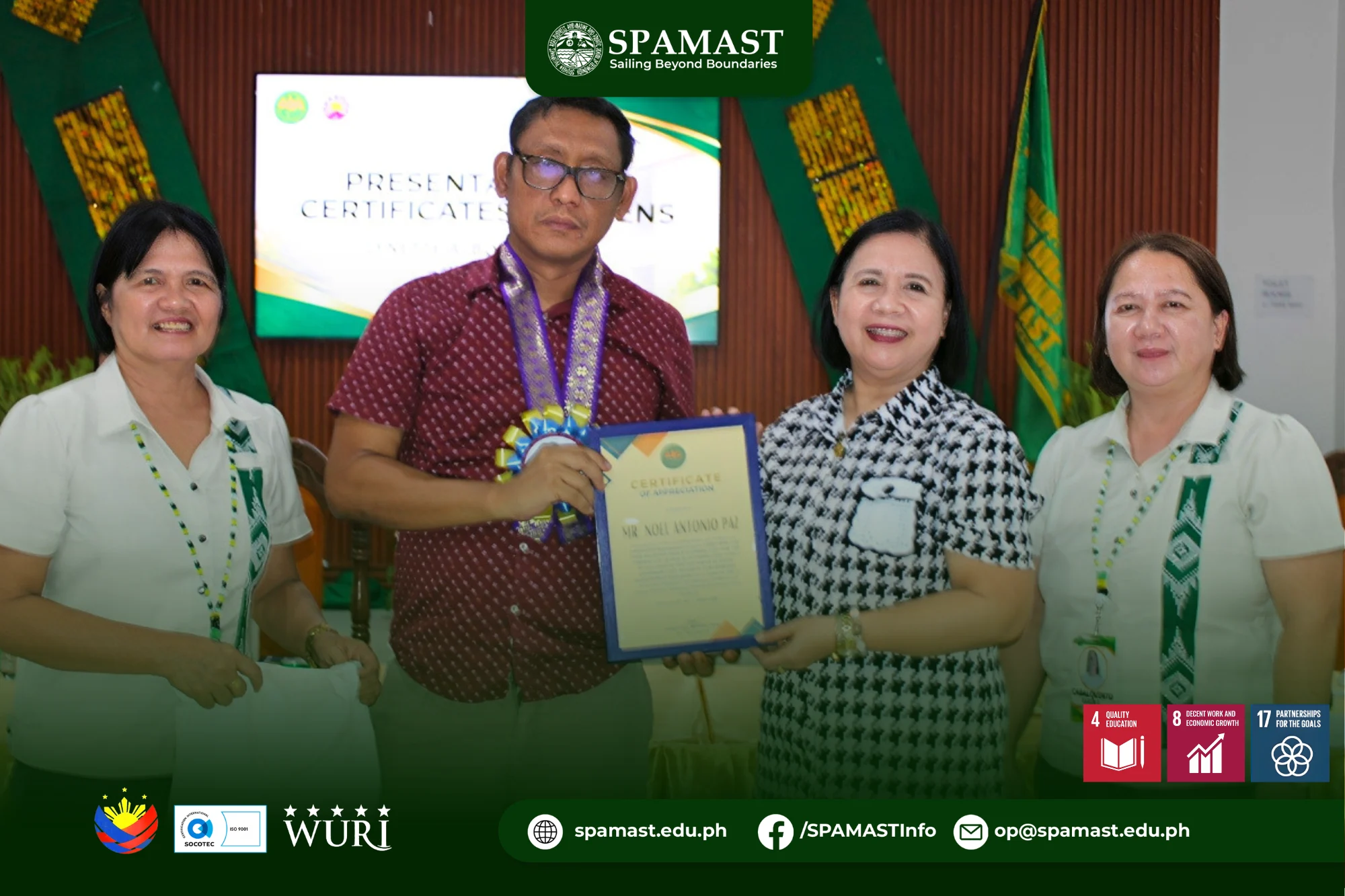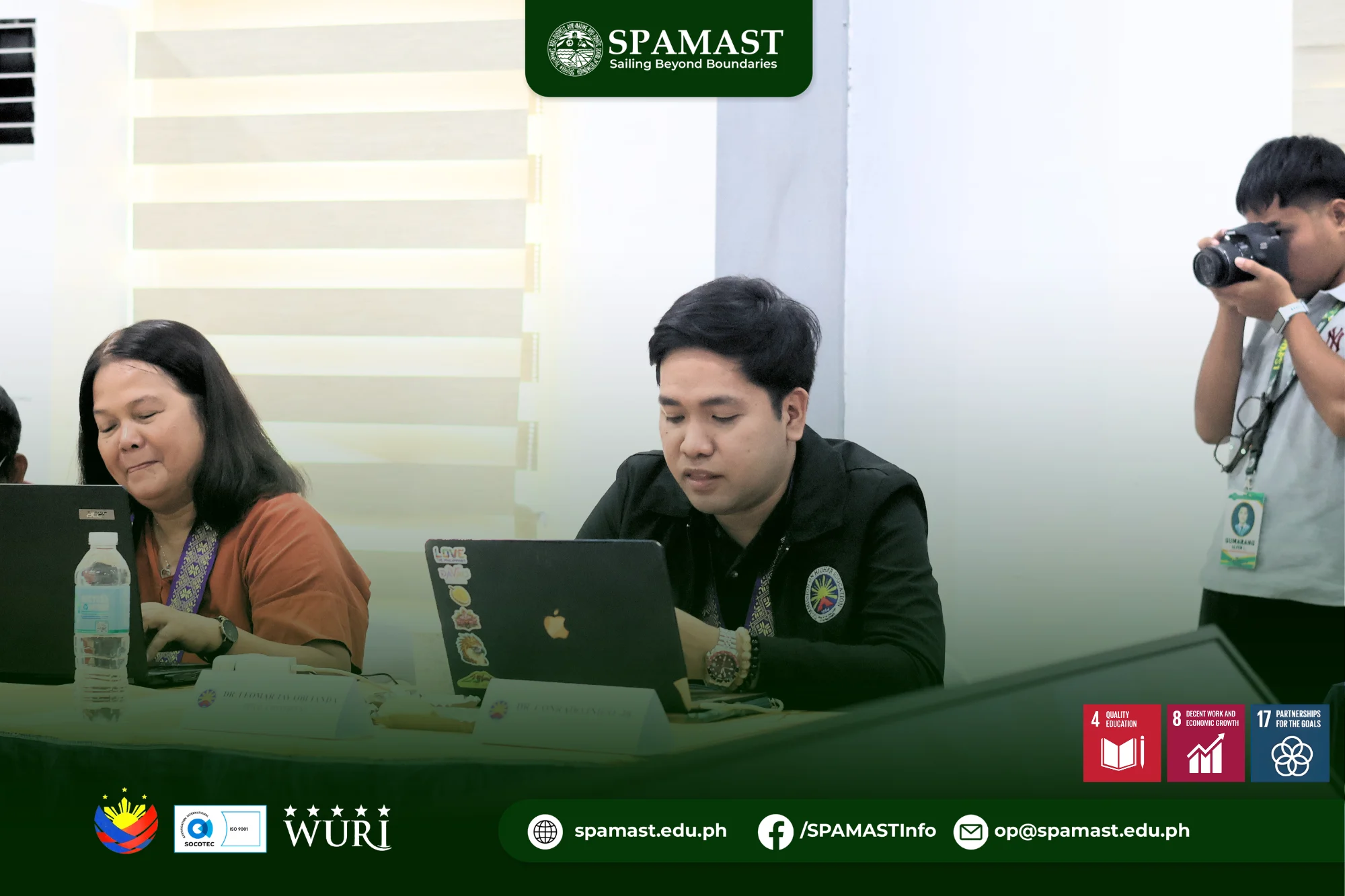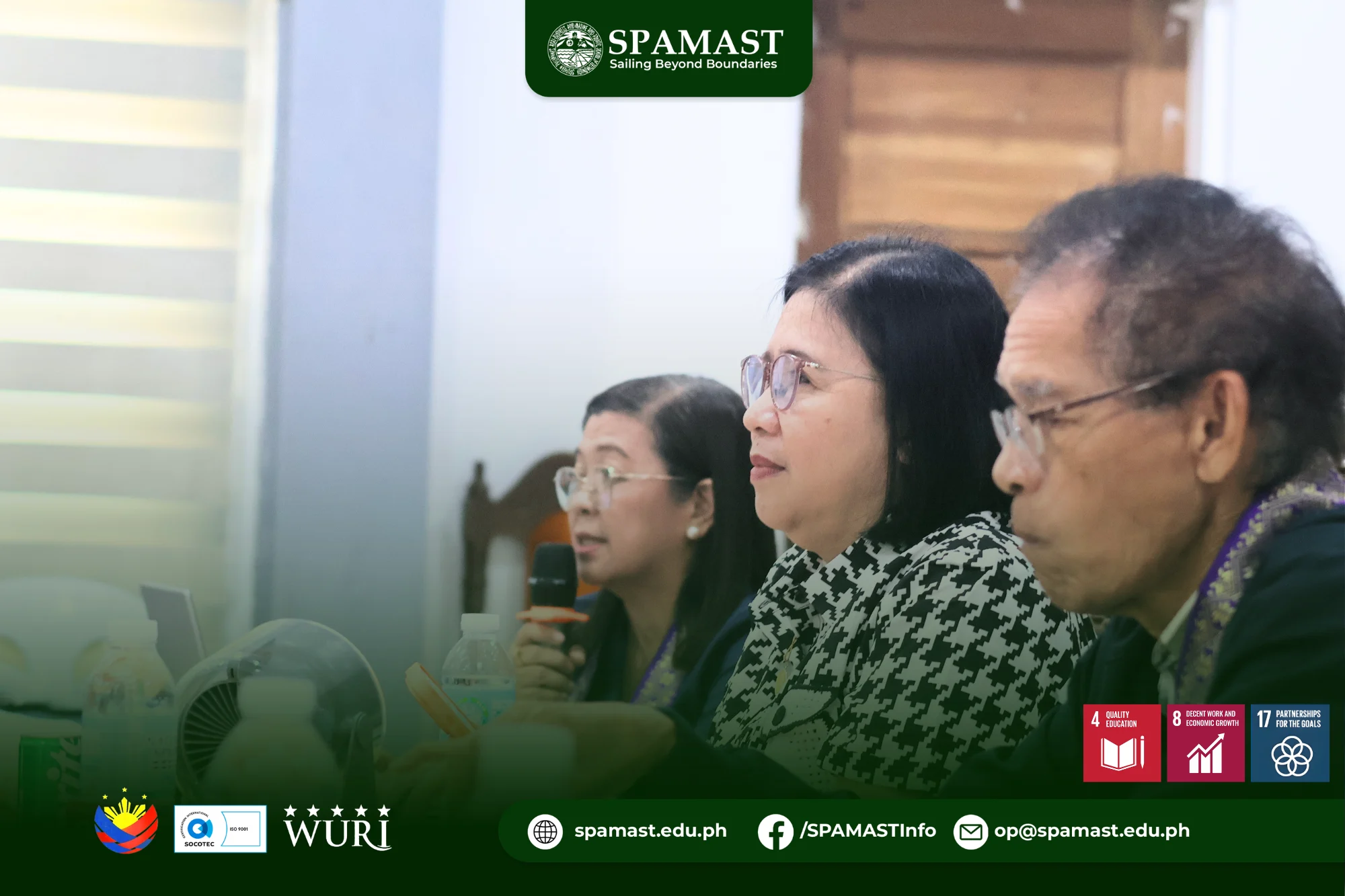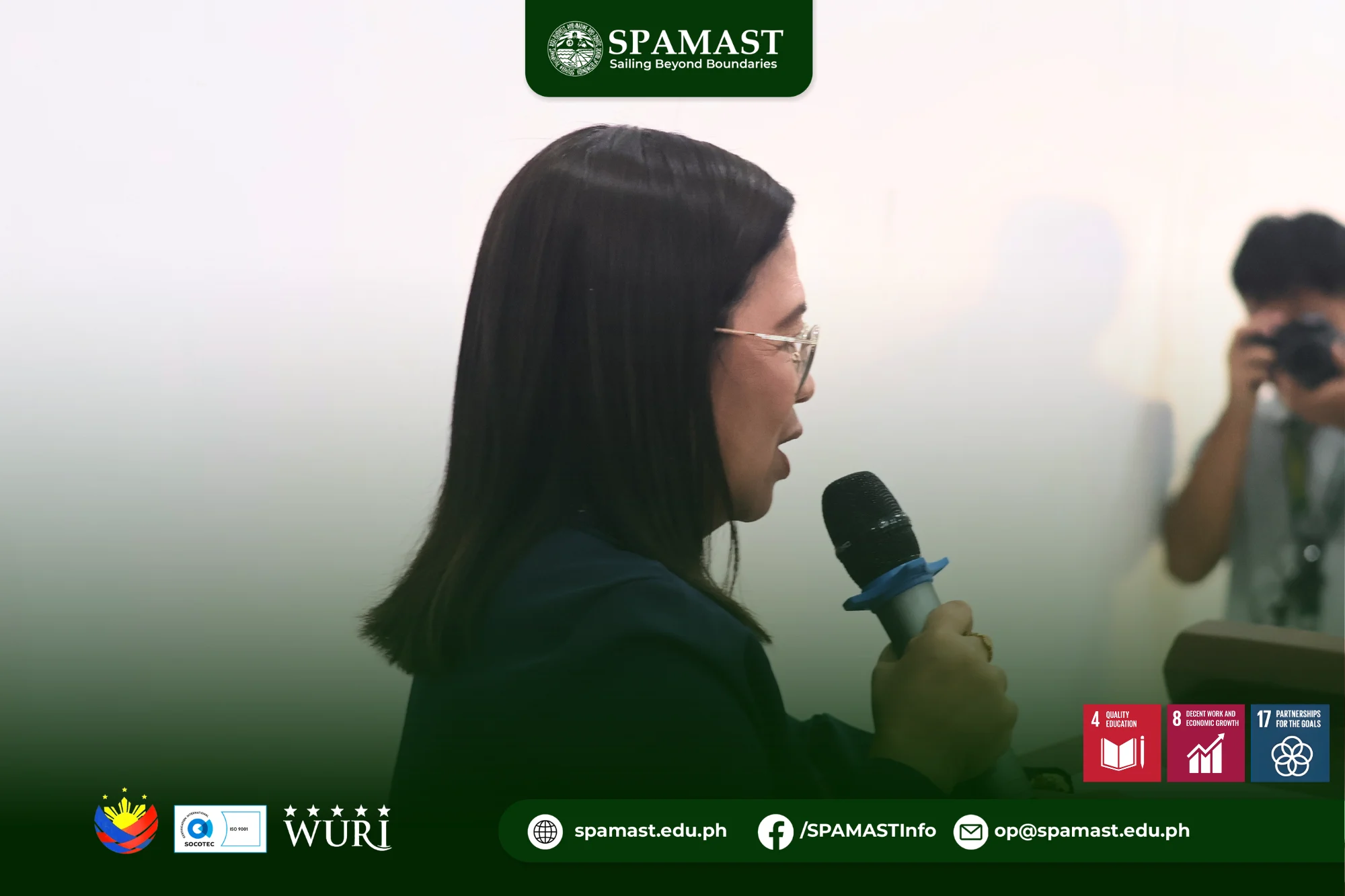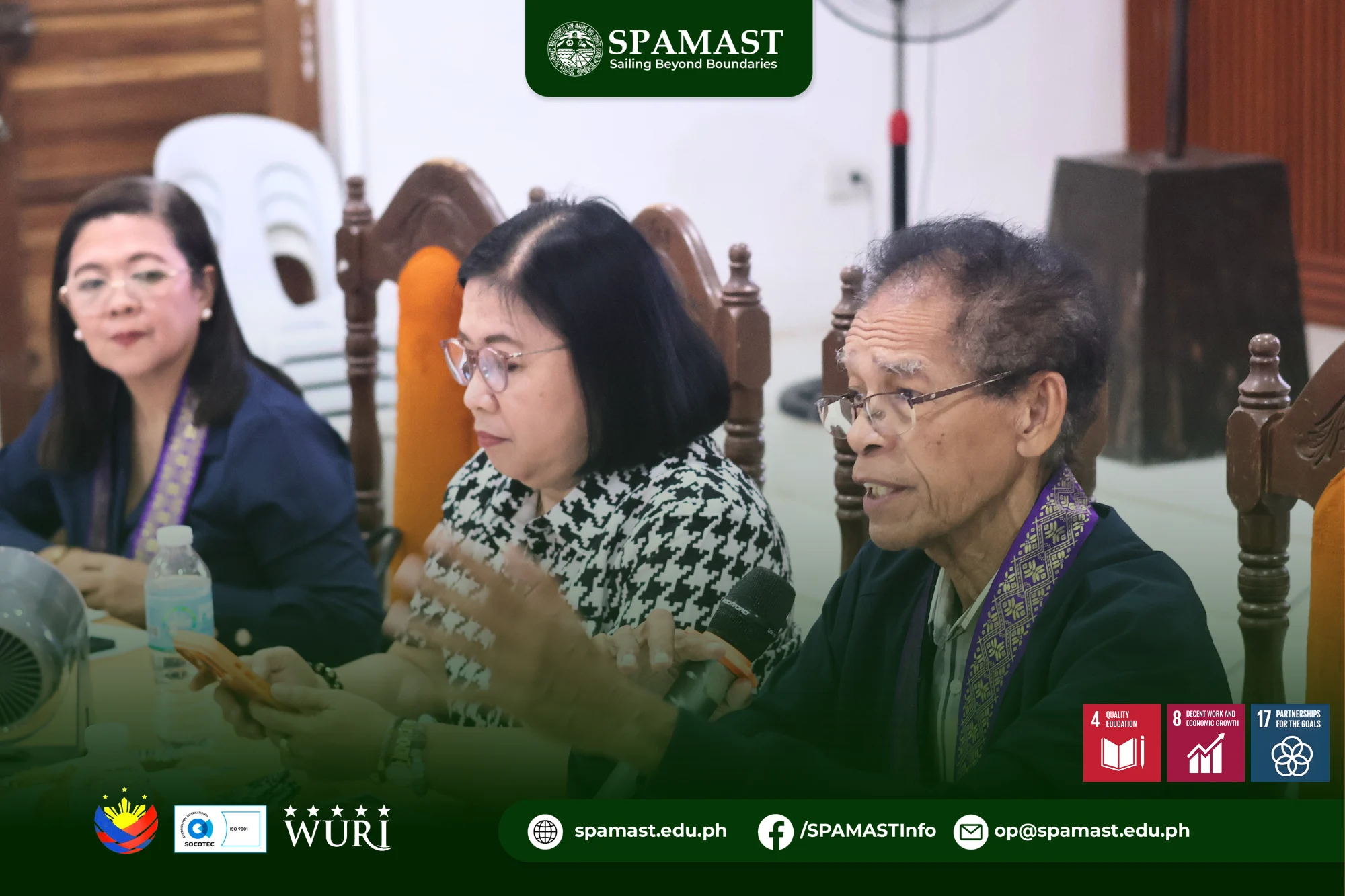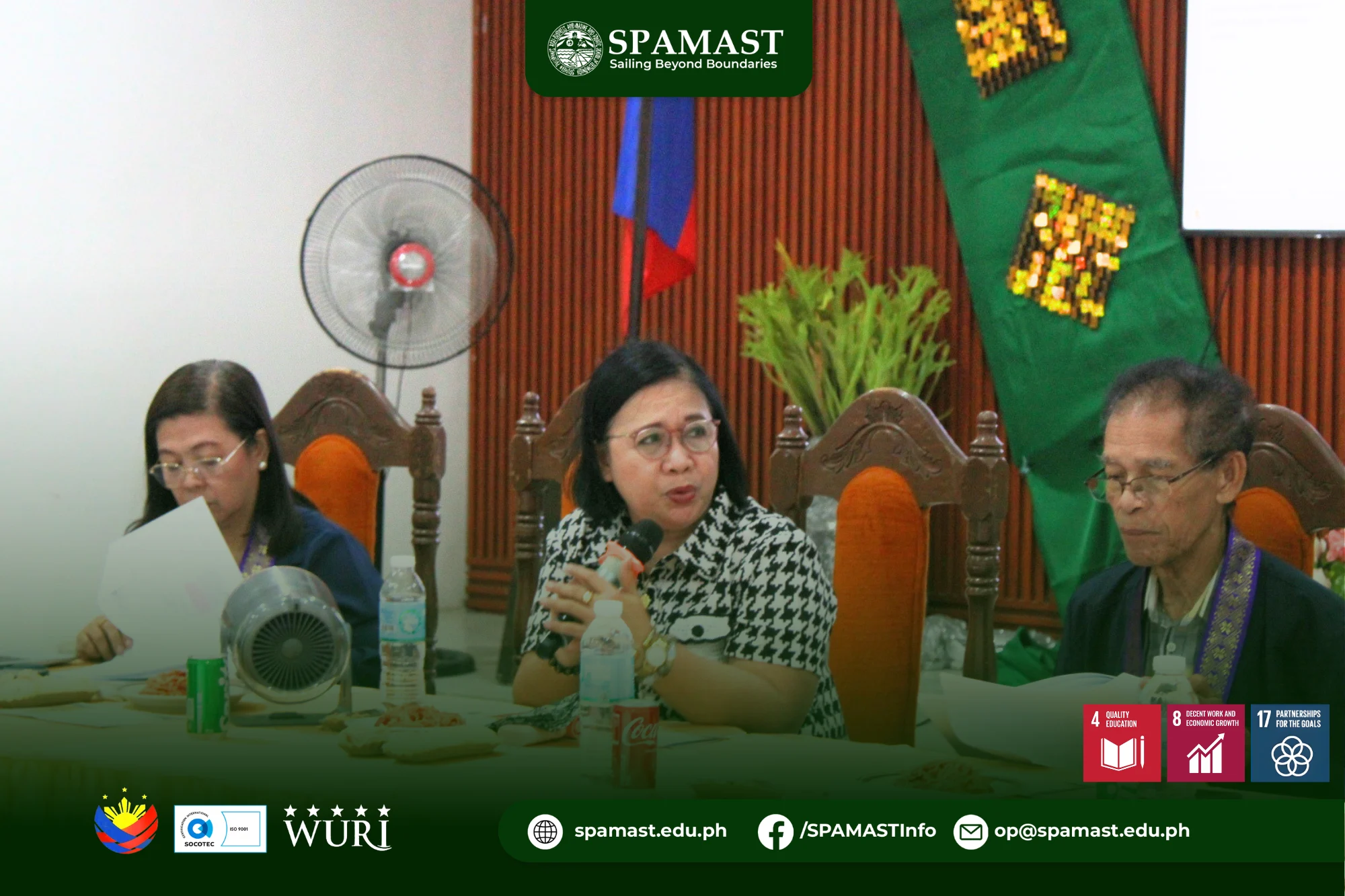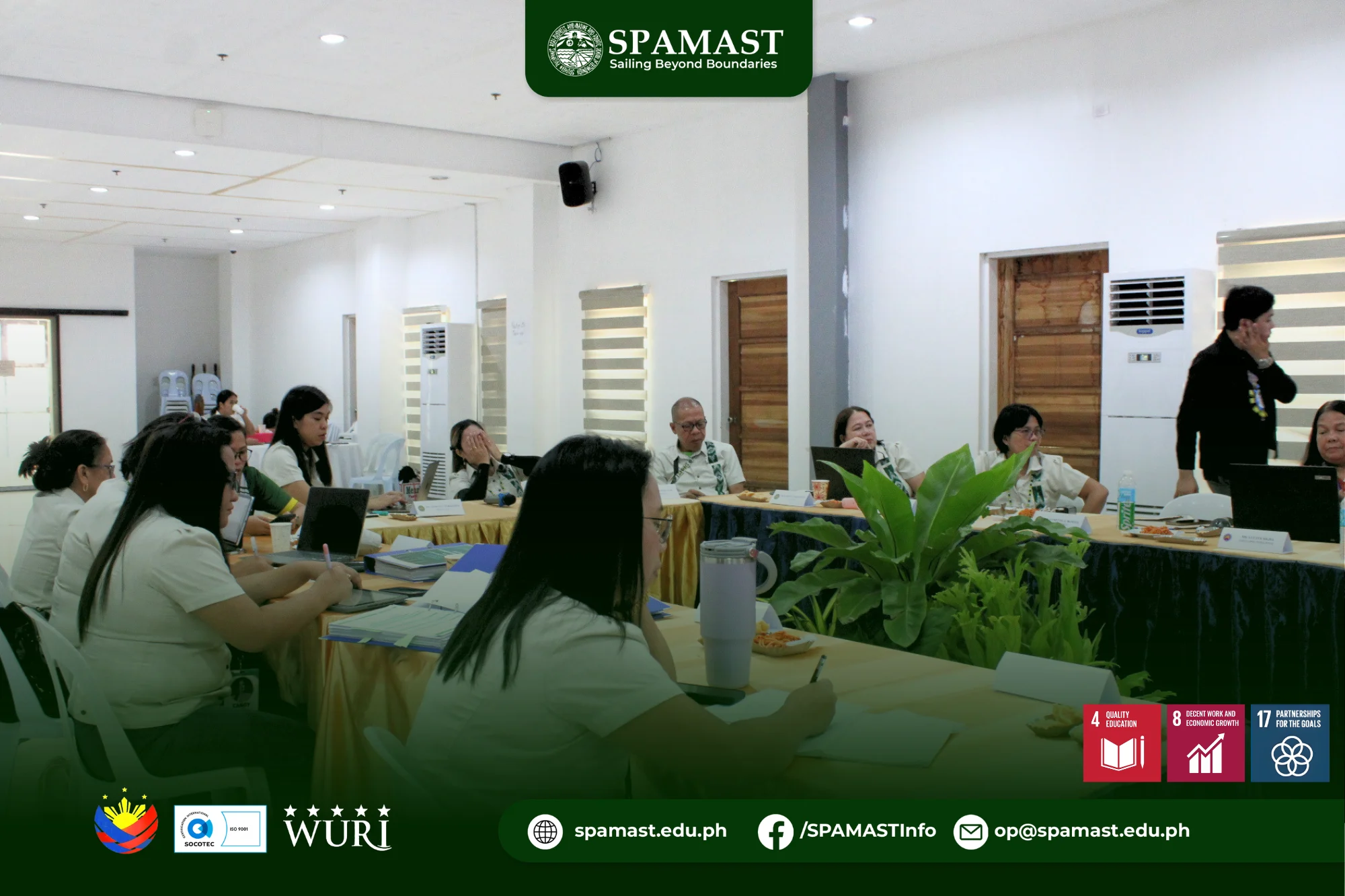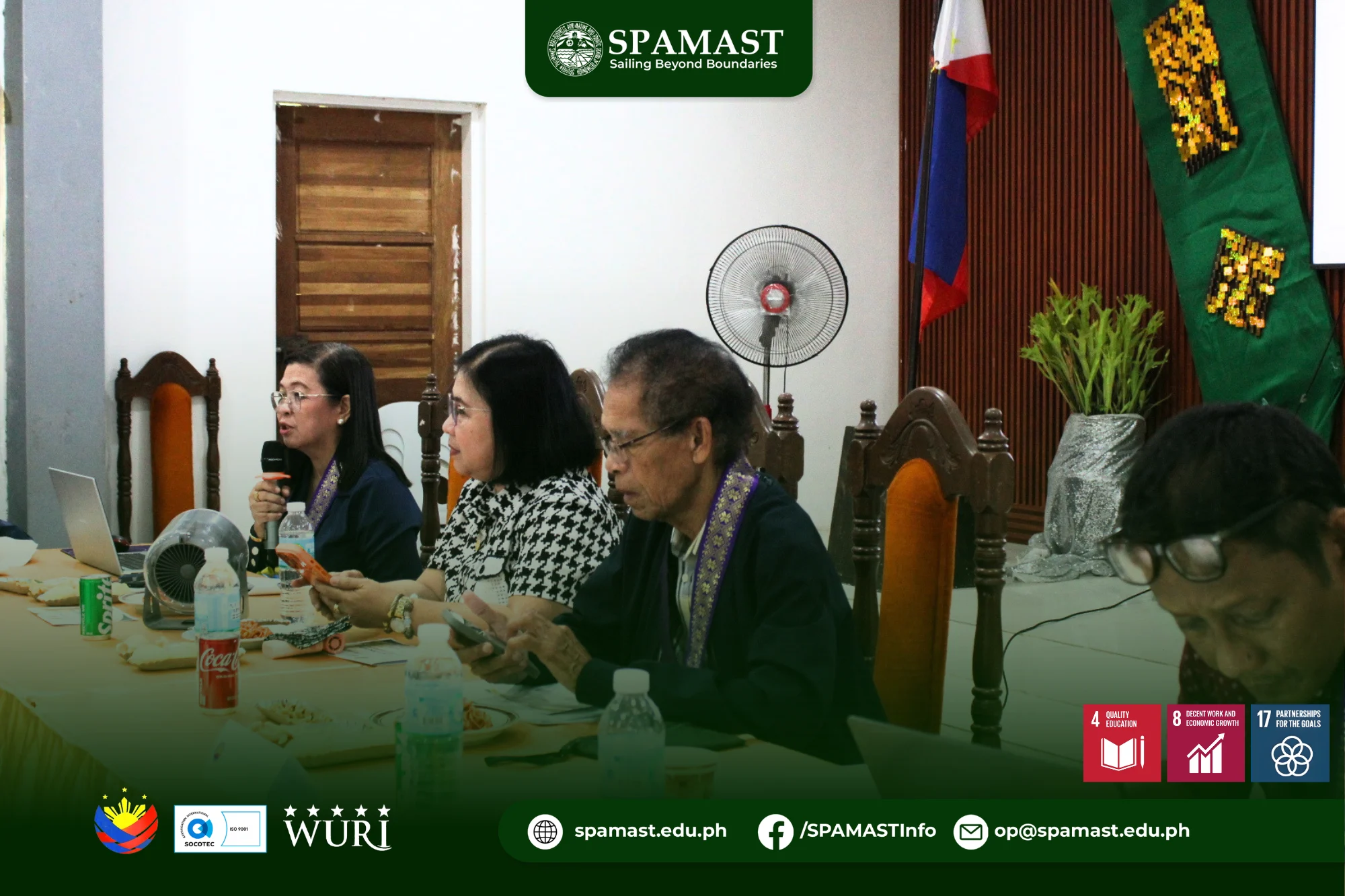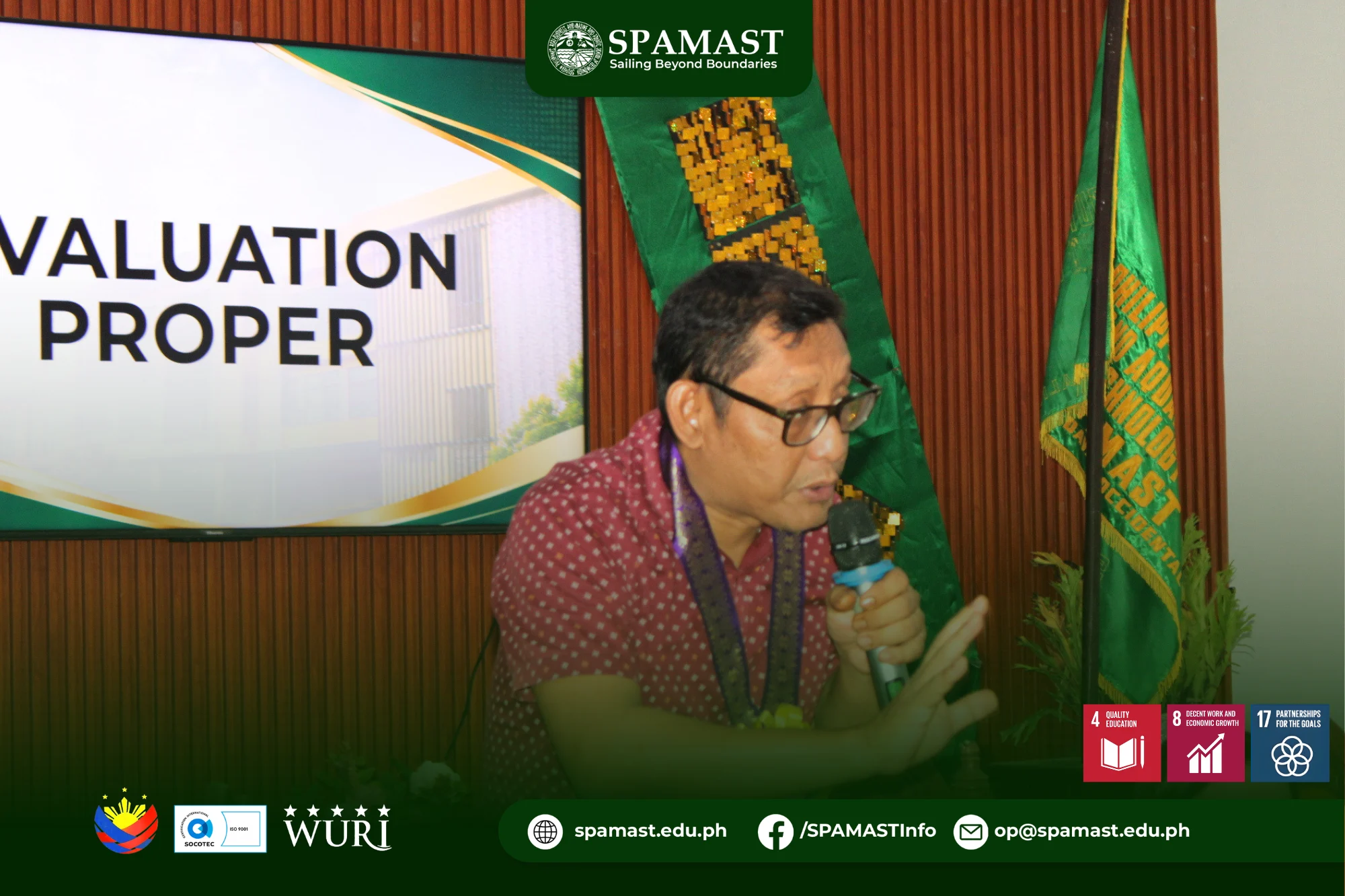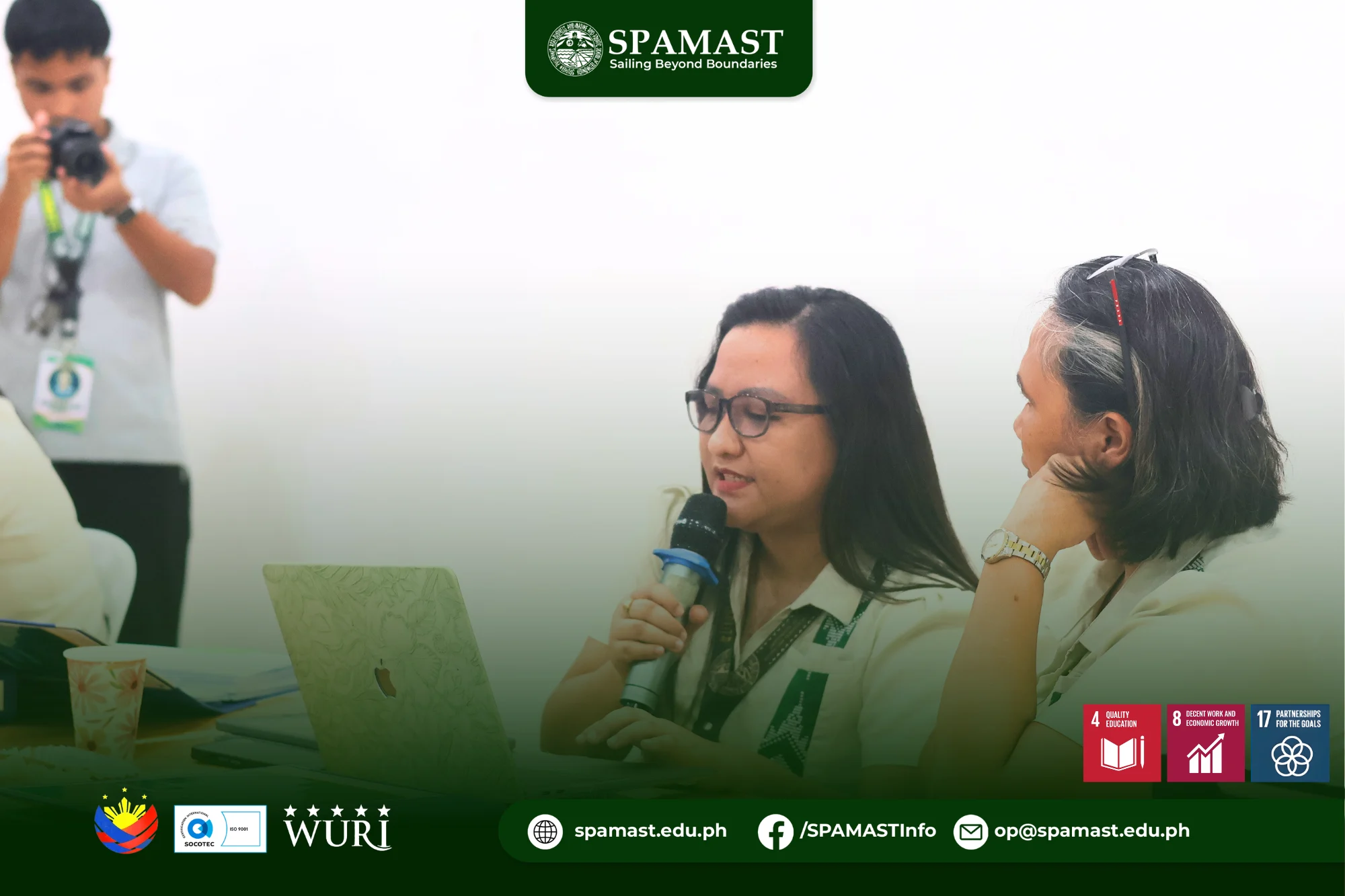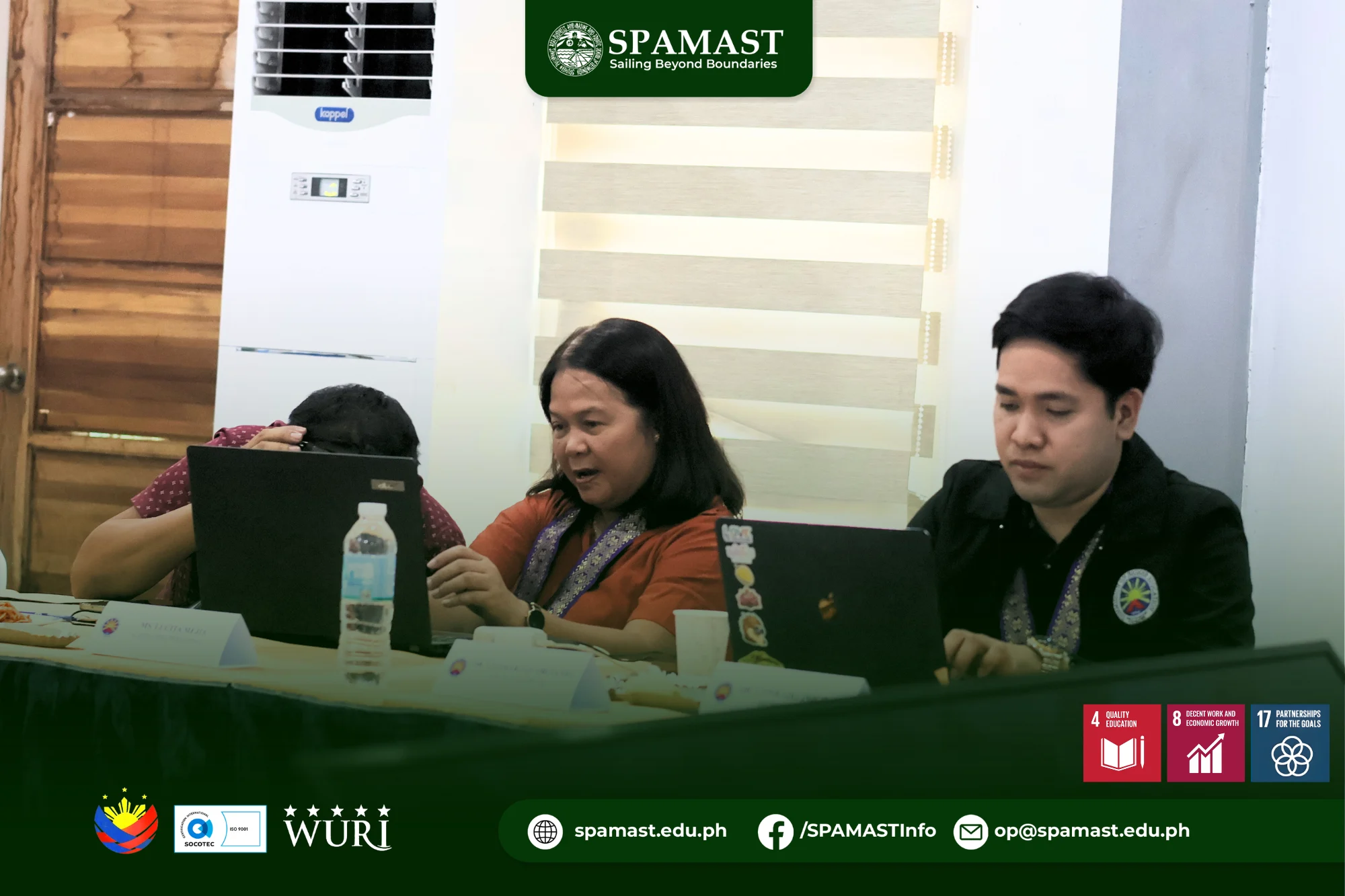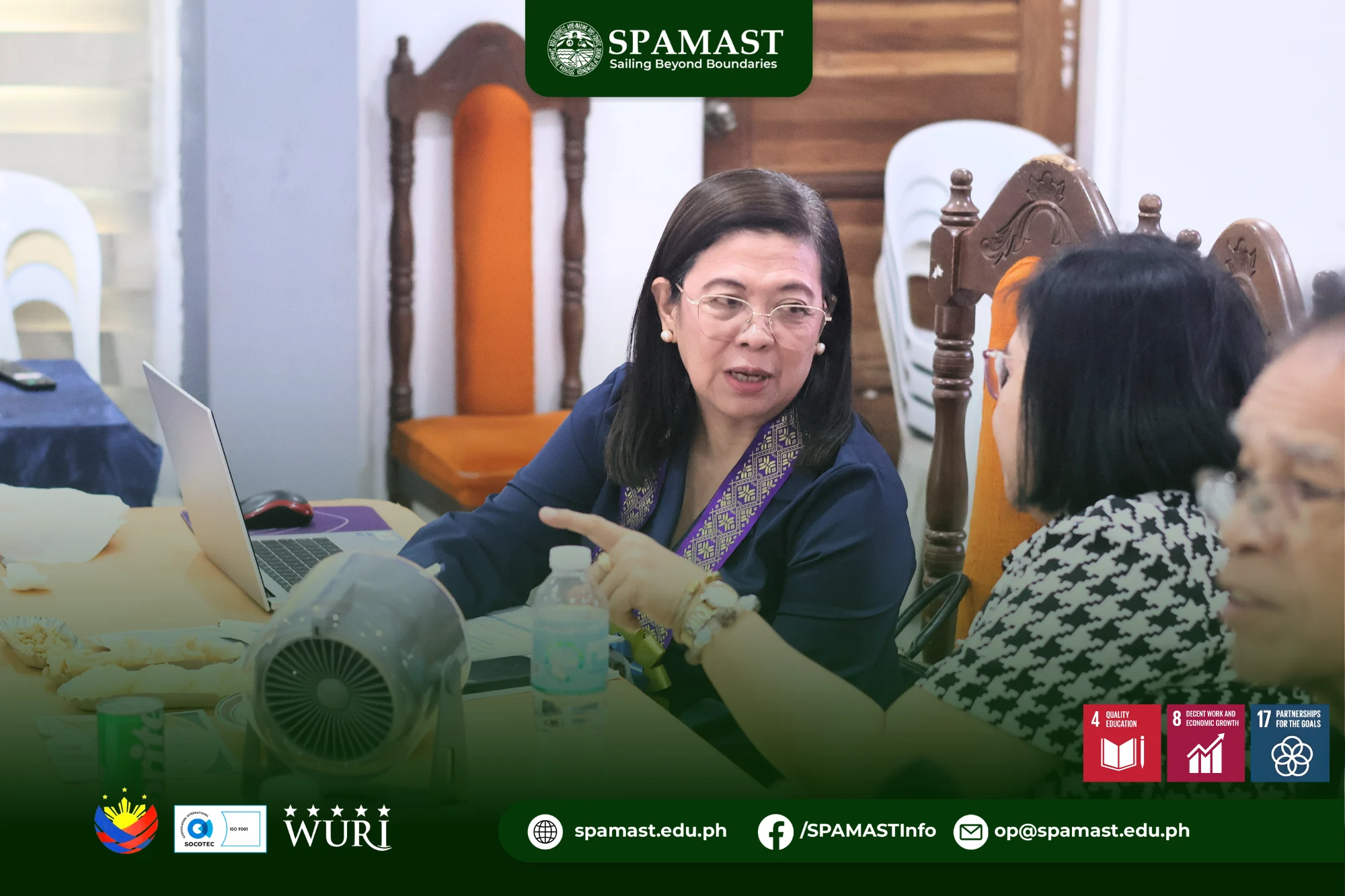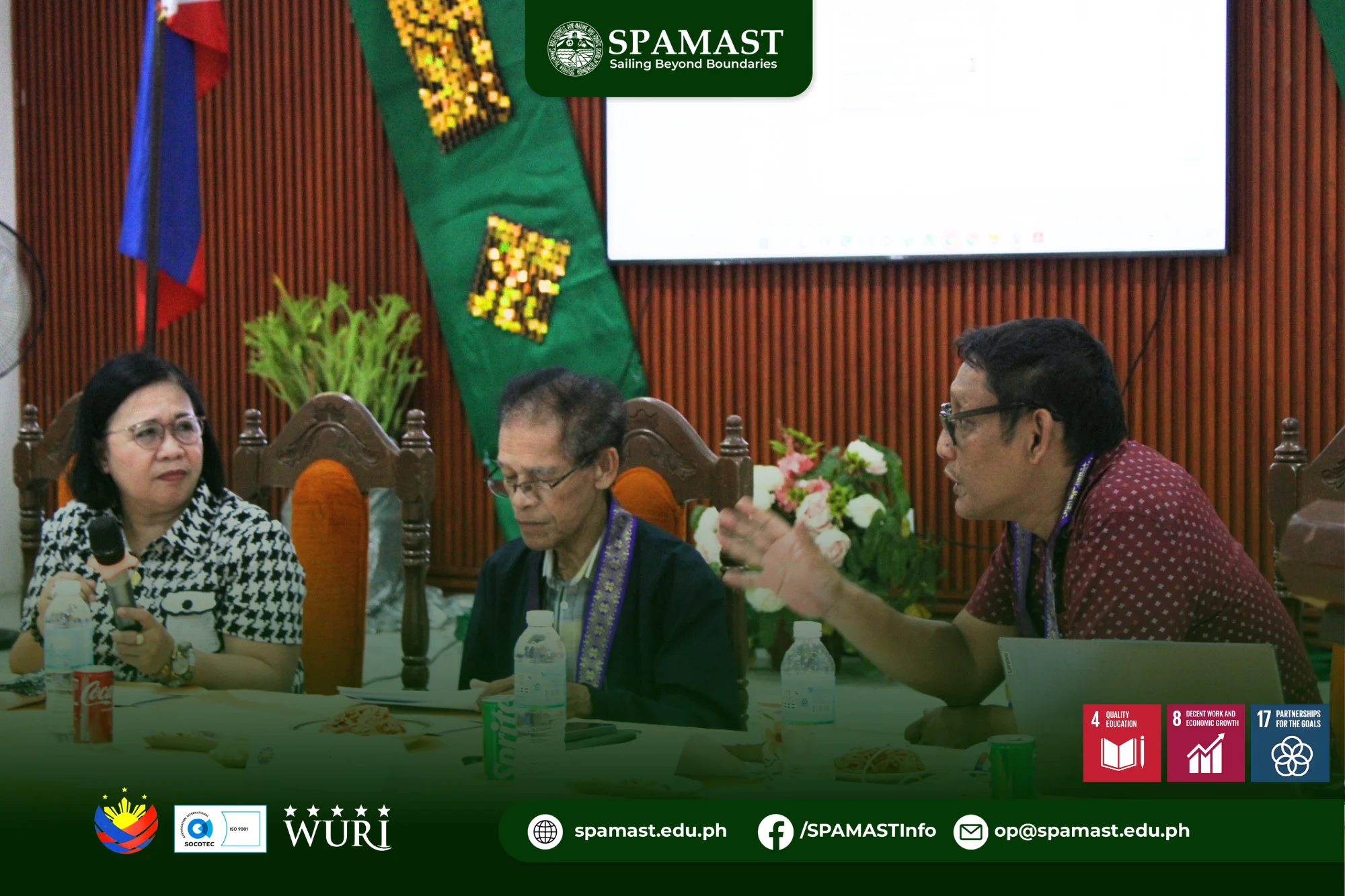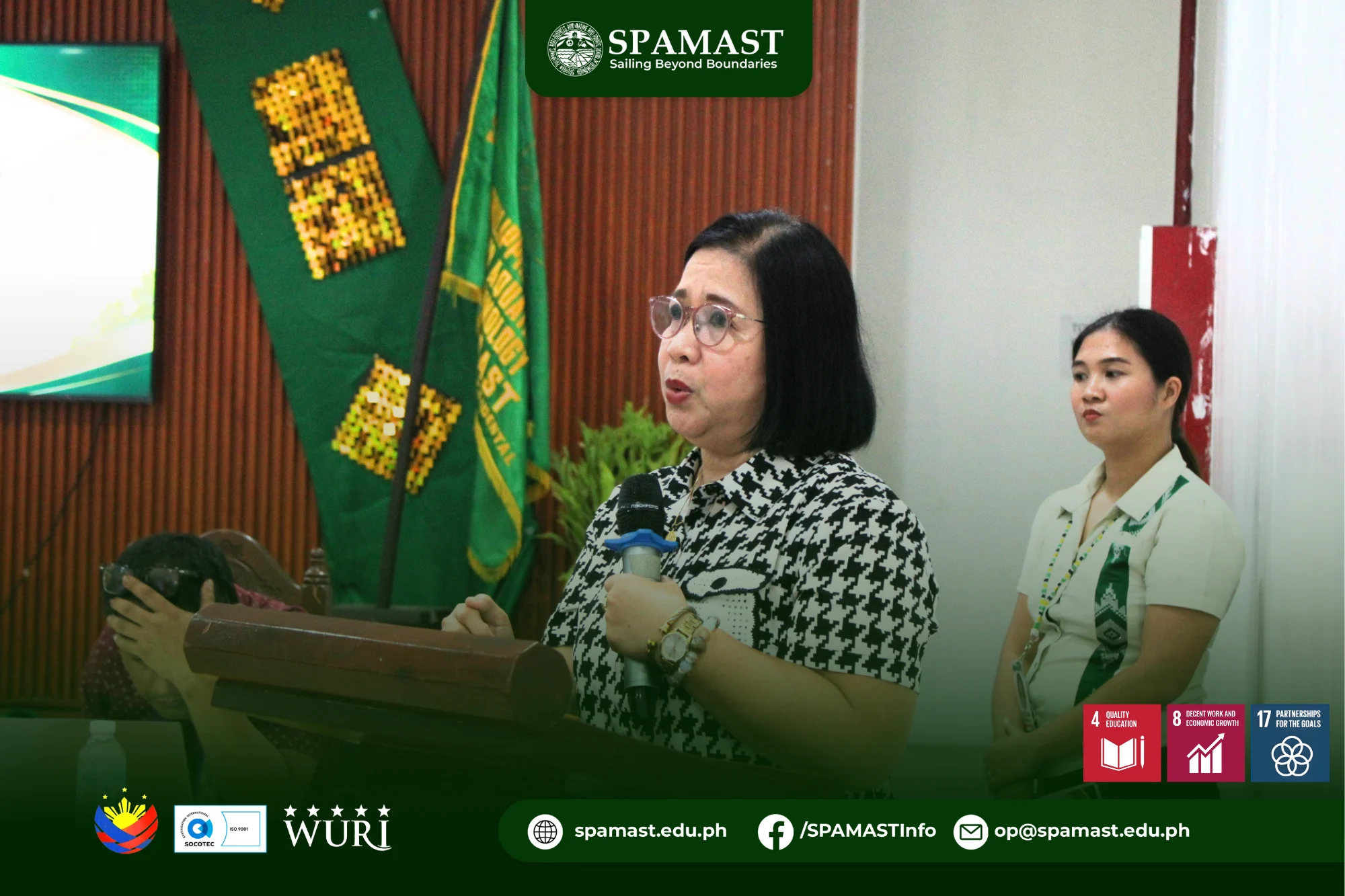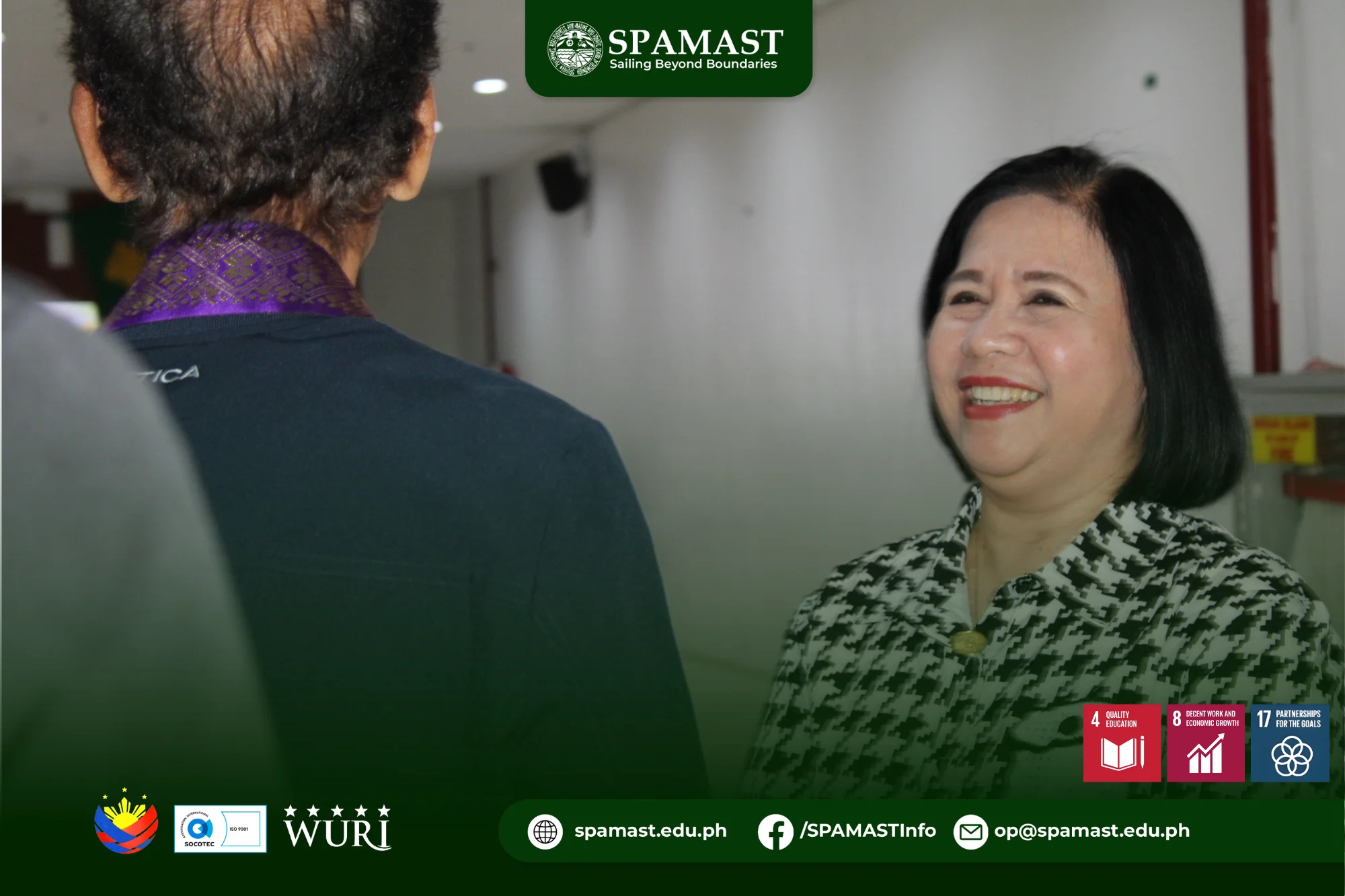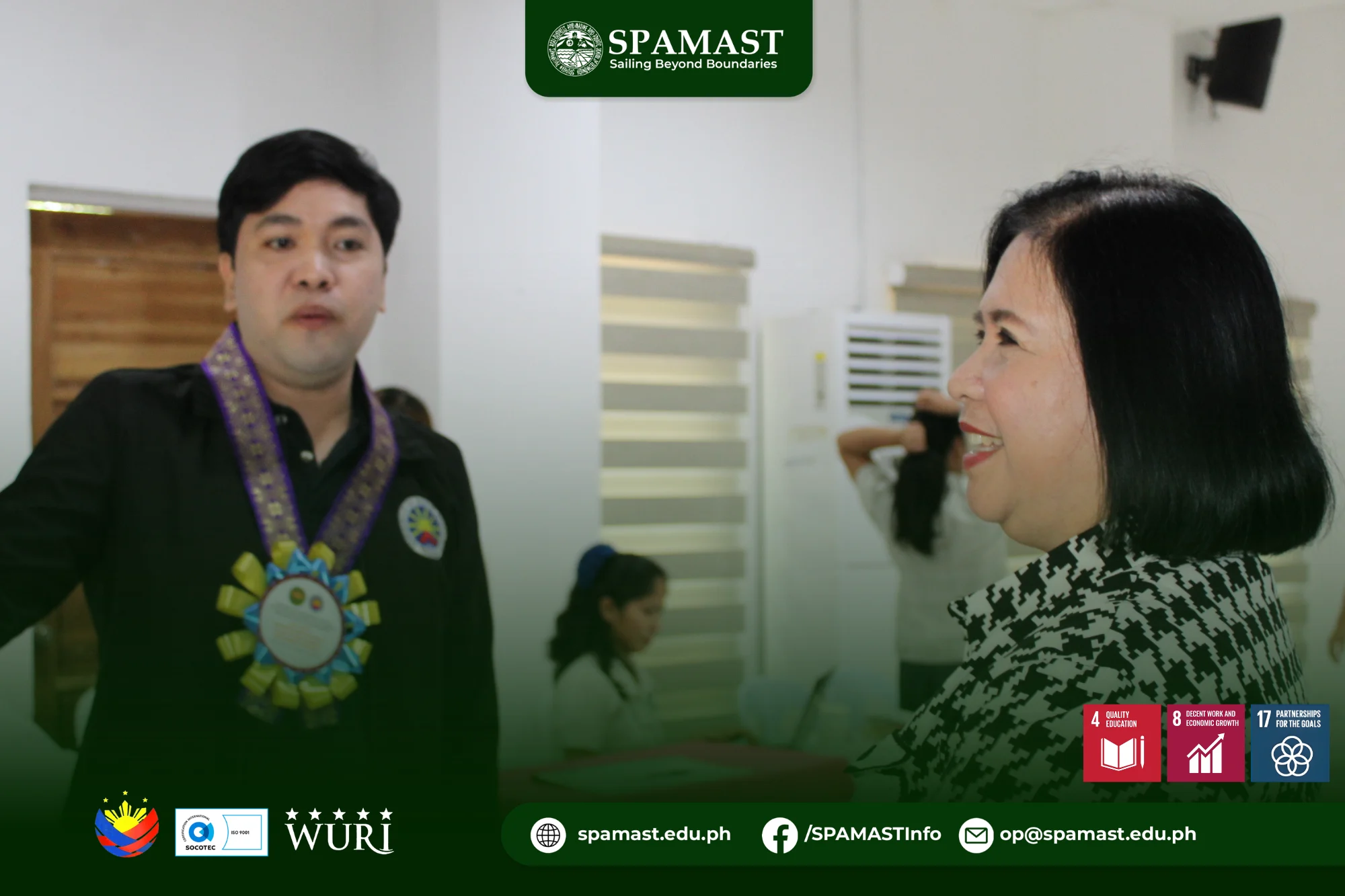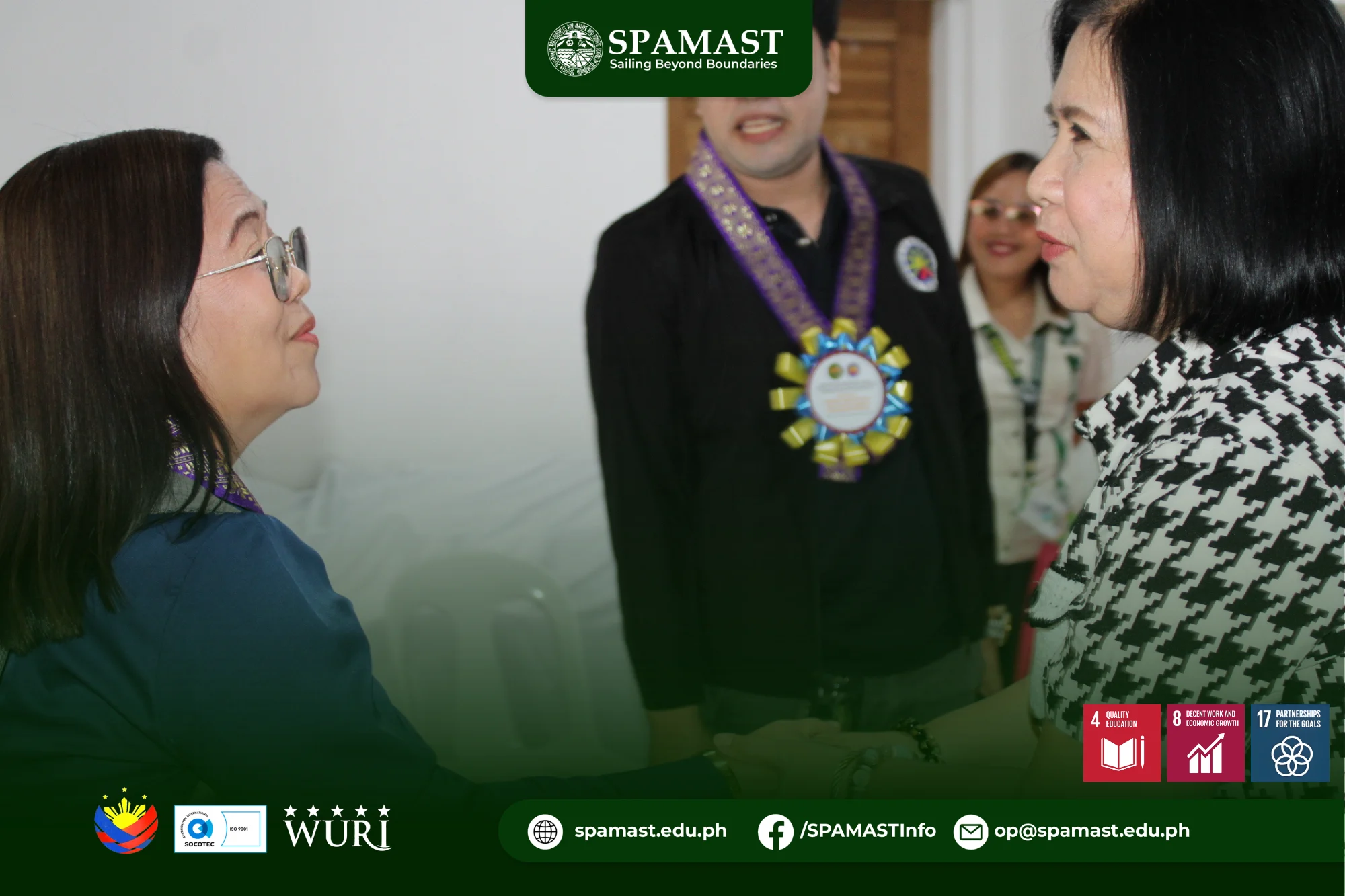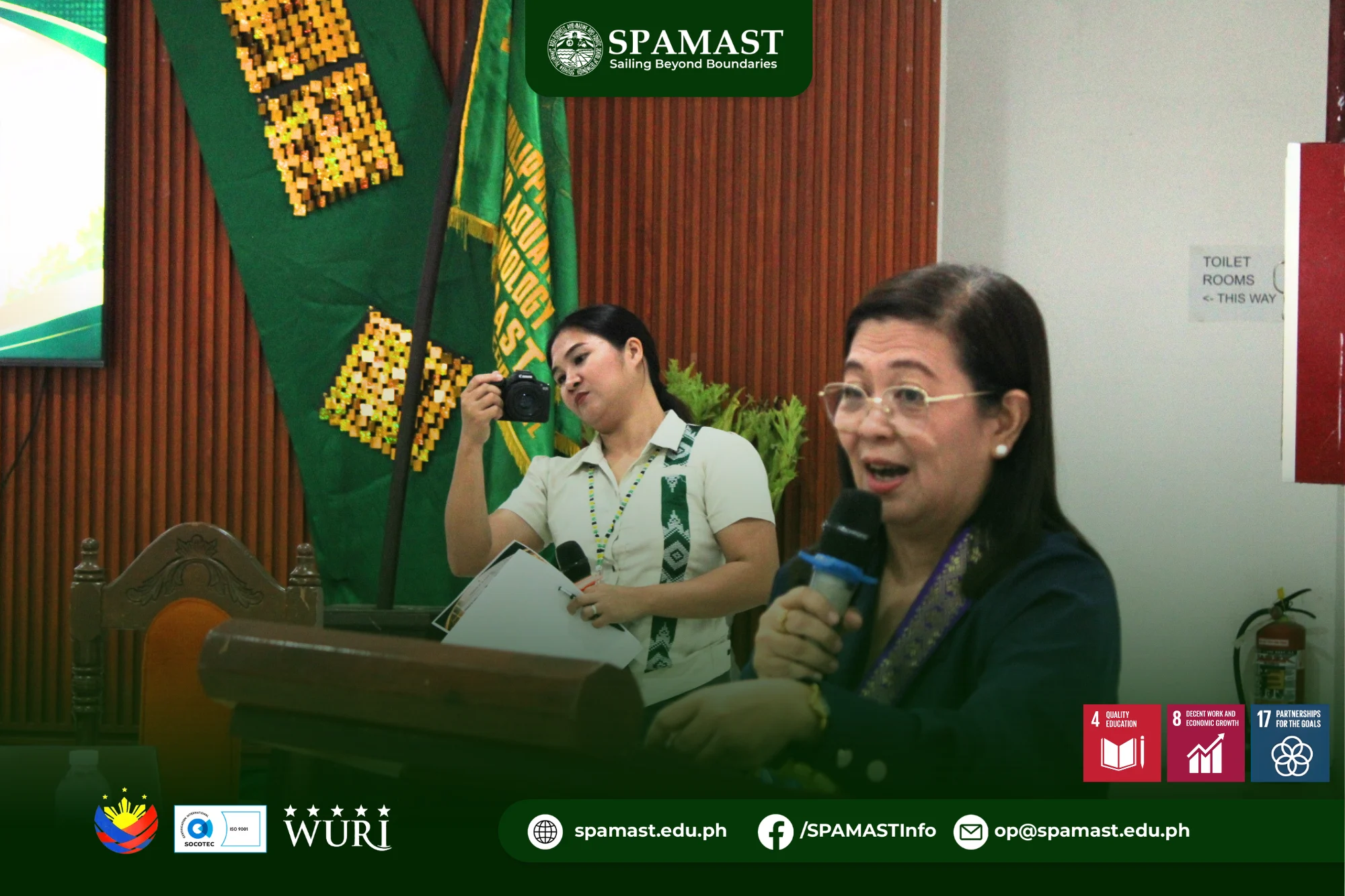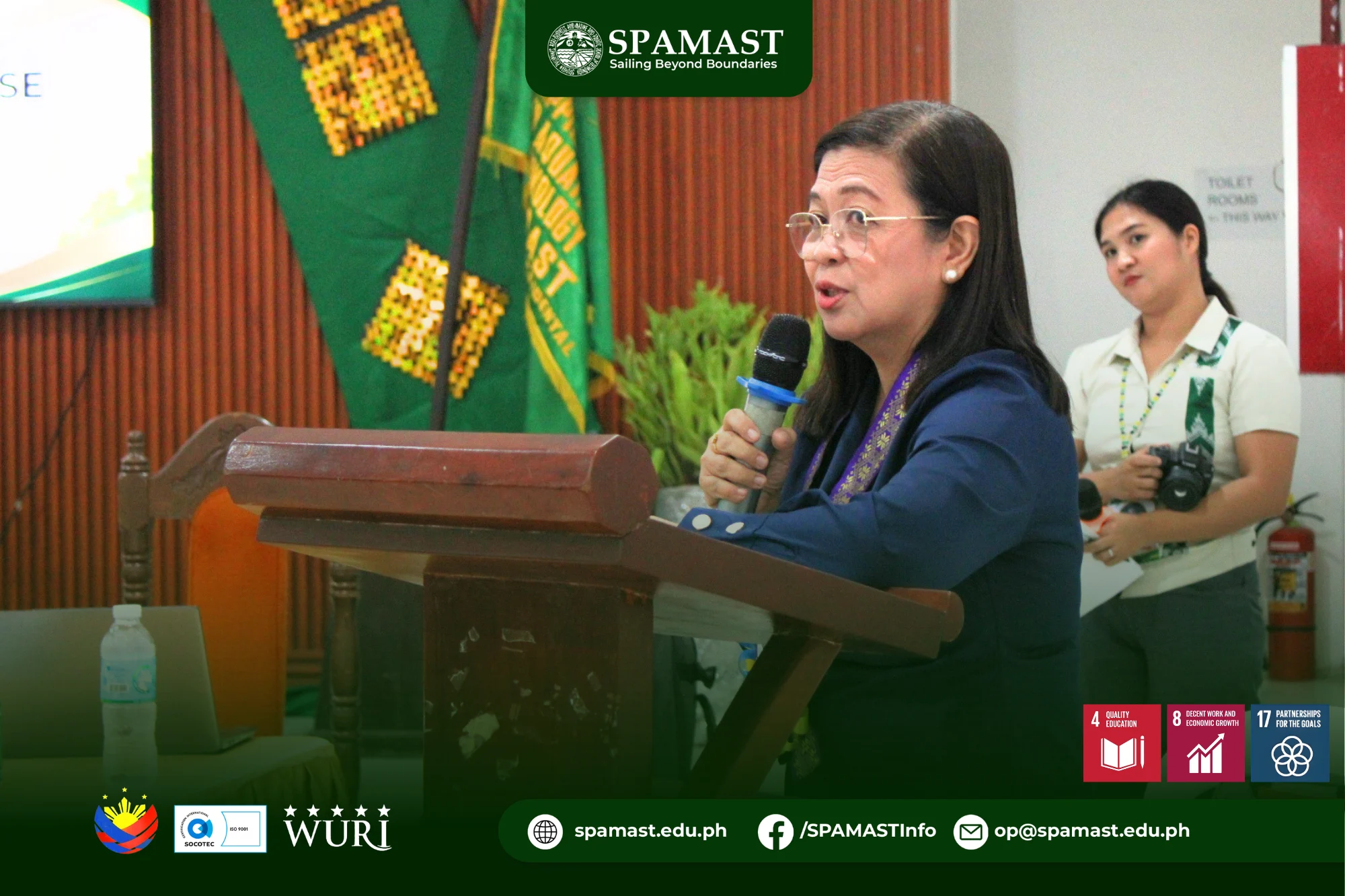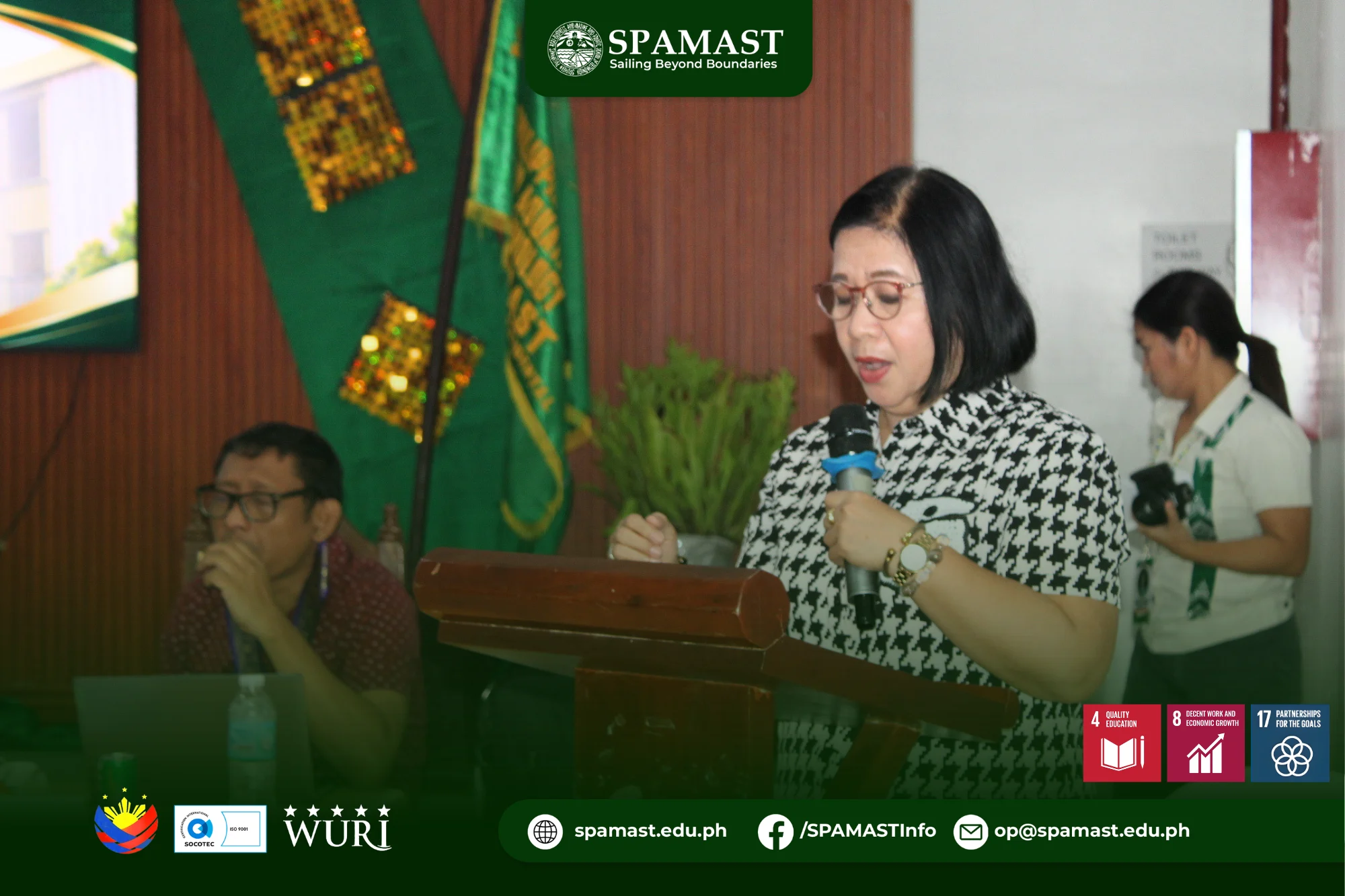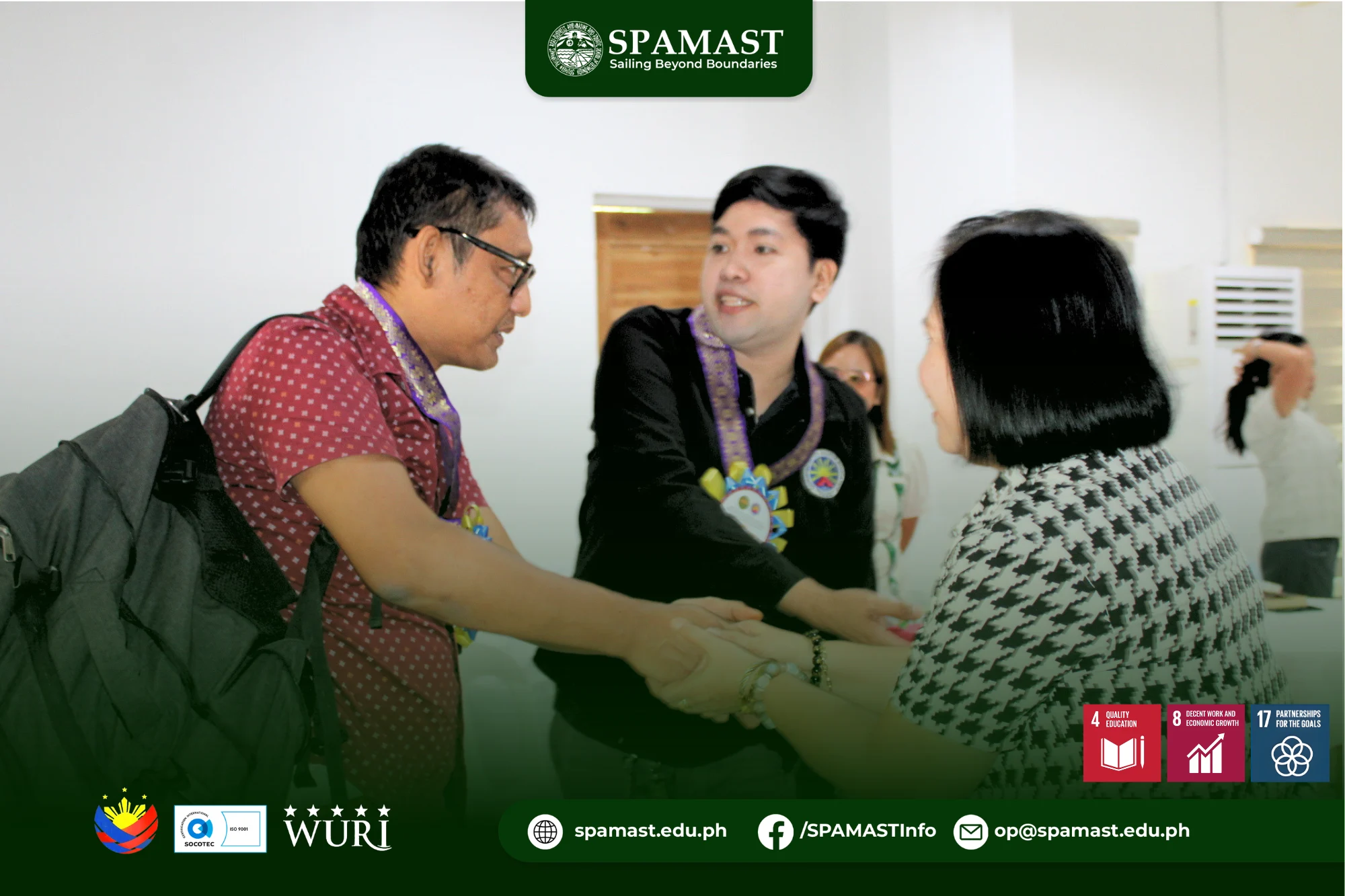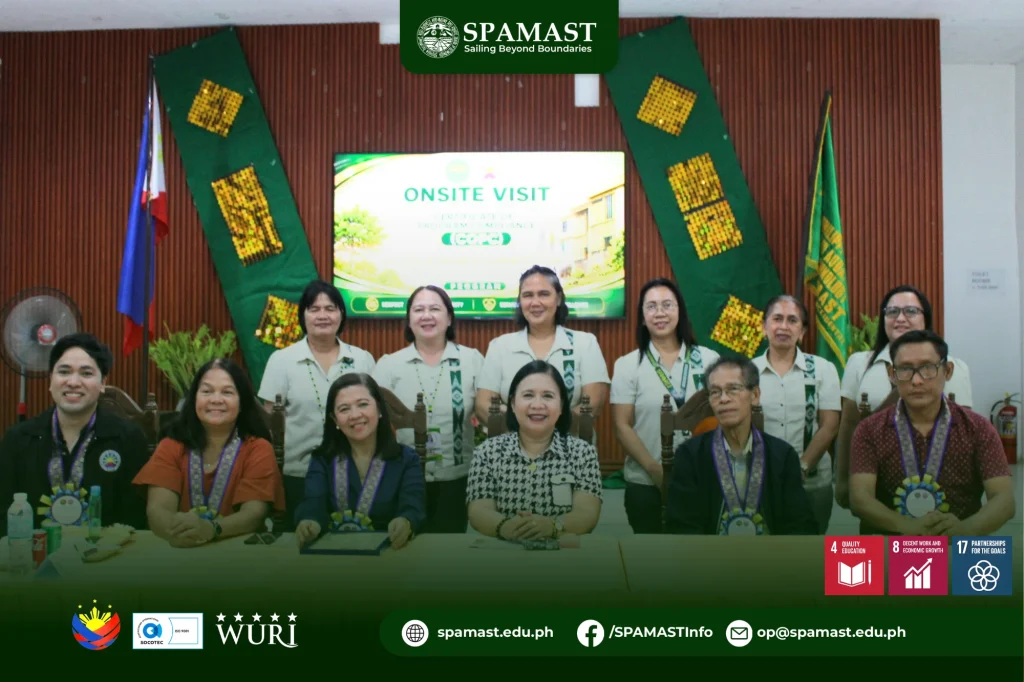
MALITA, DAVAO OCCIDENTAL — August 25, 2026. The Southern Philippines Agri-Business and Marine and Aquatic School of Technology (SPAMAST) welcomed the Commission on Higher Education (CHED) Office of Programs and Standards Development (OPSD) and CHED Regional Office XI for the onsite evaluation for the Certificate of Program Compliance (COPC) of its Doctor of Business Administration (DBA), major in Agri-Business Management, held today at the SPAMAST Lecture Hall in Malita, Davao Occidental. The visit marks a significant milestone in SPAMAST’s continuing pursuit of academic excellence, quality assurance, transformative education, and sustainable development.
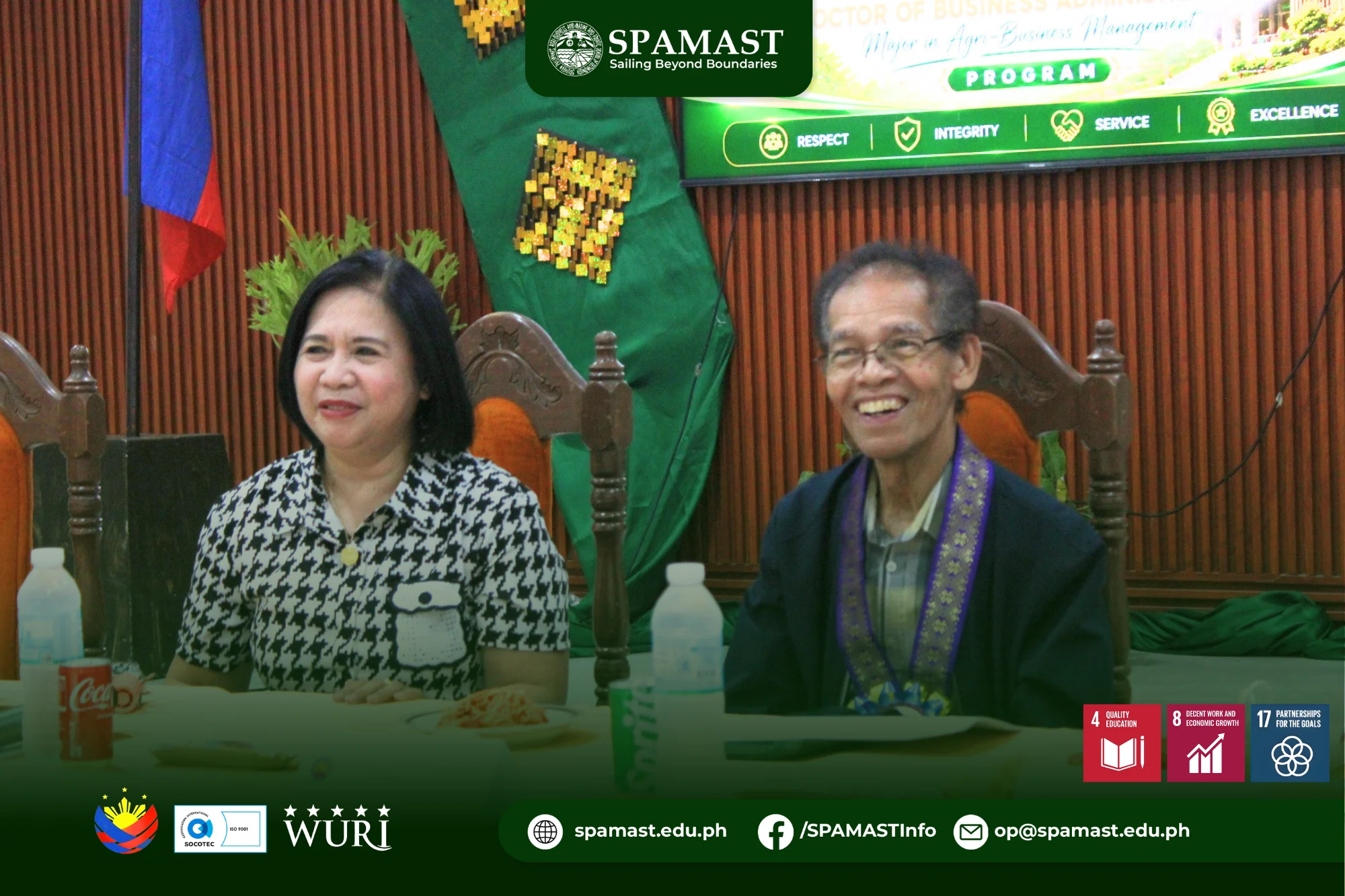
The CHED evaluation team was composed of Dr. Conrado Iñigo, Jr., Dr. Melanie Banzuela, and Dr. Epictetus Patalinghug, who served as members of the CHED Technical Panel; Mr. Noel Antonio Paz and Ms. Lucita Mejia of the CHED Office of Programs and Standards Development (OPSD); and Dr. Leomar Jay R. Oblianda of CHED Regional Office XI. Their presence underscored the importance of rigorous quality assurance in ensuring that doctoral programs meet established standards and remain responsive to the evolving needs of learners, industries, communities, and the nation.
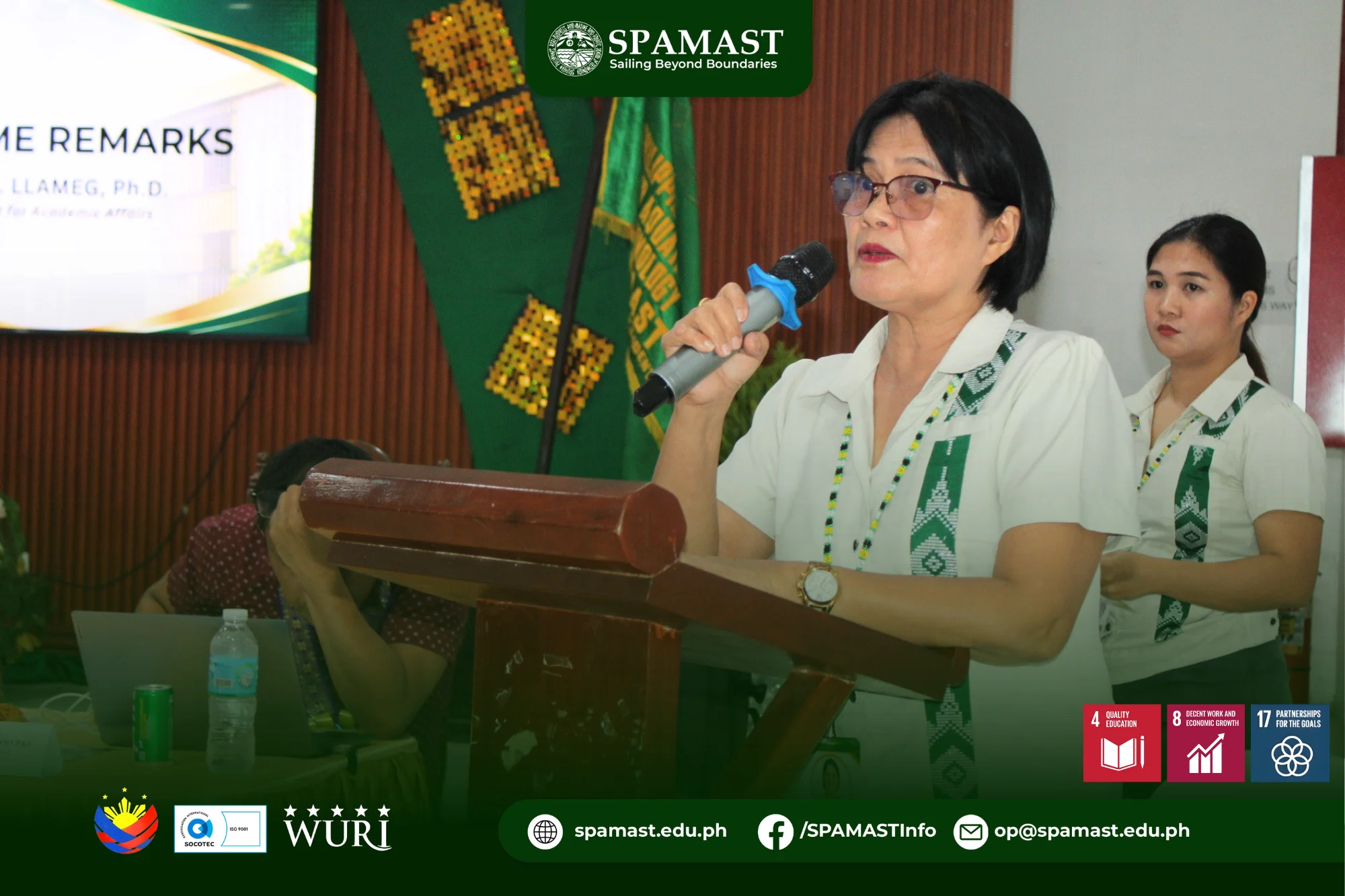
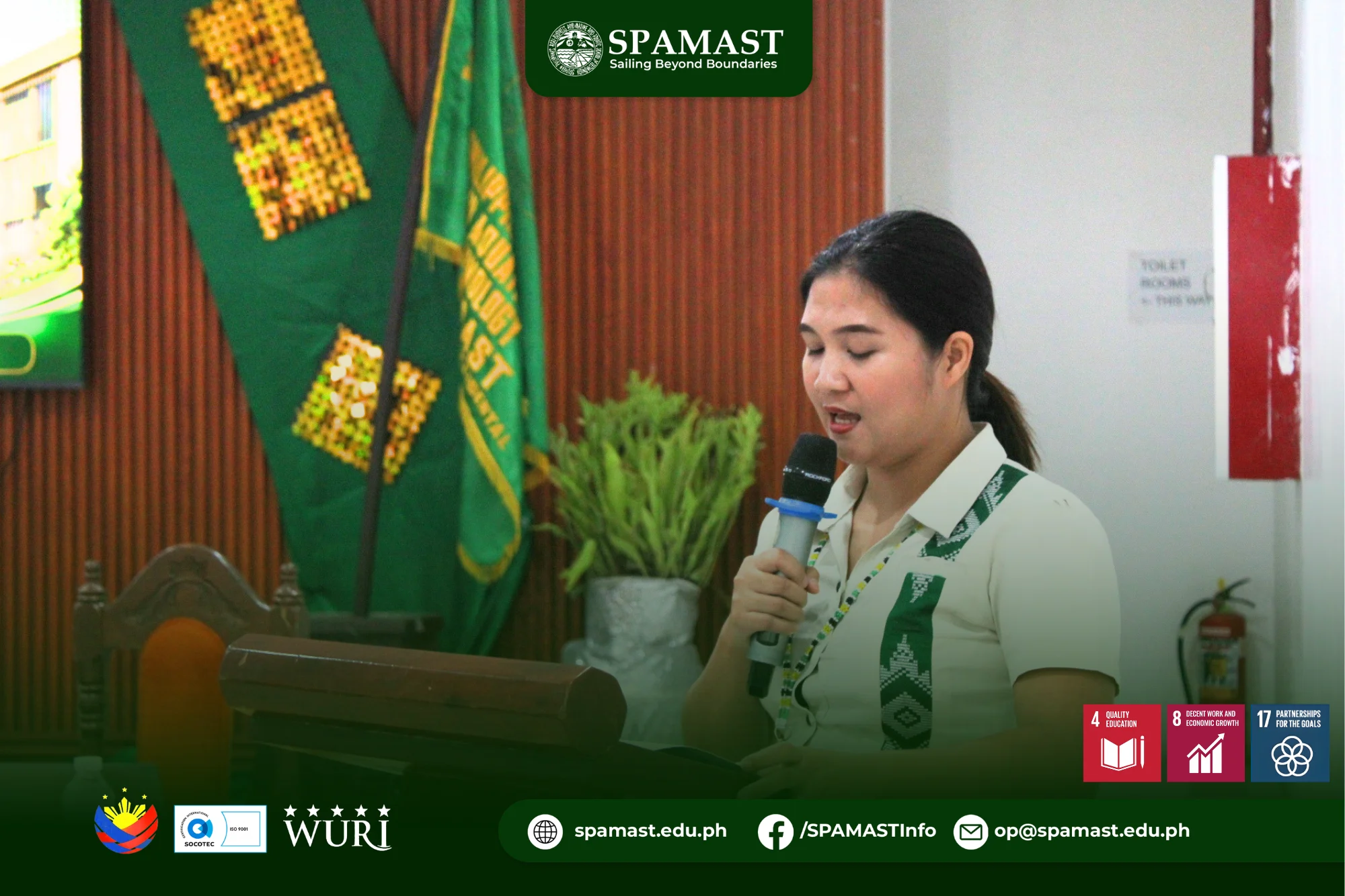
The activity opened with the preliminaries, followed by the welcome remarks of Marlyn B. Llameg, Ph.D., Vice President for Academic Affairs, and a message from Lynette A. Bontia, Ph.D., SPAMAST President. The CHED Technical Panel then presented the statement of purpose and procedures, formally setting the direction for the evaluation proper.
The onsite evaluation provides an important opportunity for SPAMAST to demonstrate the readiness and capacity of its DBA program in delivering advanced, relevant, and transformative graduate education. The evaluation encompasses the program’s academic and institutional mechanisms, including its curriculum, faculty qualifications, research initiatives, learning resources, student services, facilities, and other support systems essential to quality doctoral education.
More than a compliance exercise, the COPC evaluation reflects SPAMAST’s commitment to continuously strengthening its academic programs and ensuring that these remain relevant to the realities of the region and the demands of a rapidly changing global environment. The Doctor of Business Administration major in Agri-Business Management is particularly significant to the institution as it brings together advanced business education and the agricultural sector—two areas central to SPAMAST’s institutional identity and its commitment to community transformation.
Through the DBA program, SPAMAST seeks to develop highly competent professionals, researchers, entrepreneurs, and organizational leaders equipped to address complex challenges in business and agri-business. The program provides opportunities for advanced scholarship, strategic thinking, research, innovation, and evidence-based decision-making that can contribute to stronger enterprises, improved agricultural value chains, and more resilient communities.
The COPC initiative strongly aligns with Sustainable Development Goal 4: Quality Education, as SPAMAST continues to expand access to advanced and relevant learning while promoting research competence, critical thinking, innovation, leadership, and lifelong learning. The evaluation process further strengthens the institution’s culture of quality assurance by ensuring that its doctoral education is supported by qualified faculty, relevant academic systems, appropriate resources, and continuous improvement mechanisms.
The program also contributes to Sustainable Development Goal 8: Decent Work and Economic Growth. By developing advanced management competencies among professionals in the field of agri-business, the DBA program can help strengthen entrepreneurship, organizational productivity, innovation, and sustainable economic activity. Its graduates are positioned to become catalysts for enterprise development, employment generation, improved business practices, and inclusive economic growth, particularly within agriculture-dependent communities.
Equally important is the program’s alignment with Sustainable Development Goal 17: Partnerships for the Goals. The onsite evaluation demonstrates the value of collaboration among CHED OPSD, CHED Regional Office XI, and SPAMAST in advancing quality higher education. Through professional dialogue, technical assessment, and shared commitment to standards, the partnership creates opportunities for institutional learning, continuous improvement, and stronger academic governance.
The visit also reinforces SPAMAST’s institutional vision of becoming, by 2028, a premier higher education institution transforming communities toward the attainment of Sustainable Development. The DBA major in Agri-Business Management embodies this vision by positioning doctoral education as a powerful platform for producing leaders who can connect knowledge with practice, innovation with enterprise, and education with sustainable community development.
For SPAMAST, the pursuit of COPC goes beyond obtaining a certification. It represents an institutional commitment to quality, accountability, excellence, and continuous improvement. It is a collective undertaking involving administrators, faculty members, staff, students, and stakeholders who share the aspiration of building academic programs that create meaningful and lasting impact.
As the institution welcomes the CHED evaluation team, SPAMAST stands with confidence and openness, recognizing that every evaluation is an opportunity to affirm its strengths, address areas for improvement, and further raise the standards of its academic offerings.
The COPC onsite visit is therefore not simply a measure of SPAMAST’s compliance today. It is a step toward a stronger future—one where advanced education drives innovation, responsible leadership fuels economic progress, and meaningful partnerships accelerate sustainable development.
With quality as its foundation and sustainable development as its direction, SPAMAST continues to sail beyond boundaries—transforming education, empowering leaders, and creating impact that reaches communities and beyond.