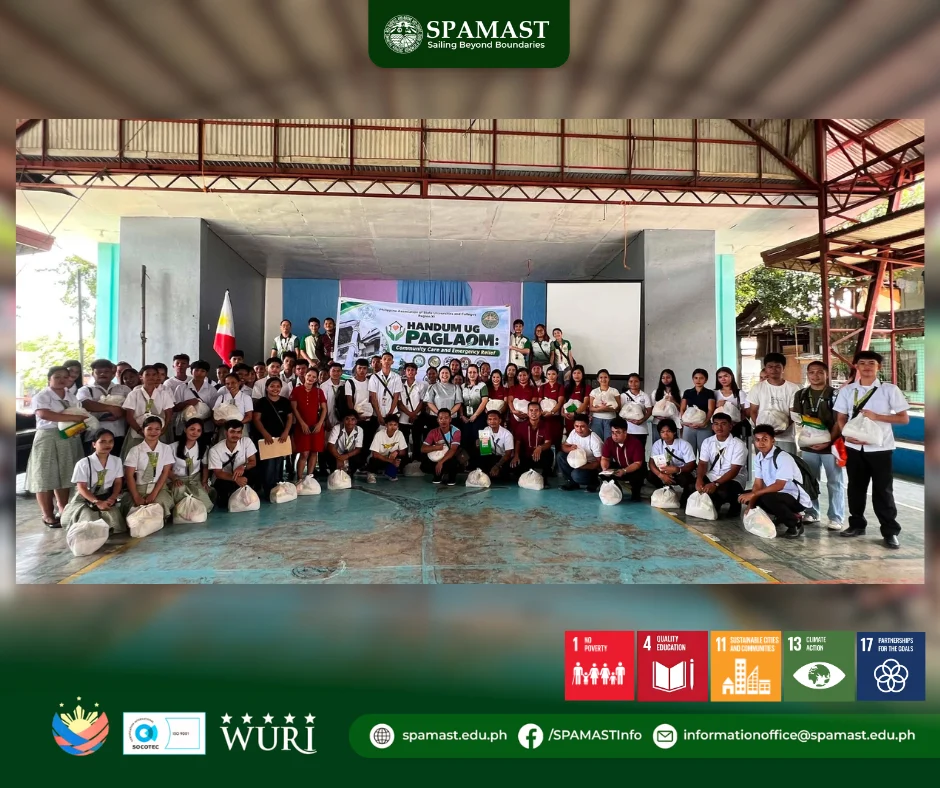
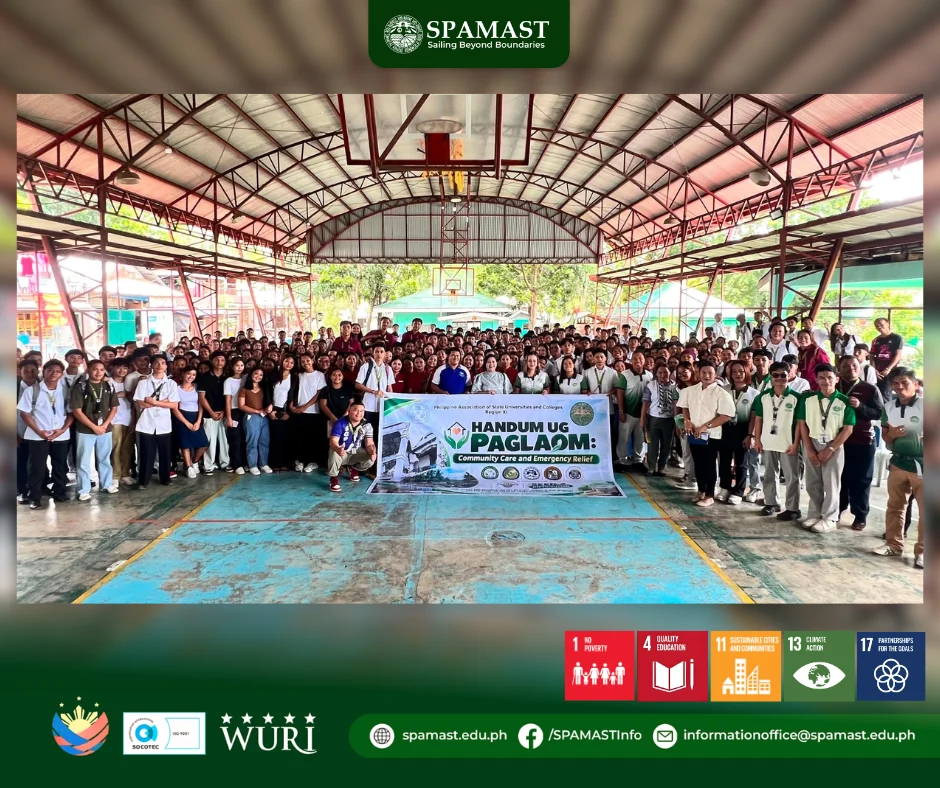
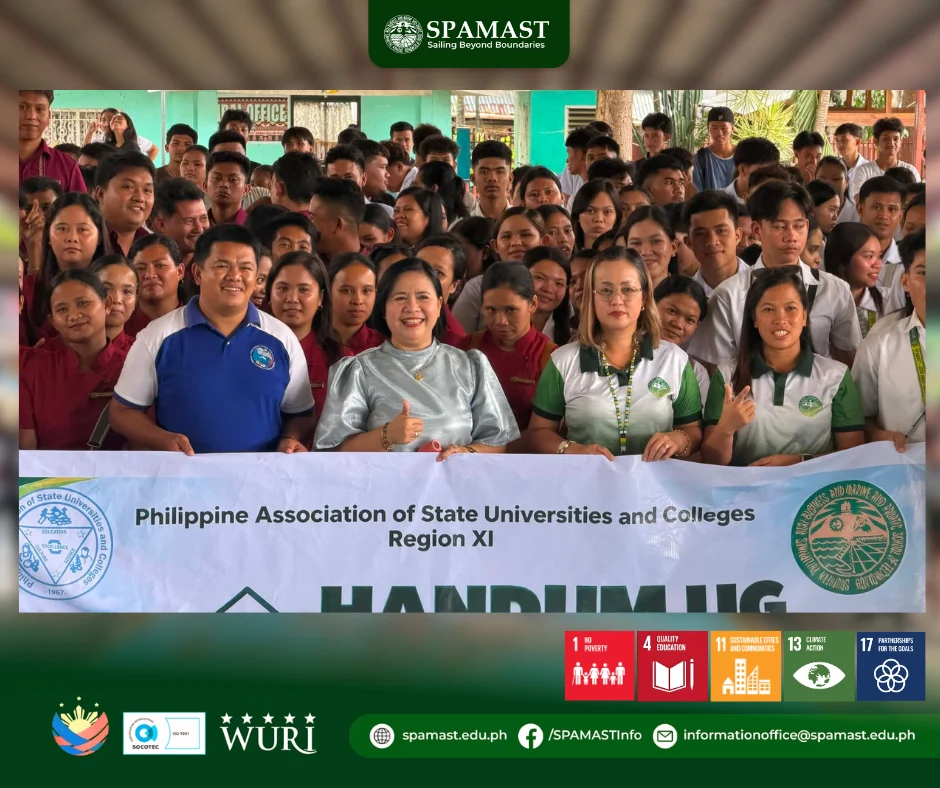
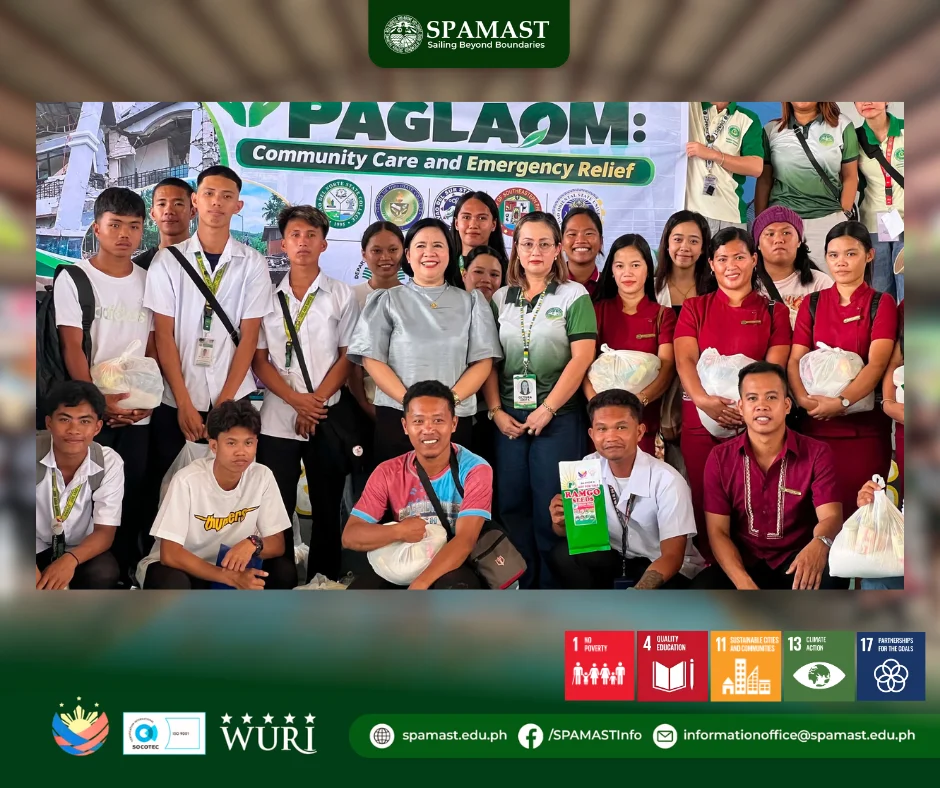
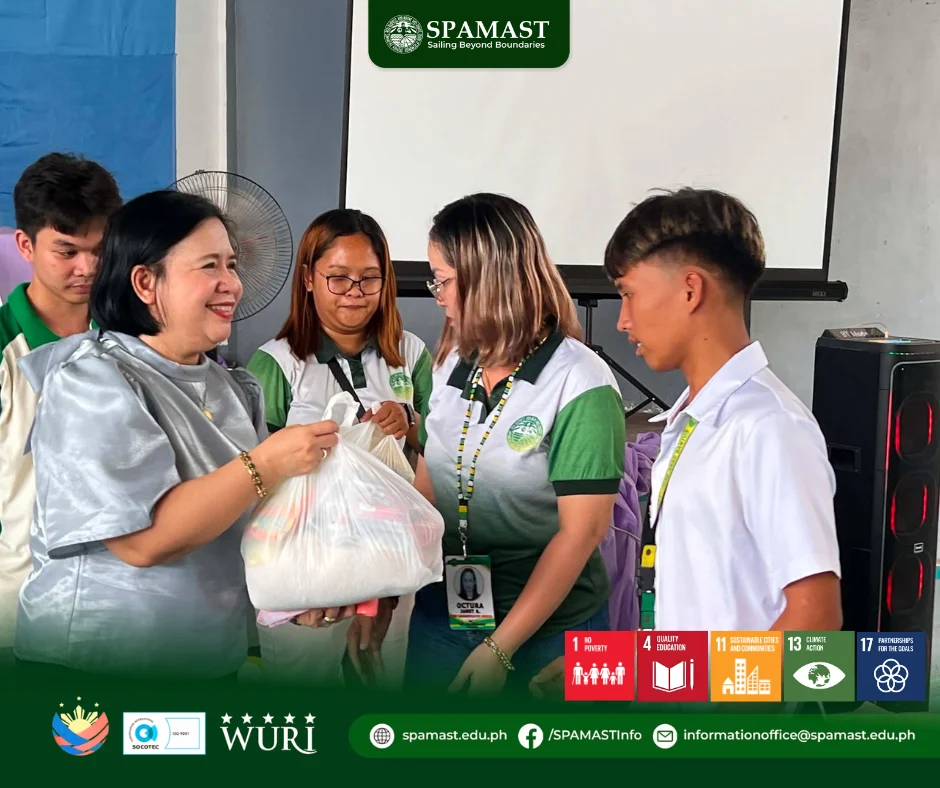
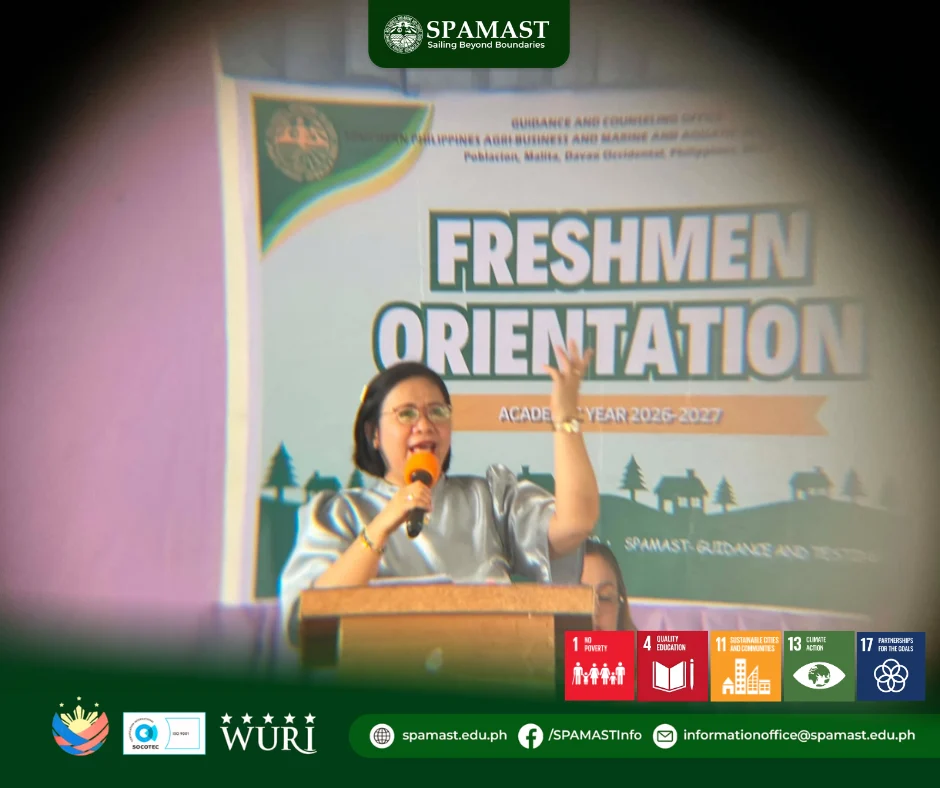
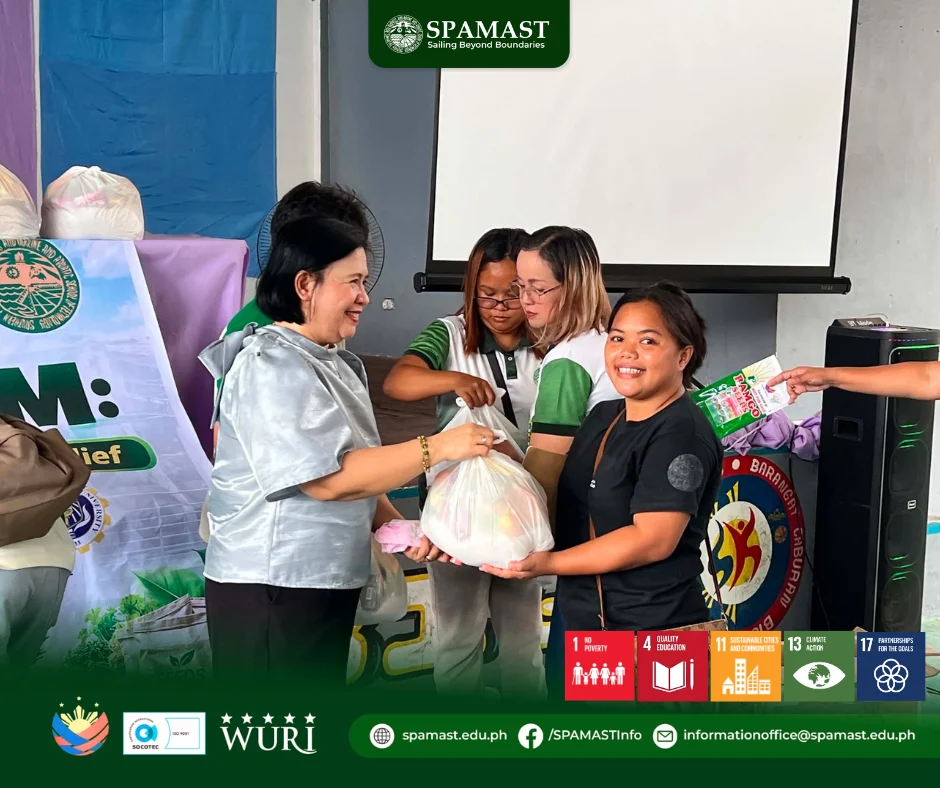
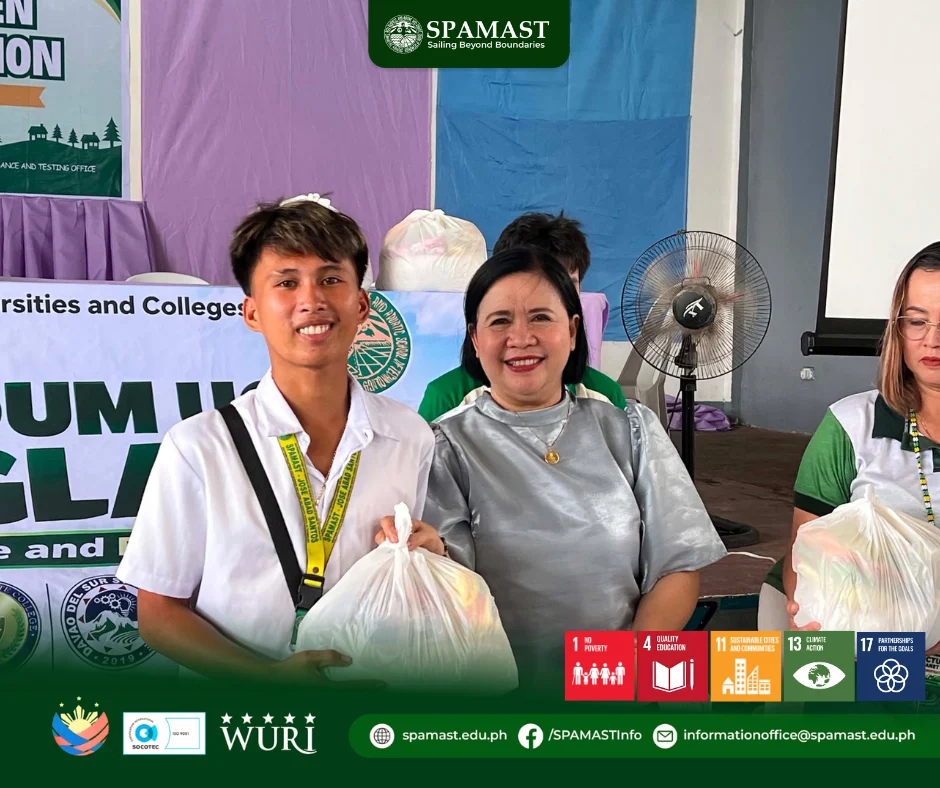
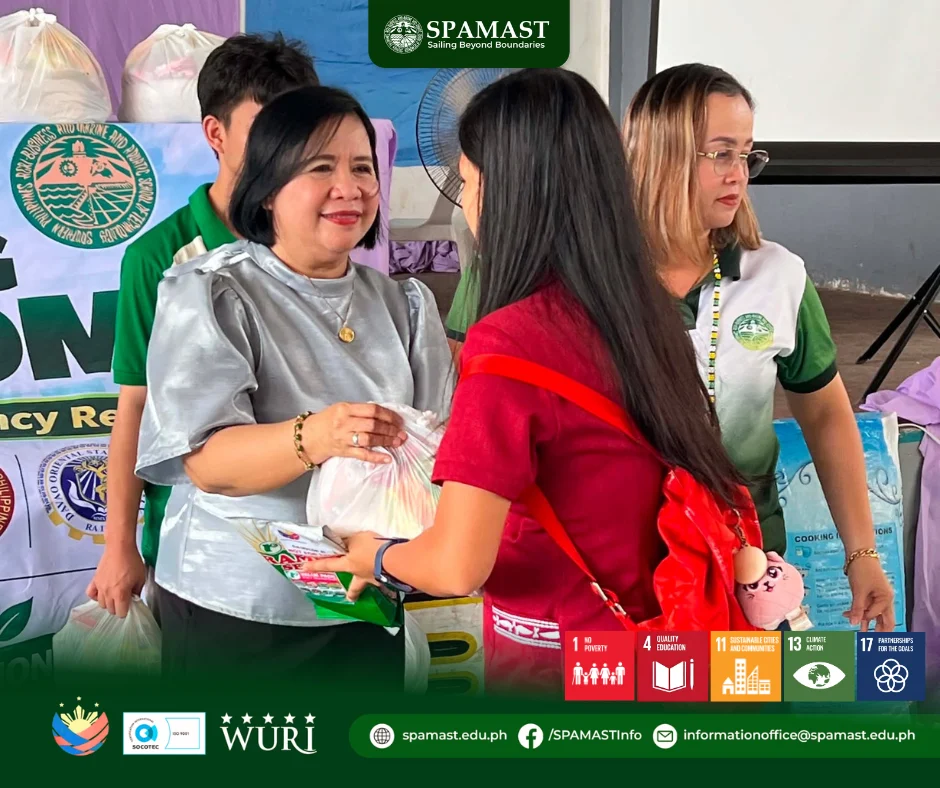
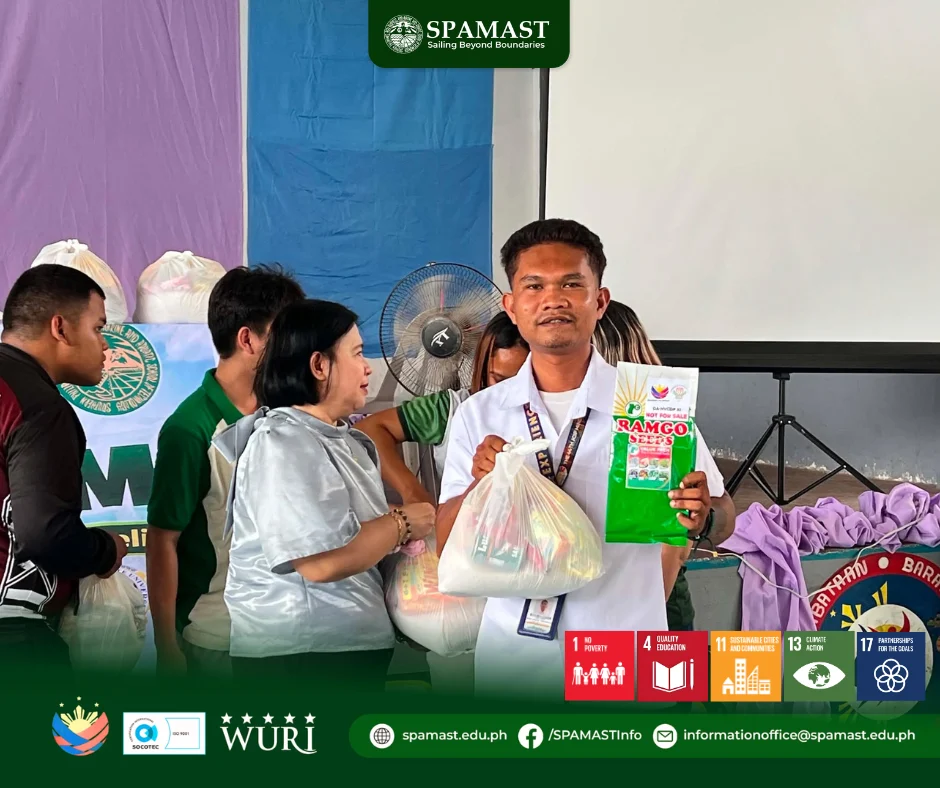
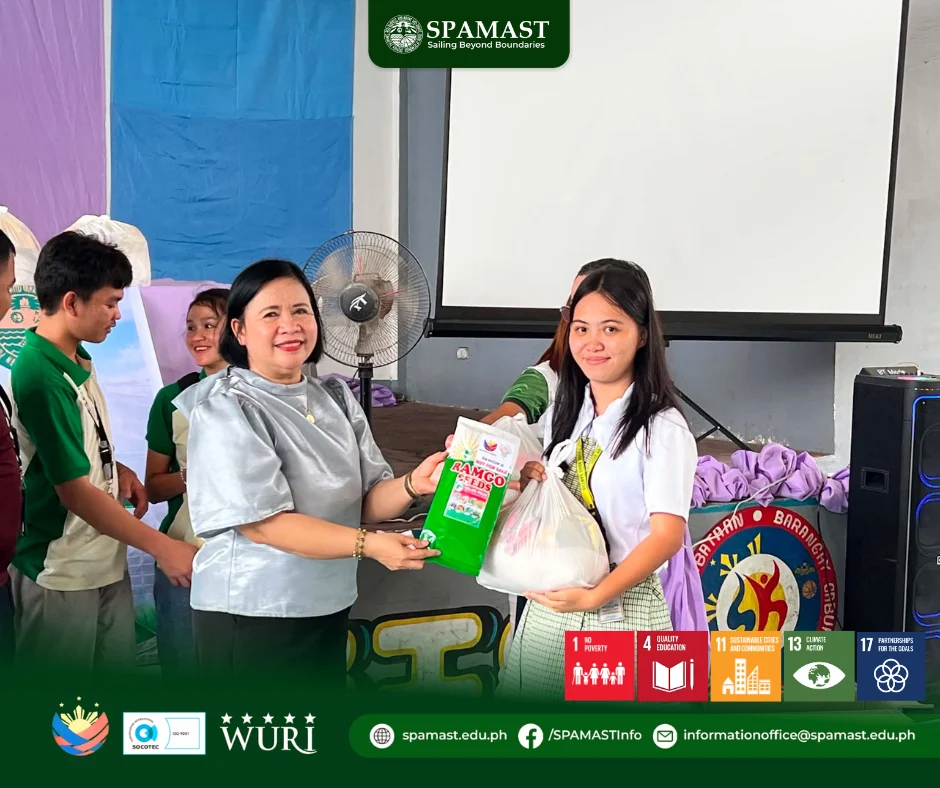
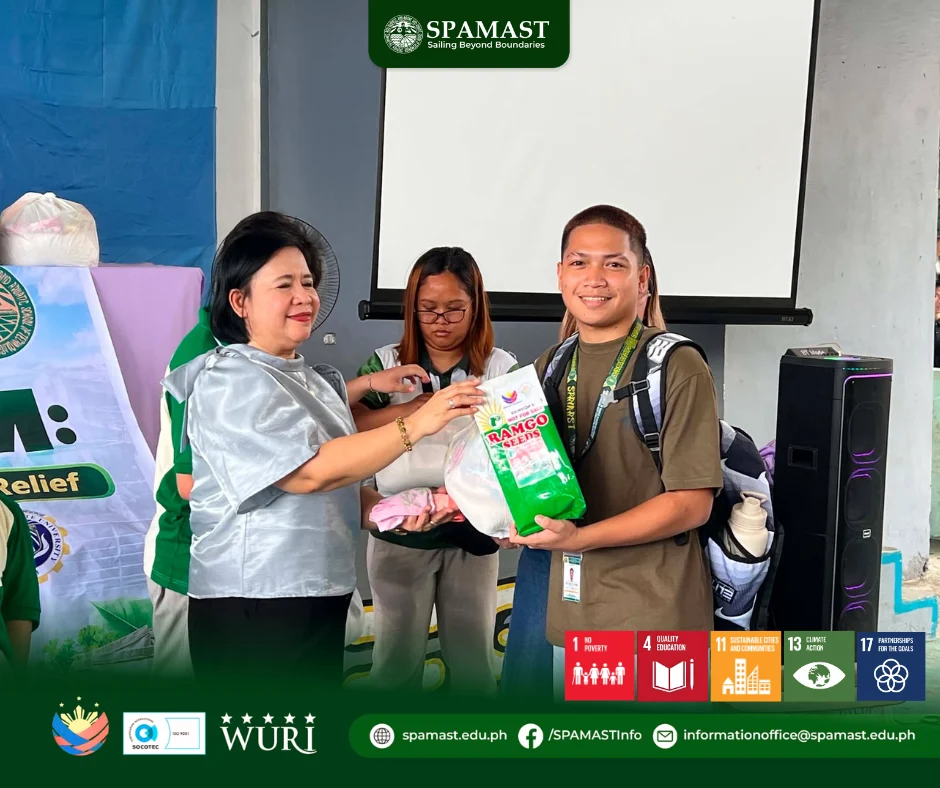
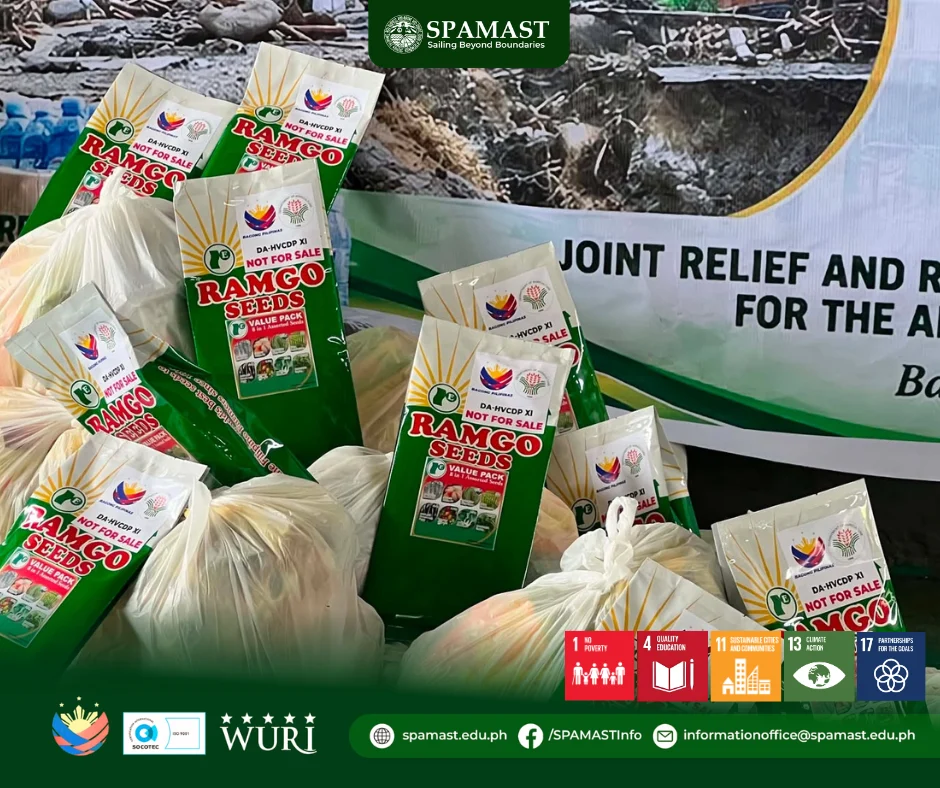
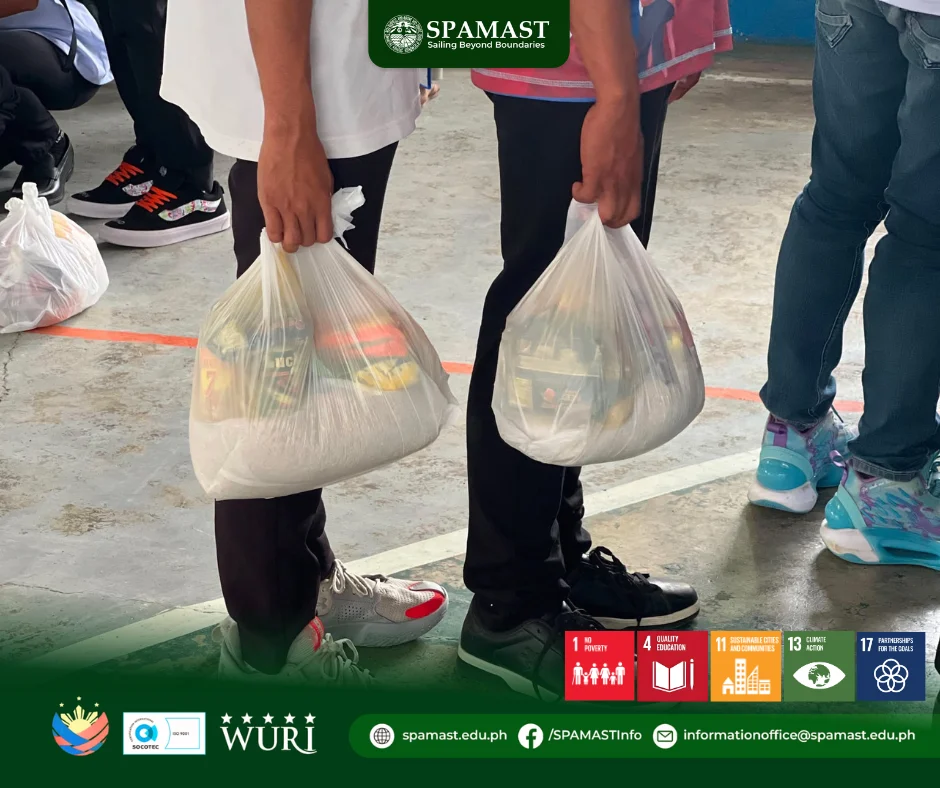
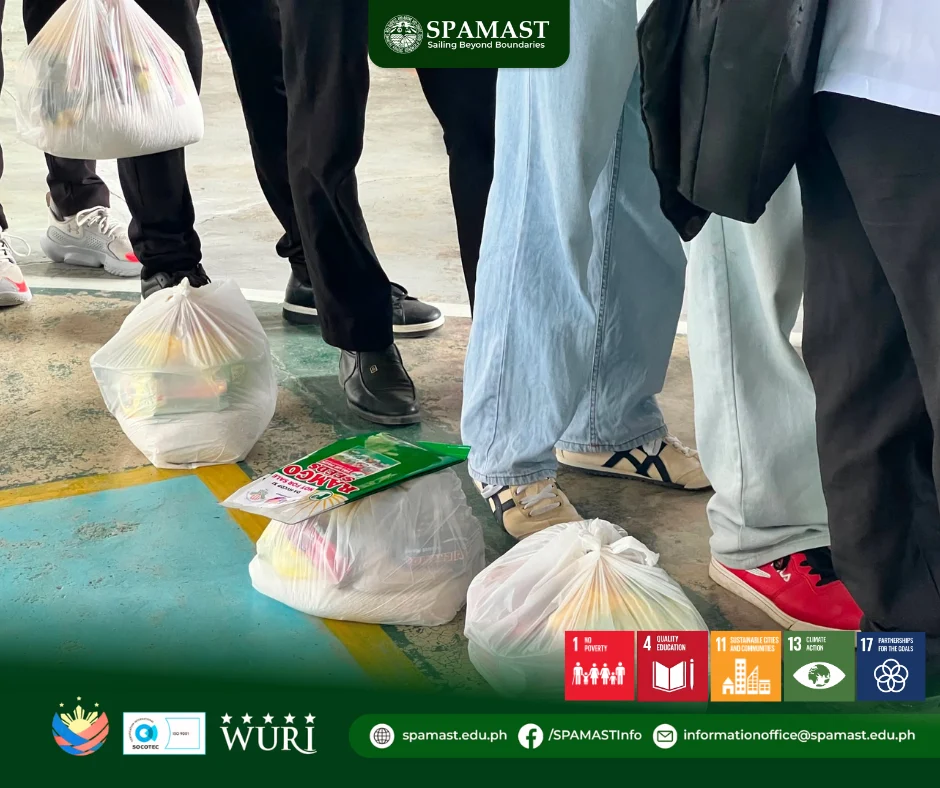
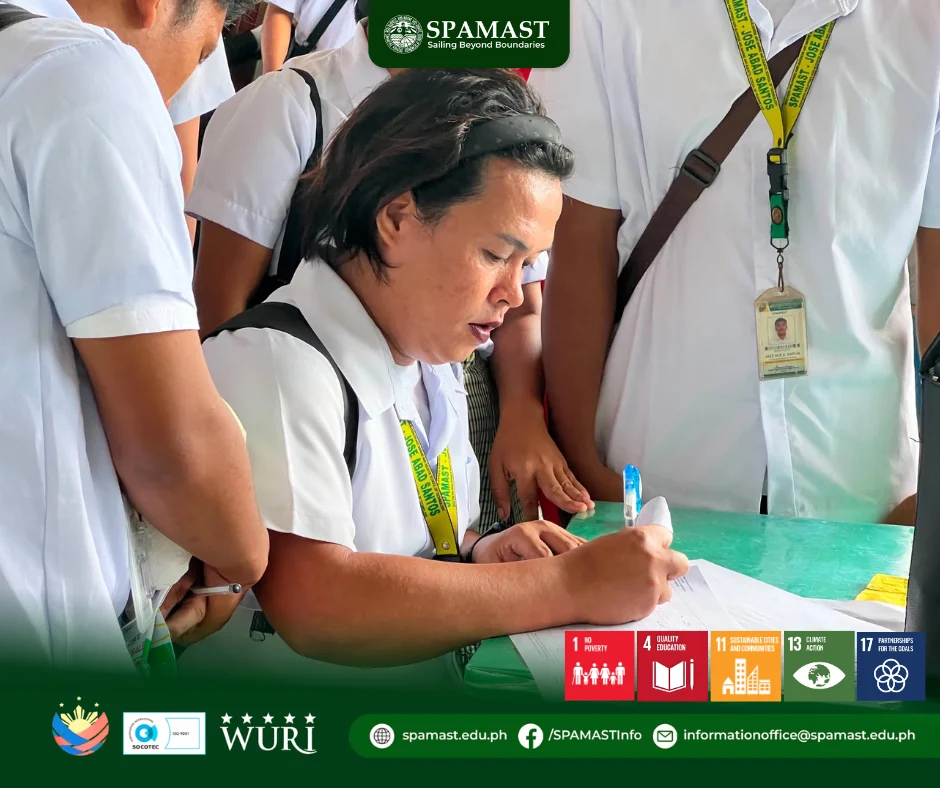
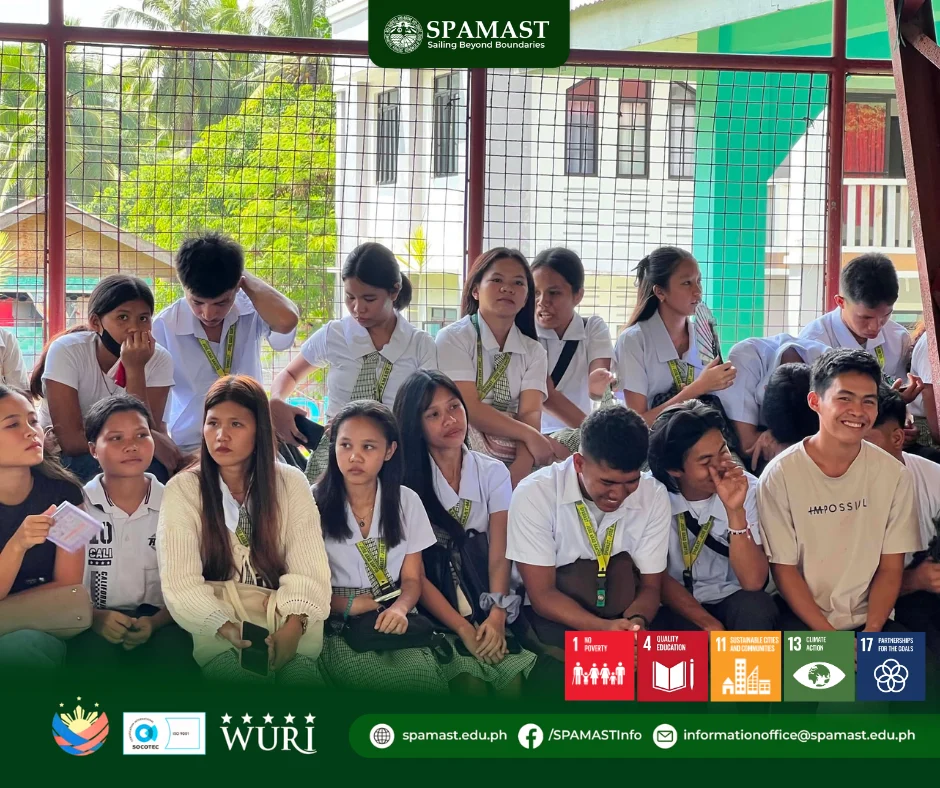
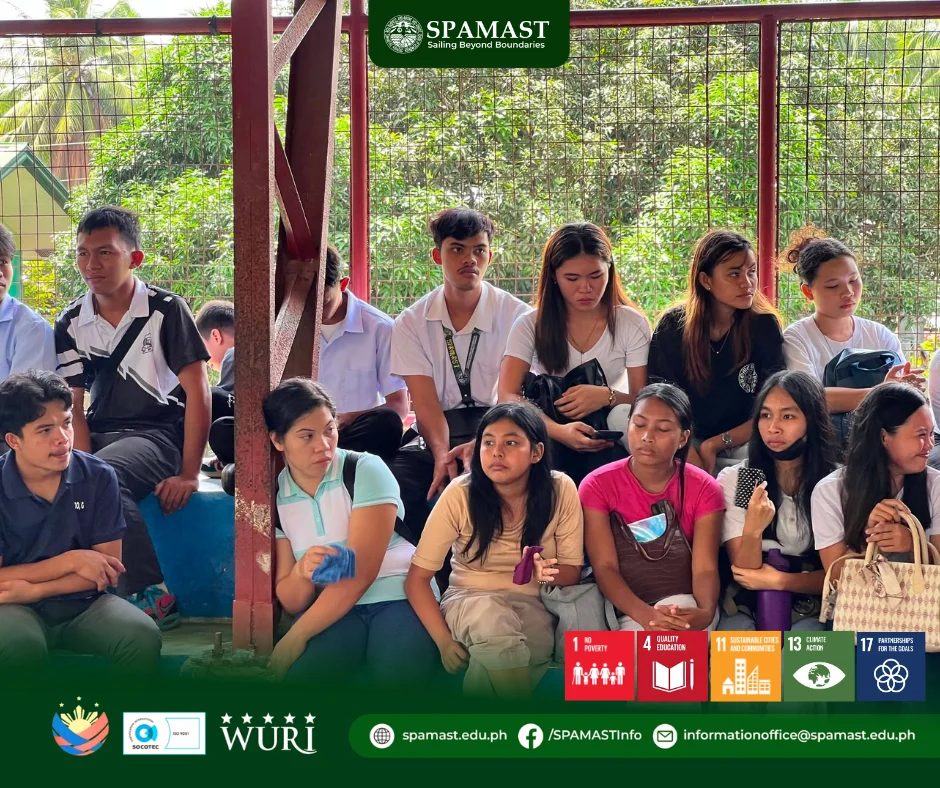
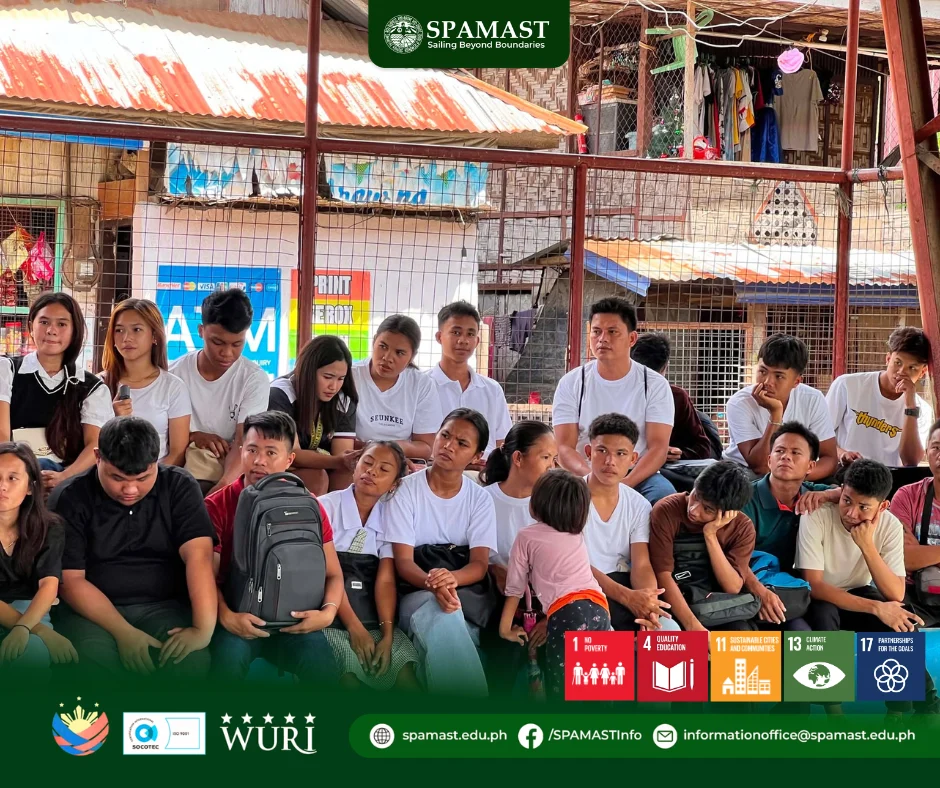
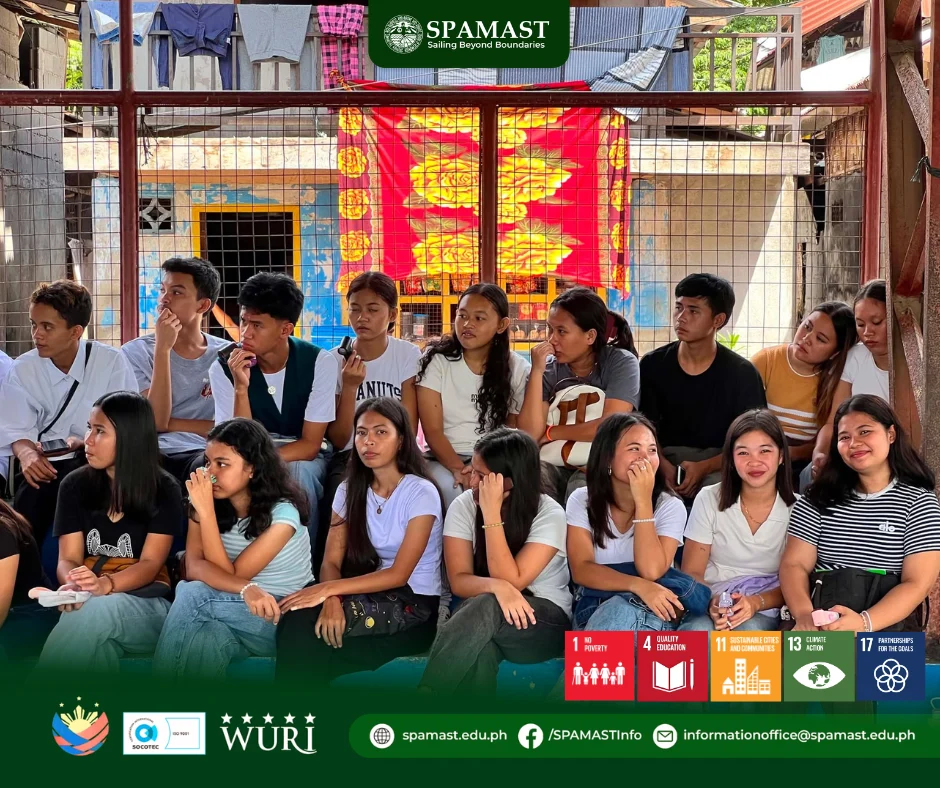
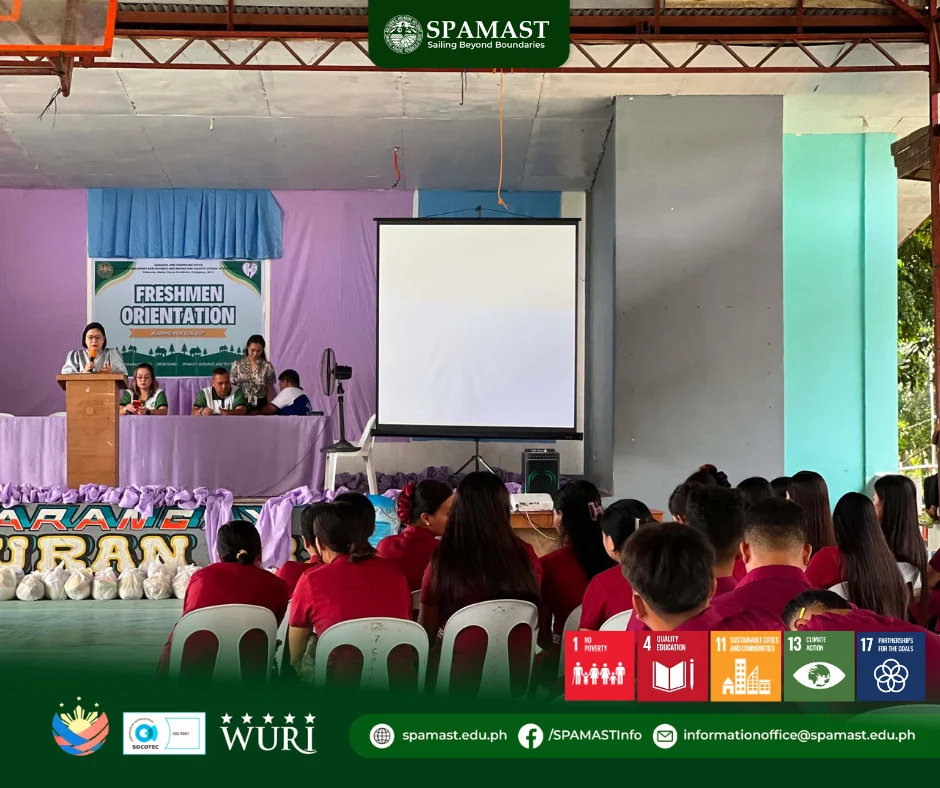
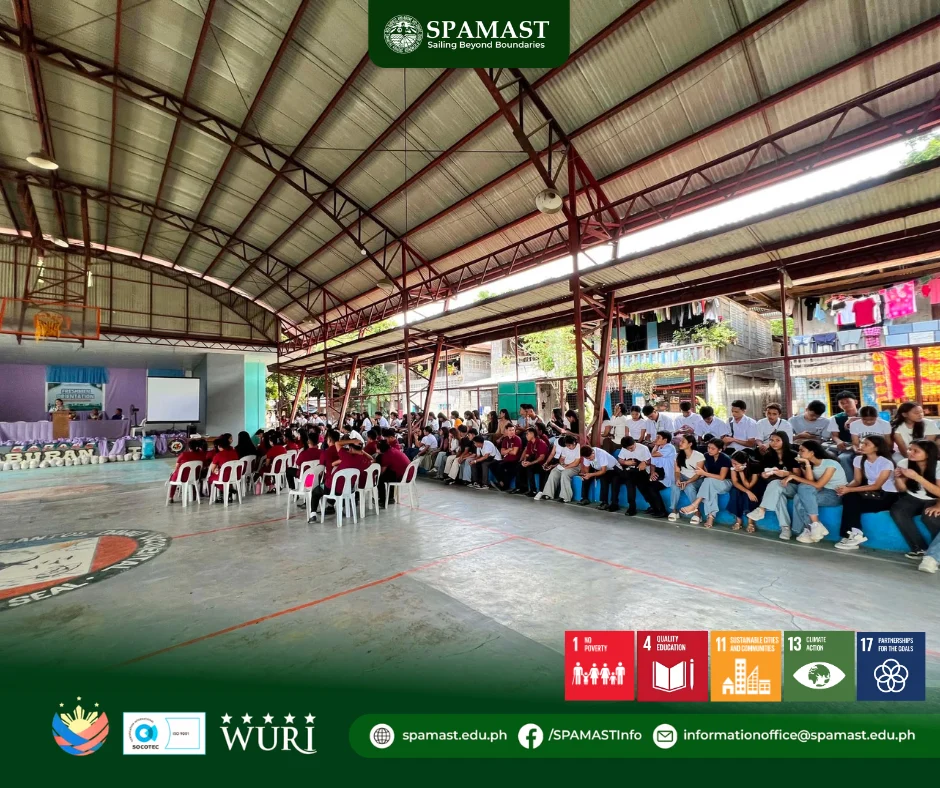
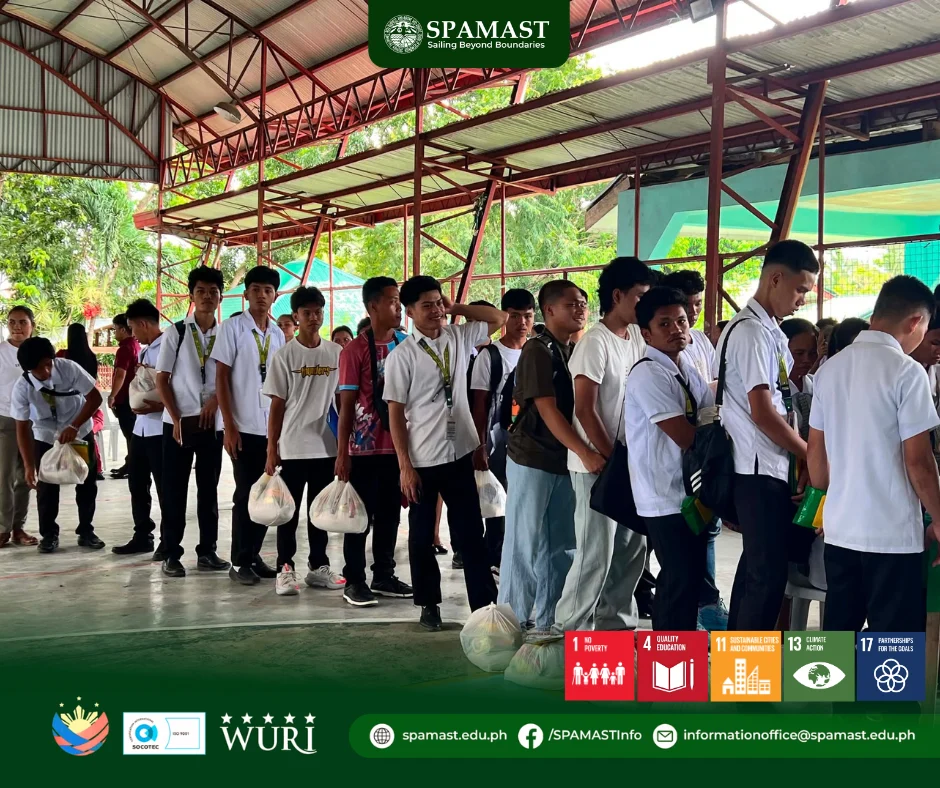
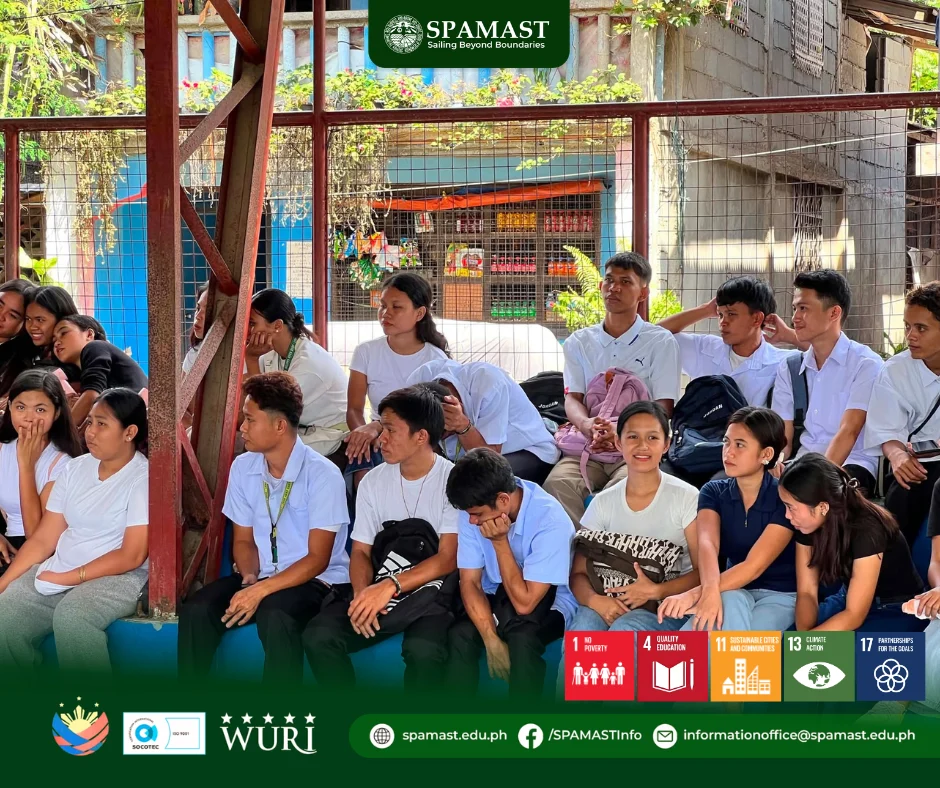
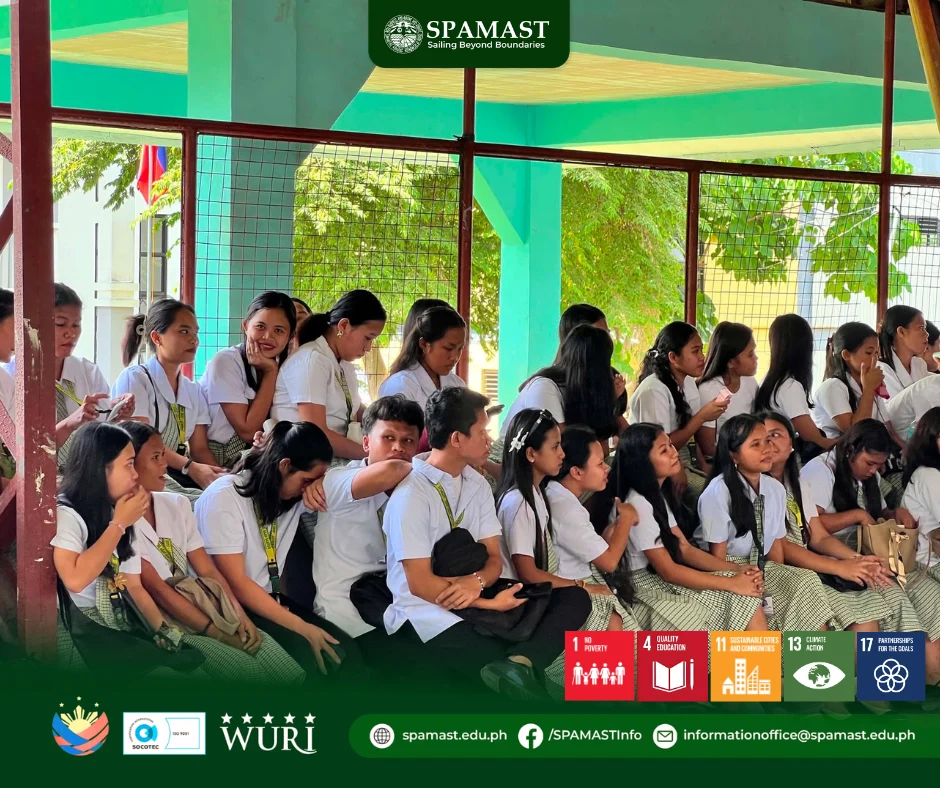
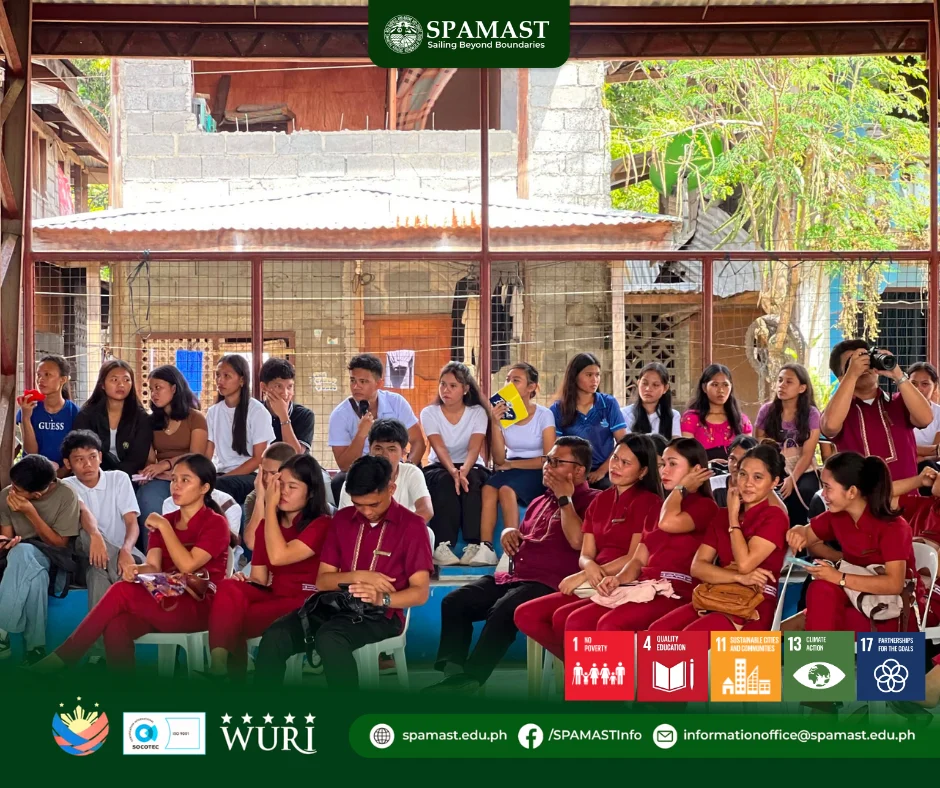
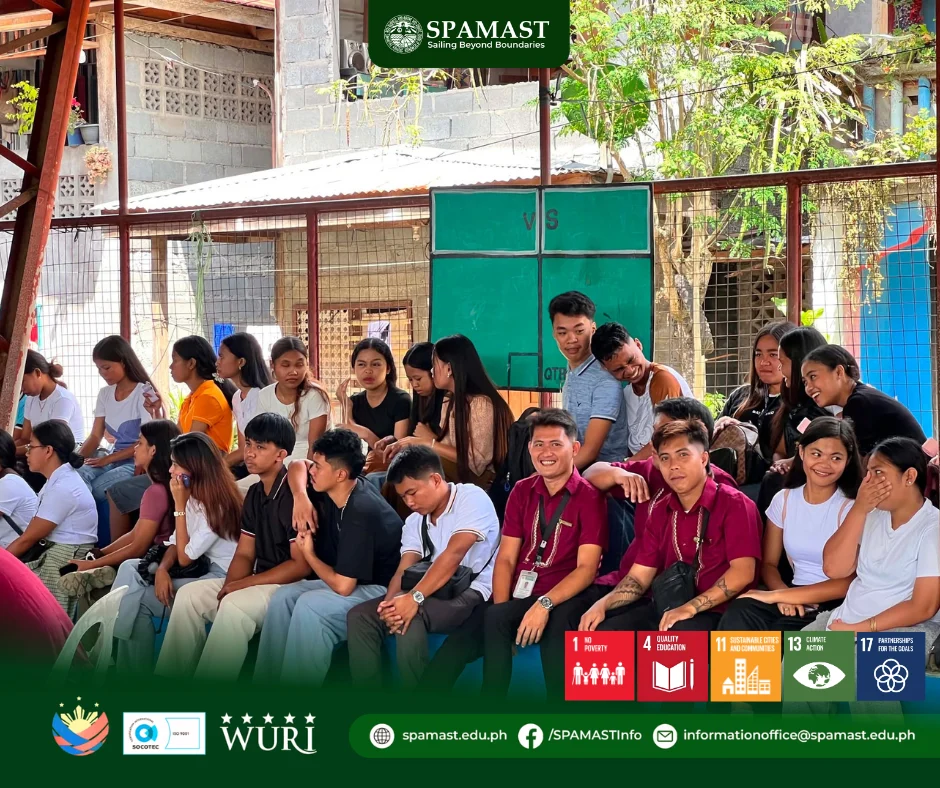
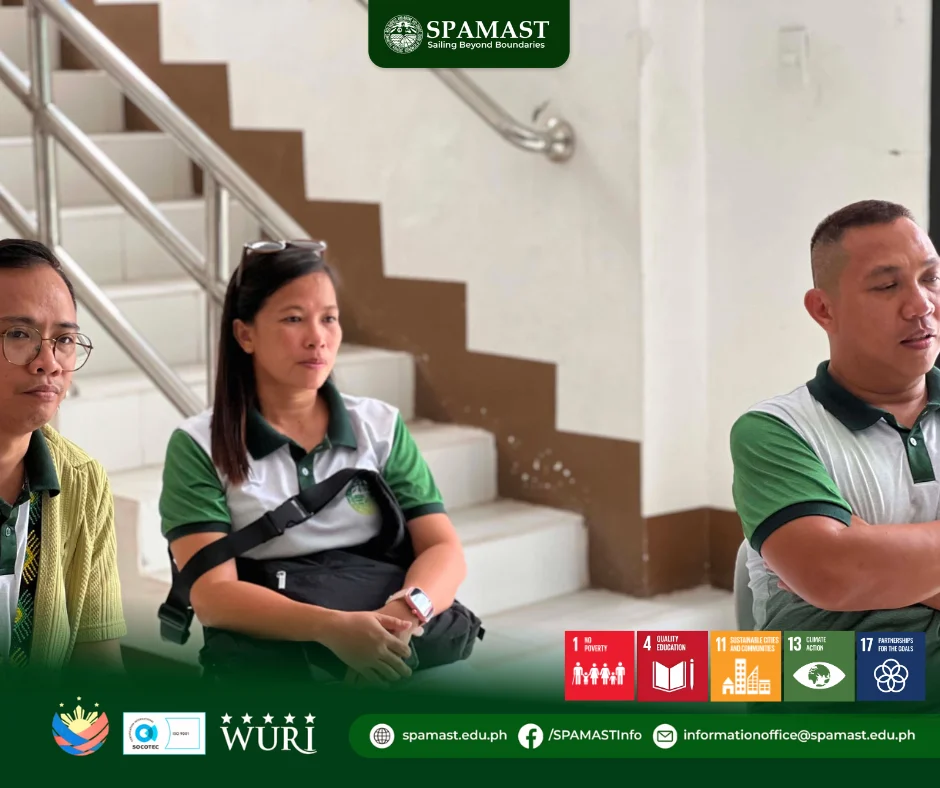
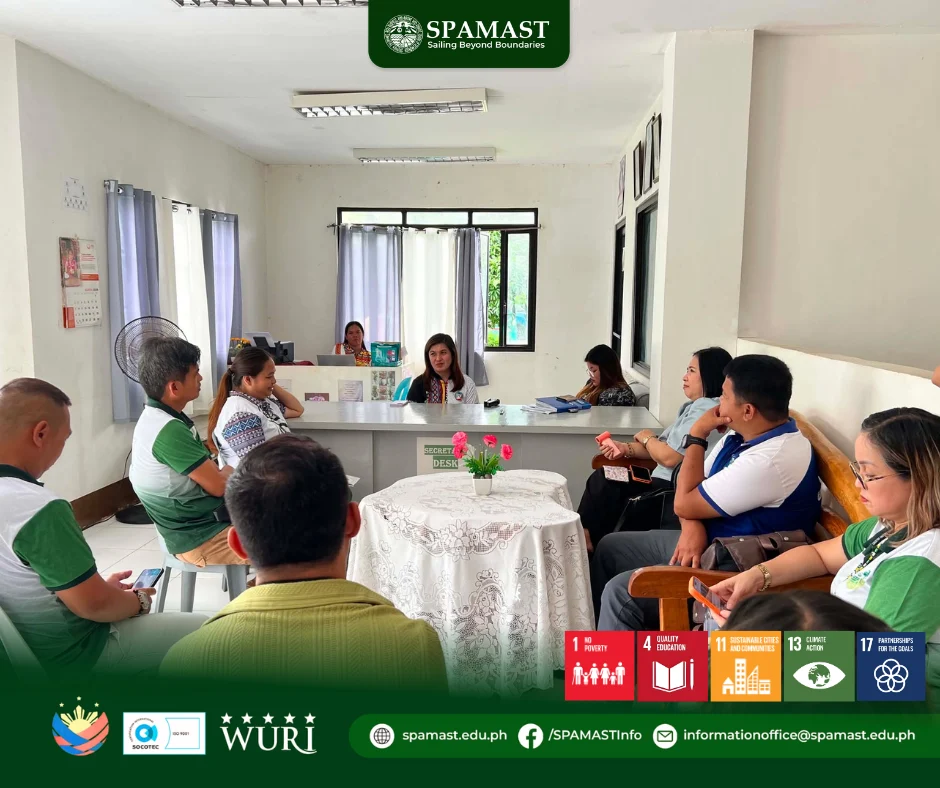
The Southern Philippines Agri-Business and Marine and Aquatic School of Technology (SPAMAST), led by College President Dr. Lynette A. Bontia, strengthened its commitment to community care and institutional recovery through its participation in “Handum ug Paglaom: Community Care and Emergency Relief” on August 3, 2026. The initiative, spearheaded by the Philippine Association of State Universities and Colleges (PASUC) Region XI in partnership with the Department of Agriculture and participating institutions, brought together efforts to support communities affected by recent emergencies in Davao Occidental. For SPAMAST, the activity went beyond relief assistance as the institution also focused on the welfare of its students and the recovery of the SPAMAST JAS Campus, where classes are currently being held in barangay facilities due to the damage sustained by the campus.
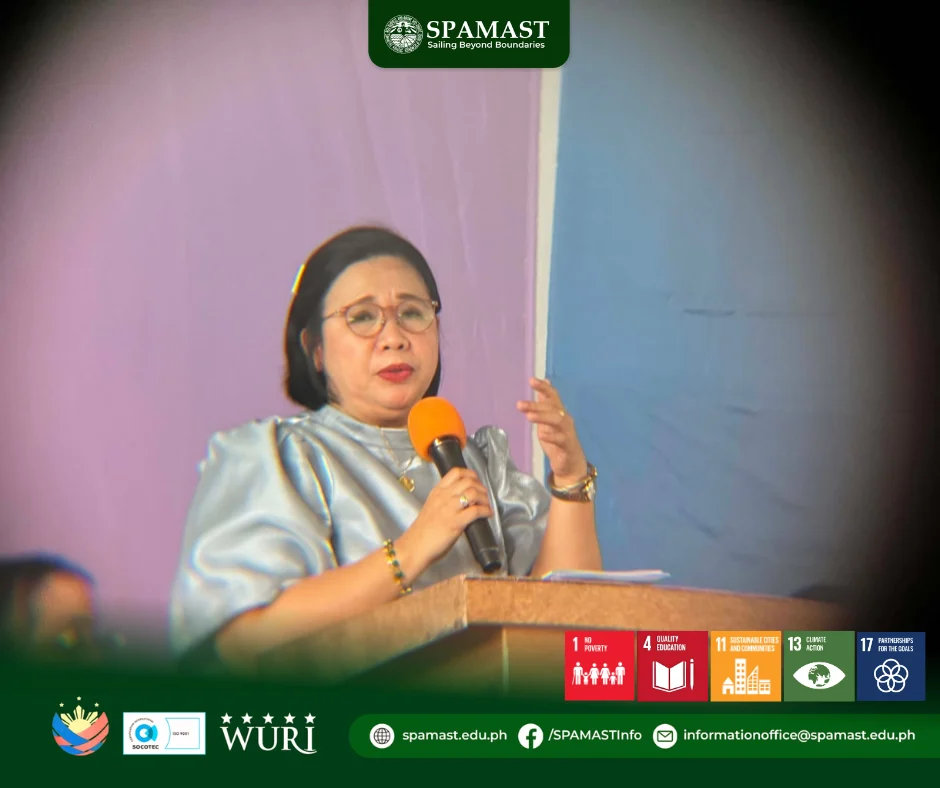
During the engagement, Dr. Bontia shared a deeply personal message of resilience, drawing from her own experiences of surviving rebel conflicts, severe storms, and a life-threatening flood incident. Her message underscored the importance of continuing forward despite adversity. She urged students and members of the community to carry “HOPES” as a guiding principle in confronting challenges: Humility, by remaining other-centered rather than boastful; Obedience, by respecting rules and doing what is right; Perseverance, by sustaining effort despite difficulty and discomfort; Excellence, by cultivating one’s talents and pursuing opportunities to excel; and Surrender, by entrusting one’s journey to God and believing in His presence. “Padayon lang!” became a powerful expression of the message, reminding the SPAMAST community that difficult circumstances can be overcome through courage, discipline, persistence, excellence, and faith.
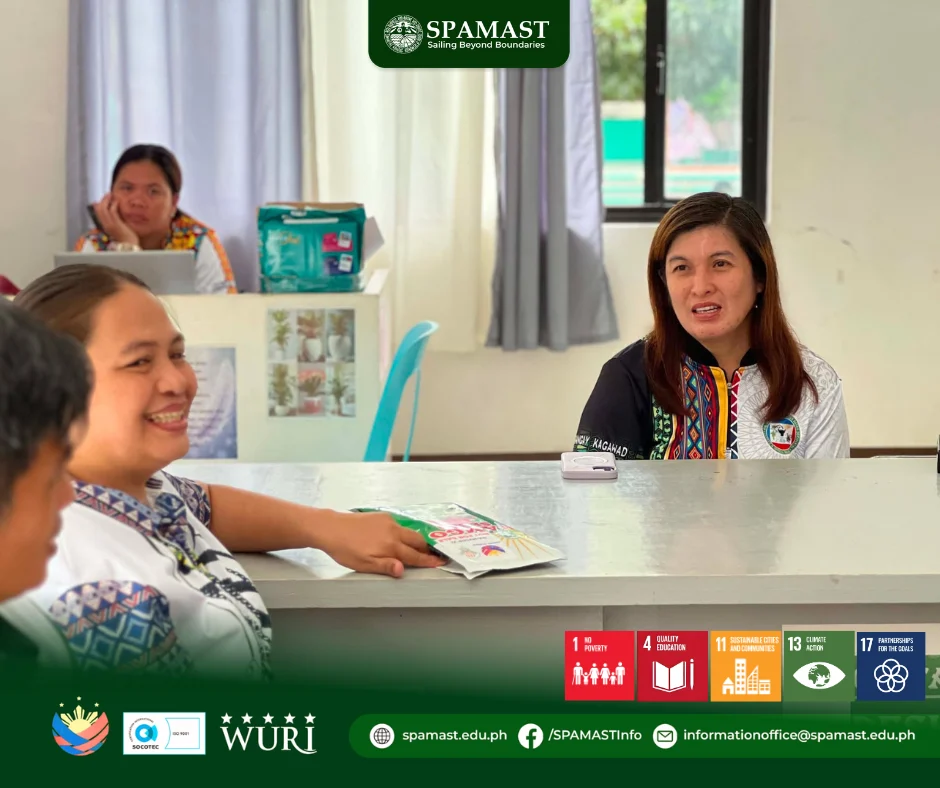
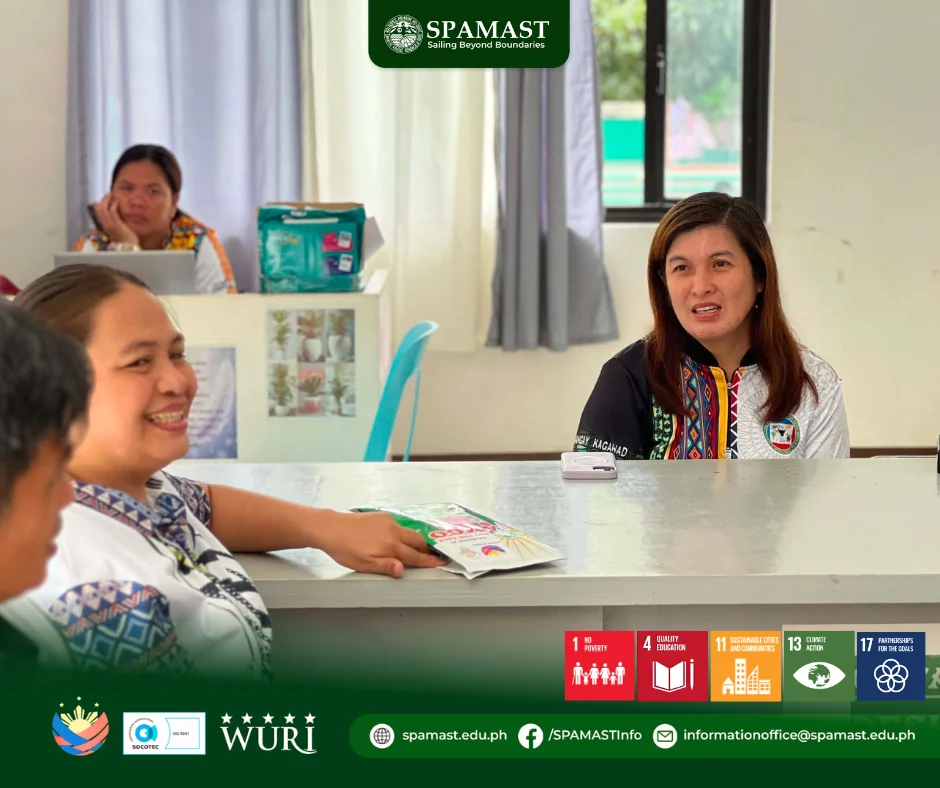
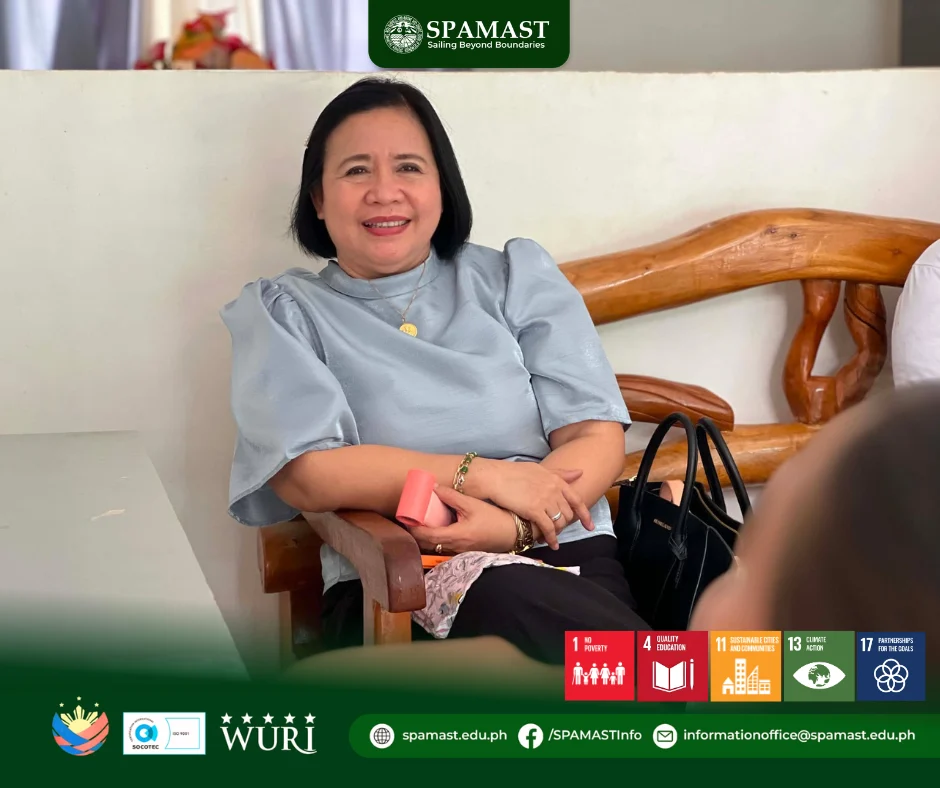
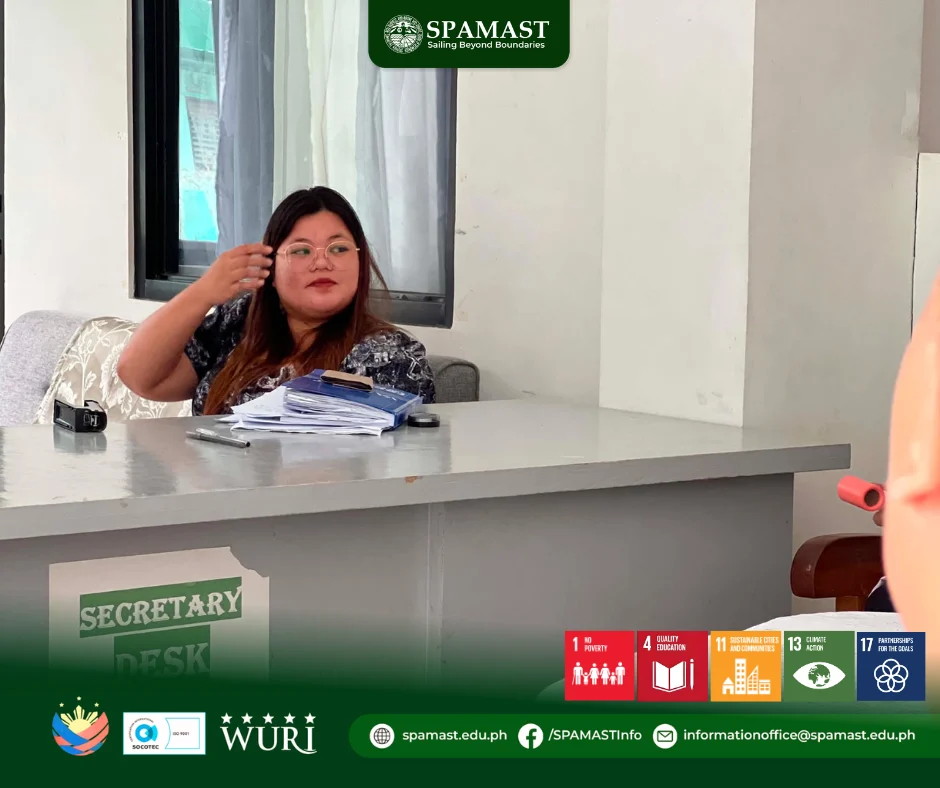
Following the relief and community engagement, the SPAMAST team led by Dr. Bontia discussed measures for the recovery of damages sustained by the JAS Campus and the continuing needs of affected students. The team also engaged members of the Barangay Council to explore stronger institutional-community partnerships, particularly in supporting students who are temporarily attending classes in barangay facilities. These discussions reflect SPAMAST’s broader commitment to ensuring that disruptions caused by emergencies do not compromise access to education and student welfare. The initiative further advances the United Nations Sustainable Development Goals (SDGs), particularly SDG 4: Quality Education, SDG 11: Sustainable Cities and Communities, SDG 13: Climate Action, SDG 17: Partnerships for the Goals, and SDG 1: No Poverty, by linking education, community resilience, emergency response, and collaborative action toward more inclusive and sustainable communities.