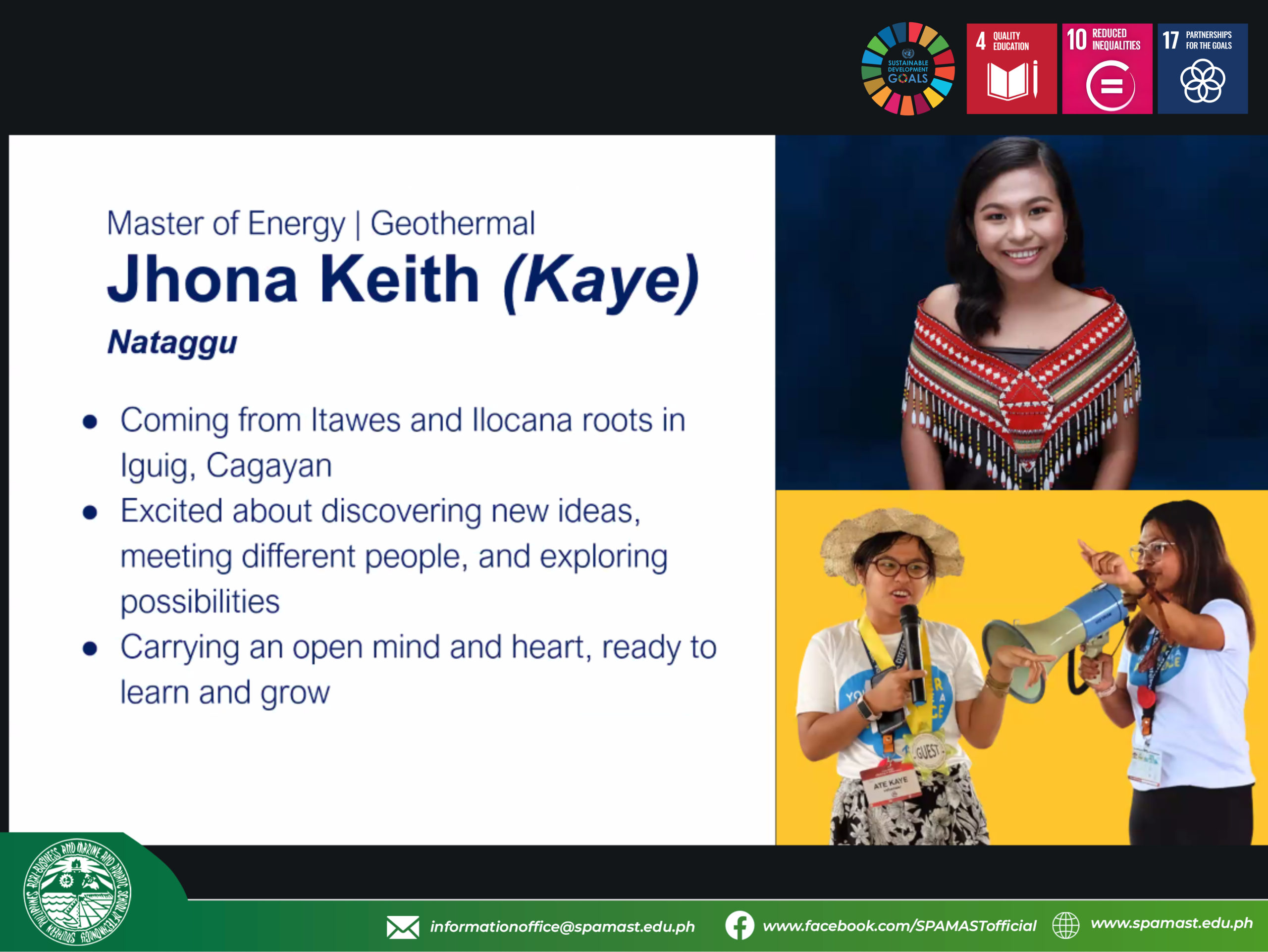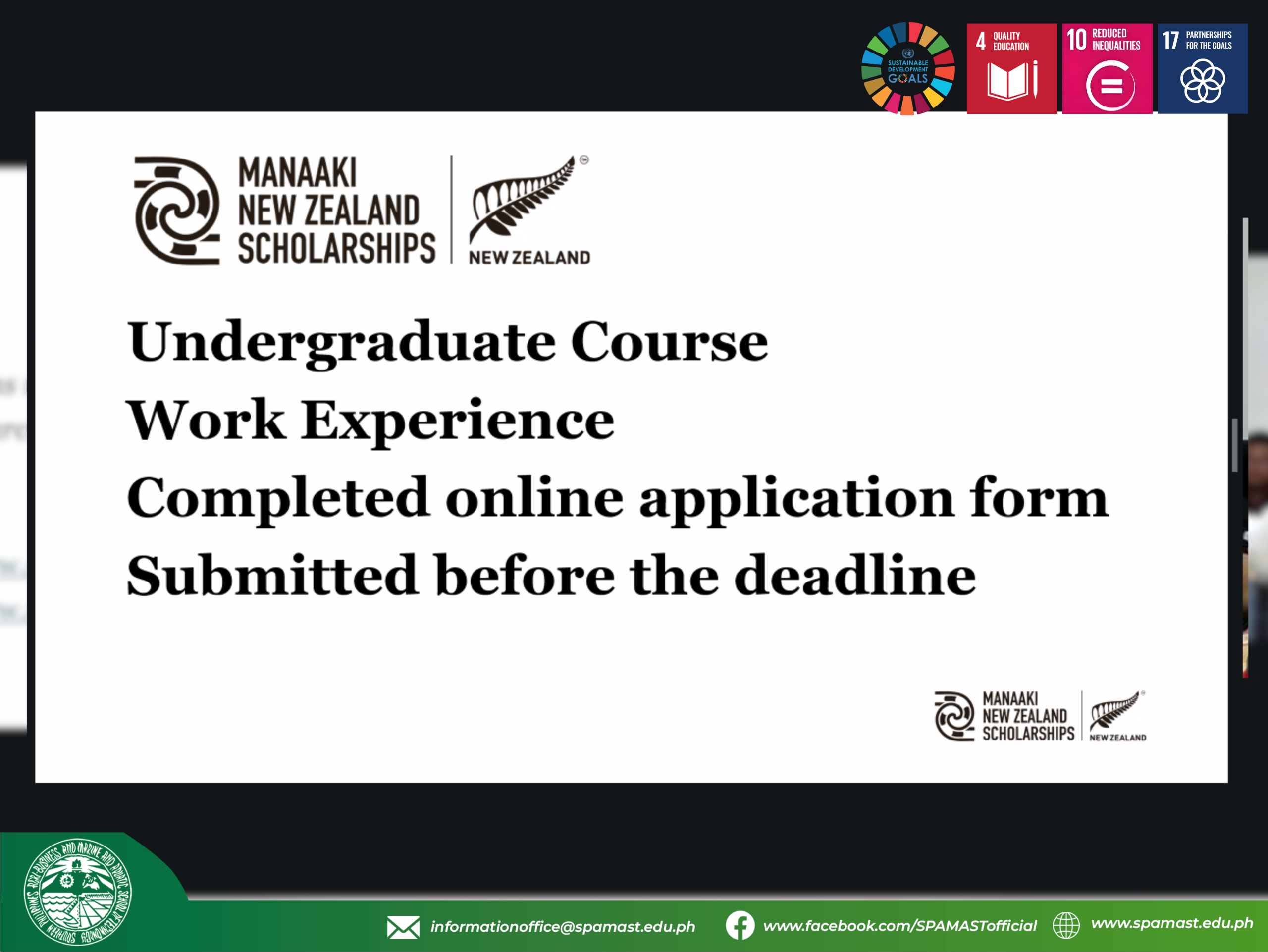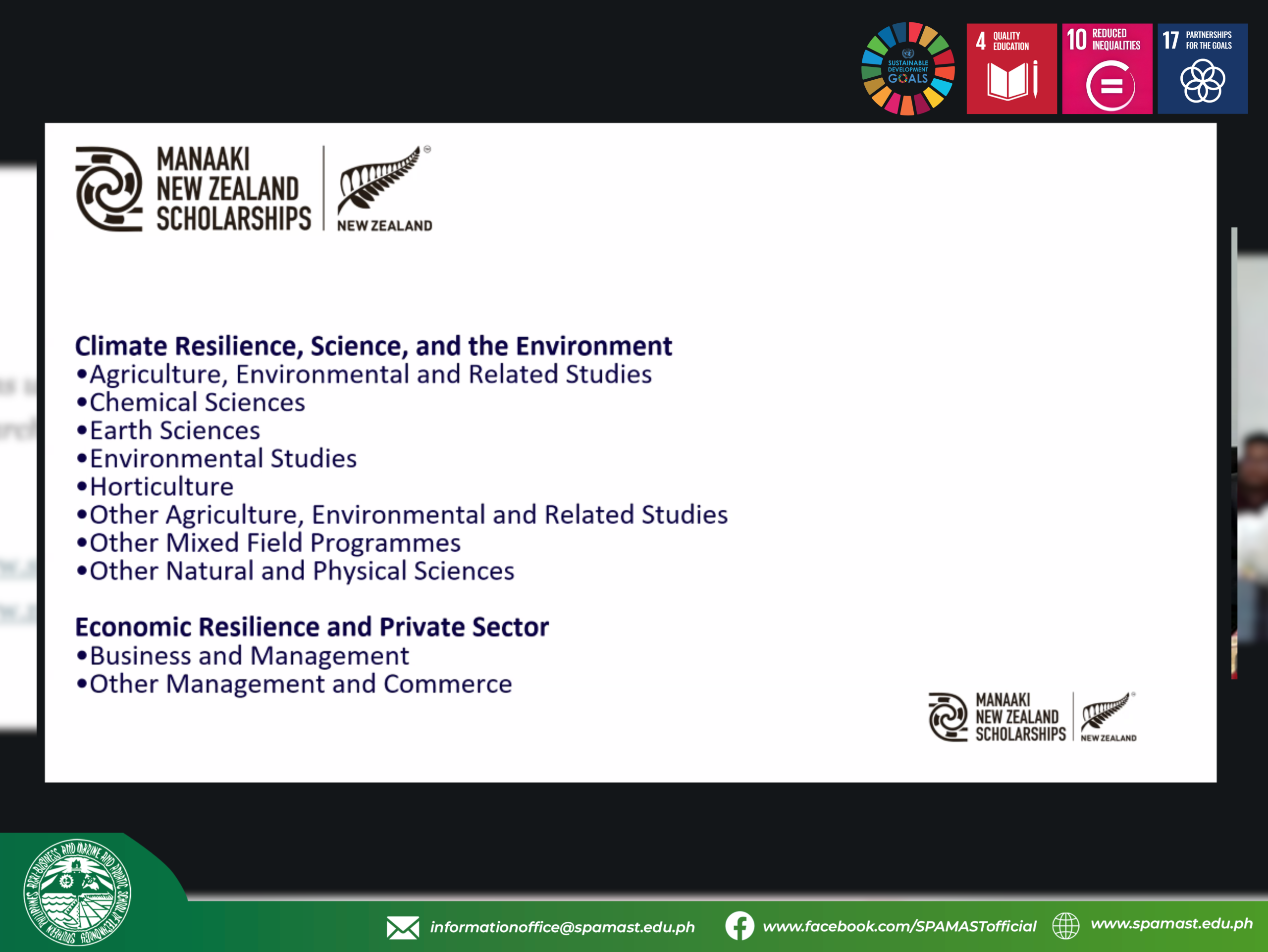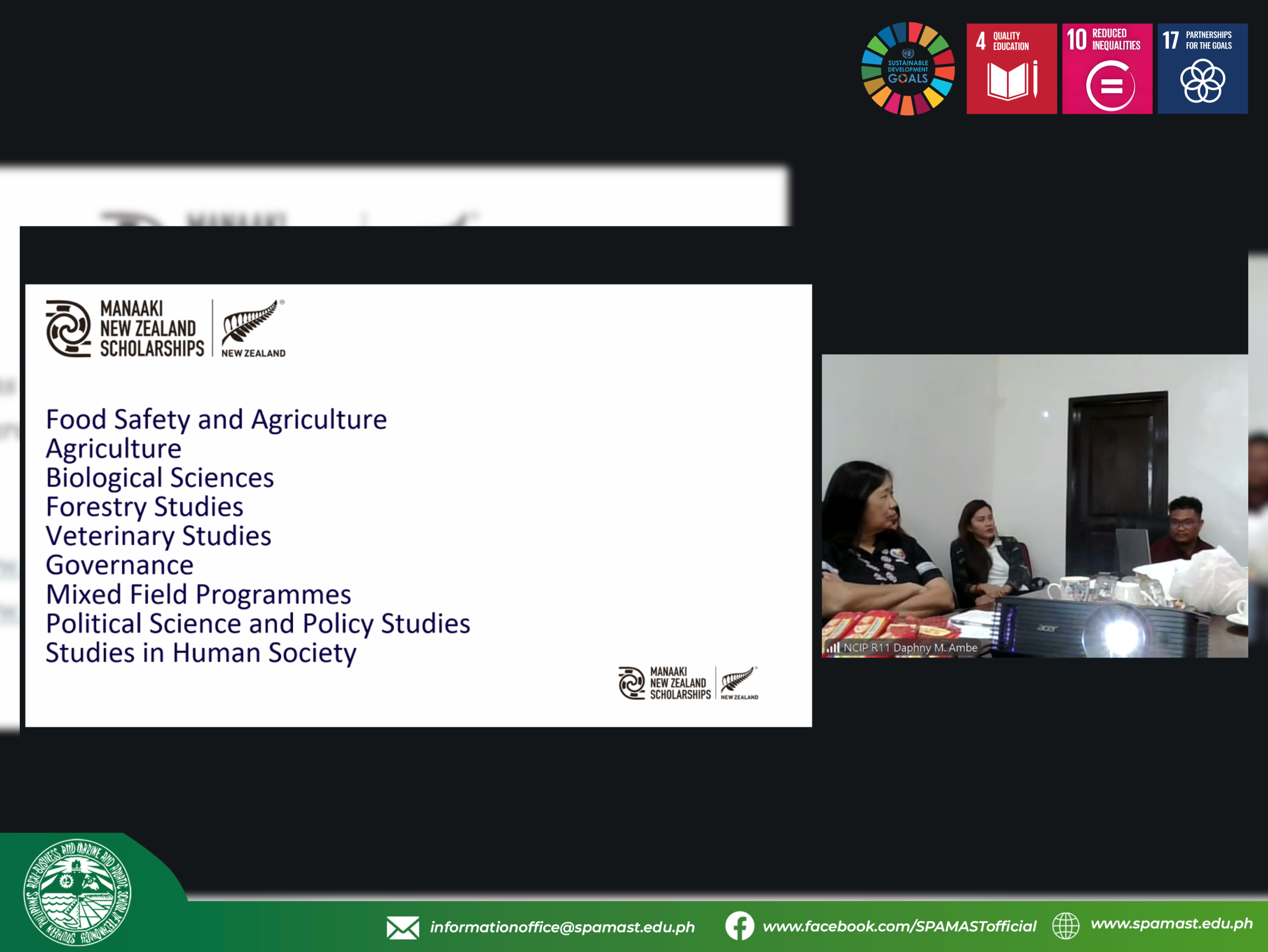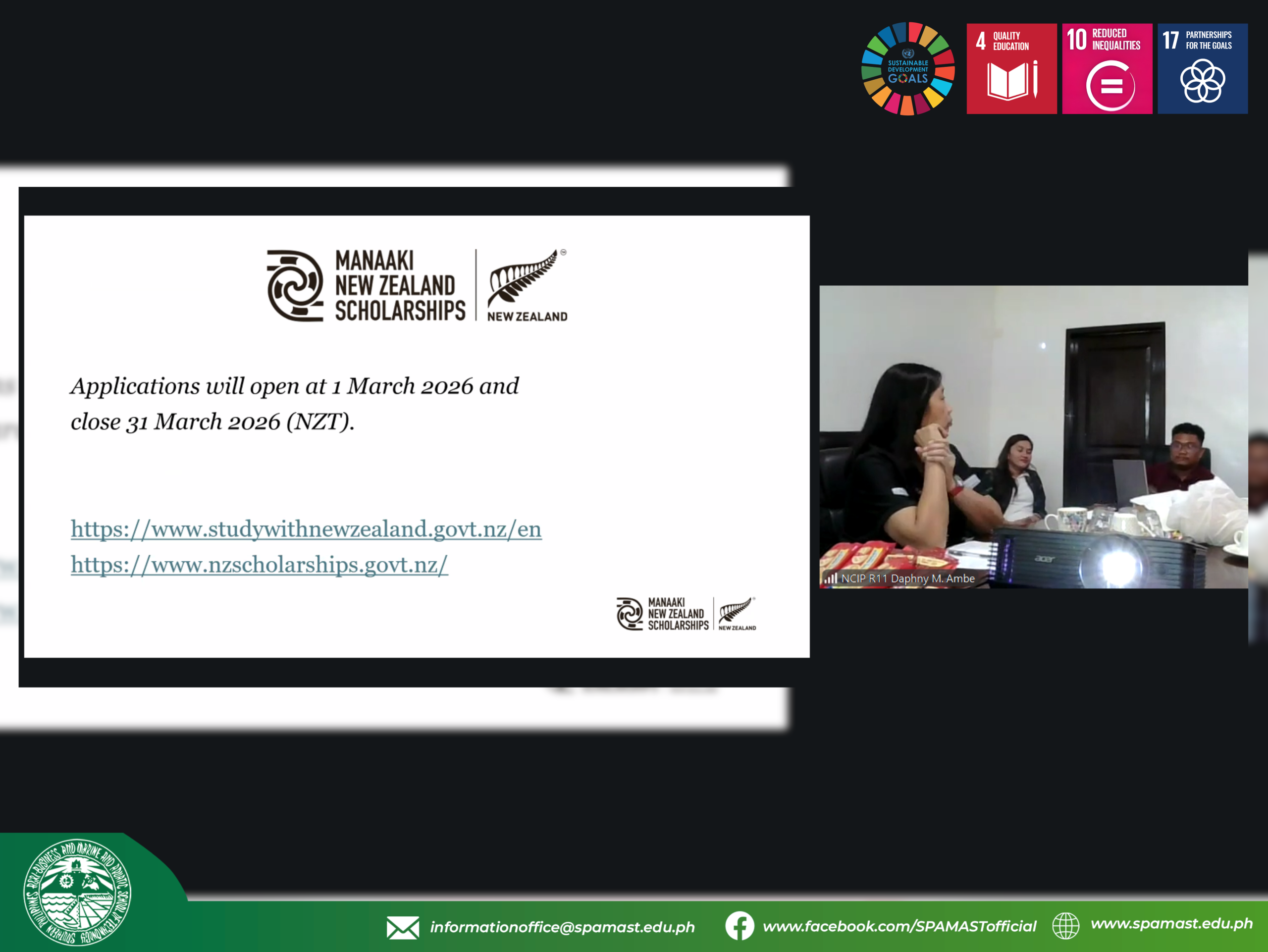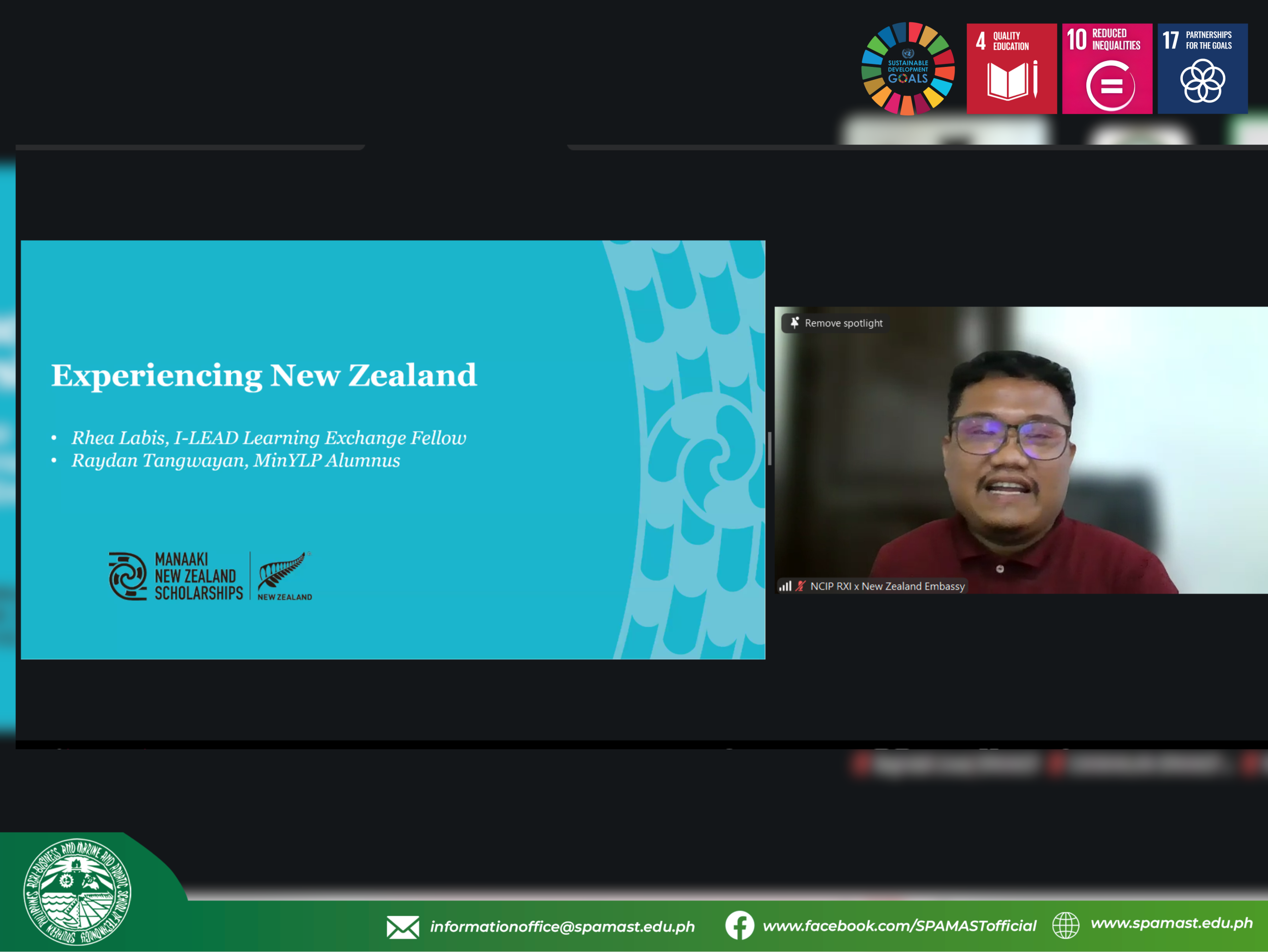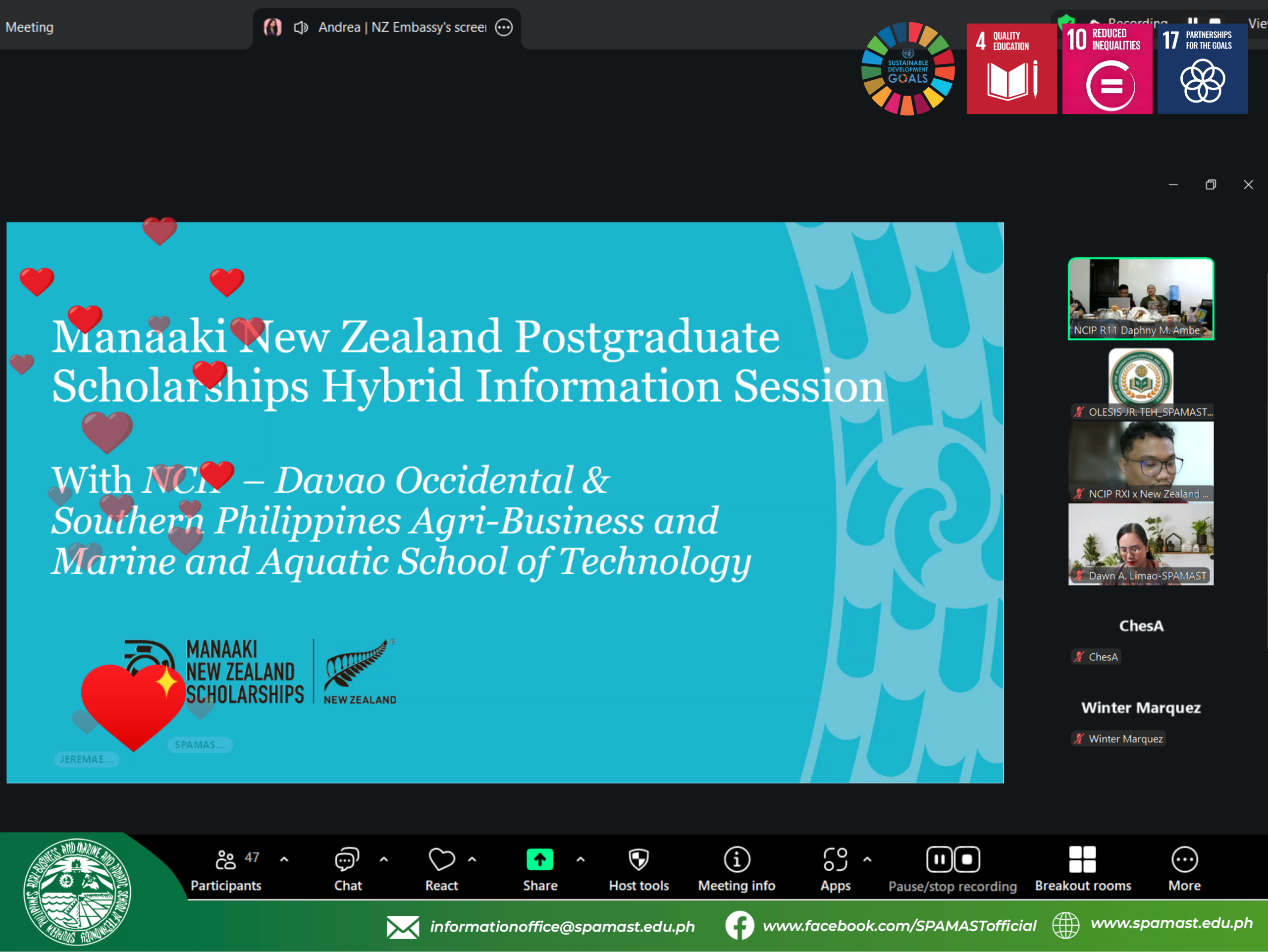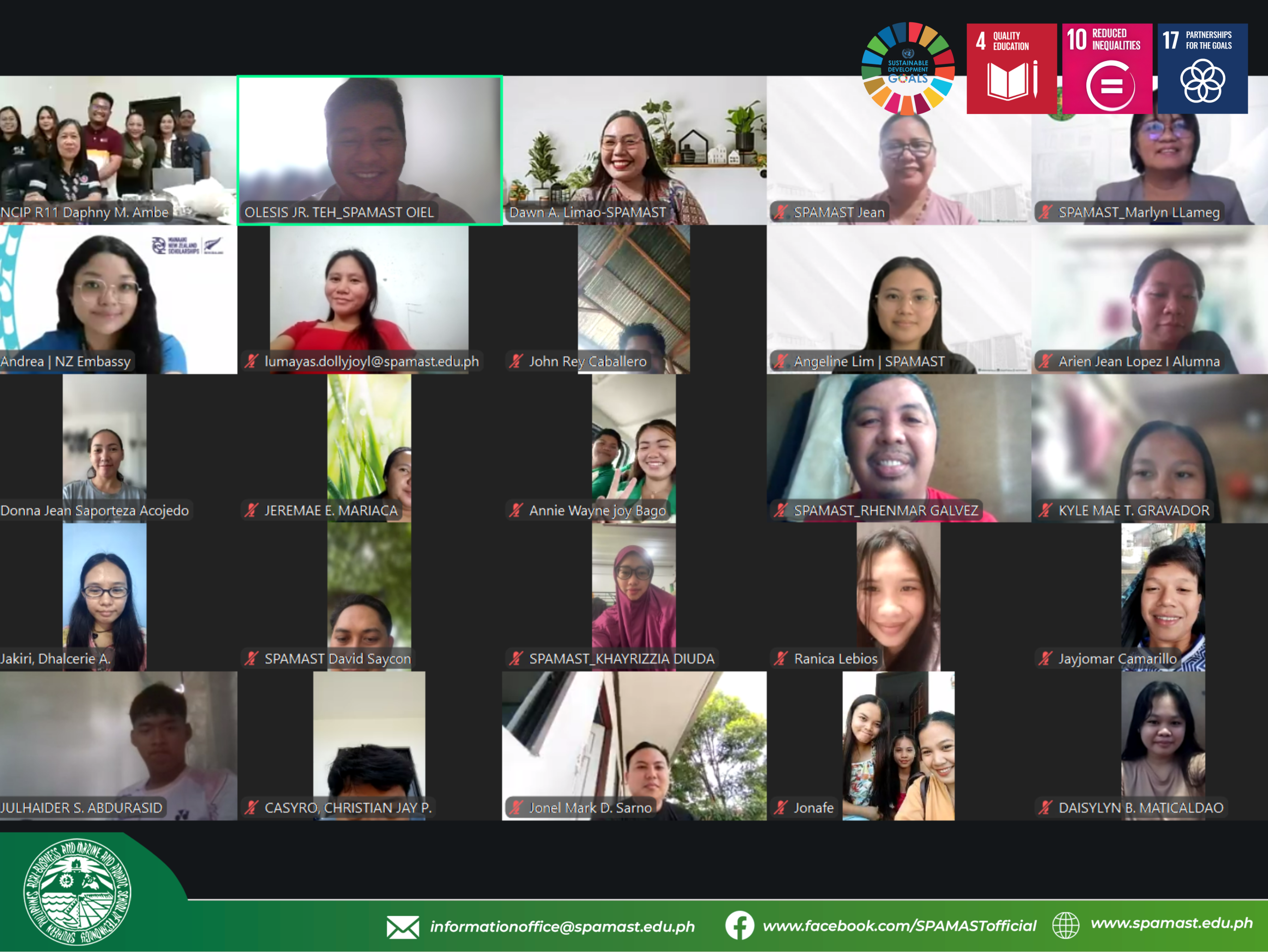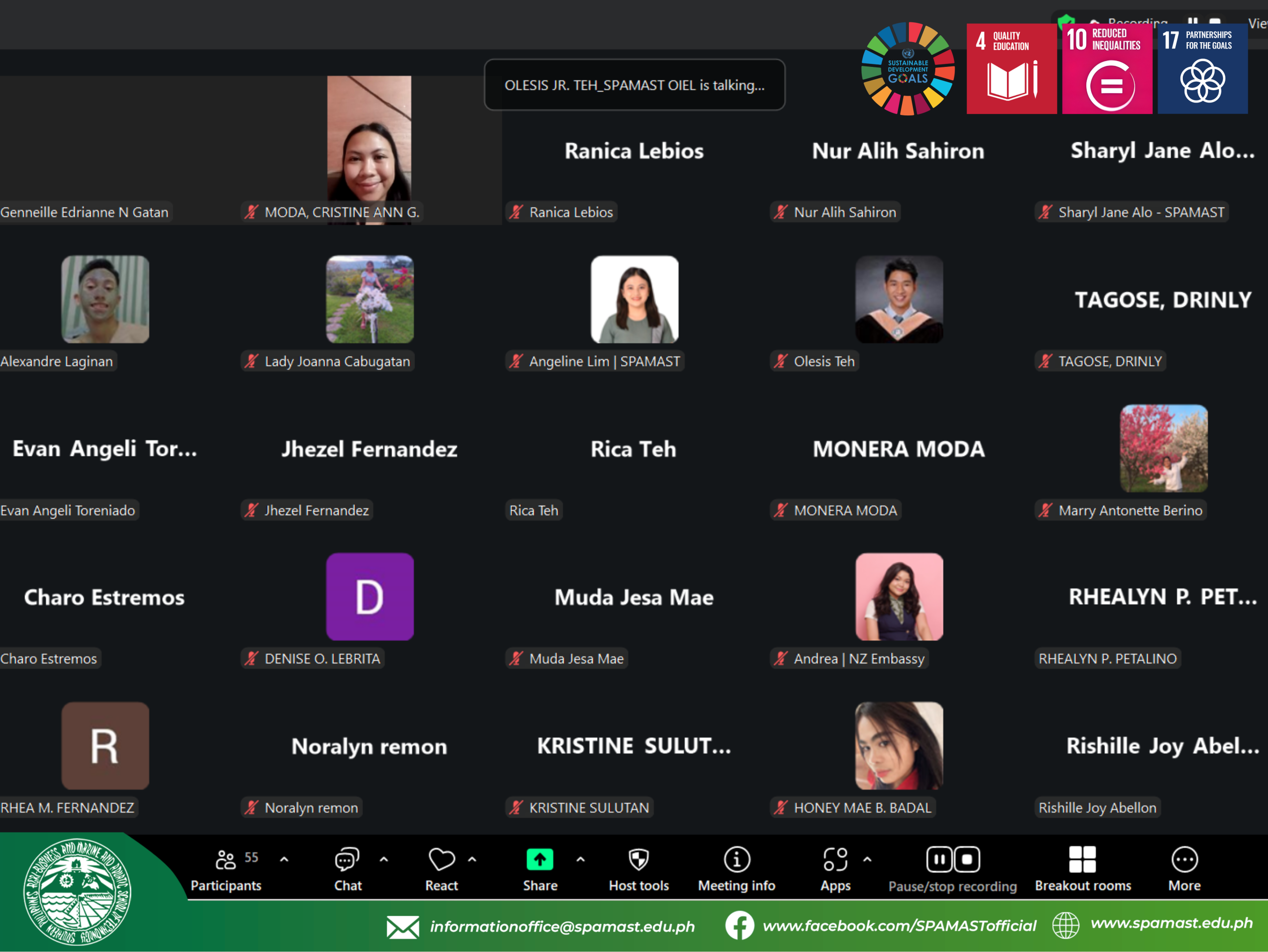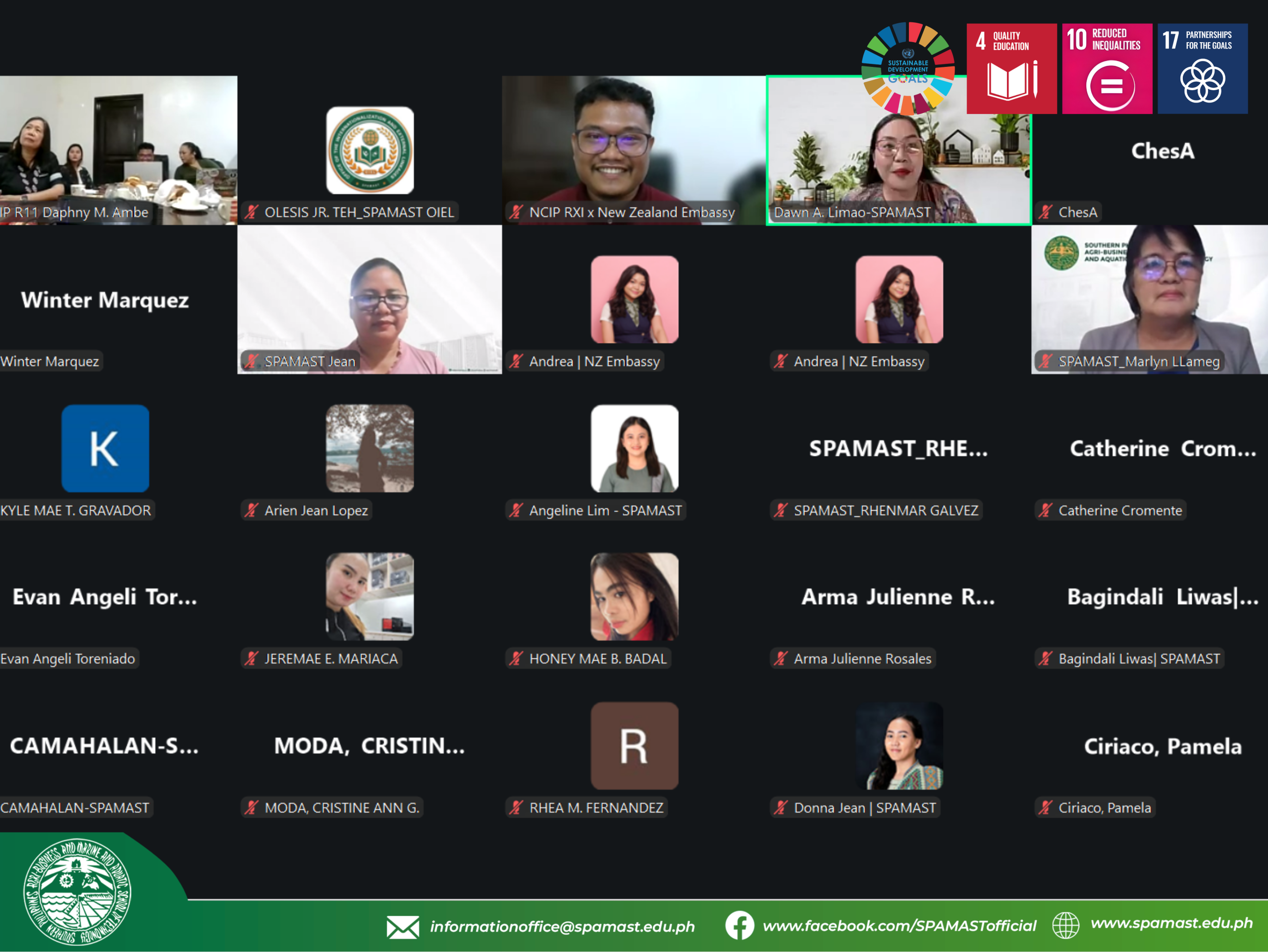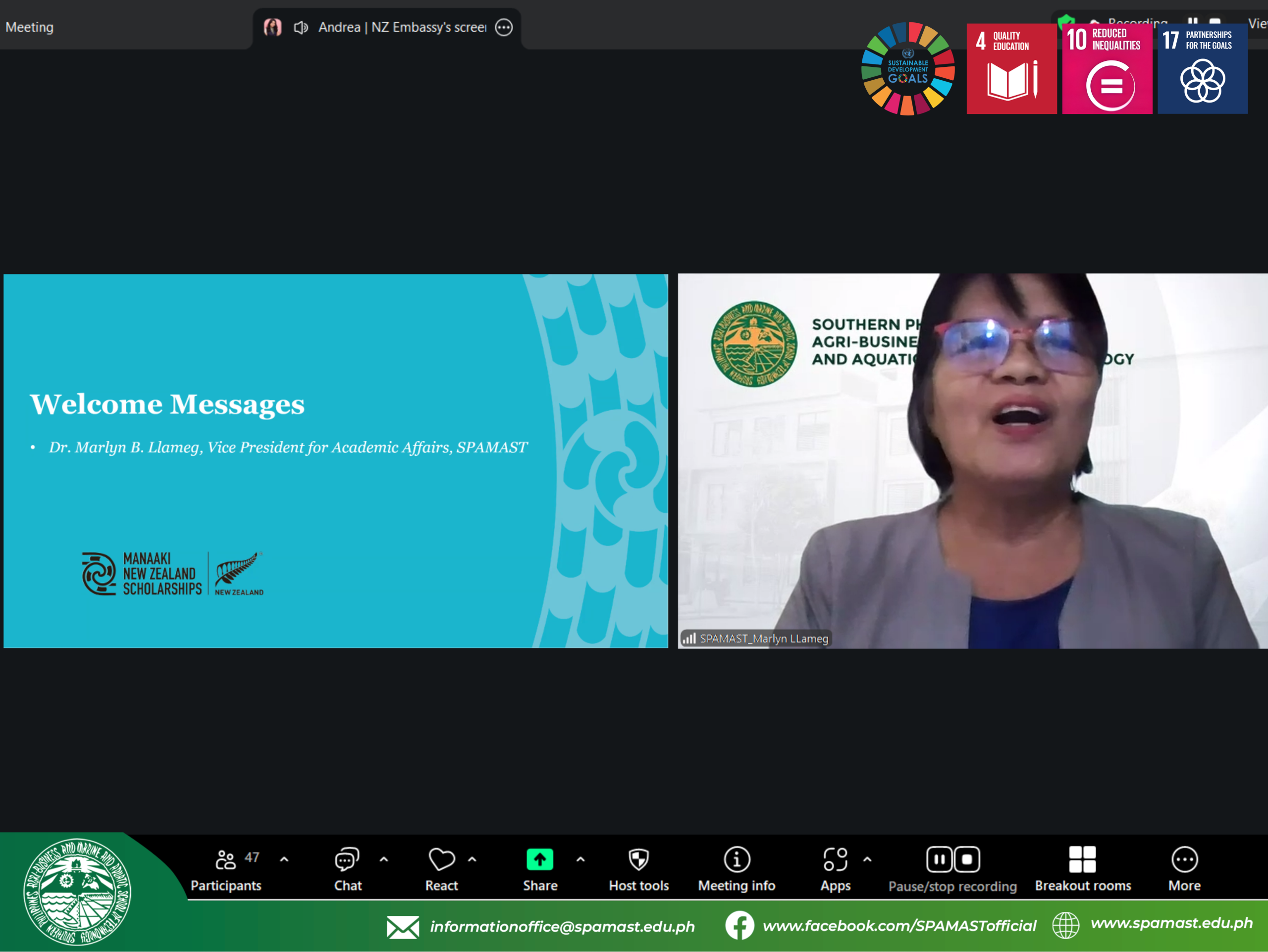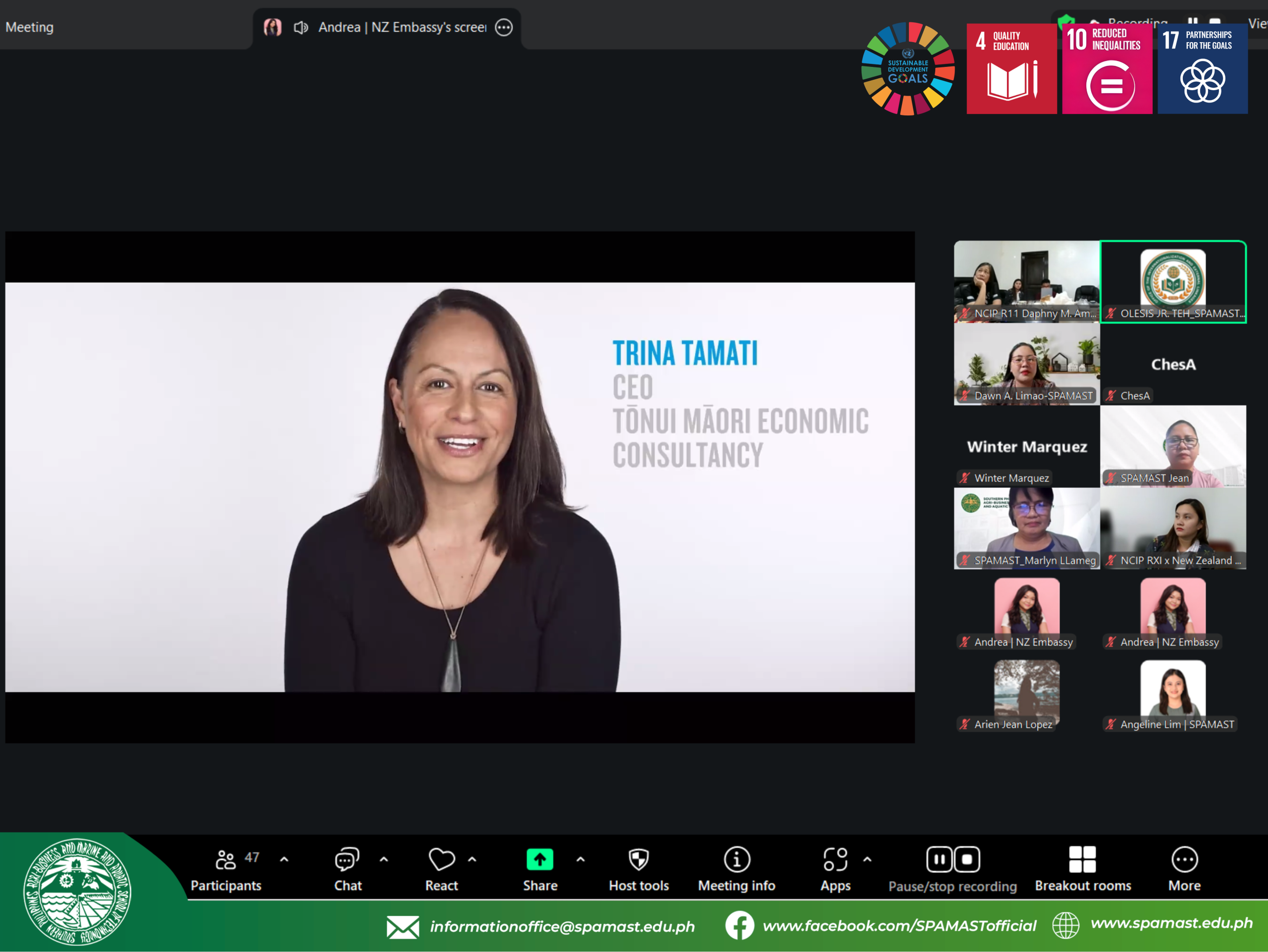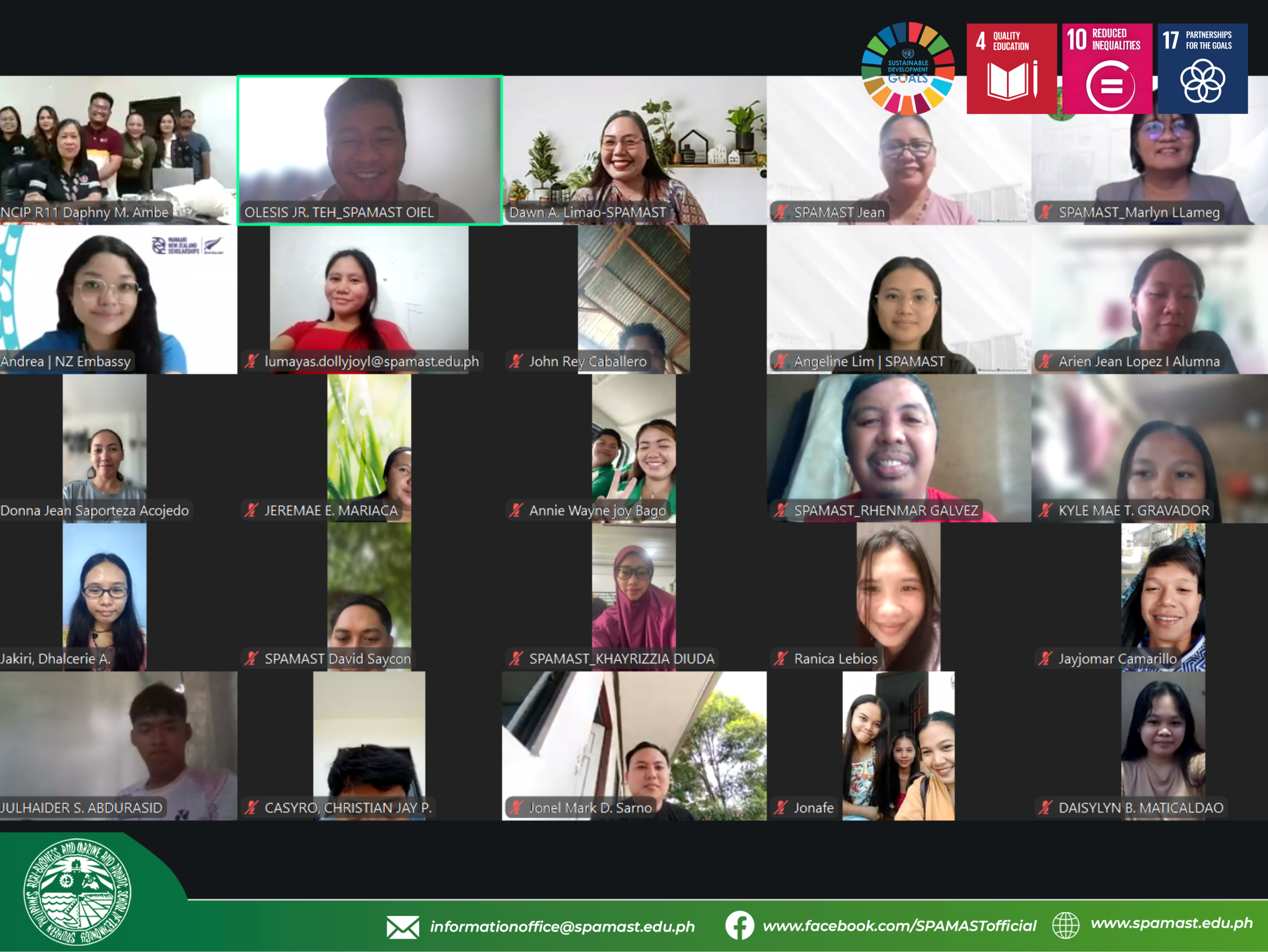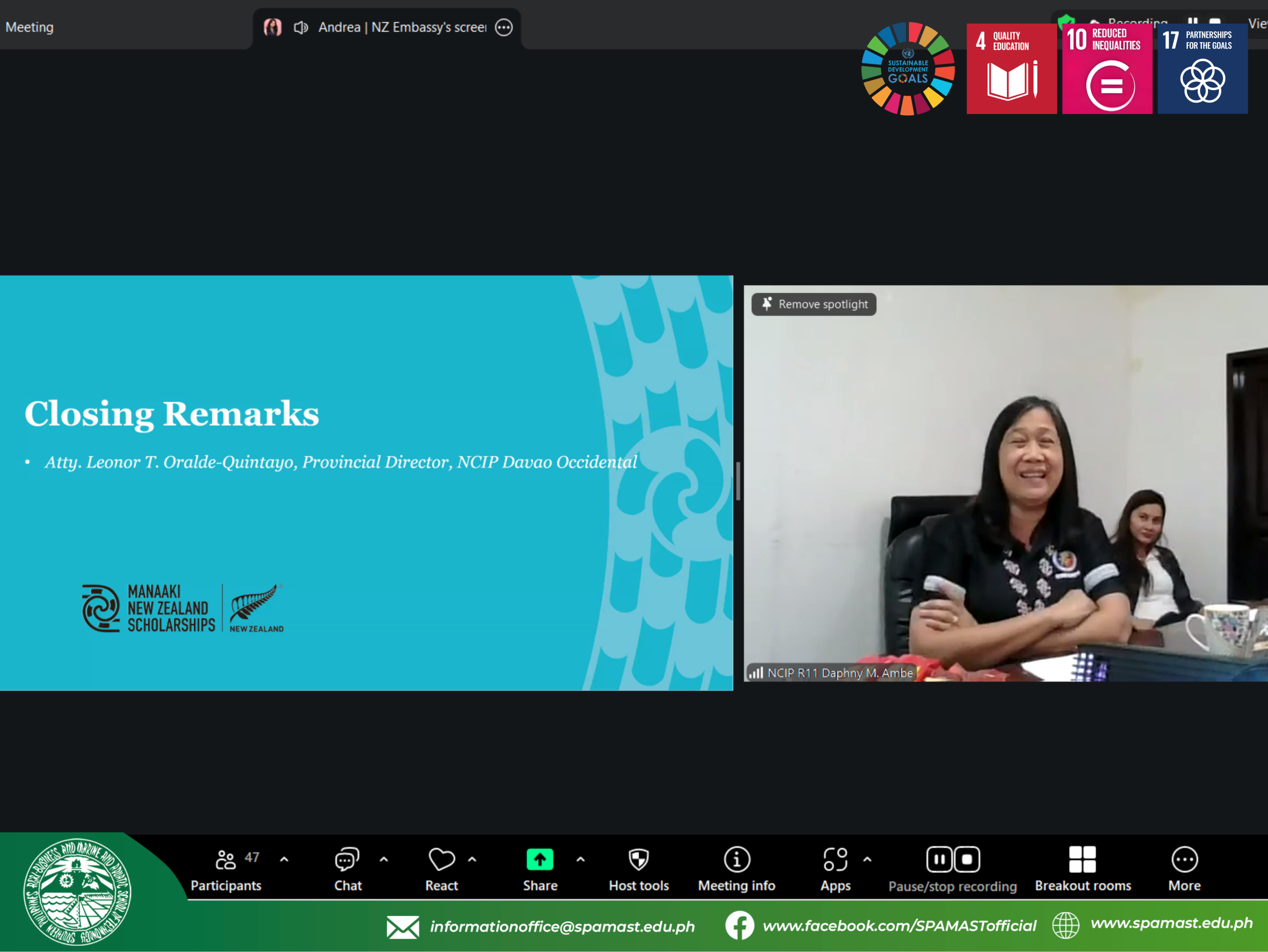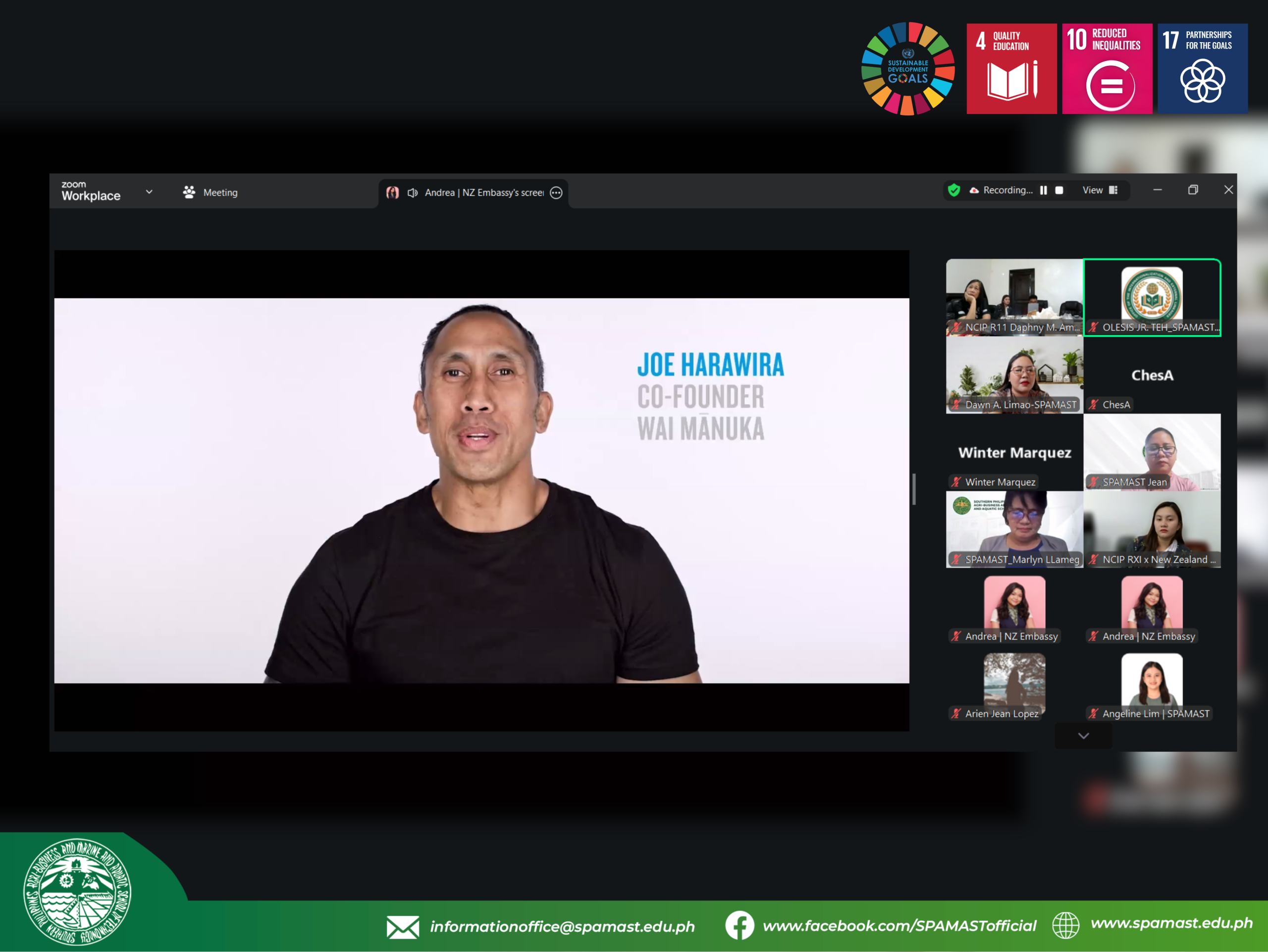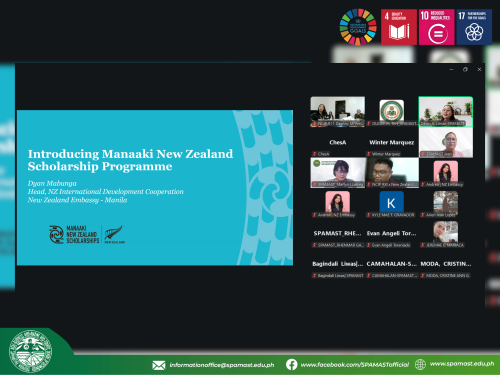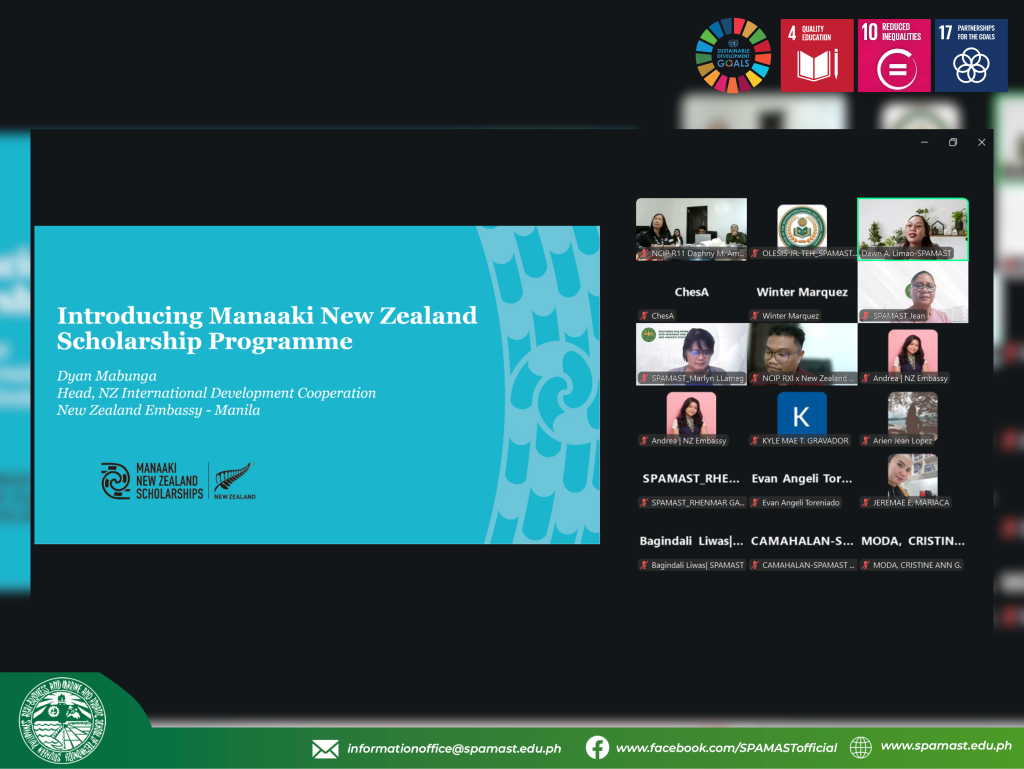
The Southern Philippines Agri-Business and Marine and Aquatic School of Technology (SPAMAST), in collaboration with the National Commission on Indigenous Peoples (NCIP) Provincial Office of Davao Occidental, successfully conducted a Manaaki New Zealand Scholarships Hybrid Information Session on March 13, 2026, via Zoom. The activity aimed to provide valuable information on international scholarship opportunities for Filipino students and professionals, particularly those from indigenous communities.
The session featured resource persons from the New Zealand Embassy in the Philippines, who presented comprehensive details about the Manaaki New Zealand Scholarships program. The scholarship initiative of the New Zealand Ministry of Foreign Affairs and Trade offers opportunities for qualified individuals from partner countries to pursue higher education in New Zealand while contributing to sustainable development in their home communities.
Participants included SPAMAST faculty members, staff, and students, along with personnel from the NCIP Provincial Office of Davao Occidental. During the session, the resource speakers discussed scholarship coverage, eligibility requirements, priority study fields, and the application process. They also highlighted the program’s commitment to empowering scholars to become leaders who will contribute to the social and economic development of their respective communities.
The hybrid information session also served as an avenue for participants to ask questions and gain deeper insights into studying in New Zealand, the academic environment, and the cultural exchange opportunities offered through the Manaaki New Zealand Scholarships. Attendees expressed enthusiasm and appreciation for the opportunity to learn about international education pathways and professional development.
Through this initiative, SPAMAST and NCIP continue to strengthen partnerships that expand educational opportunities for Filipinos, particularly for learners and professionals from indigenous communities who aspire to pursue advanced studies abroad.
This collaborative effort supports global and national development goals by promoting inclusive and equitable access to quality education and strengthening partnerships for sustainable development, contributing to the attainment of the United Nations Sustainable Development Goals: SDG 4 – Quality Education, SDG 10 – Reduced Inequalities, and SDG 17 – Partnerships for the Goals.