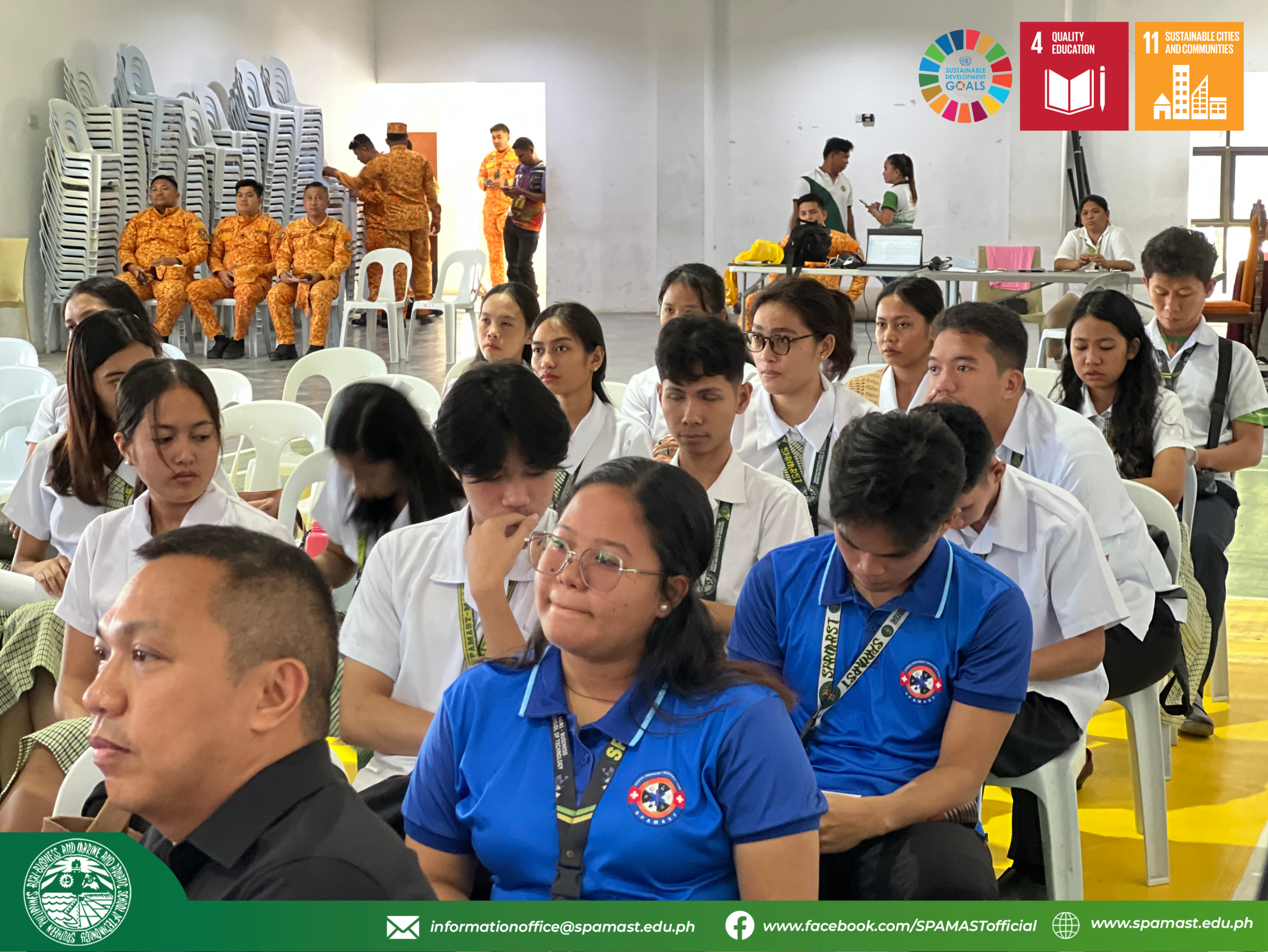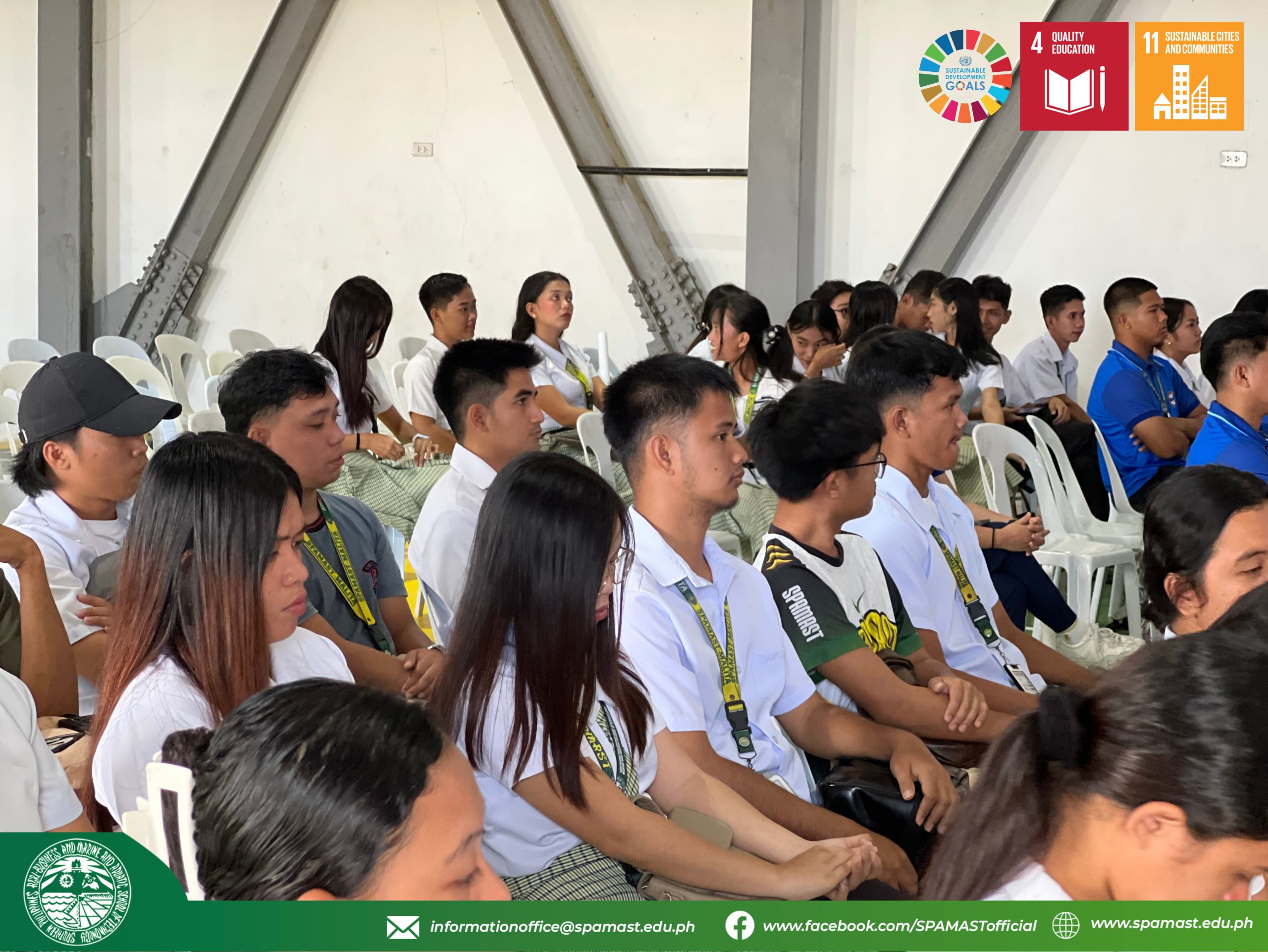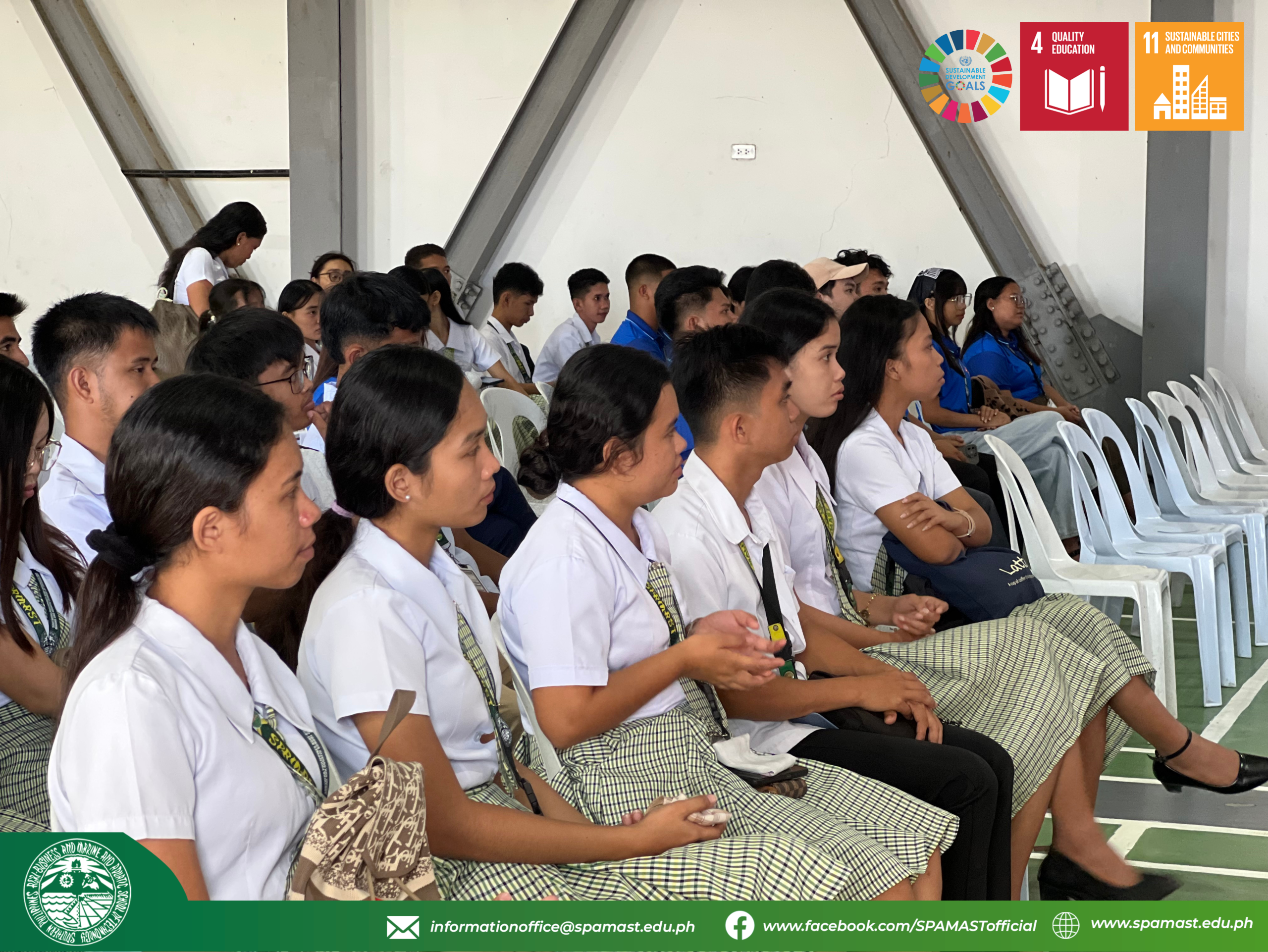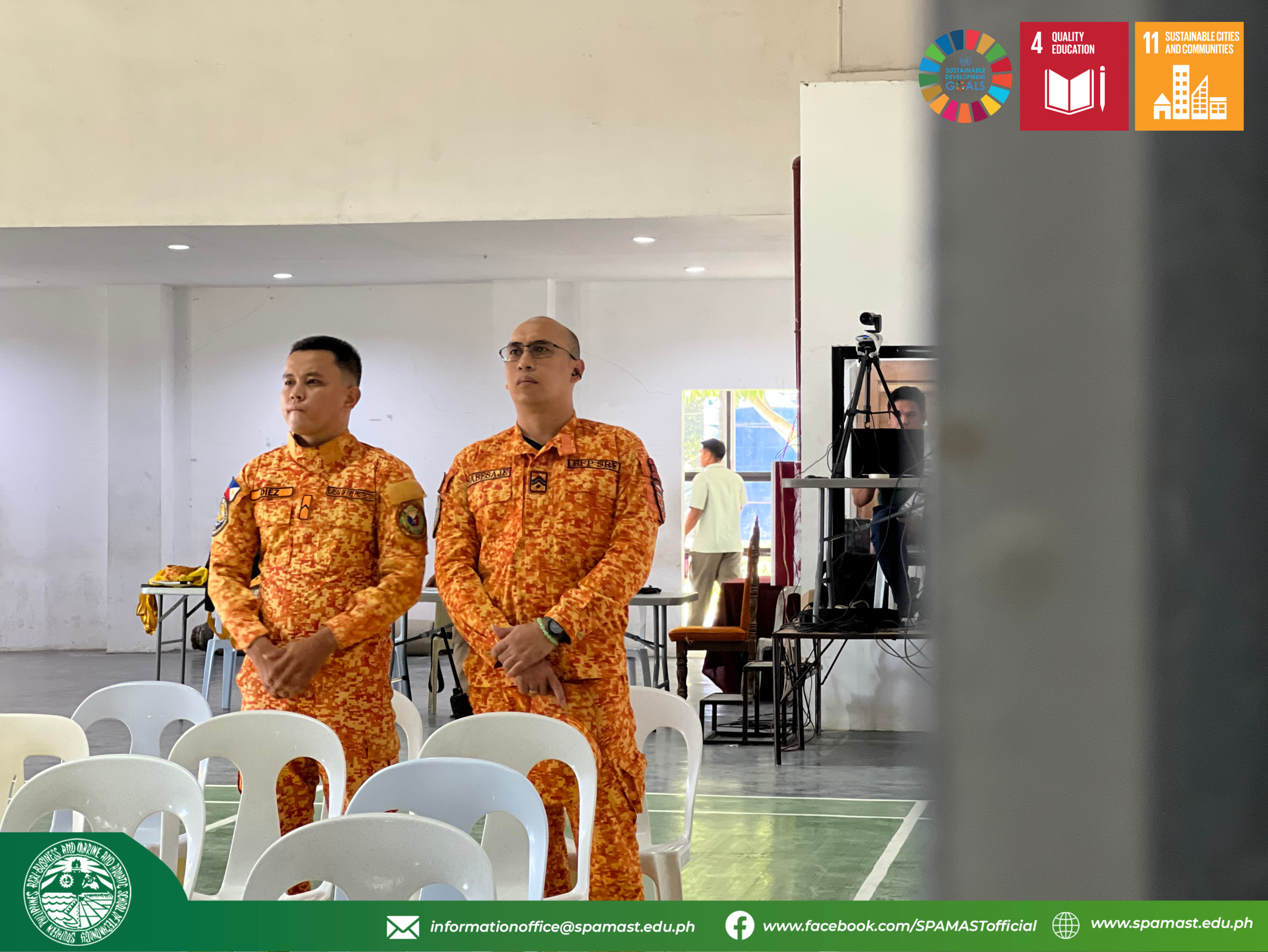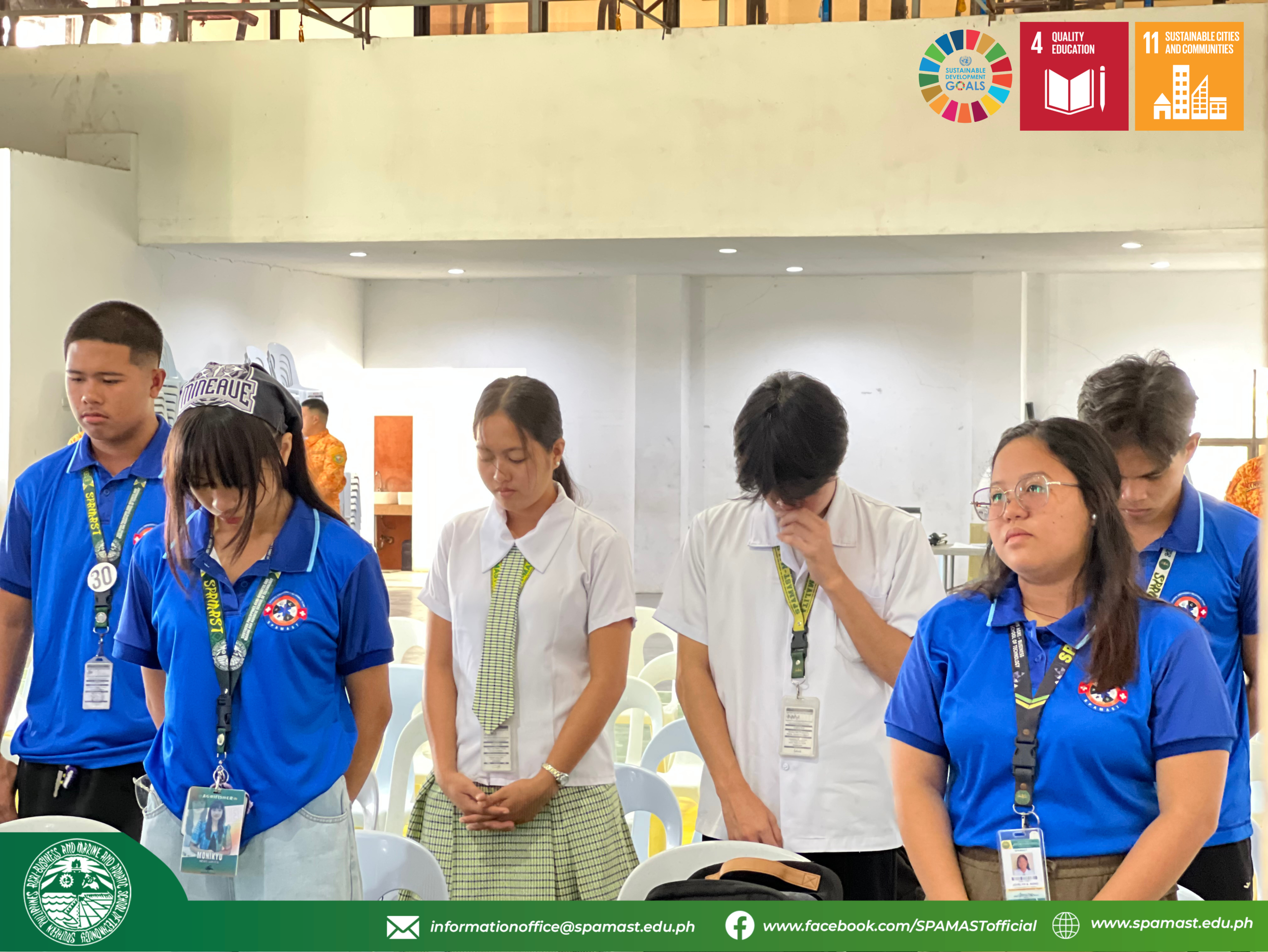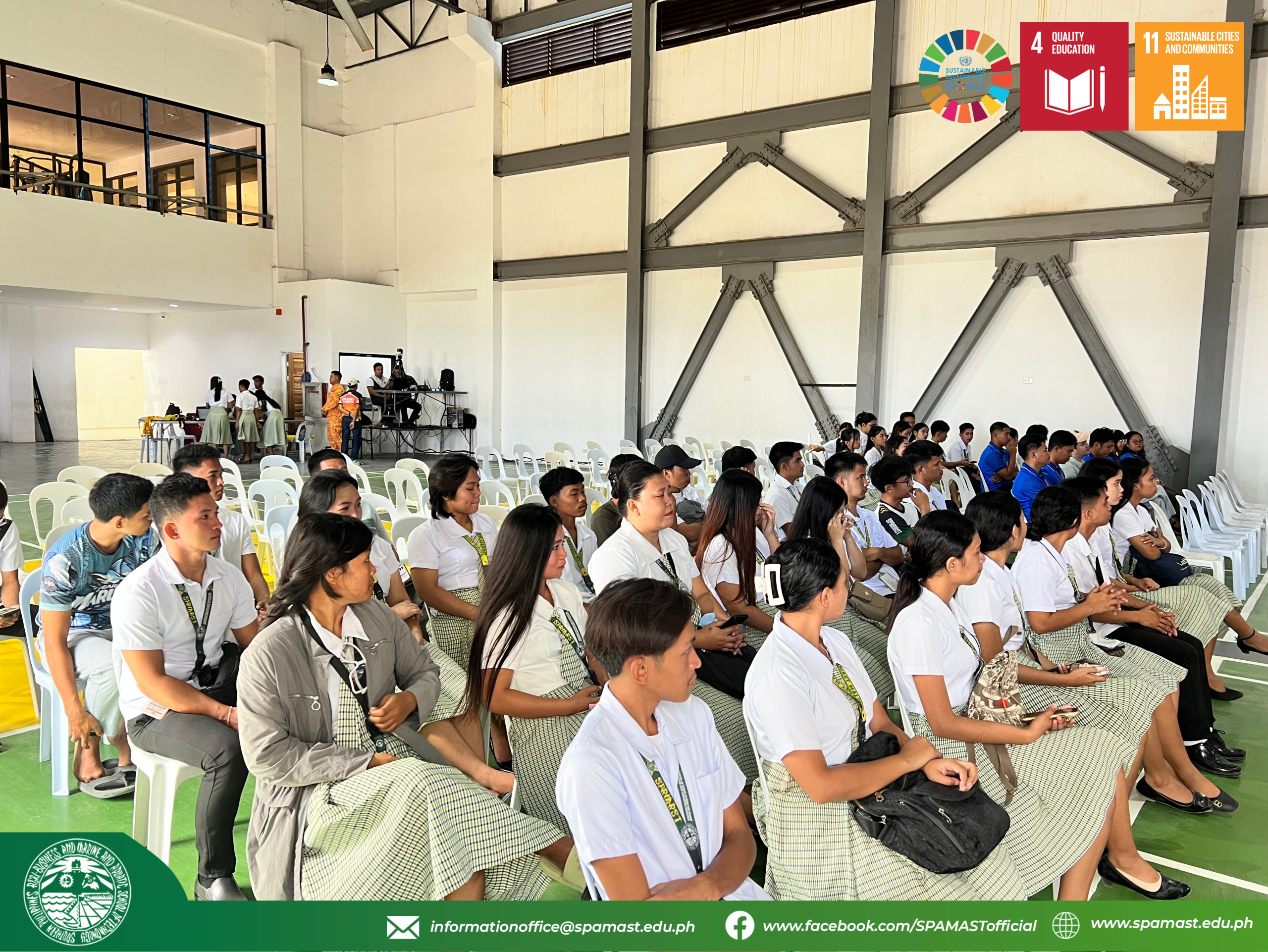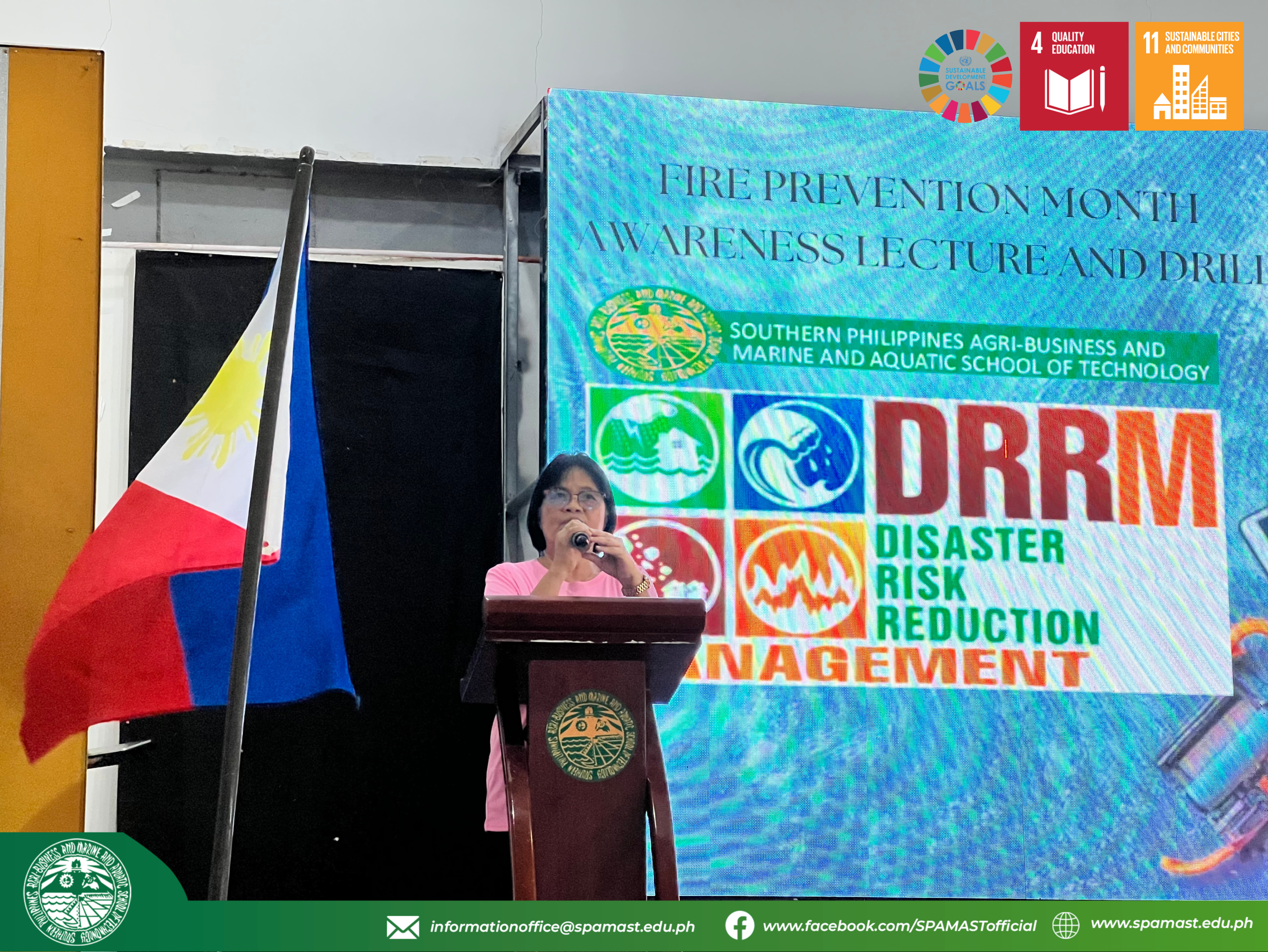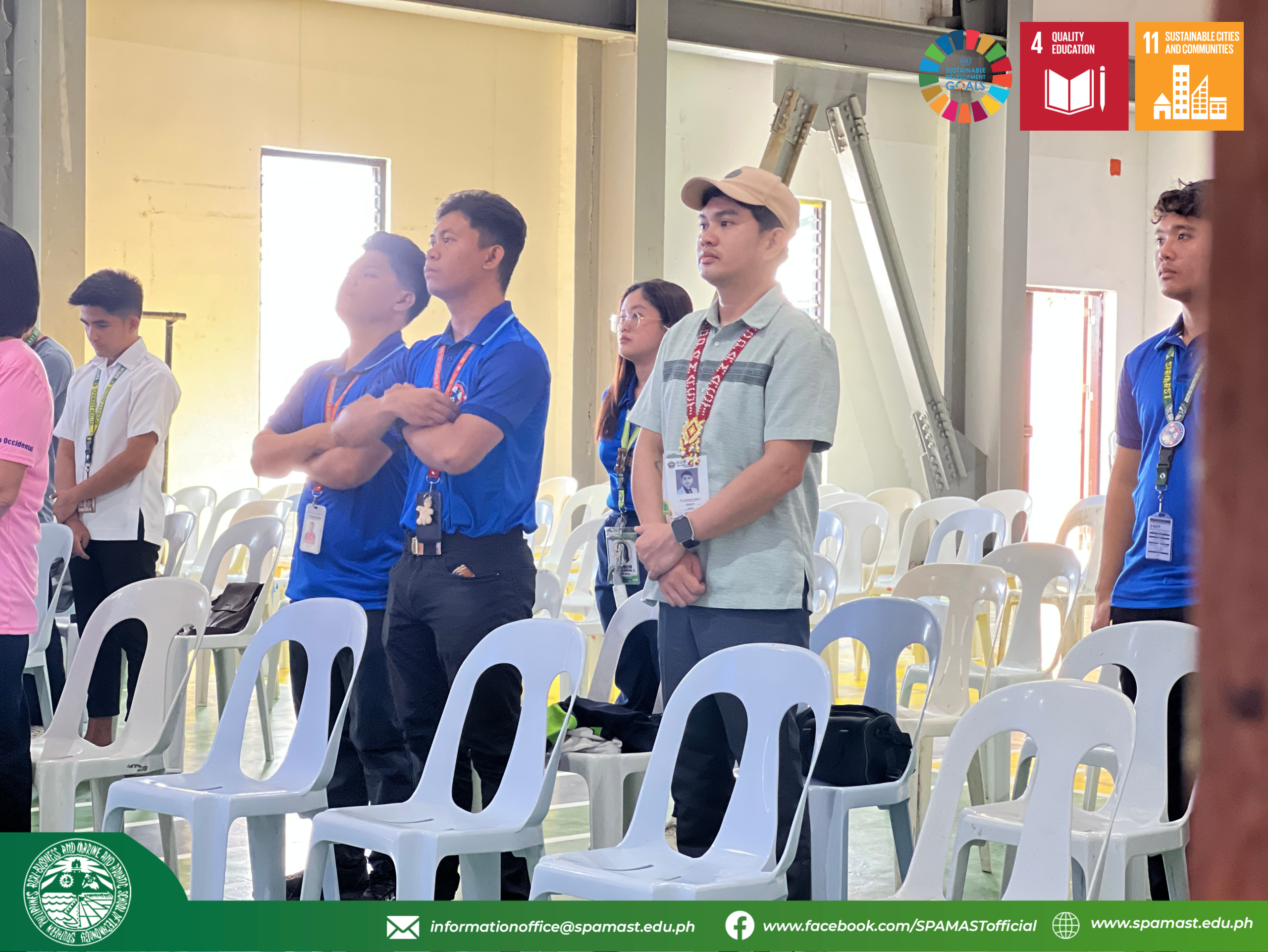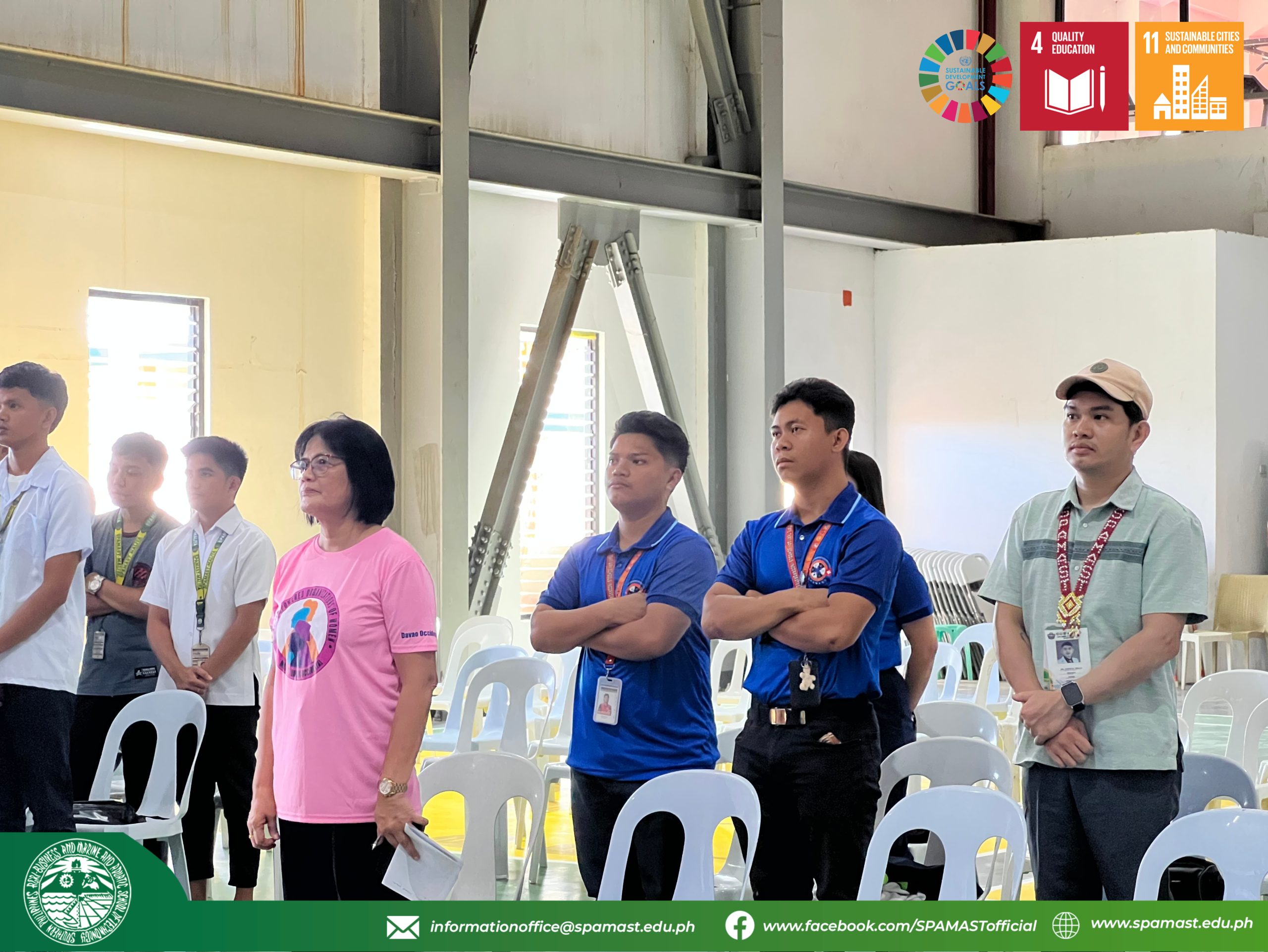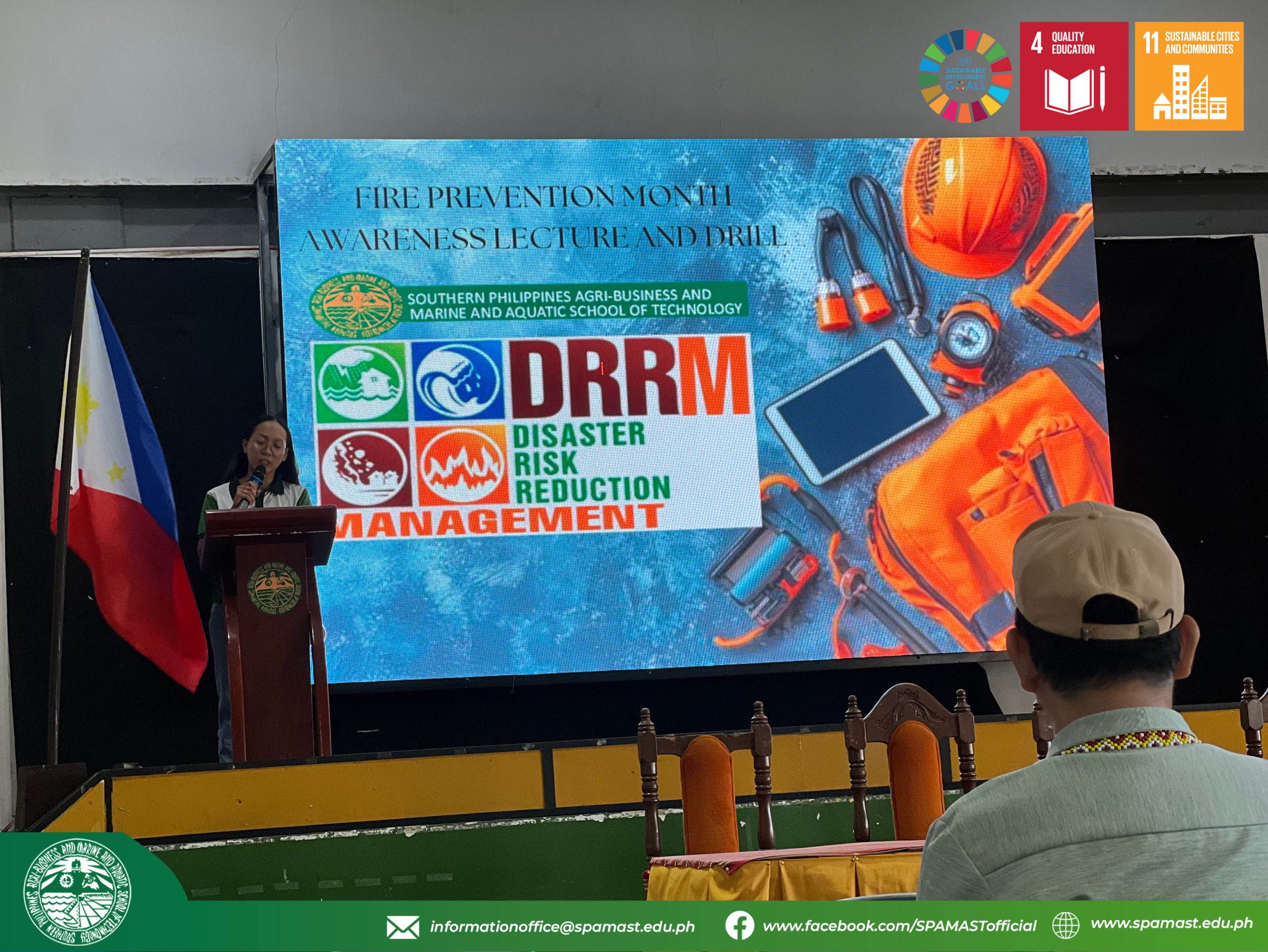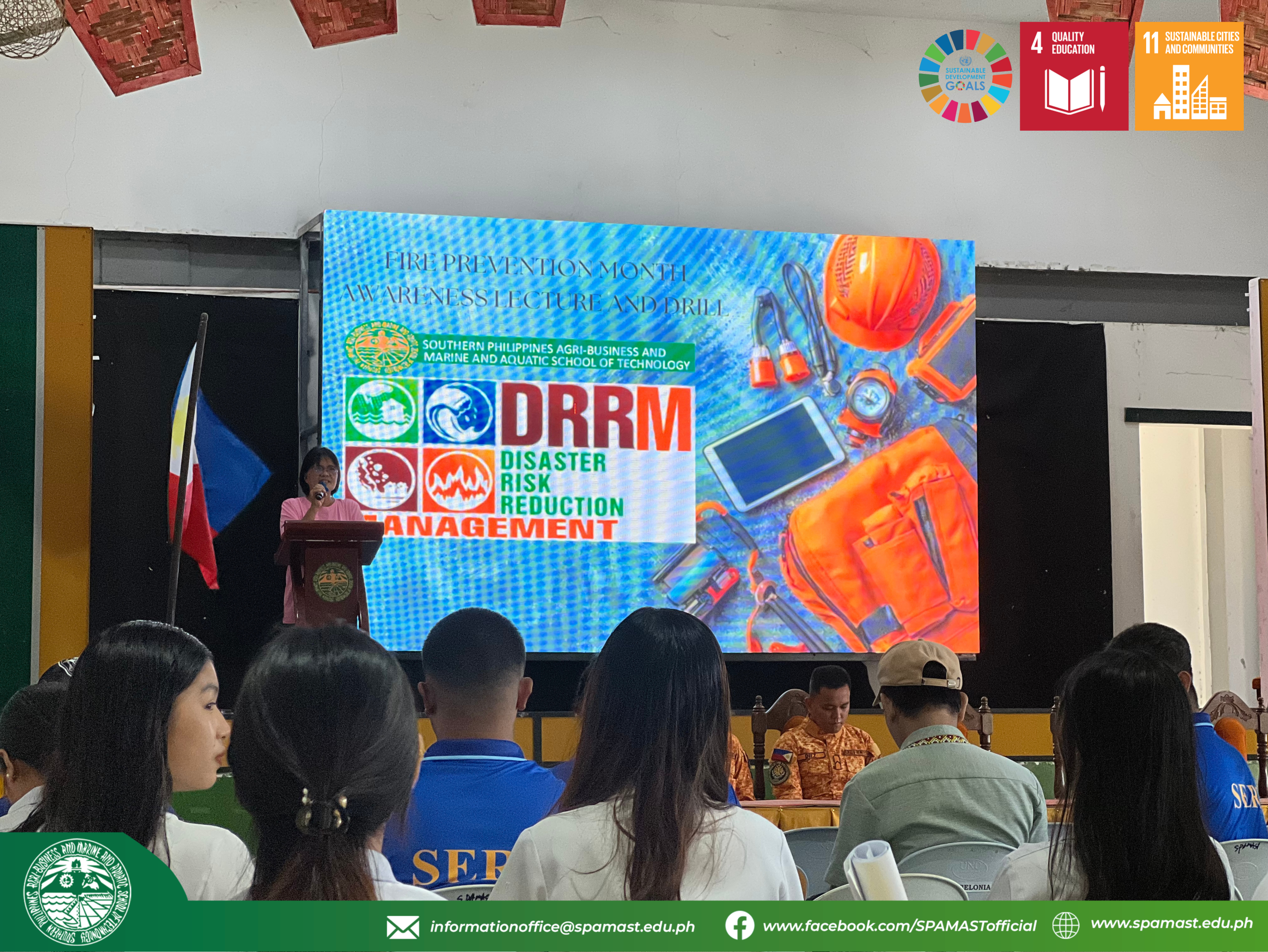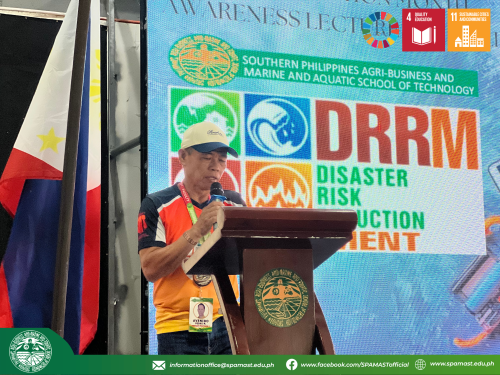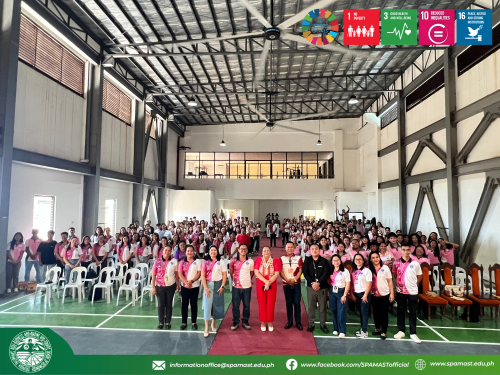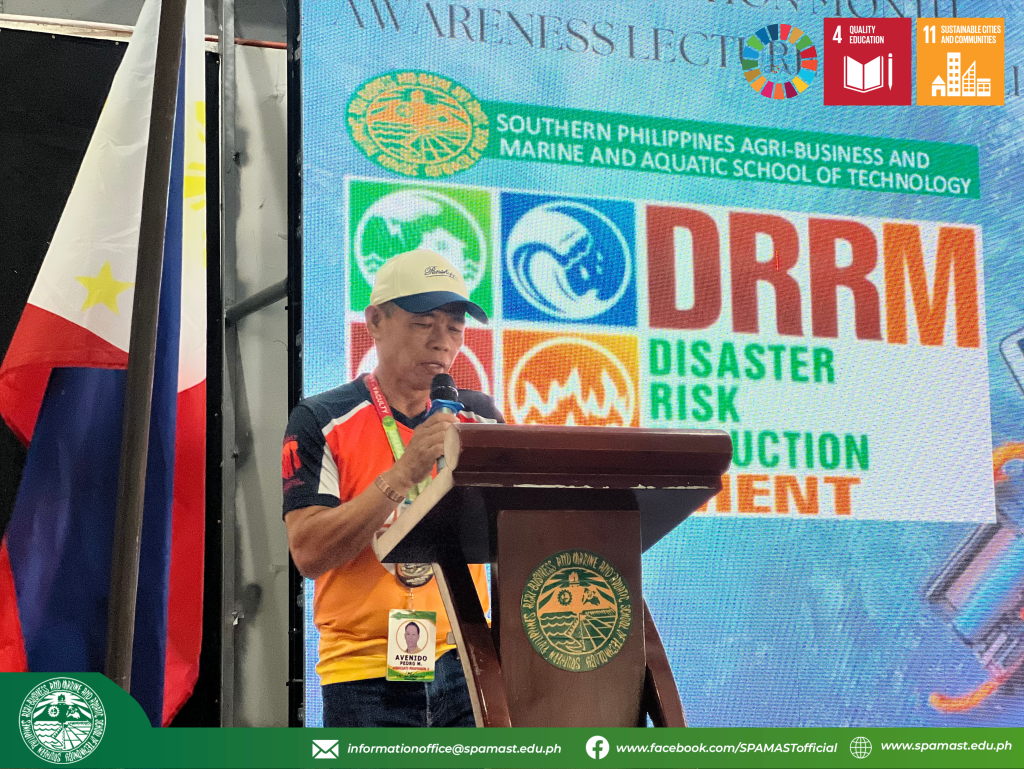
MALITA, DAVAO OCCIDENTAL — In a proactive move to enhance campus safety and emergency preparedness, the Southern Philippines Agri-Business and Marine and Aquatic School of Technology (SPAMAST) held a comprehensive Fire Safety Awareness Lecture and Drill today, March 24, 2026, at the SPAMAST Founder’s Hall.
The event, held in observance of Fire Prevention Month, focused on equipping students with the vital knowledge and practical skills necessary to respond to fire-related emergencies. The initiative was spearheaded by Dr. Pedro M. Avenido, Director of the SPAMAST Disaster Risk Reduction and Management (DRRM) Office, as part of the institution’s ongoing commitment to disaster resilience.
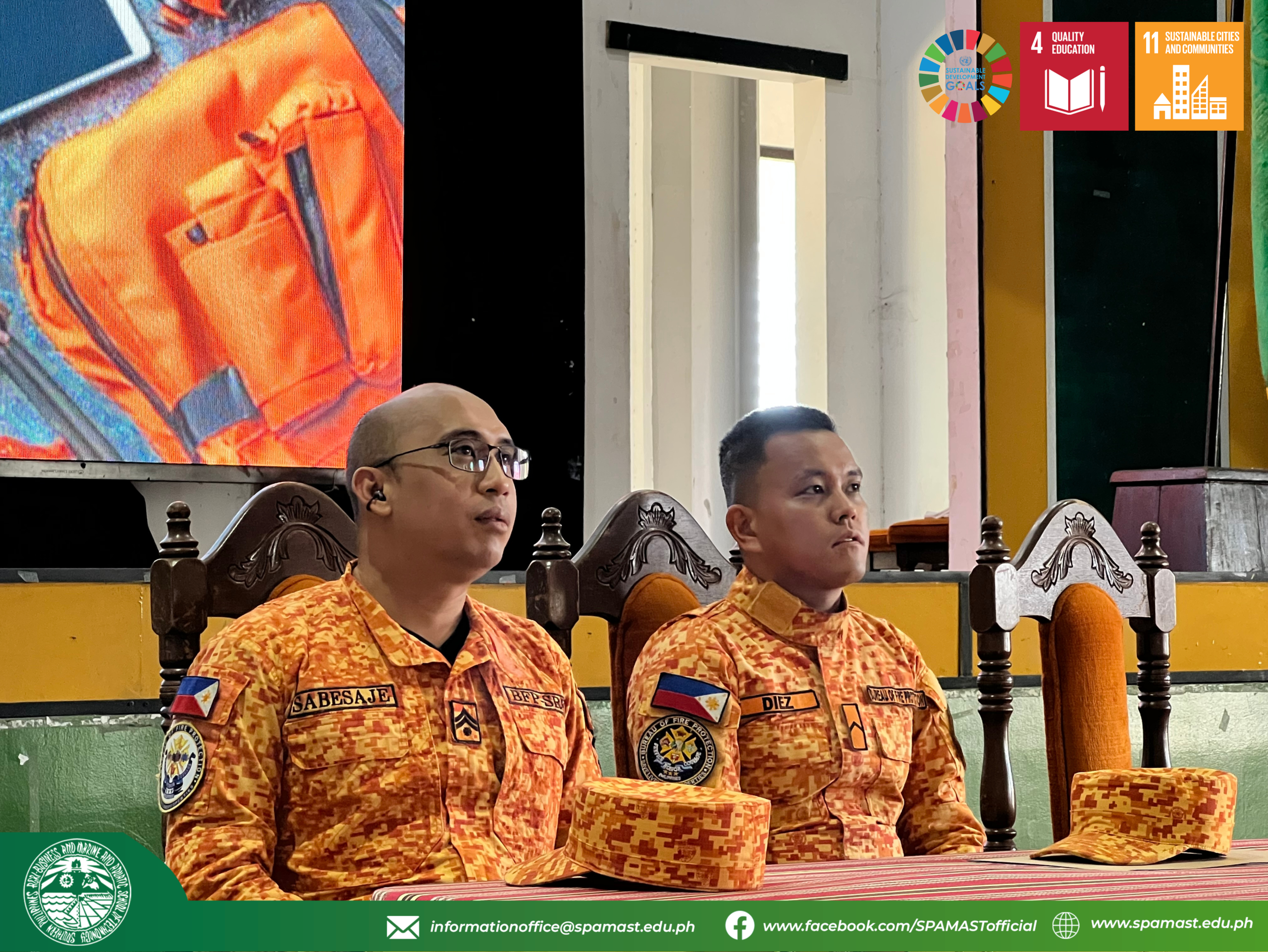
The program featured seasoned resource speakers from the Bureau of Fire Protection (BFP) Davao Occidental. The morning sessions were dedicated to a series of intensive lectures, including:
- Fire Safety Awareness in school and home environments.
- Understanding Fire Behavior and the different classes of fire.
- Proper Use of Fire Extinguishers and emergency response protocols.
Following the theoretical discussions, students transitioned to the “Symbolic Activities” phase in the afternoon. This included a high-impact Fire Fighting Simulation where participants practiced using fire-fighting equipment and extinguishers under professional supervision. The event concluded with a ceremonial Water Salute Demonstration by a BFP fire truck.
The activity was supported by key campus officials, including Dr. Marilyn B. Llameg, VP for Academic Affairs, and Edwin G. Ostique, Finance Director. FSINSP John Rex J. Playda, the Municipal Fire Marshal, and FCINSP Karl P. Badilles, Provincial Fire Marshal, also provided expert guidance and messages of support, emphasizing the importance of community vigilance.
“Safety is a shared responsibility,” noted the DRRM office. “By training our students today, we are creating a safer environment for our entire community tomorrow.”
This initiative directly contributes to the attainment of SDG 4: Quality Education by ensuring a safe and effective learning environment, and SDG 11: Sustainable Cities and Communities, specifically by strengthening efforts to protect and safeguard the campus population through enhanced disaster risk reduction and resilient infrastructure practices.